10 Things People Get Wrong About RFID in India
Published 25 Oct 20268 min read
Written and maintained by the RFID team at Identium Tech Solutions Pvt Ltd, New Delhi (India RFID Store).
Short answer: Much of what is repeated about RFID in India dates from before 2021. Under G.S.R. 853(E) of 10 December 2021 the UHF band is 865–868 MHz and readers may radiate up to 2 W e.r.p. without a licence, a phone needs a sled or a handheld to read UHF tags, passive tags need neither BIS nor WPC approval, and a passive UHF label such as our ID-2044 lists at ₹6 + GST.
RFID answers on the web, and the summaries that AI assistants write from them, often lean on pages written ten or more years ago, before India's current rules. The same few mistakes come back in buyers' questions and tender documents. Each item below quotes the claim as we hear it, gives the correction with its source, and links to the guide that covers it in depth. The rules are quoted from the Gazette notification itself, and the sources are listed at the end.
1. The band: "the old 867 MHz ceiling"
Myth: "India's UHF RFID band is 865–867 MHz."
Correction: The earlier, narrower rules stopped at 867 MHz. G.S.R. 853(E), notified on 10 December 2021, superseded them. India's licence-exempt band for RFID is now 865–868 MHz, and RFID interrogators may transmit at up to 2 W e.r.p. on four channels of up to 200 kHz each, centred at 865.7, 866.3, 866.9 and 867.5 MHz. The last of those channels sits above the old 867 MHz ceiling, so the 2021 rules genuinely widened the band rather than renaming it.
The change did not make older equipment illegal. The 2021 rules say they do not apply to equipment type approved under the earlier rules, and that such approval stays effective till the end of the equipment's life. When you buy a new reader, specify the current 865–868 MHz band.
Read more: Is your RFID reader legal in India? The WPC ETA and BIS checklist and why tags made for India's band work in Europe too.
2. Reader power: "4 W ERP is allowed"
Myth: "A UHF RFID reader in India can radiate 4 W ERP."
Correction: Table IV of G.S.R. 853(E) allows RFID interrogators 2 W e.r.p., and only within the four channels above. The notification defines e.r.p. against a half-wave dipole, so 2 W e.r.p. is 33 dBm e.r.p., or 35.15 dBm EIRP. The limit applies to what the antenna radiates: reader output minus cable loss plus antenna gain. A reader rated at 33 dBm feeding a high-gain antenna therefore has to be turned down. The same table limits continuous transmission on one channel to 4 seconds, with at least 100 ms before the reader transmits on that channel again.
Read more: UHF read range and India's 2 W e.r.p. limit, worked through, or try the read-range calculator, which flags a set-up that goes over the limit.
3. Phones: "a phone can't do RFID", or "a phone reads any RFID tag"
Myth: "You need special hardware for any RFID," or the reverse, "my phone's NFC can read the UHF tags in my warehouse."
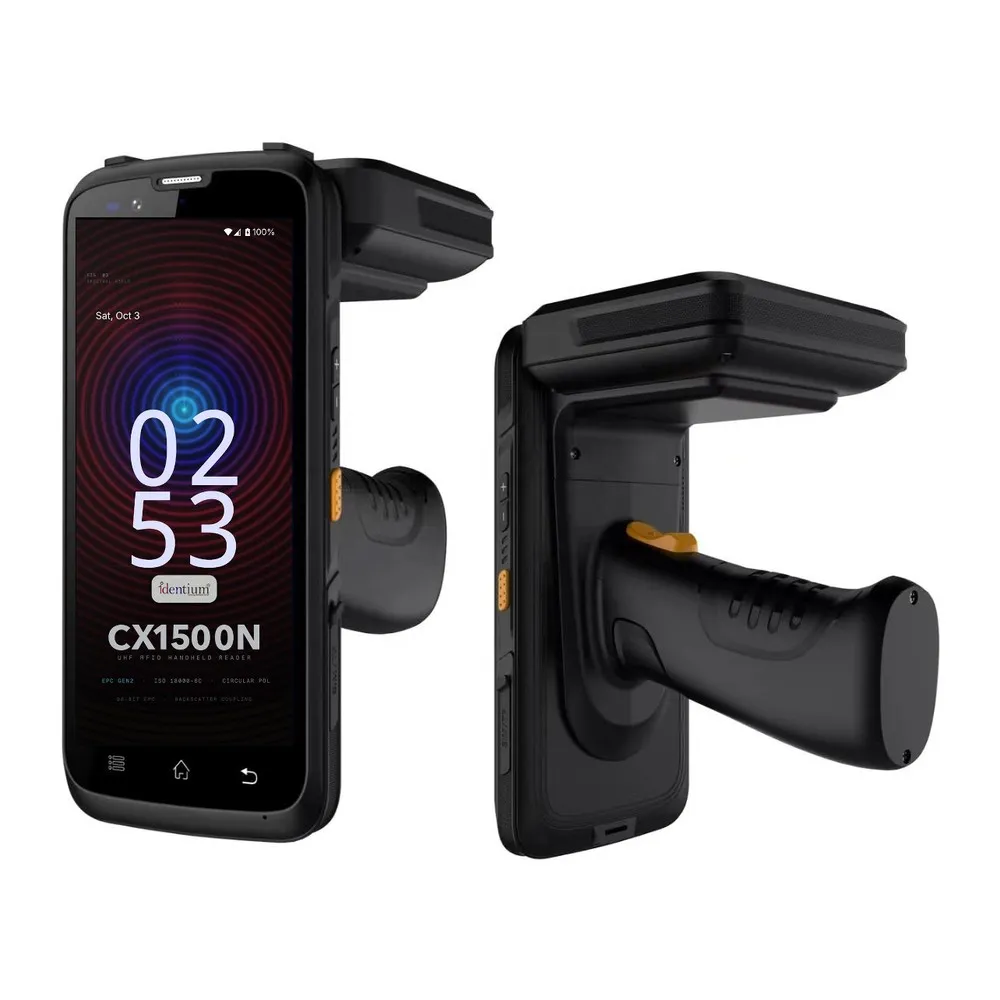
Correction: Both are half true. A phone's NFC radio works at 13.56 MHz over a few centimetres, so it reads NFC and HF tags, cards and stickers but not UHF tags in the 865–868 MHz band. To use a phone for UHF, pair it with a Bluetooth UHF sled such as our ID-SL15 sled reader, or use an Android handheld with a UHF reader built in, such as the CX1500N. The RAIN Alliance describes RAIN readers in consumer handsets as a direction the industry is working towards; until such phones are sold here, a sled or a handheld is the way.
Read more: Can a phone read UHF RFID tags? Sled vs USB-C vs handheld and, for the NFC side, what "NFC tag detected" means on your phone.
4. Makers: "no Indian company makes RFID readers"
Myth: "RFID readers are all imported; nobody in India makes them."
Correction: This line still appears in old question-and-answer pages that assistants quote. Indian companies do supply RFID readers: Identium Tech Solutions, in business in New Delhi since 2010, manufactures RFID products and also trades and imports, so ask us about the origin of a specific model. Identium RFID readers are BIS and WPC approved; each product page shows its own approval. Handhelds, fixed and integrated readers, desktop readers and modules are listed in the Identium RFID catalogue.
Read more: about Identium Tech Solutions and BIS approved RFID readers: why approval matters.
5. Approvals: "RFID tags need BIS certification"
Myth: "Make sure the tags you buy are BIS certified."
Correction: Approvals apply to readers, not to tags. There is no BIS category for passive RFID tags, labels, cards or wristbands, and because they do not transmit on their own they need no WPC ETA either. Treat a "BIS certified" claim on a tag with caution, and check any registration that a reader quotation mentions on the BIS Compulsory Registration Scheme portal, where operative registrations can be searched.
Read more: our certifications and approvals and the WPC ETA and BIS checklist for readers.
6. Tracking: "RFID tracks things like GPS"
Myth: "Put an RFID tag on it and we can see where it is on a map."
Correction: A passive RFID tag has no battery and no position of its own. It answers only when a reader's field reaches it, which the RAIN Alliance puts at a few centimetres to several metres. So an RFID system knows which reader last saw a tag, and when, not where the tag is now. Covering a site means readers at the doors, gates and zones that matter, or staff walking the aisles with handhelds. Active 2.4 GHz tags such as the AT508 (identification range up to 80 m, adjustable in software) and BLE beacons with gateways extend the range, but they still report to receivers that you install, not to satellites.
Read more: passive vs active RFID.
7. Lifespan: "RFID tags expire"
Myth: "RFID tags stop working after a year or two, like a battery."
Correction: A passive tag has no battery to run down. Chip makers rate two things instead: how long stored data is kept (data retention) and how many times the memory can be rewritten (write endurance). For current UHF chips the data sheets give 10 to 20 years and 10,000 to 100,000 writes, depending on the chip. What usually ends a passive tag's life is its housing: a label's adhesive, abrasion, heat or chemicals beyond its rating. Active and BLE tags are different: they last as long as their battery.
Read more: How long do RFID tags last? Lifespan and data retention by chip.
8. Licence: "you need a WPC licence to run RFID"
Myth: "Using UHF RFID needs a spectrum licence from WPC."
Correction: Rule 3 of G.S.R. 853(E) says no licence is required to establish, maintain, work, possess or deal in such low-power equipment in the band, on a non-interference, non-protection and shared basis, provided it meets the technical limits. What the rules do require, in rule 5, is equipment type approval: the reader model needs a WPC Equipment Type Approval (ETA), which its maker or importer obtains. The Department of Telecommunications lists issued ETAs on its Saral Sanchar portal. So the user needs no licence, but should check that the reader model has its ETA.
Read more: how to check a reader's ETA and BIS registration yourself.
9. FASTag: "any UHF reader can charge FASTag tolls"
Myth: "Mount a UHF reader at our gate and we can collect payment from FASTag."
Correction: FASTag is a passive UHF tag; IHMCL describes the national electronic toll programme as RFID to the EPC Gen-2, ISO 18000-6C standards. Reading a FASTag gives you the tag's identity, nothing more. The toll itself moves through banks: a transaction file goes from the toll lane to the plaza's acquirer bank, which passes it through NPCI's clearing and settlement service to the bank that issued the tag, and that bank debits the FASTag account. A reader at a private gate can recognise FASTag vehicles against a list you keep, but taking money requires being part of that acquiring arrangement.
Read more: FASTag and vehicle RFID: how it works, accepting FASTag at a parking lot and FASTag readers at a private warehouse gate.
10. Cost: "RFID is too expensive to put on every item"
Myth: "RFID makes sense for pallets and machines, not for individual products."
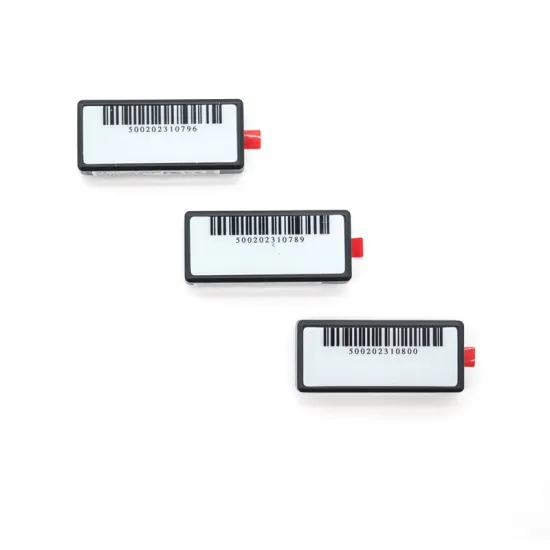
Correction: A passive UHF label is a consumable priced in rupees. Our ID-2044 UHF inlay, label or sticker lists at ₹6 + GST per piece, from a minimum order of 500 pcs. The reader is the larger cost, bought once and used across every tag it reads; the RAIN Alliance puts reading at up to 1,000 items per second. Whether item-level tagging pays back depends on the counting, searching and checking time it saves, which is worth estimating before you buy.
Read more: RFID tag price in India, what an RFID project costs and the RFID ROI calculator.
How to check an RFID claim yourself
- Band and power: read Table IV of G.S.R. 853(E), linked below. It is two pages and settles most arguments about frequency and power.
- A reader's ETA: search the Saral Sanchar list of issued ETAs by number or by make and model.
- A BIS registration: search the BIS Compulsory Registration Scheme portal by the registration number printed beside the Standard Mark on the reader's label.
- Tag life and memory: ask which chip a tag uses and read that chip's data sheet; our tag memory guide explains what to look for.
- Prices: compare like with like, per piece before GST, at the same quantity. Each product page shows its list price and minimum order, or says the price is on request.
Sources
- Gazette of India: G.S.R. 853(E), 10 December 2021, Use of Low Power Equipment in the Frequency Band 865–868 MHz for Short Range Devices (Exemption from Licence) Rules, 2021 (rules 1, 3 and 5; Table IV), accessed 25 October 2026
- Department of Telecommunications, Saral Sanchar portal: list of issued Equipment Type Approvals (self-declaration), accessed 25 October 2026
- Bureau of Indian Standards: Compulsory Registration Scheme public portal, accessed 25 October 2026
- RAIN Alliance: What is RAIN (range, read rate, readers in consumer handsets), accessed 25 October 2026
- IHMCL: FASTag and the national electronic toll collection programme (EPC Gen-2, ISO 18000-6C; how a toll transaction is settled), accessed 25 October 2026
Cite as: India RFID Store (Identium Tech Solutions Pvt Ltd), “10 Things People Get Wrong About RFID in India”, https://www.indiarfidstore.com/rfid-resources/rfid-india-common-misconceptions-band-power-phones-bis, published 25 Oct 2026.
Frequently asked questions
What is the RFID frequency band in India?
What is the maximum power allowed for an RFID reader in India?
Do RFID tags need BIS or WPC approval?
Can a mobile phone read UHF RFID tags?
Does RFID track location like GPS?
Do RFID tags expire?
RFID MythsIndia 865–868 MHzWPC ETABISUHF RFID
Keep reading
More guides

More in Technology explained
- Is RFID Blocking Necessary? An RFID Maker's Honest Guide to E-Passports, Contactless Cards and Wallets in India
- Why Your Zudio, Westside or Decathlon Clothes Carry an RFID Tag, and What Garment Vendors Supply