Why Your Zudio, Westside or Decathlon Clothes Carry an RFID Tag, and What Garment Vendors Supply
Published 22 Oct 20269 min read
Prices checked on 22 Oct 2026 against the catalogue.
Short answer: The small label, swing tag or soft fabric patch with a faint metallic pattern in your new shirt is usually a passive UHF RFID tag. Trent, which runs Westside and Zudio, says its fashion portfolio has moved to RFID-based tracking of merchandise. Decathlon says all of its products carry an RFID tag fitted in the factory. Azorte's newest stores advertise RFID for inventory visibility.
The tag lets a store count stock without scanning barcodes one by one, move cartons faster and, in some stores, bill and guard against theft. It has no battery, is read from a few metres at most, and carries a product code, not your name. None of these retailers is an Identium customer; this article describes only what they have said in public.
We make RFID labels and tags for garments, so we get asked two very different questions about them. Shoppers ask what the tag is and whether it tracks them. Garment makers and exporters ask what the big retailers will want from them. This guide answers both, keeping to what the retailers have published and to what the tags themselves can and cannot do.
What the retailers have said in public
| Retailer | What it has said | Source |
|---|---|---|
| Trent (Westside, Zudio) | "Across the fashion portfolio we have transitioned to RFID based tracking of merchandise." The release calls RFID a material enabler for handling the volumes in its supply chain and for several uses in distribution centres and stores; volume growth in FY25 was over 40% | Trent Q4 and FY25 results release, 29 Apr 2025 |
| Store count on 31 March 2025: 248 Westside and 765 Zudio stores (two of them in the UAE), plus 30 stores across other formats | Same release | |
| Kotak Institutional Equities' reading of Trent's FY2025 annual report: universal RFID tagging and tracking across fashion; RFID across stores and distribution centres; better inventory accuracy, shorter cycle counts and faster inward and outward processing; faster "box-to-floor"; automated stock-takes planned; RFID checkouts being rolled out in phases; and an implementation that involves every stakeholder in the value chain, vendors included | Kotak Securities, India Daily, 19 Jun 2025 | |
| Azorte | The chain's 44th store, at Nexus Elante Mall in Chandigarh, uses RFID and QR-code technology for inventory visibility and assisted shopping, alongside smart trial rooms and self-checkout counters | Franchise India, 27 Jul 2026 |
| Decathlon | Its RFID work started in France in 2008 and became a pillar of strategy in 2014; all of its products now carry an RFID tag fitted in the factory; the tags are read from up to about a metre, hundreds per second and through cardboard; uses include fast checkout, theft protection and simpler, more reliable stocktaking | Decathlon sustainability site |
Two points stand out. First, these are whole-chain programmes: Decathlon fits the tag at manufacture, and Kotak's summary of Trent's annual report says that RFID involves the store, the warehouse and the vendors. Second, the tag is there mainly for stock, not for the till. Checkout and anti-theft uses come on top of an inventory system that already pays for itself in counting time.
What the tag in your clothes actually is
A garment RFID tag is a tiny chip joined to a thin, etched aluminium antenna, laminated into paper, PET film or fabric. In India it works in the licence-exempt UHF band of 865–868 MHz and speaks the EPC Gen2 (ISO 18000-6C) protocol, also known as RAIN RFID. It has no battery: a reader's radio field powers the chip for the moment it answers.
You will find it in one of four places:
- A swing tag or price ticket with an inlay laminated between two layers of card, which comes off with the ticket.
- A printed sticker label on the ticket or the polybag.
- A woven or soft fabric label sewn into a seam, sometimes next to the care label.
- A combined RFID and EAS inlay, where one label serves stock-taking and the shop's existing anti-theft gates.
What the chip stores is an Electronic Product Code (EPC). In retail this is usually a serialised GS1 code: a company prefix, an item reference that identifies the style, colour and size, and a serial number that makes this one shirt different from the next one of the same size. The number lets a reader tell 40 identical T-shirts apart, which a barcode cannot do. Our guide to GS1 SGTIN-96 encoding explains how the number is built.
Why the barcode is still there
Most RFID-tagged garments still carry a printed barcode, often on the same ticket. That is deliberate. The barcode is what a person, a phone or an ordinary scanner can read, so it keeps billing working at any counter without an RFID reader and lets staff check a single item by eye. The RFID tag adds what a barcode cannot do: reading many items at once, without a line of sight, and telling two identical items apart by their serial numbers. Retail programmes therefore encode the same product identity in both, which is why our GS1 encoding guide starts by explaining how an EPC relates to the barcode on the same label.
Why the store bothers: what RFID does for a chain the size of Zudio
A store with thousands of garments in dozens of sizes cannot count stock often by scanning barcodes one at a time. With RFID, a staff member walks the floor with a handheld reader and the tags answer in bulk. The public statements above point to five uses:
- Stock counts. Faster cycle counts and better inventory accuracy (Trent, as summarised by Kotak); simpler, more reliable stocktaking (Decathlon).
- Receiving and dispatch. Faster inward and outward processing at distribution centres and a quicker "box-to-floor", because cartons can be read without opening them.
- Replenishment. Knowing which size is missing on the floor while it is still in the back room.
- Checkout. Decathlon describes very fast checkouts; Kotak's summary says Trent is rolling out RFID checkouts in phases; Azorte has self-checkout counters.
- Loss prevention. Decathlon says items are protected against theft; the same tag can be read at the exit.
The scale explains the economics: Trent reported volume growth of over 40% in FY25 across more than a thousand stores. Our RFID self-checkout guide and RFID loss-prevention guide cover the checkout and exit uses in detail.
Is the tag tracking you after you leave the store?
Short answer: no, and here is why, from someone who makes these tags.
- No battery, no GPS, no transmitter of its own. The tag only reflects a reply while a reader's field powers it. Out of range of a reader, it is inert.
- Short range. Decathlon gives about a metre for its tags. Our own garment labels list 1–3 m when on a folded garment and 2–5 m in free air. Nobody reads them from across a street.
- A product code, not a person. The tag says which item it is. Whether a retailer links that code to your bill or loyalty account is a matter for the retailer's privacy policy, and you can ask them.
If the tag still bothers you, removing it is easy. Swing tags and price stickers come off with the ticket, and a separate sewn-in RFID patch can be cut out like any label without harming the garment. If the tag is woven into the care label itself, keep the care label for the washing instructions. Decathlon's site mentions tags built into the yarn of the fabric as a future idea; it does not describe that as current practice.
What garment vendors are asked to supply
For a factory, an exporter or a private-label supplier, a retailer's RFID programme turns into a line in the purchase order. We cannot tell you what Trent, Azorte or Decathlon put in their vendor manuals, and we make no claim about them. What we can give you is the set of questions every RFID tagging programme raises, so that you ask your buyer the right ones:
- Get the tagging specification in writing: the format (swing tag, label, woven or fabric), its placement on the garment or ticket, the inlay or chip the buyer accepts, and whether the RFID tag must also work with EAS gates.
- Confirm the encoding: which EPC scheme and filter value, whose company prefix (yours or the retailer's), and how serial numbers are allocated so that no two items share one.
- Decide how you will encode: print and encode in-house on an RFID printer-encoder, or buy rolls pre-encoded to your number range. Our RFID printer price guide compares the options.
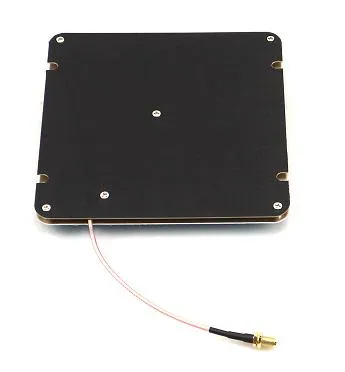
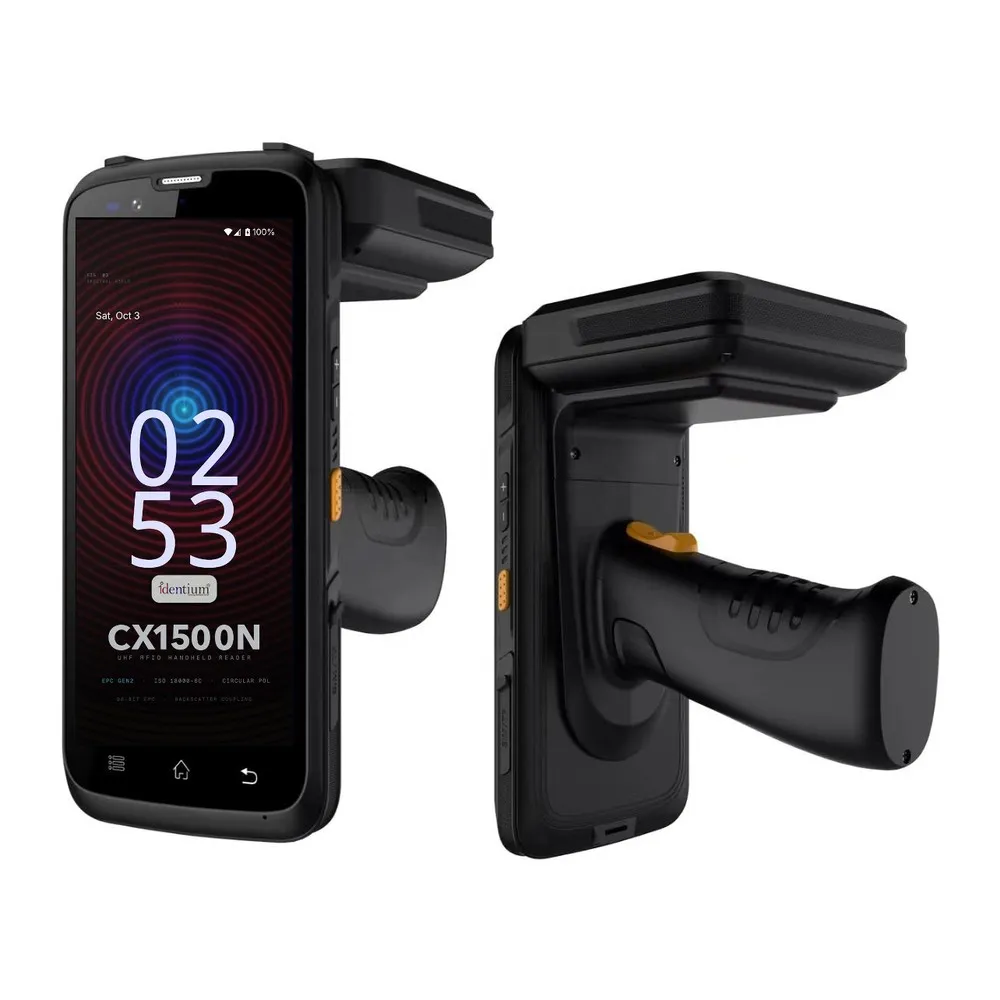
- Check every carton before it ships: a read at the packing table or a short tunnel confirms that the count in the carton matches the packing list. A near-field antenna (₹12,000 + GST) reads tags placed on or close to it, which suits a packing bench; a CX1500N handheld reader (₹58,000 + GST) lets a supervisor audit cartons anywhere.
- Get a sample signed off before bulk: ask whether the buyer keeps an approved-inlay list and have the sample read on the buyer's own system.
Our apparel RFID implementation guide covers the retailer side, and the RFID apparel and fashion retail system page shows how tags, readers and software fit together. Exporters to the US should also read our note on the Walmart RFID mandate, and exporters to the EU our guide to the Digital Product Passport.
Garment tag formats in our catalogue, and what they cost
All of these are passive UHF tags for India's 865–868 MHz band, sold at a minimum order of 500 pcs. Read ranges are the listed figures and depend on the reader, antenna and how the garment is folded.
| Format | Size and listed read range | Best for | Price |
|---|---|---|---|
| Clothing label ID-5030-R6 | 50 × 30 mm, printable face; 2–5 m in free air, 1–3 m on a folded garment; GS1 SGTIN-96 supported | Price tickets and carton labels printed in-house | ₹8 + GST |
| Garment tag 1570-U8 | 15 × 70 mm; adhesive, sewn in or as a hang-tag insert; 1–4 m on a garment | Narrow placements and swing-tag inserts | ₹8 + GST |
| Clothing tag ID-1470-U8 | 14 × 70 mm; 1–4 m on folded garments; GS1 SGTIN-96 available | Folded stock on shelves | ₹6 + GST |
| Apparel tag ID-3050 U8 | 30 × 50 mm, printable face; 2–5 m free air, 1–3 m on folded fabric | Labels printed with size and price | ₹6 + GST |
| Woven RFID label ID-4015-U8 | Woven fabric label with an embedded inlay; up to 6 m listed | Sewn-in labels that stay with the garment | ₹8 + GST |
| Soft fabric label ID-3050-U9 | 30 × 50 mm soft fabric; up to 8 m listed | Care-label style placement | ₹7 + GST |
| UHF + EAS dual inlay ID-6535-U8 | 65 × 35 mm; one inlay for RFID and EAS gates | Stores keeping their existing anti-theft gates | ₹7 + GST |
| RFID hang tag IDTS-HT11037 | Paper swing tag with a laminated UHF inlay; 110 × 37, 80 × 50 or 60 × 40 mm, other sizes to order | Branded swing tags | price on request |
The whole range is under UHF RFID inlays and labels. If you are matching a buyer's specification, send it to us with a sample request and we will tell you which format fits, or request samples to test on your own garments.
Sources
All fetched on 22 October 2026. None of the retailers named in this article is an Identium customer.
- Trent Limited, 29 April 2025: Trent announces Q4 and FY25 results (press release, PDF)
- Kotak Institutional Equities, India Daily, 19 June 2025: Trent, FY2025 annual report analysis (PDF; secondary source for the annual report)
- Franchise India, 27 July 2026: Azorte opens first Chandigarh store
- Decathlon: Product traceability and RFID technology at Decathlon
Frequently asked questions
Why is there an RFID tag in my Zudio or Westside clothes?
Can the RFID tag in my clothes track me after I leave the store?
Should I remove the RFID tag after buying clothes?
Does Decathlon put an RFID tag on every product?
How much does an RFID clothing tag cost in India?
What do garment suppliers need to RFID-tag clothes for a retailer?
Apparel RFIDRetailUHF RFID LabelsGarment VendorsConsumer Guide
Keep reading
More guides
More in Technology explained
- How Far Will My UHF RFID Tag Read? Link Budget Explained for India
- Will RFID Tags Made in India Work in Europe, the UK, the Gulf or Africa? The ETSI 865-868 MHz Compatibility Guide
- RFID Data Security in India (2026): Is RFID Safe? Cloning, Skimming & Encryption Explained