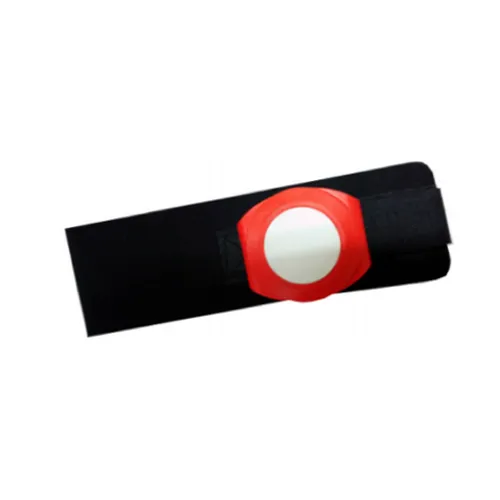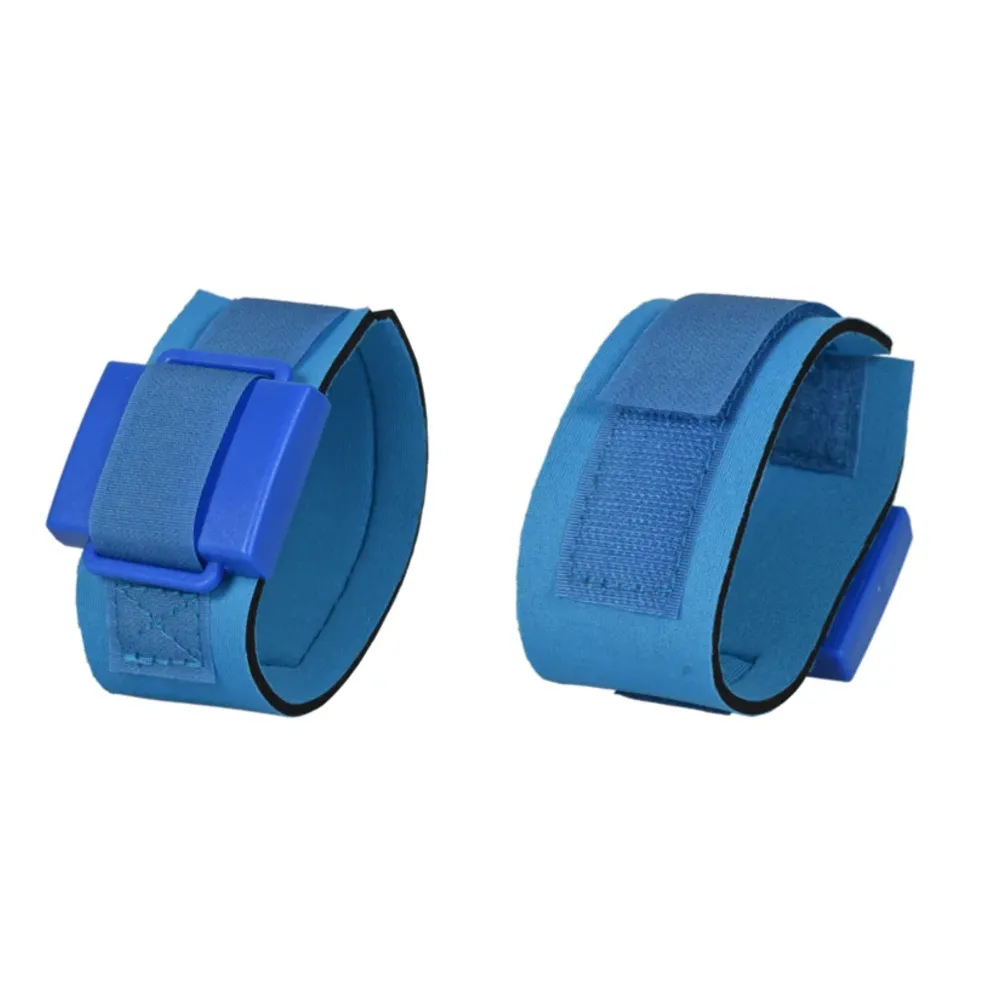
IDTS-RTB5038
Reusable UHF RFID Timing Band IDTS-RTB5038 (Wrist & Ankle, 860–960 MHz)
- Frequency: 860–960 MHz
- Range: Up to 6 m…
₹299 + GST
Min. order 100 pcs
Shop by category
UHF RFID chip timing for running, cycling, duathlon and triathlon events: the RTUS timing system, a per-participant timing service, tagged race bibs, shoe tags and labels. For race organisers, timing companies, schools and sports academies.
Buying guide ↓Sold by India RFID Store, the online catalogue of Identium Tech Solutions Pvt Ltd, an RFID manufacturer in New Delhi, India, in business since 2010.
8 products · from ₹25 + GST
IDTS-RTB5038
₹299 + GST
Min. order 100 pcs₹3,50,000 + GST
Per piece₹30 + GST
Min. order 500 pcsNo products match that filter. Ask us for a custom option.
| Product | Price, excl. GST | Min. order | Frequency | Read range |
|---|---|---|---|---|
| Reusable UHF RFID Timing Band IDTS-RTB5038 (Wrist & Ankle, 860–960 MHz)IDTS-RTB5038 | ₹299 + GST | 100 pcs | 860–960 MHz | Up to 6 m… |
| Identium Race Timing Solution | ₹3,50,000 + GST | 1 pc | – | – |
| RFID Race Timing Services | ₹150 + GST per participant | 1 pc | 865–868 MHz | – |
| RFID Race timing systemRTUS | ₹35,00,000 + GST | 1 pc | 865–868 MHz | – |
| RFID Marathon Bibs | ₹30 + GST | 500 pcs | – | – |
| UHF High-Performance Race Timing Label RT6-PRT6-P | ₹30 + GST | 500 pcs | – | – |
| Battery-Operated RFID Race Timing Tag (30–40 ft Range) | ₹300 + GST | 500 pcs | – | 30–40 ft |
| RFID Race Timing Shoe TagIDTS-LSTH3 | ₹25 + GST | 500 pcs | 865–868 MHz | – |
Tag each participant
Give every entrant a chip-tagged bib, an RT6-P timing label or a shoe tag, and link its tag number to that athlete's registration.
Lay the timing mats
Place mat antennas across the road at the start, the finish and any split points, and connect each set of mats to a multi-port UHF reader.
Capture crossings
As people pass over a mat, the reader picks up their tags without anyone stopping or holding up a chip, and sends each read with its timestamp to the timing software.
Publish results
The software works out chip and gun times along with splits, ranks finishers within their categories, and lets you share or export results when the race closes.
Bib and athlete tags
Numbered marathon bibs with a UHF chip inside, the RT6-P timing label for organisers who handle bib printing themselves, a disposable shoe-lace tag, and the UW01 silicone wristband for events where a band suits better than a bib.
| Product | List price | Min. order |
|---|---|---|
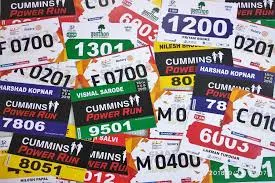 RFID Marathon Bibs | ₹30 + GST | 500 pcs |
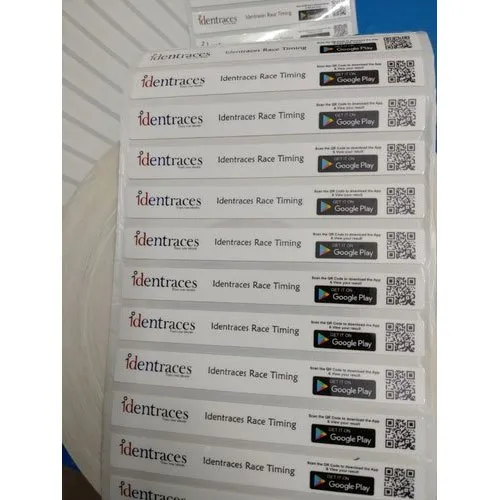 UHF High-Performance Race Timing Label RT6-P | ₹30 + GST | 500 pcs |
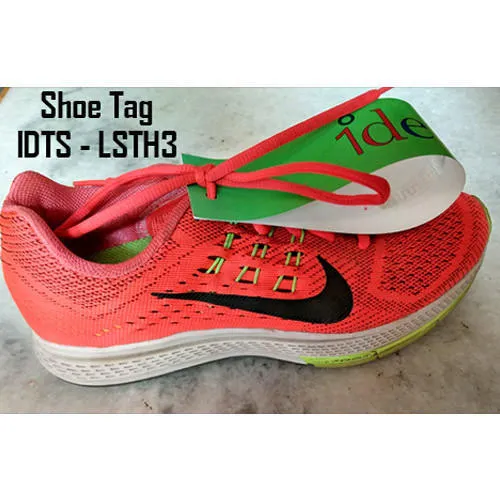 RFID Race Timing Shoe Tag | ₹25 + GST | 500 pcs |
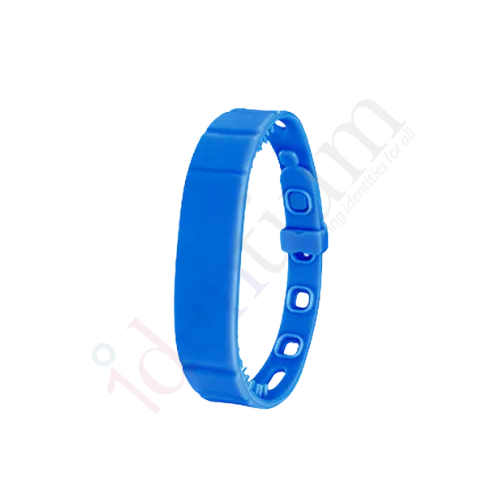 UW01 UHF RFID Wristband | ₹275 + GST | 500 pcs |
Mat antennas
Floor mats laid across the course at start, split and finish lines. Choose the 6 dBi IDTS-UMAT mat or the 8.5 dBi ID-ANT-85CP mat antenna.
| Product | List price | Min. order |
|---|---|---|
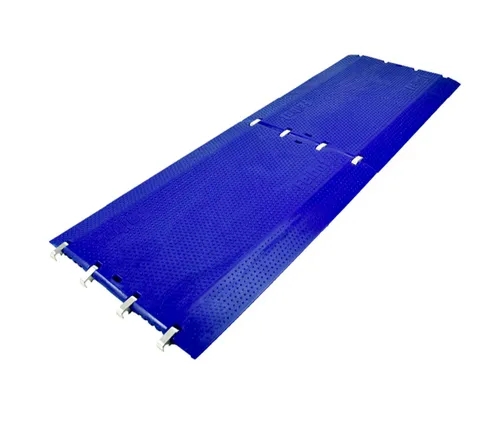 RFID UHF Mat Antenna – Race Timing System | ₹2,75,000 + GST | 1 pc |
 UHF RFID Mat Antenna ID-ANT-85CP (8.5 dBi) | ₹2,45,000 + GST | 1 pc |
Timing reader
The IHZ4 4-port UHF reader, built on the Impinj E710 chip, drives the mats at each timing point and passes every tag read on to the timing software.
| Product | List price | Min. order |
|---|---|---|
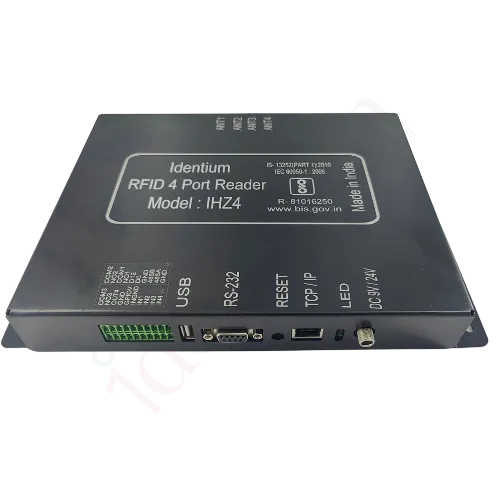 UHF IHZ-4 RFID Multi Port Reader – Impinj E710 | ₹55,000 + GST | 1 pc |
Complete systems and managed timing
The RTUS race timing system for organisers who stage events regularly, the Identium race timing solution package, or a timing service charged per participant for a one-off race.
| Product | List price | Min. order |
|---|---|---|
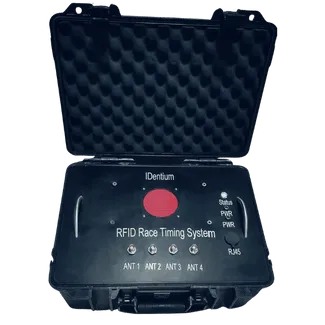 RFID Race timing system | ₹35,00,000 + GST | 1 pc |
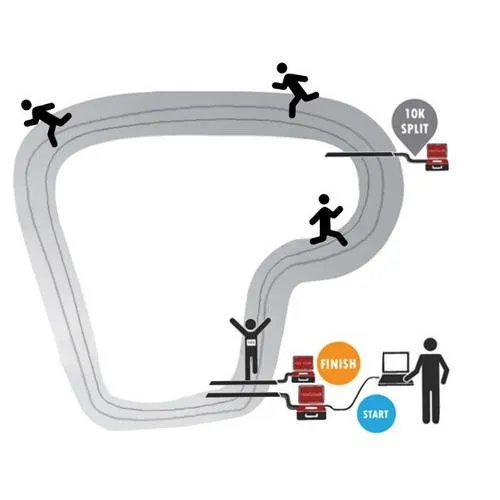 Identium Race Timing Solution | ₹3,50,000 + GST | 1 pc |
 RFID Race Timing Services | ₹150 + GST | Per participant |
Hardware sold by India RFID Store, the online catalogue of Identium Tech Solutions Pvt Ltd, New Delhi. Prices are catalogue list prices before GST. Software and installation are quoted per project.
Software
The mats and readers capture tag reads; RaceFlow Pro, the timing software described on IdentiumOne, turns them into results. It covers event and race setup, categories and age groups, athlete registration with tag assignment, split points, a live tracking dashboard, handheld scanning for manual checks and result export, with an on-site relay connecting the readers at each timing point. For screenshots, the full feature list and a live demo, see the race timing page on IdentiumOne.
RFID race timing software and live results demo on IdentiumOneBuying guide
Quick answer: a timed race needs one UHF tag per participant, either a bib with a built-in chip (₹30 + GST per bib) or a shoe tag (₹25 + GST), mat antennas across every timing line (the IDTS-UMAT mat system is ₹2,75,000 + GST), a UHF reader at each timing point and timing software. Or book the timing service, charged per participant.
If finishers will use their certificates to enter Procam races such as the Tata Mumbai Marathon, Procam's timing recognition guidelines ask for the tag fixed to the bib before distribution, split mats by distance (3 for a full marathon, 2 for 25 km and the half marathon, 1 for 10 km and 5 km) and provisional results within 12 hours of the race close; the transition period ends on 31 March 2027. Details are in our guide to Procam timing certificate rules.
Every participant carries a UHF RFID tag, in the bib, on the shoe or on a label, and antennas at each timing point record the tag as the athlete crosses. Nobody reads stopwatches or writes down bib numbers, and every time is tied to one entry.
A timed bib is a race number with a built-in UHF RFID timing chip. Mat antennas at the start, splits and finish read the chip as the runner crosses, giving each runner a chip time. A bib without a chip is not timed. Our RFID marathon bibs with timing chip cost ₹30 + GST each; a disposable shoe timing chip costs ₹25 + GST.
The Automated RFID Race Timing System RTUS is for timing companies, academies and run series that time events through the season. It is a UHF RFID timing system supplied with international standard bibs and UHF tags.
The RFID Race Timing Service includes the timing system, tagged bibs, antennas, readers and machinery, and is charged per head. It suits corporate runs, college meets and one-off marathons.
The UHF RFID Race Timing Solution is scoped around your sport, course and timing points, with tagged bibs and results on the event website.
| Tag | Key facts | Best for |
|---|---|---|
| UHF RFID Marathon Bib | Pinned on the chest; Impinj Monza R6 chip in a Tyvek or polyester bib, printed in full colour | Runs where you want the number and the chip in one piece |
| Shoe Tag IDTS-LSTH3 | Looped on the shoe lace or clipped to the bib; 3–5 g, IPX5, disposable | Courses timed with ground mats |
| Race Timing Label RT6-P | Fixed to the bib or kit; can be printed and pre-encoded | Organisers who print their own race numbers |
| Battery-Operated Race Timing Tag | Battery operated; listed range 30–40 ft; −20 °C to 50 °C | Wide timing lines and fast fields such as cycling |
Where the tag is worn decides how it is read and whether the certificate meets Procam's bib rule:
| Tag | Where it is worn | Read point | Reusable? | Price | Meets Procam's bib rule? |
|---|---|---|---|---|---|
| Bib tag | In the race number on the chest | Mats across the line, or antennas at the side | No, one bib per runner per event | ₹30 + GST | Yes |
| Shoe tag | Looped on the shoe lace | Mats, close to the ground | No, disposable | ₹25 + GST | No, unless clipped to the bib before kit handover |
| UHF wristband | On the wrist | Antennas at wrist height; the body shortens the read range | Yes, sealed silicone | ₹615 + GST | No |
| Ankle strap | Strap around the ankle, used in triathlons | Mats, close to the ground | Usually issued and collected after the race | Not listed in the store | No |
The Procam column is our reading of its guidelines, which bar loose chips handed to runners; see the Procam timing certificate rules for the detail.
The RFID UHF Mat Antenna IDTS-UMAT uses detachable, foldable polyurethane mats rated for 865–868 MHz, so one set can be resized for a narrow start or a wide finish. The 8.5 dBi UHF RFID Mat Antenna ID-ANT-85CP covers both the 865–868 MHz and 902–928 MHz bands. A timing point must cover the full width of the course, so measure each start, split and finish before deciding how many mats you need. More options are in UHF RFID antennas.
Planning a marathon whose finishers need timing certificates for entry to major races? Read the timing certificate rules for RFID bibs and split mats, and the full RFID race timing organiser's guide.
IDBOT
Product finder & instant answers