Top 5 RFID Applications in India 2026 — Use Cases & Case Studies
Published 6 Apr 2026Updated 24 Nov 20266 min read
Written and maintained by the RFID team at Identium Tech Solutions Pvt Ltd, New Delhi (India RFID Store).
Short answer: As of September 2026, the five RFID applications delivering the clearest measured returns in India are warehouse and logistics, item-level retail apparel, hospital patient safety and asset tracking, sports and event management, and vehicle and pedestrian access control. All five run on the licence-exempt 865–868 MHz UHF band, or on 13.56 MHz HF where a close, deliberate read is safer, and most pay back within 9–24 months when the tag, reader and workflow are matched to the job.
RFID has moved well beyond toll booths and library books. In India it now drives inventory accuracy in fashion retail, patient safety in hospitals, timing at race events and throughput at logistics warehouses. Below are the five most impactful applications as of September 2026, each with the problem it solves, the hardware involved and what to measure in a pilot.
1. Warehouse and logistics management
The problem: manually scanning thousands of SKUs at dock doors, inaccurate inventory counts and stocktakes that take days.
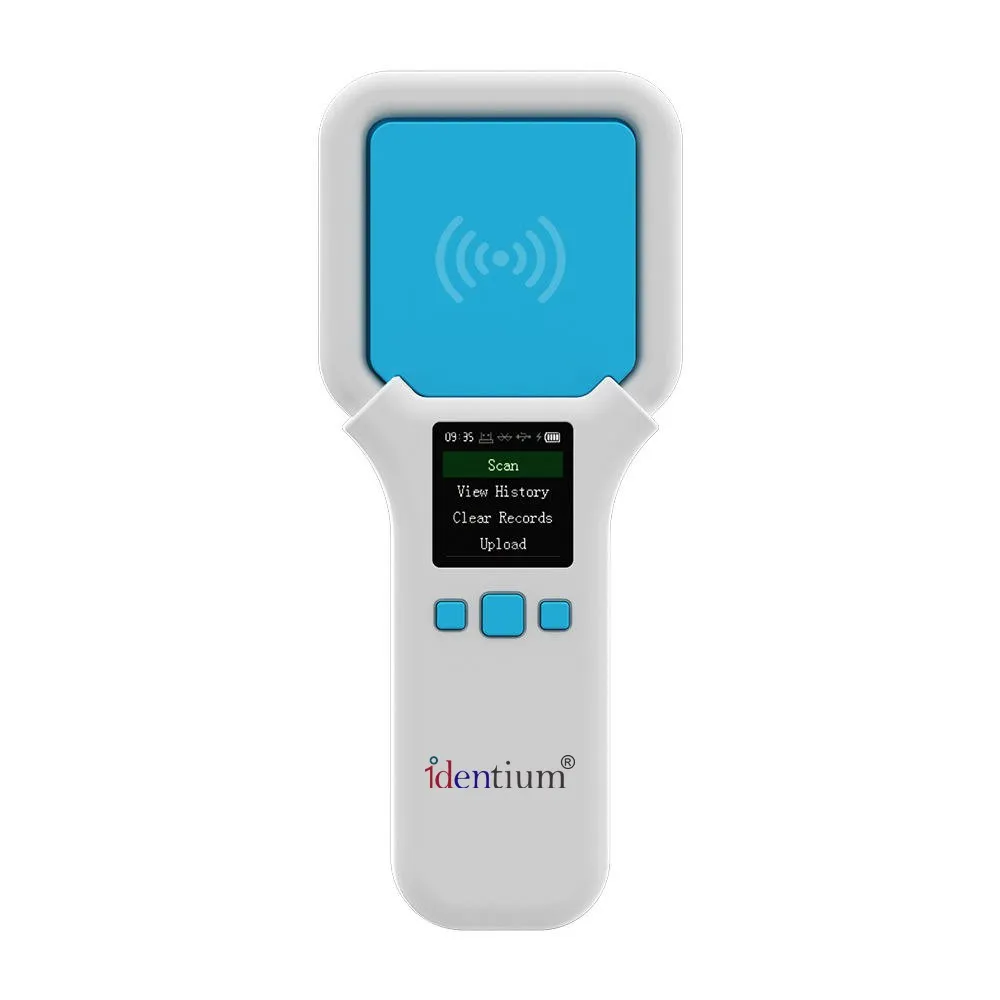
The RFID solution: 4-port UHF readers at dock doors read 200+ items per second as pallets move through, and handheld readers complete a full warehouse stocktake in hours rather than days. In 2026 the cycle-count tool of choice is increasingly a Bluetooth sled such as the ID-SL15 UHF sled reader, which pairs with the phone or tablet your WMS app already runs on instead of a dedicated rugged terminal.
What to measure in a pilot:
- Inventory accuracy against a full manual count
- Receiving time per pallet or truck
- Hours per full stocktake
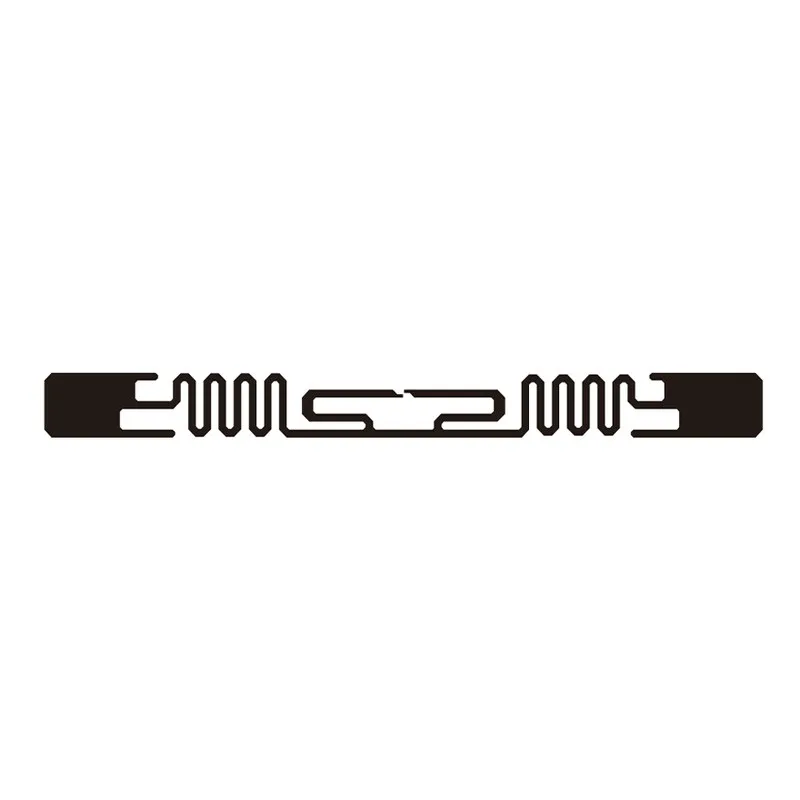
Hardware used: 4-port UHF readers, handheld readers and UHF labels.
2. Retail apparel inventory
The problem: phantom inventory, stockouts and manual stocktakes that close the store for days.
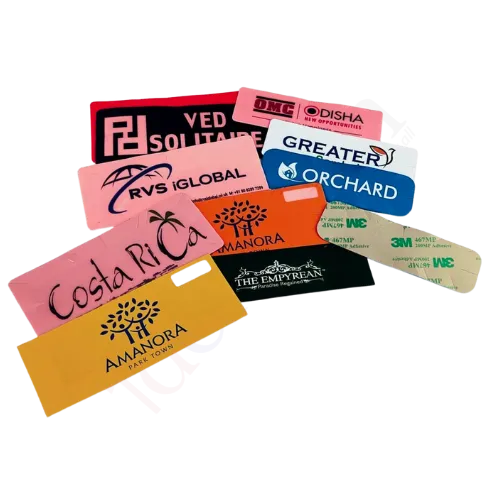
The RFID solution: each garment carries a UHF RFID hangtag or label, and staff count the entire store in about 20 minutes with a handheld reader. Real-time replenishment alerts prevent stockouts.
Indian garment exporters are also tagging at source, because overseas buyers such as Walmart now require item-level RAIN RFID tagging across apparel and an expanding list of general merchandise categories. The Walmart RFID mandate guide for Indian suppliers covers the tag and encoding rules.
What to measure in a pilot:
- Item-level inventory accuracy by store
- Hours per full-store count, and whether the store has to close for it
- Stockouts on the shop floor before and after tagging
Hardware used: UHF RFID hangtags, handheld readers and RFID exit gates.
3. Hospital patient safety
The problem: infant security in maternity wards, medical equipment going missing in large hospitals, and patient ID errors that lead to medication mistakes.
The RFID solution: HF RFID wristbands for mother–baby matching and anti-abduction systems; UHF asset tracking for high-value equipment such as infusion pumps, monitors and wheelchairs; and RFID patient ID that confirms the right patient at the bedside before a dose is given.
What to measure in a pilot:
- Time staff spend finding a pump, monitor or wheelchair
- Wristband checks completed at the bedside before a dose
- Infant security: an unauthorised exit of a tagged baby should raise an alarm at the ward door, so test the alarm at every exit
Hardware used: hospital wristbands and the infant protection system.
4. Sports and event management
The problem: marathon timing accuracy, long queues at event entry and cash handling at food stalls.
The RFID solution: RFID timing chips give split-second race results for thousands of runners at once. Cashless RFID wristbands cut queues at concessions and gates, and the same wristband doubles as the access credential for VIP zones and re-entry.
What to measure at an event:
- Missed or late reads at each timing mat
- Entries per minute at each gate lane
- Time per cashless tap at the stalls
Hardware used: race timing systems and event wristbands.
5. Access control and security
The problem: unauthorised entry, tailgating at turnstiles and manual visitor registers.
The RFID solution: UHF readers at vehicle gates identify cars by a windshield tag, with no need to stop and present a card. HF cards handle pedestrian access with anti-passback, and long-range UHF covers multi-lane vehicle plazas.
This is the same UHF windshield-tag principle behind FASTag and, since May 2026, behind NHAI's first barrier-free multi-lane free-flow (MLFF) toll gantries. The MLFF RFID gantry guide explains how the gantry-plus-camera design translates to private campuses and townships.
What to measure in a pilot:
- Vehicles per hour through each lane, against the manual barrier
- Gate events logged automatically, with no paper register
- Visitor badges issued and returned
Hardware used: gate readers, UHF windshield tags, UHF RFID cards and RFID locks.
Summary: top 5 RFID applications in India and what to measure
| Application | What gets tagged | What to measure |
|---|---|---|
| Warehouse and inventory | Pallets, cartons, bins | Stock-count hours, inventory accuracy, receiving time |
| Retail and apparel | Every garment at item level | Count hours, item-level accuracy, stockouts, shrinkage |
| Manufacturing WIP | Carriers, fixtures, tooling | WIP losses, time spent locating jobs and tools |
| Healthcare assets | Pumps, monitors, wheelchairs | Equipment search time, bedside wristband checks |
| Events and access | Attendee wristbands | Entries per minute per lane, missed timing reads, cashless spend |
What changed in 2026
- Barrier-free tolling went live (May–June 2026). NHAI switched on India's first multi-lane free-flow (MLFF) plaza at Chorayasi on the Surat–Bharuch stretch of NH-48 in May 2026, then Daulatpura on the Delhi–Jaipur section of NH-48 and Gharaunda on NH-44 in June 2026. The gantries read the FASTag UHF windshield tag at speed and back it up with number-plate cameras. In December 2025 the Road Transport Minister told the Rajya Sabha the target is barrier-free tolling across national highways by the end of 2026. For private campuses, gantry-mounted UHF readers plus ANPR is now the reference design for vehicle access control.
- A new generation of tag chips (January 2026). NXP released UCODE X in January 2026, claiming the industry's best read and write sensitivity and lowest power draw on the open GS1 Gen2v2 standard, while Impinj's M800 series (M830 and M850) offers about 1.5 dB better read sensitivity than the M700 generation. In practice that means smaller labels that still read on dense apparel racks and liquid-filled cartons. The UCODE X vs Impinj M800 chip guide explains when the chip choice actually matters.
- Tag chip volumes reset (reported April 2026). The RAIN Alliance reported 42.7 billion UHF tag chips shipped worldwide in 2025, down from a record 52.8 billion in 2024. It attributes the dip to the semiconductor inventory cycle and US tariff uncertainty rather than slowing adoption, and notes the market is still about 50% larger than four years earlier. For Indian buyers, chip supply is not the constraint in 2026; matching the right tag and reader to the application is.
- DPDP Rules put biometric attendance on a compliance clock (November 2025). MeitY notified the Digital Personal Data Protection Rules, 2025 in November 2025 with phased obligations, and full compliance on consent, privacy notices and data-principal rights falls due by May 2027. Fingerprint and face attendance now carries notice and safeguard duties that a plain RFID card or UHF vehicle tag does not, which is pushing offices and factories back towards RFID for access and attendance. See the DPDP Rules and RFID attendance guide.
- New hardware in the catalogue (checked September 2026). The store now lists the ID-SL15 Bluetooth 5.2 sled reader (up to 15 m read range, 200+ tags per second, IP54) for stocktakes and asset audits from a paired phone or tablet; a wide range of on-metal UHF tags, from ceramic hard tags to flexible on-metal labels for tooling, IT assets and steel racking; and passive UHF and NFC temperature sensor tags for cold-chain, pharma and blood-bank monitoring.
Getting started
India RFID Store supplies the readers, tags, labels, wristbands, antennas and locks used in all five of these application areas. Start with the RFID readers and RFID tags ranges, use the RFID ROI calculator for a first payback estimate, or send your application details for a quote.
Related guides
Frequently asked questions
How much does an RFID system cost in India?
How long does it take to deploy RFID in a warehouse or store?
What is the difference between HF and UHF RFID, and which should I use?
Which RFID tags work on metal surfaces and liquid-filled products?
Do RFID readers need WPC or BIS approval in India?
Which RFID application pays back fastest in India?
RFID ApplicationsIndia2026
Cite as: India RFID Store (Identium Tech Solutions Pvt Ltd), “Top 5 RFID Applications in India 2026 — Use Cases & Case Studies”, https://www.indiarfidstore.com/rfid-resources/rfid-applications-india-2026, updated 24 Nov 2026.
Keep reading
More guides
More in Industries & use cases
- RFID Tags for Trees and Nursery Plants in India
- RFID Fuel Automation: Vehicle Tags at Petrol Pumps, India
- RFID Tool Tracking in India: Tool Cribs, MRO and FOD
- RFID Surgical Instrument Tracking: CSSD and Autoclave Tags
- RFID for IT Asset Tracking in India: Laptops, Servers, Racks