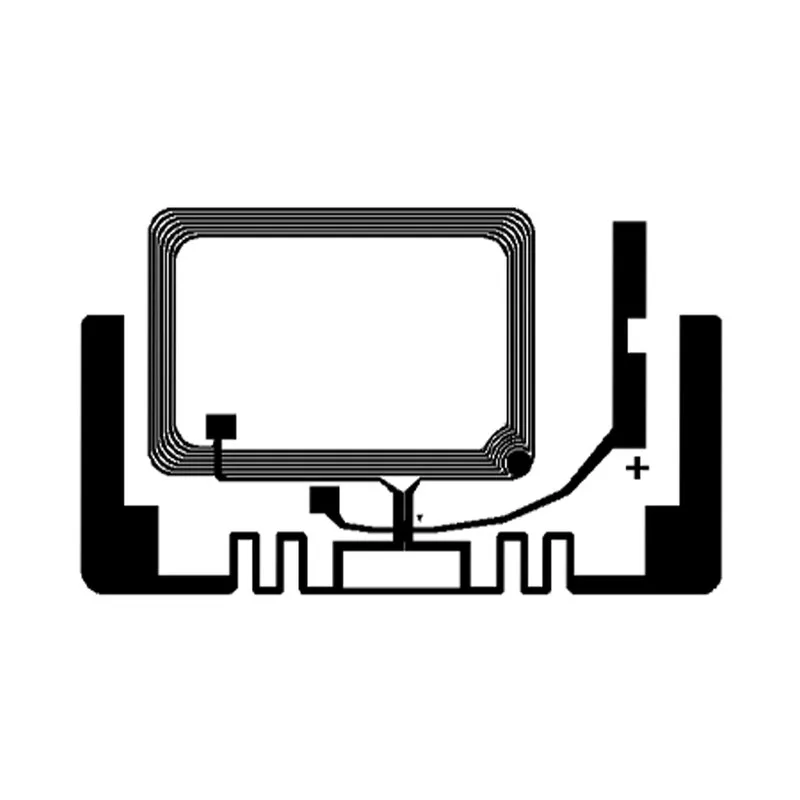
ID-SE-AS3213T
UHF Passive RFID Temperature Sensor Label ID-SE-AS3213T (94 × 20 mm)
- Range: Up to 6 m listed
₹45 + GST
Min. order 500 pcs
Shop by category
Temperature sensor tags that return a reading along with their RFID ID: a battery-free UHF sensor label for quick checks with a UHF reader, and an NFC logger label that keeps a temperature history for cold-chain cartons.
Buying guide ↓Not sure which one fits? Try the RFID tag finder →
Sold by India RFID Store, the online catalogue of Identium Tech Solutions Pvt Ltd, an RFID manufacturer in New Delhi, India, in business since 2010.
2 products · from ₹45 + GST
ID-SE-AS3213T
₹45 + GST
Min. order 500 pcsID-SE-FM13DT160
₹45 + GST
Min. order 500 pcsNo products match that filter. Ask us for a custom option.
RFID solutions using RFID Temperature Sensor Tags & Loggers
Buying guide
A standard RFID tag tells you which item it is on. A sensor tag also tells you its temperature, so you can check a carton, tote or sample without opening it or taking a separate probe reading. The two tags in this range work differently: one gives the temperature at the moment you scan it, the other keeps a record of the journey.
The UHF temperature sensor label ID-SE-AS3213T is a battery-free 94 × 20 mm label on the AS3213T sensor chip. A UHF reader powers it and gets back the tag ID with the current temperature, so one handheld can check many cartons on a rack or at receiving.
The NFC temperature logger label ID-SE-FM13DT160 is a 77 × 44 mm label on the FM13DT160 sensor chip with 160 kbit of memory. It records temperature data on the label itself, so the history travels with the goods and is read out at close range on arrival.
| Feature | ID-SE-AS3213T (UHF) | ID-SE-FM13DT160 (NFC) |
|---|---|---|
| Interface | UHF, EPC Class 1 Gen2 / ISO 18000-6C | NFC, 13.56 MHz |
| What it reports | Temperature at the moment it is read | Logged temperature data for later readout |
| How it is read | UHF reader, from a distance, many tags per pass | NFC reader or phone, a few centimetres, one tag at a time |
| Memory | 192-bit EPC | 160 kbit |
| Size | 94 × 20 mm | 77 × 44 mm |
| Best for | Spot checks in cold rooms, stores and receiving bays | Proving the temperature history of a shipment |
Both tags in this range are temperature sensors. Our guide to RFID sensor tags for temperature, humidity and strain explains how battery-free sensor tags work, what is proven today and what to ask before you buy any sensor tag.
Typical uses are pharma and vaccine cold chain, chilled and frozen food, dairy, sample storage and condition checks on temperature-sensitive equipment. Before a rollout, trial a small batch with your own reader in the actual cold room, store or vehicle.
For the UHF label, use a handheld such as the CX1500N Android UHF handheld for walk-through checks, or a reader from UHF desktop readers at a receiving bench. For the NFC logger, an NFC-enabled phone with a compatible app or a reader from HF and NFC readers is enough. To plan a full setup, read our cold chain temperature monitoring guide.
IDBOT
Product finder & instant answers