125 kHz LF RFID Card (Plain White PVC)
₹10 + GST
Min. order 500 pcs
Shop by category
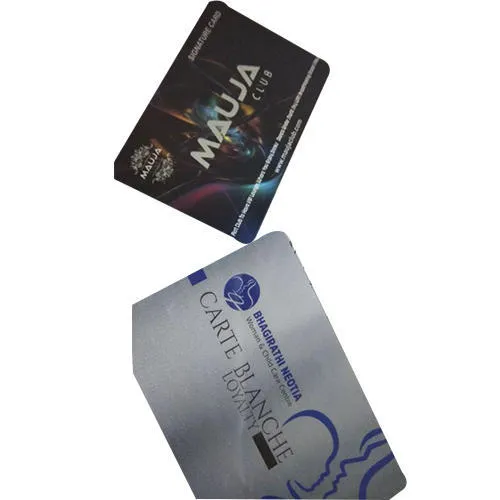
125 kHz proximity cards for attendance machines, door access and visitor passes: plain white PVC LF cards for bulk issue, and printed CR80 RFID ID cards personalised for your staff, students or members.
Buying guide ↓Not sure which one fits? Try the RFID tag finder →
Sold by India RFID Store, the online catalogue of Identium Tech Solutions Pvt Ltd, an RFID manufacturer in New Delhi, India, in business since 2010.
3 products · from ₹10 + GST
₹10 + GST
Min. order 500 pcs₹30 + GST
Min. order 500 pcsNo products match that filter. Ask us for a custom option.
Buying guide
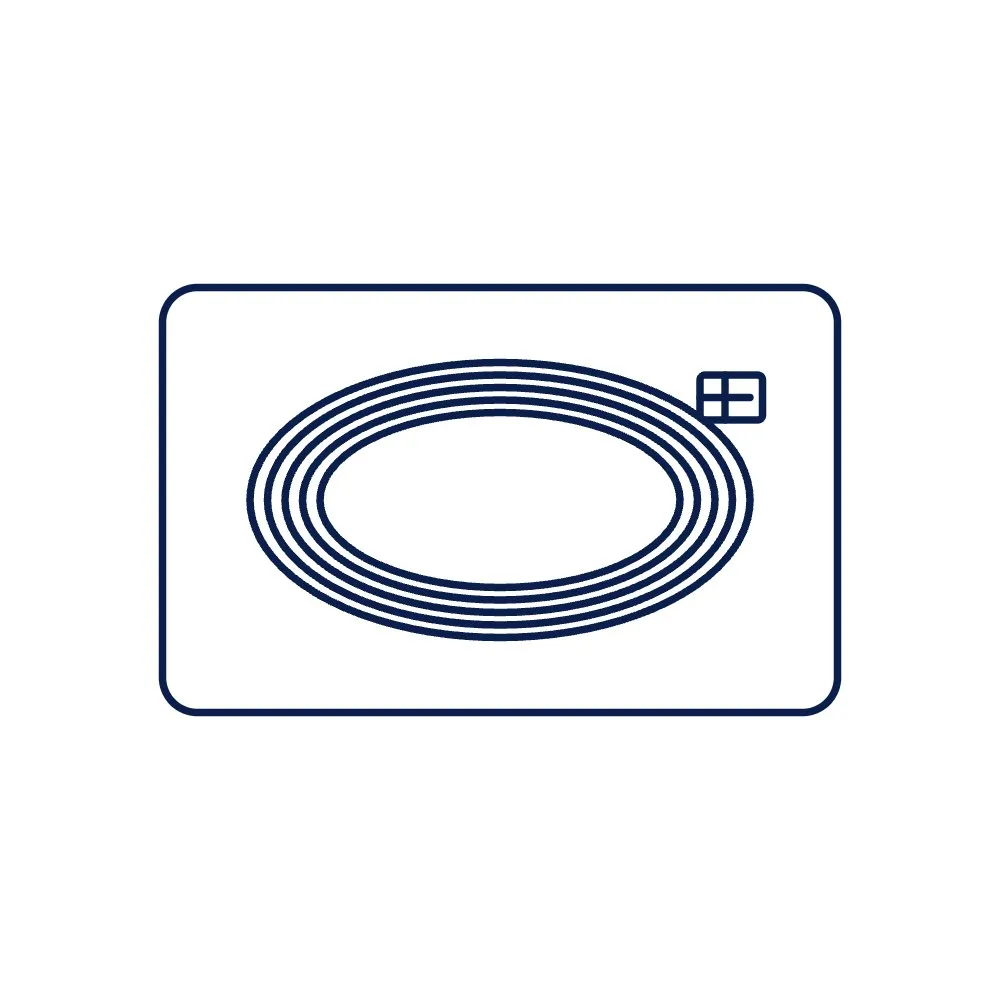
LF proximity cards run at 125 kHz and are read by holding them close to the reader. They are still the card inside many attendance terminals, door readers and canteen or parking systems in Indian offices, factories and housing societies. Most buyers order them for one reason: more cards that work with readers already on the wall.
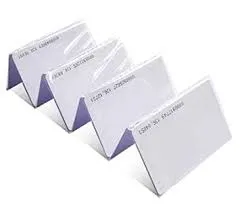
125 kHz LF RFID cards are passive white PVC cards in the standard rectangular smart-card shape. Use them for bulk issue, temporary and visitor passes, or cards you print in-house on a card printer.
Printed RFID ID cards are CR80 (86 × 54 mm), 0.76 mm thick, personalised with your design in a gloss or matte finish. They are made with a 125 kHz or 13.56 MHz chip, so one card can be both the photo ID and the access card.
“125 kHz” alone does not guarantee a card will work. LF systems use different chip formats. EM4100-type read-only cards are the most common in Indian attendance and access machines, but some systems use HID Prox or other proprietary formats that EM-type cards will not open. Rewritable T5577 cards can be programmed to copy several formats.
Before printing a full batch, confirm that a sample card opens your reader. Our guide on matching your eSSL, ZKTeco or door reader before printing covers the checks.
125 kHz proximity cards normally carry only a fixed ID number with no encryption, so they are easy to copy. New installations increasingly use 13.56 MHz HF and MIFARE cards. During a changeover, an LF + HF dual frequency card carries both chips, so one badge works on old LF readers and new HF readers.
To enrol cards into PC software, the IDTS-LFPPR LF USB desktop reader reads 125 kHz card numbers with no driver installation. If staff prefer a keyring to a card, see 125 kHz LF tags and key fobs.
IDBOT
Product finder & instant answers