UHF vs HF vs LF RFID — Which Frequency Is Right for Your Application? India 2026
Published 11 Apr 2026Updated 12 Oct 20269 min read
Short answer: Choose LF (125–134 kHz) when the tag has to survive metal, moisture or an animal; choose HF/NFC (13.56 MHz) for access cards, ID badges, library books, files and anything a phone should tap; choose UHF (865–868 MHz in India) whenever you need multi-metre range or need to read hundreds of items in one pass. The Indian UHF band is de-licensed under G.S.R. 853(E) of 10 December 2021, so there is no operating licence to buy, but reader hardware still needs WPC Equipment Type Approval before it is imported or sold.
"Which frequency should I use?" is one of the most common questions from businesses new to RFID in India. The answer depends on your application, environment and required read range. This guide breaks down LF, HF and UHF RFID with practical Indian use cases, updated for September 2026.
LF, HF and UHF RFID frequency bands compared
| Property | LF (low frequency) | HF (high frequency) | UHF (ultra high frequency) |
|---|---|---|---|
| Band | 125–134 kHz | 13.56 MHz | 865–868 MHz in India (the same as the ETSI 865–868 MHz band) |
| Read range | Up to 30 cm | Up to 1 m | 1–10+ m |
| Read speed | Slow | Moderate | Fast (500–1,000 tags per second) |
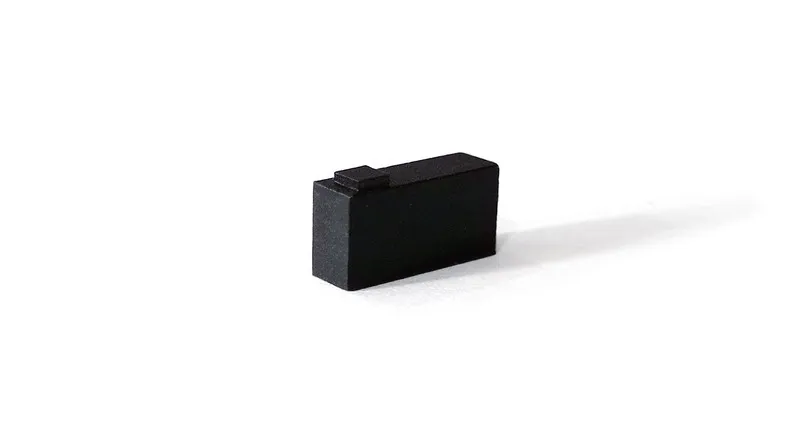
| Performance near metal | Good | Fair | Challenging (special tags needed) |
| Performance near liquids | Excellent | Good | Challenging |
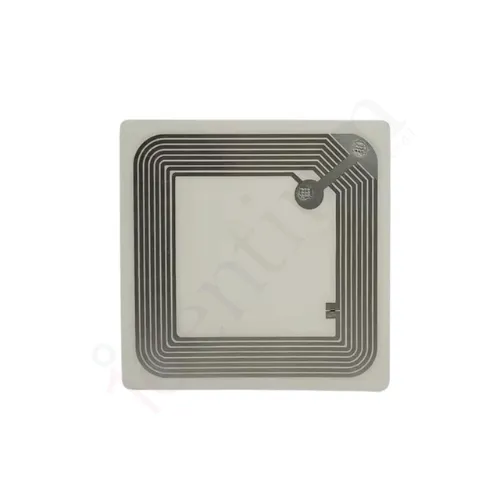
| Tag cost (India) | Highest per tag of the three | Mid-range per tag | Lowest per tag at volume |
| India licensing (WPC) | No operating licence; ETA applies to the equipment | No operating licence; ETA applies to the equipment | Band de-licensed by G.S.R. 853(E) of 10 December 2021; WPC ETA still required for readers |
| Power limit (India) | Short-range device limits apply | Short-range device limits apply | 2 W e.r.p. on four 200 kHz channels |
| Chip families quoted in 2026 | EM4200, T5577, Hitag S, ISO 11784/11785 animal transponders | MIFARE DESFire EV3, MIFARE Plus, NTAG 213/215/216, ICODE SLIX | NXP UCODE 8 / 9 / X; Impinj Monza R6, M700 and M800 families |
| Global standard | ISO 11784/11785, ISO 14223 | ISO 15693, ISO 14443 (NFC) | EPC Gen2 / ISO 18000-6C |
A note on the tag cost row
The cost row compares plain paper or PET label stock in commercial quantities, where UHF inlays are the cheapest per piece and LF the dearest. Specialty formats break the ranking: on-metal tags, ceramic or PCB tags, autoclavable and laundry tags, jewellery tags and rugged industrial housings all cost multiples of a plain wet inlay, because the substrate and the assembly, not the chip, dominate the bill of materials.
Compare like with like before concluding that one frequency is "cheaper", and get quotes for your exact format and quantity rather than working from a headline figure. Our bulk RFID pricing page and the RFID project cost and ROI guide break the line items down.
LF RFID (125–134 kHz): when and why
LF is the oldest and most established RFID band. Its biggest advantage is performance near metal and liquids: it is far less affected by the detuning and absorption that challenge UHF systems. The trade-off is range, speed, and the fact that LF readers see one tag at a time.
Where LF is used in India
- Animal identification. ISO 11784/11785 LF chips are the international standard for livestock ear tags and implantable microchips in cattle, sheep and pets, and 134.2 kHz is the activation frequency ISO 11785 specifies. India's National Digital Livestock Mission (the Bharat Pashudhan platform) issues a 12-digit animal ID carried on ear tags, and state livestock schemes use LF transponders where electronic rather than printed identification is called for.
- Vehicle immobilisers. Car key fobs and immobiliser transponders (Hitag, T5577) use LF. Any application inside an engine bay or near metal benefits from LF's tolerance of metal.
- Proximity access cards (legacy). EM4100/EM4200 and HID Prox cards are LF, and many older access control systems in India still use them. Almost every new installation now specifies HF (MIFARE), because 125 kHz proximity credentials carry no meaningful cryptography and are cloned with inexpensive off-the-shelf duplicators. If you run an estate of them, plan the migration before the next expansion; the LF card and LF tag ranges cover like-for-like replacements in the meantime.
- Industrial tool tracking. Small LF tags can be embedded directly into metal tool handles where UHF would detune.
Avoid LF when you need read range beyond 30 cm, bulk reading of many tags at once, or low per-tag cost at scale.
HF RFID (13.56 MHz): the versatile middle ground
HF RFID at 13.56 MHz is the most versatile band: it includes NFC, MIFARE and ISO 15693 tags. It works reasonably well near liquids, which matters for pharmaceutical and food applications, offers the strongest on-tag security options of the three bands, and needs no operating licence in India.
Where HF is used in India
- Smart cards and access control. MIFARE DESFire EV3 and MIFARE Plus are the chips to specify for new building access, transit and employee ID rollouts in India; DESFire EV3 runs AES-128 mutual authentication over ISO/IEC 14443-A. MIFARE Classic is still widely installed, but its Crypto1 cipher was publicly broken by academic researchers in 2008, so treat any Classic estate as a migration project, not a design choice. Our HF card range and dual-frequency cards exist largely to make that migration painless.
- Library management. ISO 15693 HF tags are the global library standard. Library self-checkout machines across India use HF RFID, typically with ICODE SLIX inlays such as the ICODE SLIX2 50 × 50 mm book label.
- Pharmaceutical tracking. HF tags on medicine blister packs and vials track individual doses through hospitals, and the intentionally short read range prevents accidental bulk reads. For case and pallet aggregation in pharma distribution, UHF is the usual answer instead; see our pharma aggregation guide.
- Document tracking. File folders and documents in government offices use HF labels for individual item tracking with precise identification, which is how most file tracking systems are built.
- NFC applications. All NFC use cases (tap payment, smartphone interaction, product authentication) run on HF at 13.56 MHz. NFC Forum Type 2 tags such as NTAG 213/215/216 are the safe default for phone-tap marketing and authentication because handset support is near-universal. ISO 15693 tags fall under NFC Forum Type 5 and are readable by many recent phones, but with less consistency across handsets. Browse NFC tags and labels if the phone is your reader.
Avoid HF when you need to read many tags at once from a distance, or you are tracking bulk goods in a warehouse.
UHF RFID (865–868 MHz in India): high performance at scale
UHF is the frequency of choice for supply chain, retail, warehousing and any application requiring bulk reads or long-range identification. In India, UHF RFID operates in the 865–868 MHz band, de-licensed by the WPC Wing of the Department of Telecommunications. This is different from the US band (902–928 MHz).
India's band and its four reader channels sit inside the European ETSI 865–868 MHz allocation covered by the harmonised standard ETSI EN 302 208, whose current edition is V3.4.1, published December 2023. In practice, a tag designed for Europe performs well in India, while a reader must be configured to stay within 865–868 MHz.
Where UHF is used in India
- Warehouse and logistics. Bulk pallet and carton reading at dock doors, typically 500+ tags per second at 4–8 m, using gate readers and circularly polarised antennas.
- Apparel retail. Item-level tagging of garments enables weekly full-store counts in minutes. It is also what the large global retail mandates are built on: Walmart has extended item-level UHF tagging from apparel into further categories, which is why Indian exporters increasingly get tagging specifications with the purchase order. Our guide for Indian suppliers covers the encoding side.
- Manufacturing WIP tracking. Pallets and totes tagged with UHF labels track movement through production stages automatically.
- Vehicle parking and tolling. Long-range UHF (up to 10 m) identifies vehicles hands-free as they enter and exit, usually with windshield tags. India's FASTag programme is passive UHF RFID on the same 865–868 MHz band, which is why highway tolling and campus parking use compatible hardware.
- Events. UHF wristbands enable cashless payments and zone access at concerts and festivals.
Licensing and type approval for UHF readers in India
The 865–868 MHz band is de-licensed for RFID under G.S.R. 853(E), notified on 10 December 2021, with readers allowed up to 2 W e.r.p. on four 200 kHz channels centred at 865.7, 866.3, 866.9 and 867.5 MHz. De-licensed means no spectrum licence and no annual spectrum fee. It does not mean no paperwork.
Every wireless device model imported into or sold in India still needs WPC Equipment Type Approval (ETA), obtained through the Saral Sanchar portal, and readers meant for the Indian market are usually paired with BIS registration for the electronics. Readers bought abroad and left on the US 902–928 MHz band are not legal for use in India.
If you are importing hardware yourself, read our WPC ETA and BIS compliance checklist for RFID readers. If you would rather buy a model that already carries the paperwork, see the BIS-registered reader models and our certifications page.
Quick selection guide
| Application | Frequency to choose |
|---|---|
| Animal and livestock tracking | LF (ISO 11784/11785) |
| Access control, ID cards, libraries | HF (MIFARE DESFire / ISO 15693) |
| NFC payment or smartphone tap | HF (NFC / ISO 14443) |
| Warehouse inventory, retail, supply chain | UHF (EPC Gen2, 865–868 MHz) |
| Vehicle tracking, tolling, parking management | UHF (long range) |
| Near metal or liquid, engine bay | LF, or specialised UHF on-metal tags |
| Exporting tagged goods to Europe | UHF (ETSI 865–868 MHz tags read in India too) |
Still torn between two bands? The side-by-side UHF vs HF comparison works through the decision on real Indian deployments, and the troubleshooting guide is worth reading before you blame the frequency for a read-rate problem.
What changed in 2026 (updated September 2026)
December 2025: NFAP-2025 came into force
The Department of Telecommunications released the National Frequency Allocation Plan 2025, which took effect on 30 December 2025, refreshing India's spectrum table across 8.3 kHz to 3000 GHz. The 865–868 MHz RFID de-licensing under G.S.R. 853(E) of 10 December 2021 is unchanged, so nothing you already run on the Indian UHF band needs re-tuning. Quote NFAP-2025 rather than an older plan when a tender asks for a spectrum reference.
January 2026: NXP announced UCODE X
The new RAIN RFID chip, announced on 12 January 2026, targets high-volume retail, logistics and pharmaceutical labels. NXP describes it as offering industry-leading read and write sensitivity, the industry's lowest power consumption, flexible memory configurations and support for smaller label footprints, all built on the non-proprietary GS1 Gen2V2 standard.
It joins Impinj's M700 and M800 families at the top of the UHF range; we compare them in the UCODE X vs M800 chip guide. The practical effect for Indian buyers: an inlay quoted in 2026 can out-read a several-years-old inlay on the same reader and antenna, so ask which chip is inside before comparing two tag quotes.
May 2026: India's first barrier-free toll plaza went live
NHAI rolled out multi-lane free flow (MLFF) tolling at the Chorayasi plaza on the Surat–Bharuch section of NH-48 in Gujarat, combining automatic number plate recognition with FASTag so vehicles never stop. FASTag is UHF RFID on the same 865–868 MHz band this guide describes, the clearest signal yet that UHF, not HF, is India's default frequency for identifying vehicles at speed. Our MLFF gantry guide covers what the reader side looks like.
Checked September 2026: the European profile has not moved
ETSI EN 302 208 V3.4.1, published December 2023, is still the current edition of the harmonised standard for 865–868 MHz RFID, so the overlap that lets Indian and European hardware share tag designs is stable. That matters for exporters: see our note on ETSI 865–868 MHz compatibility for tags shipped from India.
GST 2.0: 18% still applies to RFID hardware
The GST restructuring that took effect on 22 September 2025 collapsed the slabs to 5% and 18%, with 18% as the standard rate covering electronics of this type. RFID tags, readers and antennas remain an 18% line, so the input-tax-credit arithmetic in an RFID business case is the same as it was last year. Budget accordingly rather than assuming a cut.
Shop by frequency
Frequently asked questions
How much does a UHF RFID reader and antenna cost in India?
Do I need a WPC licence to run UHF RFID in India?
Can one RFID reader read LF, HF and UHF tags?
Is NFC the same thing as HF RFID?
How do I make UHF RFID work on metal surfaces and liquid containers?
What GST rate applies to RFID tags and readers in India?
RFID FrequencyUHFHFLFBuying Guide