UHF RFID Handheld Reader Price in India 2026 — Complete Buyer's Guide
Published 18 Jul 2026Updated 4 Oct 20268 min read
Short answer: What a UHF RFID handheld reader costs in India depends mainly on its class. Phone-connected micro readers that rely on your own phone for the app are the cheapest; Bluetooth sleds and pistol-grip readers, standalone Android handhelds and industrial RFID tablets cost progressively more as read range, ruggedness and on-board computing go up, although prices overlap between classes. Every reader on India RFID Store shows its list price before 18% GST on its product page.
If you are budgeting for asset tracking, inventory audits or warehouse operations, the first question is usually what a UHF RFID handheld reader actually costs. Two devices that look almost identical can be far apart in price because of the reader chip inside, the read range, the ruggedness and whether they run Android. This 2026 guide explains the price tiers, what you are paying for at each step, and how to match a class of reader to the job without overpaying.
The examples below are readers from the RFID handheld readers category, so you can open each one and check its current list price, specs and minimum order.
UHF RFID handheld reader price in India: the tiers
Roughly from the lowest cost to the highest, the market for a typical Indian B2B buyer in 2026 splits into these classes:
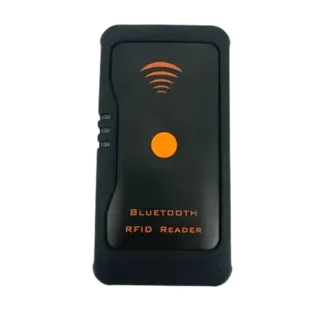
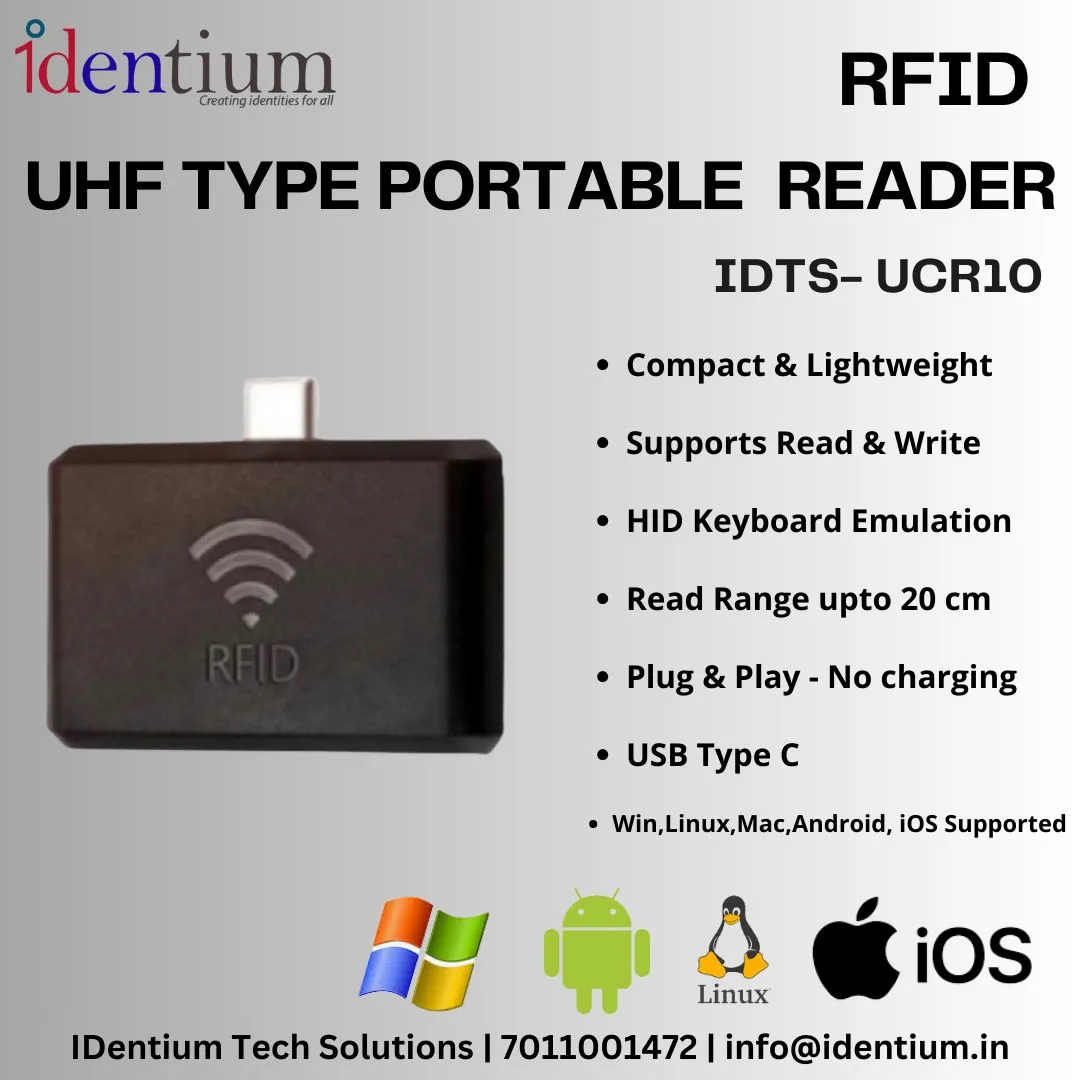
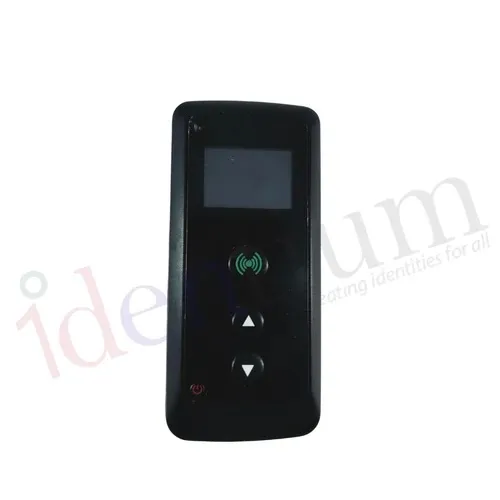
- Phone-connected micro readers: small plug-in and Bluetooth readers that rely on a phone for the app, such as the UCR10 Type-C reader, the UBR12 BLE micro reader (which adds a small OLED status display) and the UBR90H Bluetooth reader. Short range, for shelf-by-shelf work.
- Bluetooth sleds and pistol-grip readers: the MUBR01 portable Bluetooth reader, the UHA-800 pistol-grip reader and the ID-SL15 sled reader. A phone, tablet or PC runs the app; the reader supplies the RF power and antenna.
- Android handhelds: standalone terminals with their own screen and operating system, from the cost-effective CX1000 and the compact CX-2000 to the rugged long-range CX1500N.
- Industrial RFID tablets: a larger screen for data-heavy work, such as the CX806T RFID industrial tablet.
Prices are listed before 18% GST. The right device is not the cheapest or the most expensive one; it is the one whose read range, ruggedness and software fit your workflow. The next section explains what moves the price.
What actually drives UHF handheld reader price
Five factors explain almost every price difference in the market. Knowing them lets you question a quote and avoid paying for capability you will never use.
1. The UHF reader chip
The RFID module is the single biggest cost driver. Readers built on Impinj E710 or E910 chips read more tags per second, hold onto weak signals better and cost more than devices using generic modules. If you read dense pallets or run fast inventory counts, the premium chip pays for itself in speed. For occasional asset checks, a mid-tier module is plenty.
2. Read range and antenna design
Read range is the spec buyers fixate on, and vendors price it accordingly. A reader that works at a few centimetres to a metre is cheap; one that reads at 15–25 m needs higher RF output and a better antenna, and costs much more. Range also depends on tag quality and the environment: metal and liquid cut range whatever the reader, so buying the longest-range device to make up for cheap tags is a false economy.
3. Android, barcode and connectivity
A Bluetooth sled that pairs with your existing phone is cheaper because you supply the computer. A full Android rugged handheld with its own touchscreen, 4G, Wi-Fi and GPS, and on models such as the CX1500N a camera and a 1D/2D barcode imager as well, is a complete mobile computer and is priced accordingly. If your team already runs an app on rugged phones, a Bluetooth reader saves money. If you need a standalone all-in-one device on the shop floor, budget for Android.
4. IP rating and ruggedness
An IP65 or IP67 device survives dust and water, and a rated drop height tells you whether it will survive a fall onto concrete. Consumer-grade housings crack on the first fall in a busy warehouse. Sealed ports, a rugged enclosure and toughened glass add real cost, but a device that dies in month two costs far more than the money saved.
5. Certification and support
Imported readers carry customs duty, distributor margins and slow repair cycles. Certification is model-specific: a UHF reader used in India needs WPC Equipment Type Approval and BIS registration for that exact model, and a unit tuned only to the US 902–928 MHz band may underperform or be non-compliant on India's 865–868 MHz band. In this catalogue, the CX1500N handheld and the MUBR01 Bluetooth reader hold both WPC ETA and BIS registration, while the CX1000, CX806T and UBR12 are BIS-registered. Ask for the certificate for the model you are buying.
UHF RFID handheld reader tiers compared
| Class (roughly lowest to highest cost) | Device type | Read range (by model) | Best for |
|---|---|---|---|
| Phone-connected micro reader | Type-C or Bluetooth reader that relies on a phone for the app (UCR10, UBR12, UBR90H, ID-UBRS100) | About 10–15 cm (UBR12) to 2 m (UBR90H) | Shelf-by-shelf counts, tag checks, field teams with phones |
| Bluetooth sled or pistol-grip reader | Pairs with a phone or tablet (MUBR01, UHA-800, ID-SL15) | 0–3 m (MUBR01), 0–8 m (UHA-800), up to 16 m (ID-SL15) | Retail stock counts, asset registers, document tracking |
| Android handheld | Standalone terminal with screen (CX1000, CX-2000) | Up to 5 m (CX-2000), up to 6 m (CX1000) | Inventory audits, file tracking, retail back rooms |
| Rugged long-range Android handheld | Terminal with 1D/2D barcode imager, camera, 4G and GPS (CX1500N) | Up to 25 m, label-dependent | Warehousing, logistics, yards, asset tracking at scale |
| Industrial RFID tablet | Tablet with UHF and optional NFC (CX806T) | Up to 25 m | Data-heavy workflows, tool tracking, waste management |
Prices overlap between classes: a long-range sled can cost more than an entry-level Android handheld, and within a class the chip, range and ruggedness move the price. Compare the list prices on the RFID handheld readers category page, which runs from compact phone readers to rugged Android devices.
Reader class comparison: match the device to the job
Beyond price, the practical decision is which class of reader fits your operation. This table compares the three main handheld classes on the attributes that matter on the floor.
| Attribute | Bluetooth sled | Android rugged handheld | Industrial RFID tablet |
|---|---|---|---|
| Where the cost goes | RF module and antenna only; you supply the phone | A complete mobile computer plus RFID | Larger screen and battery plus RFID |
| Needs a separate phone? | Yes | No, standalone | No, standalone |
| Screen | None (uses the phone) | 4–5 inch touchscreen (CX-2000, CX1500N) | Tablet-size display |
| Read range | 0–3 m (MUBR01) to 16 m (ID-SL15) | 5 m (CX-2000) to 25 m (CX1500N) | Up to 25 m (CX806T) |
| Barcode scanner | Optional 1D/2D imager on the ID-SL15 | 1D/2D imager on the CX1500N; optional 2D on the CX-2000 | Check the listing |
| Battery | Built-in; ID-SL15 can top up the phone | 10,000 mAh on the CX1500N | Check the listing |
| Ruggedness | IP54 on the ID-SL15 | IP54 (CX-2000); 1.2 m drop onto concrete (CX1500N) | Over-moulded industrial design (CX806T) |
| Ideal use | Retail, field audits | Warehouse, logistics | Data-heavy, large-screen work |
For fixed-position counting at portals and dock doors rather than handheld work, see RFID readers and the 4-port fixed UHF readers.
What to check before you buy
Price is only half the decision. This checklist avoids the most common, and most expensive, mistakes Indian buyers make.
- Confirm the frequency band. The device must operate on 865–868 MHz, and the model should carry WPC ETA. A US-band (902–928 MHz) grey-market unit is non-compliant and weaker on Indian tags.
- Test with your own tags. Range specs are measured on ideal tags in open air. Trial the reader on your actual assets, because metal, liquid and packaging all change the result; you can request RFID samples for the trial.
- Match the operating system to your software. A current Android version keeps your inventory or WMS app, device management and security patches supported for years. Older Android builds are cheaper but age out fast.
- Check the battery strategy. A hot-swappable battery keeps a device running across two shifts; a sealed battery forces downtime to charge.
- Insist on an SDK. If you plan to integrate with SAP, Tally or your own app, you need a documented SDK. The CX1000 and CX806T listings include an SDK and demo application, and the ID-SL15 ships with Android and iOS SDKs.
- Ask about support and spares. Find out who handles repairs in India and how long a replacement screen or trigger takes.
Need to work hands-free? The UHF RFID smart glove reader reads at 5–20 cm as staff pick items. For a screenless reader that pairs with an Android phone at a counter or in the field, look at the MUBR01 portable Bluetooth reader.
Total cost of ownership: beyond the sticker price
The reader is one line item. A realistic project budget also includes RFID tags, software or middleware and, in some sites, fixed readers for portals. A handheld that is cheaper but forces you onto poor tags, or lacks an SDK, usually costs more once integration and rework are counted. When you compare quotes, compare the whole solution, not just the reader. Tag prices are covered in the RFID tag price guide and full project budgets in the RFID project cost and ROI guide. Run a sample trial on your own assets to confirm read range before rollout.
Which UHF handheld reader should you choose?
- Small team, existing phones, tight budget: a phone-connected micro reader for close work, or a Bluetooth sled such as the ID-SL15 when you need range.
- Warehouse or logistics needing a standalone all-in-one device: a rugged Android handheld such as the CX1500N, which combines long-range UHF with a 1D/2D barcode imager, a camera, 4G and GPS.
- High-throughput, yard or data-heavy work on a large screen: a long-range handheld or an RFID tablet such as the CX806T.
Browse the full RFID handheld readers range, compare it with integrated readers for fixed points, and add the models you shortlist to your quote list for a GST invoice price.
Related guides
Frequently asked questions
What is the cheapest UHF RFID handheld reader in India?
Is GST charged on RFID handheld readers, and at what rate?
Which handheld readers have WPC ETA and BIS registration?
Why are imported readers sometimes cheaper, and should I buy one?
How much read range do I really need?
Can these readers integrate with SAP, Tally or my own app?
UHF RFIDHandheld ReaderRFID Price IndiaBuyer GuideAndroid RFID ReaderBluetooth RFIDRFID 2026
_1htz0p.webp)