RFID Livestock & Cattle Ear Tags in India (2026): Dairy Herd Management, Government Schemes & Reader Guide
Published 18 Jul 2026Updated 8 Oct 20266 min read
RFID livestock and cattle ear tags give every animal on an Indian dairy farm, gaushala, cooperative or veterinary programme a unique digital identity that is hard to duplicate, and they automate herd records, breeding cycles, vaccination history and milk-yield tracking. This guide is for dairy farm owners, cooperative managers, veterinary officers and agri-tech integrators deciding which tag technology (LF or UHF), reader hardware and compliance approach fits Indian conditions. It covers the government tagging landscape, indicative INR prices and how to build a practical, field-ready system.
Why RFID ear tags are replacing manual cattle records in India
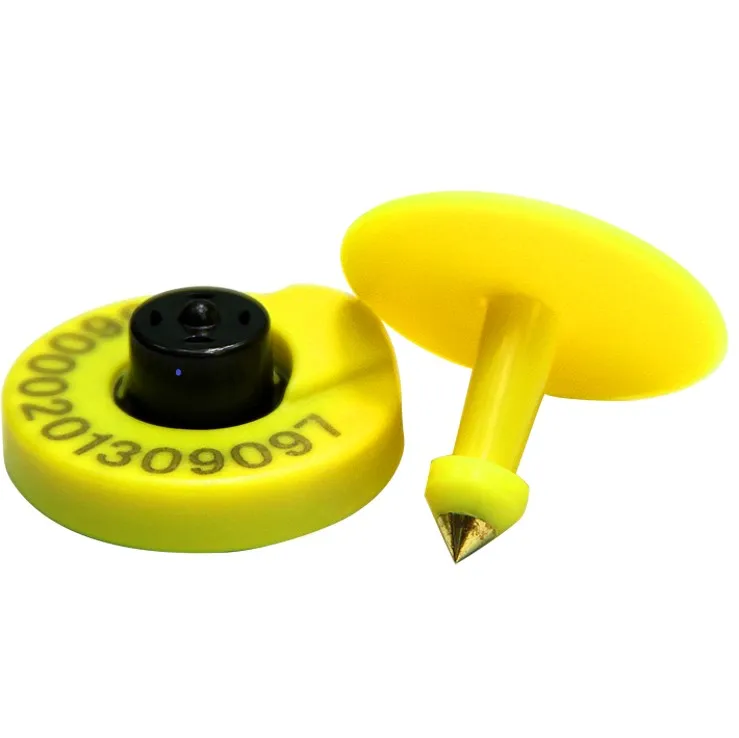
India has the world's largest cattle and buffalo population, and register-based tracking cannot keep pace with vaccination drives, artificial insemination schedules, subsidy claims and insurance verification. Plastic ear tags with printed numbers fade, get misread and are easy to duplicate for fraudulent insurance or subsidy claims. An RFID ear tag embeds a unique electronic ID in a rugged polyurethane button that survives years of sun, mud and rubbing against sheds and fences.
With a quick scan from a handheld reader, a field worker pulls up the animal's full history: no squinting at a faded number and no wrong-animal errors.
Core benefits for Indian dairy and livestock operations
- Hard-to-fake identity: a unique electronic ID makes duplicate insurance and subsidy claims much harder.
- Herd management: link each tag to breeding, calving, milk-yield and lactation records.
- Vaccination and health tracking: log FMD, brucellosis and deworming dates per animal.
- Traceability: meet dairy cooperative and export traceability requirements.
- Faster field work: scan hundreds of animals an hour instead of reading numbers by hand.
Government cattle tagging schemes and standards
Under the National Digital Livestock Mission, and the earlier INAPH (Information Network for Animal Productivity and Health) programme, each bovine is identified by a 12-digit Pashu Aadhaar number carried on an ear tag. Where a scheme, cooperative or insurer specifies an electronic tag, the international animal-ID standard is LF (134.2 kHz) to ISO 11784/11785. If your main goal is to take part in a government scheme, a cooperative programme or animal insurance linked to INAPH or Pashu Aadhaar, confirm the exact tag specification with your district veterinary officer before ordering.
For private herd management, milk-yield automation or gate reading, UHF ear tags offer longer read range and faster bulk scanning. Many progressive farms run a hybrid: the scheme tag for compliance plus a UHF tag or reader workflow for day-to-day operations.
LF vs UHF cattle ear tags: which should you choose?
The most important technical decision is frequency. LF is the global animal-ID standard and performs well around the wet, salty tissue of an animal's ear; UHF gives much longer range and bulk-read speed. The table compares both for Indian conditions.
| Parameter | LF ear tag (134.2 kHz, ISO 11784/11785) | UHF ear tag (865–868 MHz, EPC Gen2) |
|---|---|---|
| Read range | A few cm to roughly 30 cm, depending on reader and tag | 1–5 m in the open |
| Use in schemes | International animal-ID standard; the usual choice where an electronic ID is specified | Not the animal-ID standard; check before using it for a scheme |
| Performance near animal tissue and water | Excellent | Good with a tuned on-animal design |
| Bulk or gate reading | One animal at a time | Several animals through a gate |
| Reader cost | Lower-cost LF handhelds and wands | Higher: UHF handheld or gate reader |
| Best for | Compliance, insurance, veterinary drives | Large private dairies, feedlots, milking-parlour automation |
Ear tags in the catalogue: the UHF RFID Animal Ear Tag (865–868 MHz, 1–3 m read range, flag or button style, several colours) for gate and chute reading, and the round TPU HF RFID Animal Ear Tag NAET (13.56 MHz, laser-engraved number or barcode) for herds read with HF readers. Whichever you choose, match the tag to a reader on the same frequency before ordering in volume.
What makes a good cattle ear tag for Indian farm conditions
- UV and weather resistance: a thermoplastic polyurethane (TPU) housing that survives the monsoon, dust and 45 °C summers.
- Secure locking button: a one-way snap lock so tags cannot be reused or swapped fraudulently.
- Correct chip: ISO 11784/11785 FDX-B for LF schemes, or a proven on-animal UHF inlay.
- Laser-printed visual ID: a human-readable number and barcode as a backup to the RFID read.
- Applicator compatibility: matched applicator pliers to avoid ear tearing and infection.
Applicators and tagging hygiene
A cattle ear tag is only as good as its application. Use the matched applicator, disinfect the piercing point, and place the tag in the tag-friendly zone of the ear, between the ribs of cartilage, to minimise infection and tag loss. Budget for a modest tag-loss rate and keep a small buffer of replacement tags that can be linked to the same animal record.
Handheld readers and reader hardware for farms
The reader must match your tag frequency: an LF handheld or wand for LF ear tags, and a UHF handheld or a lane or gate reader for UHF. The main options:
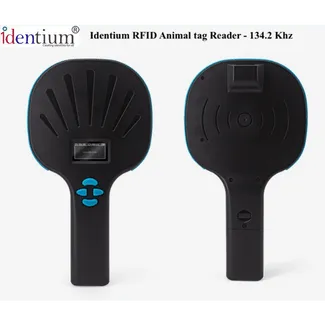
- LF animal tag readers: the Animal RFID Tag Reader RA91 reads FDX-B and EMID tags to ISO 11784/11785 at 134.2 kHz and also scans 1D and 2D barcodes, so one device covers both the chip and a printed tag number.
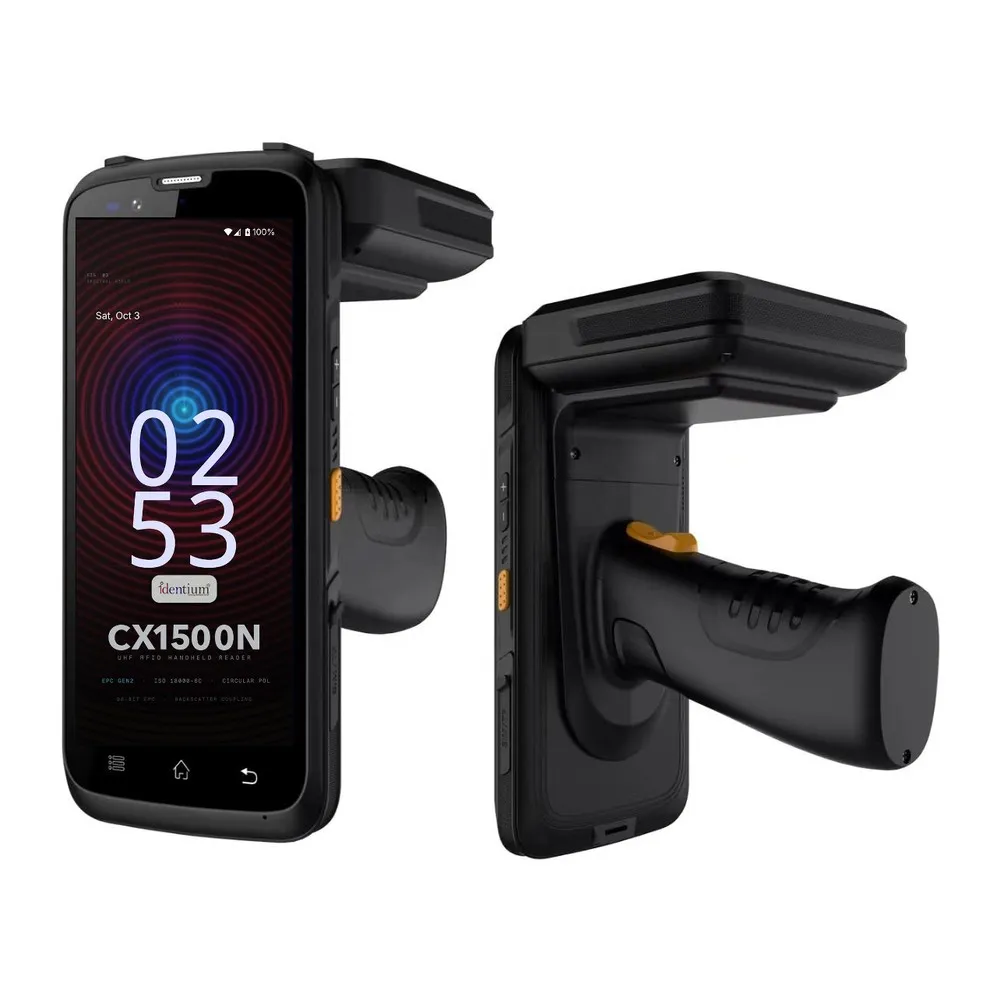
- UHF handheld readers: rugged, battery-powered units for walking the shed and scanning animal by animal, ideal for vaccination drives and daily herd checks. See RFID handheld readers.
- Gate and lane readers: UHF RFID gate readers at the milking parlour or paddock exit log animals as they pass, enabling hands-free milk-yield attribution.
- Fixed integrated readers: readers with a built-in antenna, mounted at feeders or weigh crushes for unattended logging.
For most Indian dairies starting out, a single rugged handheld paired with a mobile herd app or INAPH-linked software covers most daily field work, with fixed readers added as automation grows.
Indicative pricing in India (2026)
Prices vary by frequency, chip, order volume and GST. The ranges below are indicative market figures for planning, not quotes; list prices for the ear tags and readers we stock are shown on their product pages.
| Item | Typical price range (INR, ex-GST) |
|---|---|
| LF cattle ear tag (ISO 11784/11785) | ₹25–₹60 per tag |
| UHF cattle ear tag (EPC Gen2) | ₹30–₹80 per tag |
| TPU applicator pliers | ₹800–₹2,500 |
| LF or UHF handheld reader | ₹25,000–₹90,000 |
| UHF gate or lane reader with antennas | From about ₹60,000 |
For cooperative, gaushala or scheme volumes, send your herd size and tag specification with a request for quote.
Building a practical herd-tracking system
- Choose the frequency. Start from your compliance needs: the scheme's tag specification first, then your operational goals.
- Order tags and applicators. Buy pre-numbered ear tags together with the matched applicator pliers.
- Tag at a scheduled camp. Tag animals during a vaccination camp and link each scan to a mobile herd-management app.
- Automate over time. Add a gate reader at the milking parlour for automatic yield logging.
Whether you need long-range UHF ear tags, HF ear tags or an LF animal tag reader, start with the UHF animal ear tag, the HF ear tag and the RA91 reader, or request a quote for your dairy, gaushala or cooperative.
Related guides
Frequently asked questions
Which frequency do Indian government cattle tagging schemes use?
Can one RFID ear tag last the animal's lifetime?
Do I need a special applicator for cattle ear tags?
What read range can I expect on a live animal?
Are RFID ear tags and readers certified for use in India?
Can I track milk yield per cow with RFID?
RFID LivestockCattle Ear TagsDairy ManagementAnimal IdentificationHandheld ReadersIndia RFID
_ZREg3a.webp)