Is Your RFID Reader Legal in India? WPC ETA & BIS Compliance Checklist (2026)
Published 7 Aug 2026Updated 25 Oct 20268 min read
Written and maintained by the RFID team at Identium Tech Solutions Pvt Ltd, New Delhi (India RFID Store).
Short answer: in India, a UHF RFID reader must carry WPC Equipment Type Approval (ETA) and operate in the 865–868 MHz band within 2 W e.r.p., on four 200 kHz channels centred at 865.7, 866.3, 866.9 and 867.5 MHz. Passive tags, labels and cards need no approval. Readers built for the US 902–928 MHz band are not legal to operate here. This guide is the buyer-side checklist: what each certificate covers, what changed recently, and the exact documents to demand before you raise a purchase order.
It is written for procurement, IT and operations teams in India who are being asked to sign off on RFID hardware and need to know whether what is being quoted is actually legal to deploy.
Does an RFID reader need WPC ETA approval in India?
Yes. Any device that transmits radio energy in the 865–868 MHz RFID band requires an Equipment Type Approval from the Wireless Planning & Coordination (WPC) wing before it can be imported, sold or deployed in India. ETA is granted per equipment model, so approval for one reader does not cover a different model from the same brand.
ETA for licence-exempt bands is issued on a self-declaration basis through the Saral Sanchar portal, supported by an RF test report from an NABL-accredited laboratory (or an ILAC-MRA signatory lab abroad).
The responsibility sits with whoever first brings the model into India — the Indian manufacturer, or the importer. As a buyer, that matters: if your vendor is a trader who imported grey-market stock, there may be no ETA behind the unit at all.
What is the legal RFID frequency band in India, and what are the power limits?
India's licence-exempt UHF RFID allocation is 865–868 MHz, with RFID readers permitted up to 2 W e.r.p. under G.S.R. 853(E) of 10 December 2021, but only on four channels of up to 200 kHz each, centred at 865.7, 866.3, 866.9 and 867.5 MHz. Operating within those limits requires no individual spectrum licence, which is why RFID is practical to deploy at scale in Indian warehouses, retail stores and factories.
Two points buyers routinely miss:
- Licence-exempt applies to the spectrum, not the equipment. You still need ETA for the hardware.
- The limits are real engineering constraints. A vendor promising read ranges that only make sense at higher power is either quoting non-Indian settings or overstating performance. Our RFID antenna guide explains how gain and polarisation — not illegal power — are the legitimate levers for extending read range.
Which WPC notification governs the band today?
The current rules are the Use of Low Power Equipment in the Frequency Band 865–868 MHz for Short Range Devices (Exemption from Licence) Rules, 2021, notified as G.S.R. 853(E) on 10 December 2021 (full text in the WPC Wing's compilation of its rules). They superseded the 2005 RFID rules, which covered a narrower band, and the National Frequency Allocation Plan 2025 (NFAP-2025), which took effect from 30 December 2025, lists them in its annexure of wireless equipment exempted from licensing.
Beyond the power and channel limits above, G.S.R. 853(E) caps continuous transmission on one channel at 4 seconds, with at least 100 ms between consecutive transmissions on the same channel.
Equipment already type approved under the earlier 865–867 MHz rules is outside the 2021 rules, and its approval stays effective for the life of that equipment; other equipment must conform to the 2021 limits to be type approved.
Since a DoT office memorandum of 9 September 2024, ETA for licence-exempt wireless equipment has been granted on a self-declaration basis, with applications made on the Saral Sanchar portal.
Is a 902–928 MHz or 920–925 MHz RFID reader legal in India?
No. Readers whose firmware is locked to the US 902–928 MHz band, or to other regional bands such as 920–925 MHz, are not permitted for licence-exempt RFID use in India and will not be granted ETA in that configuration.
There is a performance penalty as well as a legal one. Tags supplied for the Indian market have inlay antennas tuned around 865–868 MHz. Interrogating them from a reader operating outside that band typically costs you read range and read reliability — the two things an RFID deployment lives or dies by.
If you have already bought such a reader, ask the manufacturer whether the unit supports a region setting that can be reconfigured to the India band and re-certified; many can, some cannot.
Does an RFID reader or label printer need BIS certification?
RFID readers, printers and related IT hardware fall under MeitY's Compulsory Registration Scheme, administered by BIS — a different route from the appliance Quality Control Orders that generate most of the confusion. Where an item is listed under that scheme, a valid BIS registration is expected, and Indian government buyers treat it as non-negotiable.
The Quality Control Order taking effect on 1 October 2026 covers household and commercial electrical appliances tested to IS 302 (Part 1) — not RFID readers or printers. If a vendor waves that order at you as proof of compliance, they have cited the wrong scheme.
We cover the BIS side in more depth in BIS certified RFID readers — why certification matters, and our own certificates are listed on the certifications page.
Do passive RFID tags, labels, cards and wristbands need approval?
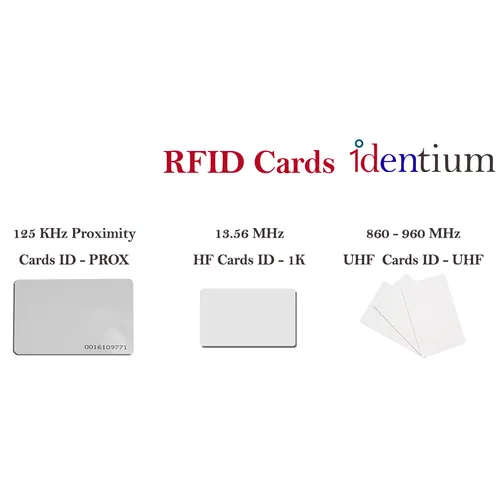
No. Passive RFID tags contain no transmitter and no power source — they backscatter the reader's energy — so they sit outside both the WPC ETA and BIS wireless-equipment regimes. You can buy UHF RFID tags, RFID cards and RFID wristbands without any spectrum paperwork.
What still matters for tags is band tuning. Ask whether the inlay is tuned for 865–868 MHz or is a global inlay tested at the Indian band. A US-tuned inlay will physically work here but gives up read range — the same trap as the reader question above, arriving from the other direction.
Compliance at a glance
| Item | WPC ETA | BIS registration | Notes |
|---|---|---|---|
| UHF RFID reader (fixed, handheld, gate, desktop) | Required | Where listed under CRS | Must be an 865–868 MHz model |
| RFID antenna (passive) | Usually assessed with the reader system; some antennas hold their own ETA | Not applicable | Gain quoted in dBi/dBic |
| RFID label printer / encoder | Required if it has an RFID encoder | Where listed under CRS | Powered IT equipment |
| Passive tags, labels, inlays | Not required | Not required | Ask for India-band tuning |
| RFID cards and wristbands | Not required | Not required | HF/NFC at 13.56 MHz, LF at 125 kHz |
What happens if you import or deploy a non-ETA reader?
The immediate risk is at customs, where ETA is checked for wireless equipment — a consignment can be held or sent back, which is expensive and hard to explain internally.
The downstream risks are just as real: uncertified hardware is normally disqualified from government and PSU tenders, and support or warranty claims on equipment that was never approved for the Indian band tend to go nowhere.
For a private deployment the practical exposure is usually commercial rather than criminal — but it becomes a compliance finding the moment an auditor, a customer or a tender committee asks to see the paperwork.
The pre-purchase document checklist
Before you raise a purchase order for RFID hardware in India, ask the vendor for these four documents and check that the model number on each one matches your quotation exactly:
- WPC ETA certificate naming the exact reader model you are buying.
- RF test report from an NABL-accredited or ILAC-MRA laboratory, on which the ETA was based.
- BIS registration for any powered printer, encoder or IT hardware listed under the CRS.
- Make in India local content certificate if you are buying through a government tender — for higher-value contracts this normally has to be certified by a statutory auditor or practising cost accountant.
Two red flags worth naming: a certificate that covers a different model number from the same brand, and a vendor who offers a brand's global datasheet instead of an India-specific approval. Neither is compliance.
Verify it yourself in five minutes
You do not have to take a vendor's word for any of this, ours included. Three public checks settle most questions before a purchase order:
- Look up the BIS registration. On the BIS Compulsory Registration Scheme portal, search by the registration number printed beside the BIS Standard Mark on the product label, or browse the operative registrations, and check that the brand and the exact model you were quoted are listed.
- Check the ETA on Saral Sanchar. The DoT's Saral Sanchar portal publishes a list of issued ETAs (self-declaration) that you can search by ETA number or by equipment make and model. Find the model on your quotation and note the ETA number against it.
- Match the model code on the label. Compare the model code on the reader's rating label with the BIS entry, the ETA and your quotation. A different suffix or a sister model is a different product under both regimes.
If a model does not appear, ask the vendor for the certificate itself and check its number on the portal before you rely on it. A paper copy that the portal cannot confirm is not evidence.
Buying readers with the paperwork in place
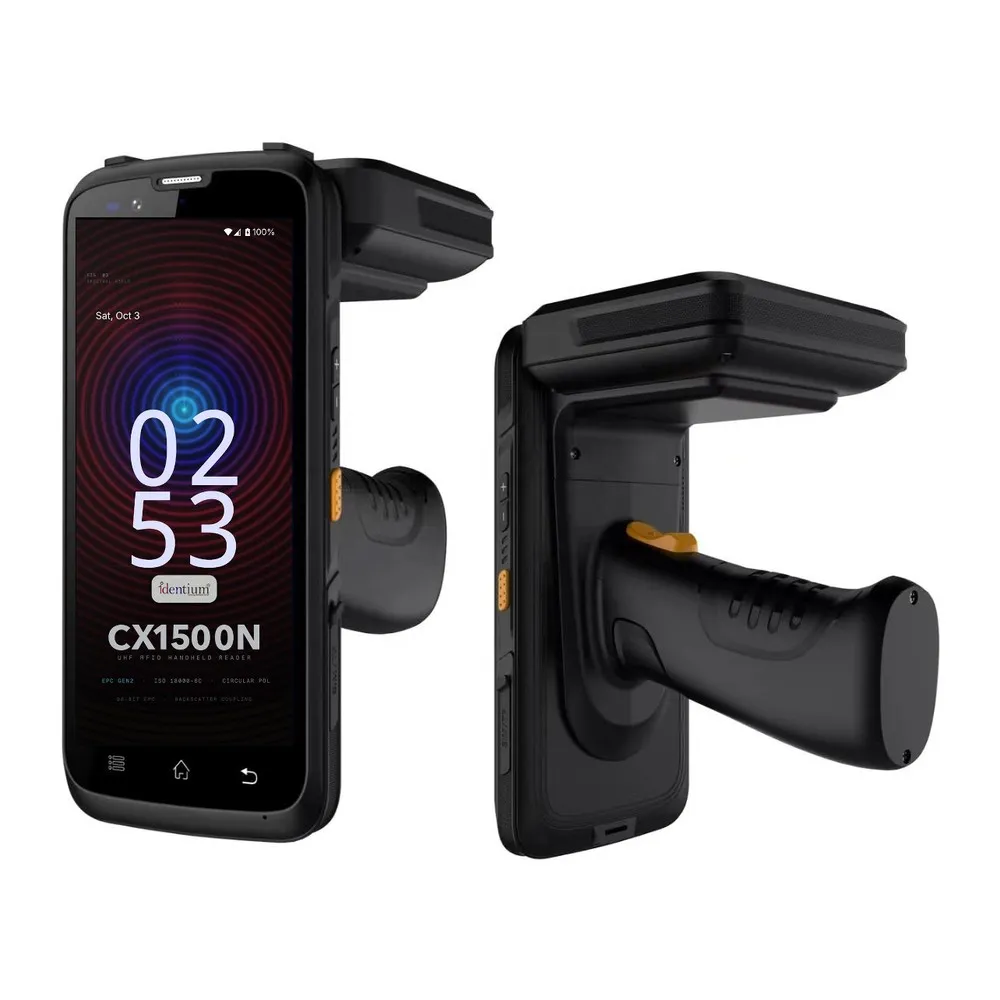
India RFID Store is the storefront of Identium Tech Solutions Pvt Ltd, an RFID manufacturer based in New Delhi. Our RFID readers are BIS and WPC approved, including the CX1500N handheld and the IF9A integrated reader.
If you are buying one of these models, ask for the matching certificates with the quotation rather than after the purchase order — that is what tender committees and internal auditors actually need. For any other model, confirm which approvals apply, and that the unit is configured for 865–868 MHz, before you order.
If you are scoping a deployment, you can request samples, check bulk and OEM pricing, or estimate payback with the RFID ROI calculator. To compare hardware first, start with RFID readers or the guide to choosing the right reader.
Regulatory note: this guide summarises Indian RFID compliance as of August 2026 and is intended as buyer guidance, not legal advice. Spectrum rules, Quality Control Orders and CRS listings are updated periodically — verify current requirements against the official WPC (Saral Sanchar) and BIS portals, or ask your vendor to produce certificates you can validate directly.
Related guides
Sources
- Gazette of India, Extraordinary, Part II, Section 3(i): G.S.R. 853(E), 10 December 2021, Use of Low Power Equipment in the Frequency Band 865–868 MHz for Short Range Devices (Exemption from Licence) Rules, 2021 (PDF)
- Department of Telecommunications, Saral Sanchar portal: list of issued Equipment Type Approvals (self-declaration)
- Bureau of Indian Standards: Compulsory Registration Scheme (CRS) public portal
Cite as: India RFID Store (Identium Tech Solutions Pvt Ltd), “Is Your RFID Reader Legal in India? WPC ETA & BIS Compliance Checklist (2026)”, https://www.indiarfidstore.com/rfid-resources/wpc-eta-bis-certification-rfid-reader-india-2026, updated 25 Oct 2026.
Frequently asked questions
A vendor has quoted a 902–928 MHz RFID reader for our retail stores. What should we do?
We already imported a 902–928 MHz RFID reader from the US for our warehouse. What are our options?
Does an RFID reader need WPC ETA approval in India?
What is the legal RFID frequency band in India?
Is a 902–928 MHz RFID reader legal to use in India?
Do passive RFID tags, labels and cards need WPC or BIS approval?
Does the Quality Control Order effective 1 October 2026 apply to RFID readers?
What happens if I import an RFID reader without ETA?
Which documents should I ask an RFID vendor for before raising a purchase order?
How can I check a reader's WPC ETA and BIS registration myself?
Which certificates does a government or PSU RFID tender expect?
WPC ETABIS CertificationRFID Compliance India865-868 MHzRFID ImportGovernment Tender
Keep reading
More guides
More in Regulations & tenders
- DEFSAC RFID Smart Cards: What Defence Suppliers Should Prepare
- Metro RFID Tokens & Smart Cards: What an AFC Spec Asks of a Card
- Haryana RFID House Tags for Waste Collection and the SWM Portal
- Trailer RFID Tags and AIS-140 Tractors: MoRTH Draft Status 2026