Trailer RFID Tags and AIS-140 Tractors: MoRTH Draft Status 2026
Published 22 Oct 20269 min read
Status on 22 October 2026: MoRTH's proposal to put AIS-140 trackers on haulage tractors and passive RFID tags on trailers is still a draft. We have found no final notification bringing it into force, and the first date in the draft, 1 October 2026, has passed without one. Nothing on this page is a legal requirement today. It sets out what draft G.S.R. 485(E) of July 2025 proposes, as reported, and what a fleet, a trailer builder or a tracking-device maker would need if it is notified as drafted.
This guide is for trailer and tractor OEMs, body builders, port, plant and logistics fleets that run tractor-trailer combinations, and the makers of AIS-140 vehicle location tracking devices (VLTDs) who would have to add an RFID reader to their units. It is a dated status page: the facts below are as read on 22 October 2026, and the sources are listed at the end. For FASTag and the UHF windshield tags used at gates today, see our vehicle RFID tag and FASTag guide.
What the draft says
MoRTH's Motor Vehicle Legislation listing carries G.S.R. 485(E), dated 18 July 2025, as a draft on tractor and trailer interchangeability, proposing amendments to the Central Motor Vehicles Rules, 1989. CMV360 reported its main proposals on 24 July 2025:
- "from October 1, 2026, it will be mandatory for all haulage tractors to be equipped with" vehicle location tracking devices meeting AIS-140, fitted with RFID transceivers that read the trailer's tag;
- "Starting April 1, 2027, all haulage tractors must be equipped with an Event Data Recorder (EDR)";
- "all trailers will also need to have passive RFID tags, in compliance with IS 16722:2018", so that the tractor identifies the trailer electronically and pairs with it automatically.
The draft was opened for public comment for 30 days. VahanBazaar's status check of 10 September 2026 adds detail: the comment window closed in August 2025; the trailer tags are proposed from 1 April 2027, the same date as the EDR; and the scope is haulage tractors, goods-hauling tractors coupled to trailers or trolleys, not every goods carriage. Pickups, tempos and light goods vehicles are a different category, and the reported draft does not sweep them in.
Two questions the draft leaves open, according to the same report. It reads as a fitment obligation from a date without clearly exempting vehicles already registered and running, or clearly saying the opposite, so whether existing fleets would have to retrofit is unsettled. And a Maharashtra legislator objected that it fails to clearly exempt tractors used for agriculture. This guide takes no position on either: it covers haulage tractors and their trailers only, and makes no claim about farm tractors, retrofit duties or penalties.
Status in October 2026, and how to check
As of 22 October 2026 we have found no final notification carrying the AIS-140, EDR or trailer-tag proposals into the Central Motor Vehicles Rules; VahanBazaar found none as of 10 September 2026 either. That is not unusual for a CMVR draft. A final rule, if it comes, can carry new dates and a different scope, so do not plan purchases around the draft's dates.
To check for yourself, look for a final G.S.R. notification amending the Central Motor Vehicles Rules in the Gazette of India, and in the notifications on MoRTH's Motor Vehicle Legislation page, searching for "haulage tractor", "trailer" or "IS 16722". Treat any article that says the rule "is now mandatory" as unconfirmed until you have read the gazette text. We will update the status line at the top of this page when the position changes.
What IS 16722:2018 covers
The standard named in the draft is IS 16722:2018, "Radio Frequency Identification (RFID) System for Automotive Applications – Specification". The Bureau of Indian Standards catalogue lists it under the Transport Engineering Department, sectional committee TED 28 (Intelligent Transport Systems), as an indigenous standard rather than an adoption of an international one, with one amendment.
We do not reproduce the standard's technical content here, and a supplier's datasheet should not either: buy the current text and its amendment from BIS and have the tag or reader tested against it by a laboratory that can issue a report. India RFID Store makes no IS 16722 claim for any tag on this page. If the draft becomes a rule, conformity will be for the tag maker, the VLTD maker and the vehicle OEM to establish, and we will state it on a product page only when a test report exists.
Tag options for a steel chassis
Whatever the final text says about the standard, the installation physics is fixed: a passive UHF tag on a steel trailer, read by a transceiver on the tractor a metre or two away, through road dirt, water and vibration. Ordinary label inlays detune on metal. The candidates for a trial are on-metal hard tags, the same family used today on forklifts, gas cylinders and containers.
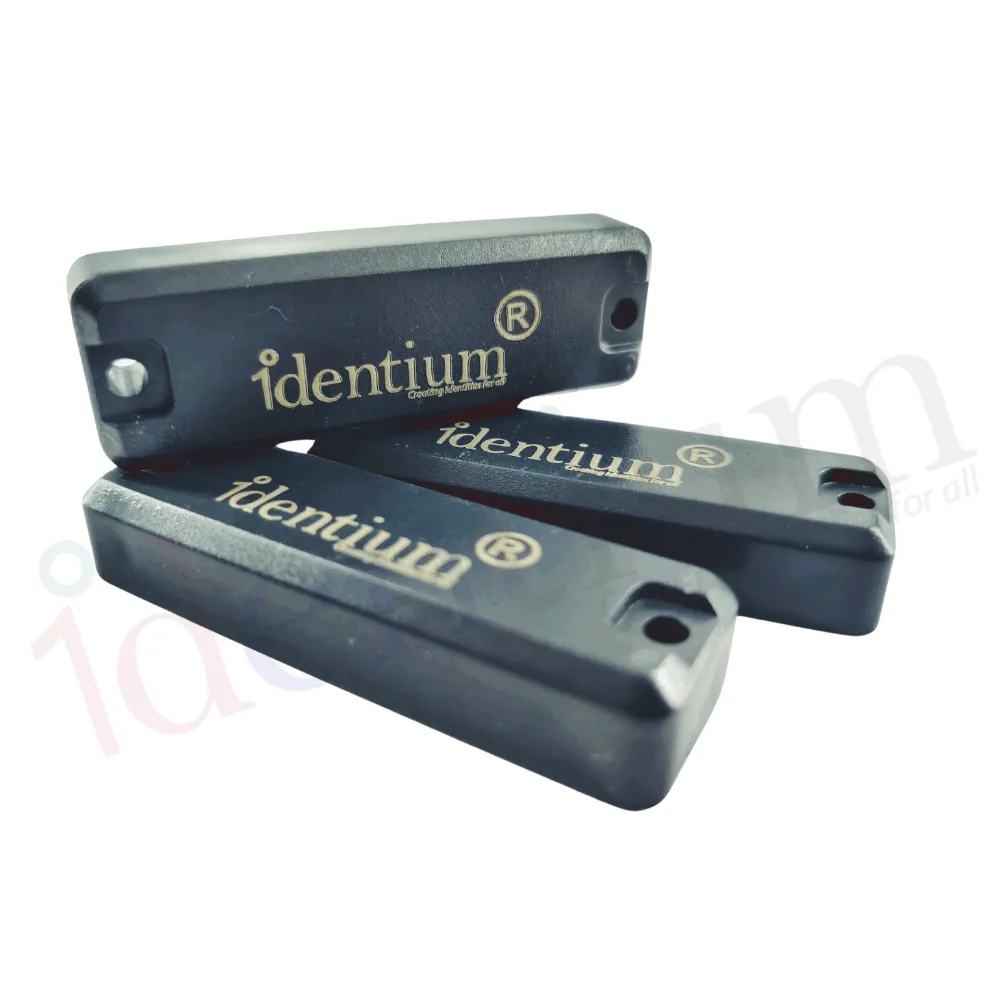
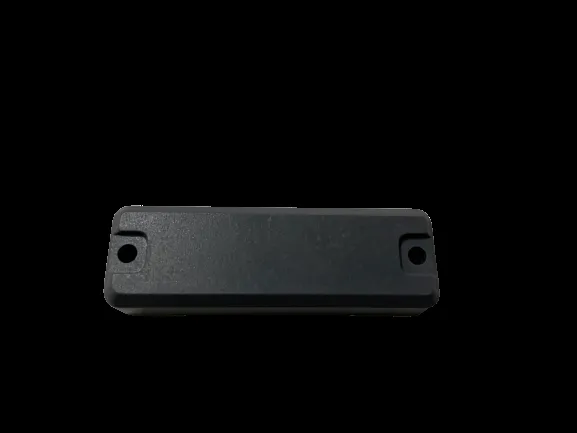
- UHF On-Metal RFID Tag UMMT (60 × 19 mm), ₹60 + GST: a compact 60 × 19 × 10 mm IP68 tag in an impact-resistant ABS/PC housing, reading up to 10 m on metal, for a chassis rail or the area around the kingpin plate where space is tight.
- UHF Long-Range On-Metal Tag UMLT (100 × 30 mm), ₹90 + GST: the longer IP68 format, rated up to 15 m, with 512 bits of user memory, enough for a trailer registration number beside the EPC.
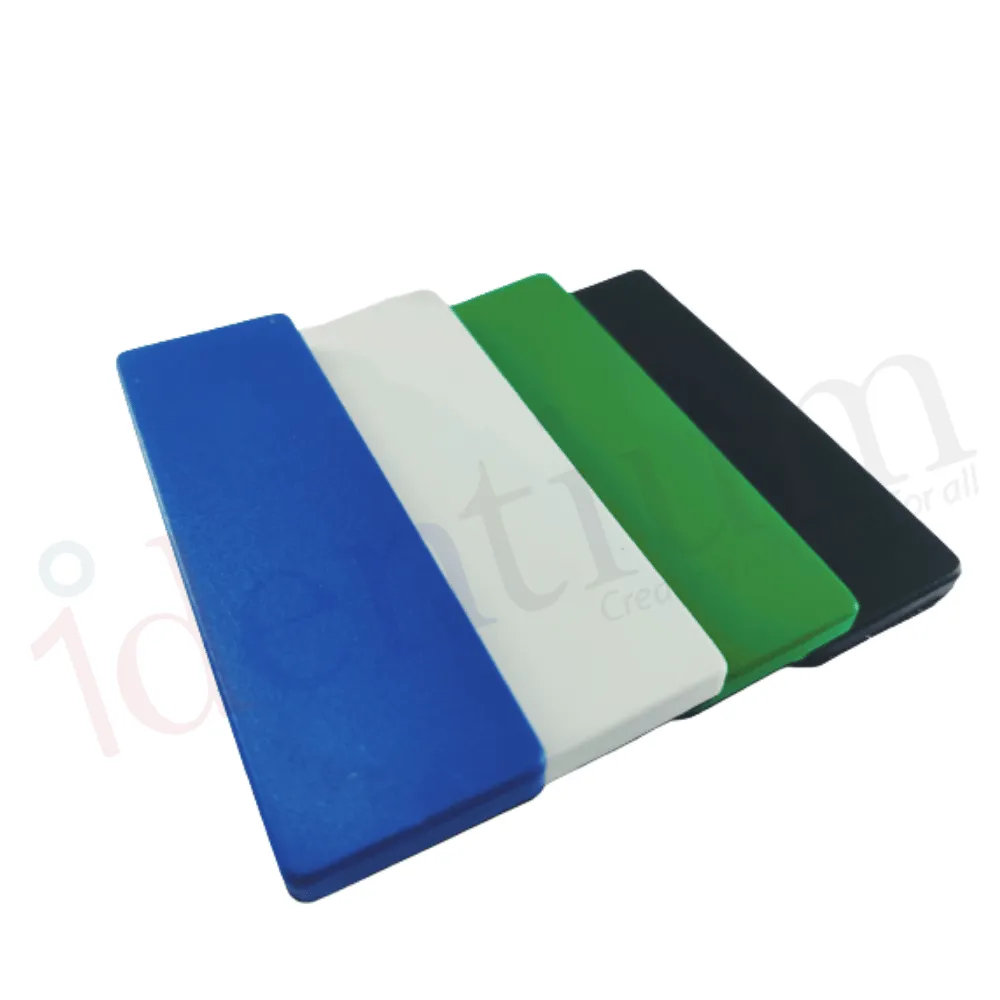
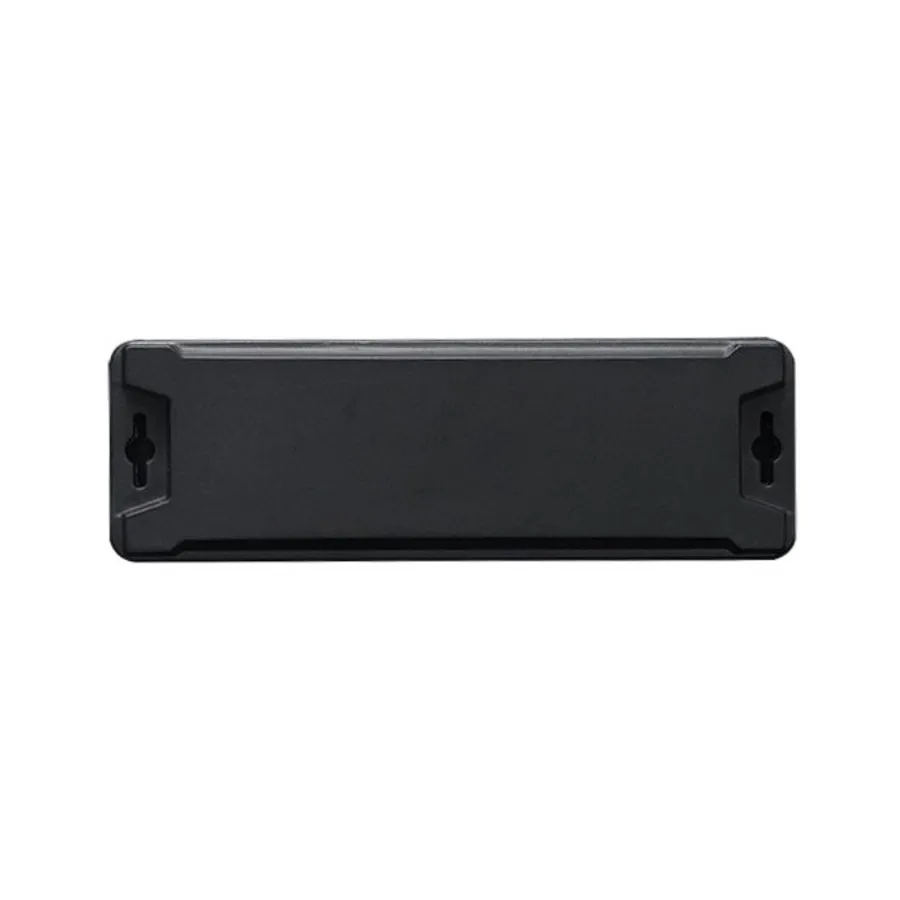
- Long-Range UHF On-Metal RFID Tag IDTS-13042 (130 × 42 mm), ₹89 + GST: a reinforced-polycarbonate bar with pre-applied adhesive and two keyhole screw slots, about 12 m on metal, for exposed cross-members.
- High-temperature UHF on-metal tag IDTS-UMHT, ₹450 + GST: rated for continuous use at +200 °C, for positions near exhaust or brake heat.
- Ceramic UHF on-metal tag CR400 (10 × 5 × 3 mm), ₹445 + GST: for recessed mounting where a housing would be in the way, at shorter range (up to 2 m on metal with a fixed reader).
Mount on a flat steel surface, not across a seam or weld, with the tag's long axis matched to the reader antenna's polarisation, and fix it with its own screw slots where it has them. Our on-metal tag selection guide covers the trade-offs, and the full sets are in on-metal RFID tags and PCB and ceramic tags. Treat any catalogue read range as a test figure, not a promise for a muddy chassis: trial on your own trailers.
The reader side: VLTD makers and yard gates
The draft, as reported, puts the RFID transceiver inside the AIS-140 VLTD on the tractor. For a VLTD maker that means a UHF reader board and a small antenna behind the cab, reporting the trailer ID in the same data stream as the position.
The UHF RFID Reader Module IDTS-RM26 (price on request) is the catalogue's board-level module for integrators: one SMA port for an external antenna, Ethernet, RS232, RS485 and Wiegand outputs, an India 865–868 MHz version, output power adjustable from 0 to 26 dBm, and an SDK, so the tag ID can be handed to the VLTD's controller over a serial line. The RM26 module evaluation kit puts the board on a bench with an antenna, cable, power adapter and sample tags; other boards are in RFID modules. The module is a component: AIS-140 compliance of the finished device remains with the device maker.
Fleets do not have to wait for any rule to pair trailers at their own gates. A fixed reader at a yard or plant gate can read the same trailer tags today: the UHF Integrated Reader IF9A (₹24,000 + GST) combines the reader and a 9 dBi antenna in a die-cast aluminium case, connects over Ethernet, PoE, RS232, USB or Wiegand, is a BIS-registered and WPC ETA type-approved model, and logs tractor and trailer tags as the combination passes the barrier. See integrated readers with inbuilt antenna, and our WPC ETA and BIS checklist for what to ask any reader vendor.
Pairing logic: tractor reads trailer, backend keeps the record
The point of the draft is interchangeability: a tractor can pull any trailer, so the pairing has to be discovered, not configured. The flow a VLTD maker would build is simple.
The reader on the tractor polls for tags; when a trailer tag stays in range longer than a threshold, the device reports that tractor T is coupled to trailer R at a time and place; when the tag disappears for longer than a second threshold, it reports the uncoupling. The backend turns those events into a trip record per trailer, which is what a transport department platform, an insurer or a fleet's own system would use.
Three details decide whether that works on the road. The trailer tag must be readable from the tractor's antenna at full articulation, so mount it on the front cross-member or near the kingpin rather than at the rear. The read threshold must ignore a trailer parked in the next bay, which is a matter of antenna placement and reader power, not tag choice.
And the ID in the tag must match the trailer's registration record, encoded once by the body builder or the fleet and then locked. The same pattern already runs at mines and weighbridges; see GPS and RFID for mineral transport vehicles and our RFID vehicle and parking management system page.
Existing AIS-140 rules, for context
AIS-140 trackers are not new to goods vehicles.
On 15 February 2022 MoRTH published draft G.S.R. 127(E), proposing a new clause in Rule 129 of the Central Motor Vehicles Rules: "every goods carriage carrying any dangerous or hazardous goods shall be equipped with or fitted with a vehicle tracking system device as per AIS 140." A Tripura Transport Department notification of 20 February 2025 quotes the final rule, G.S.R. 617(E) of 3 August 2022: every vehicle of categories N2 and N3 manufactured on and after 1 September 2022 (new models) and 1 January 2023 (existing models) carrying dangerous or hazardous goods "shall be fitted with a VLTD as per AIS 140".
The 2025 draft would extend the same device class to haulage tractors and add the trailer pairing. The device, the AIS-140 approval route and the state tracking backends already exist. The new element is the RFID link between tractor and trailer, which is why tag and reader choices are worth testing before the final text appears.
Shop the products in this guide
- UHF On-Metal RFID Tag UMMT, UMLT long-range on-metal tag and IDTS-13042 reinforced on-metal tag: trailer tags for trials.
- IDTS-UMHT high-temperature tag and CR400 ceramic tag: hot-zone and recessed mounting.
- UHF RFID Reader Module IDTS-RM26: the board for device integration.
- UHF Integrated Reader IF9A: yard-gate reading of tractor and trailer tags today.
- Printed UHF windshield labels for the tractor at the gate, from RFID vehicle tags and windshield stickers.
Running a tractor-trailer fleet or building tracking devices? Tell us the number of trailers, the chassis mounting position and the reader you plan to use, and request on-metal tag samples for a read-range trial on your own trailers.
Sources
- CMV360, 24 July 2025: Govt proposes mandatory location tracking devices for haulage tractors from October 2026
- VahanBazaar, 10 September 2026: a draft rule would put tracking devices and event data recorders on haulage tractors (G.S.R. 485(E); no final notification found)
- Ministry of Road Transport and Highways: Motor Vehicle Legislation (listing of draft G.S.R. 485(E) dated 18 July 2025, tractor and trailer interchangeability)
- Bureau of Indian Standards: IS 16722:2018, Radio Frequency Identification (RFID) System for Automotive Applications – Specification (TED 28)
- MoRTH draft G.S.R. 127(E), 15 February 2022: AIS 140 tracking device for goods carriages carrying dangerous or hazardous goods (PIB)
- Commissionerate of Transport, Tripura, notification of 20 February 2025 citing G.S.R. 617(E) of 3 August 2022 (VLTD as per AIS 140 for N2 and N3 vehicles carrying dangerous or hazardous goods)
Frequently asked questions
Is the trailer RFID tag rule in force?
Which standard would trailer tags have to meet under the draft?
Have India RFID Store's on-metal tags been tested to IS 16722?
Does the draft cover agricultural tractors, pickups or tempos?
Can a fleet use trailer tags before any rule exists?
Vehicle RFIDMoRTHAIS-140On-Metal TagsRegulation
Keep reading
More guides


More in Regulations & tenders
- FSSAI Non-Retail Container Labels 2027: Lot Numbers and RFID
- FASTag Parking System: How to Accept FASTag at Your Parking Lot
- Procam Timing Certificate Rules: RFID Bib Tags, Split Mats, 12-Hour Results by 31 March 2027
- RFID Tag for Solar Modules in India: MNRE Field List, ALMM List-II Cells and the 2027 Cut-off