FASTag & Vehicle RFID in India — How It Works, Cost & Setup (2026)
Published 18 Jul 2026Updated 8 Oct 20268 min read
If you have driven on an Indian highway since 2021, you have already used vehicle RFID. The FASTag sticker on your windshield is a passive UHF RFID tag that a reader on the toll gantry identifies in a fraction of a second, without you stopping. The same core technology now runs gated-community entry gates, factory weighbridges, corporate parking and multi-storey mall parking across the country.
This guide explains how vehicle RFID tag systems work in India: the 865–868 MHz band, how windshield tags behave, the boom-barrier and long-range reader setup, what drives the cost, and the tamper-evident hardware that keeps the system honest. It is a practical reference for anyone specifying a system for a residential society, a logistics yard or a manufacturing plant.
How vehicle RFID tags work
Vehicle RFID uses passive UHF (Ultra High Frequency) RFID. "Passive" means the tag has no battery: it harvests energy from the radio waves the reader transmits, wakes up and reflects back its unique ID using a technique called backscatter. This is the same EPC Gen2 (ISO/IEC 18000-63) standard that FASTag is built on.
The sequence at a toll plaza or society gate is simple:
- Reader transmits. A fixed long-range UHF reader continuously sends RF energy through its antenna towards the lane.
- Vehicle enters the read zone. A vehicle carrying a UHF windshield tag drives into the antenna's field.
- Tag replies. The tag powers up and transmits its unique EPC number; for FASTag, that ID is linked to the issuing bank's account through NPCI's National Electronic Toll Collection system.
- Software decides. The reader passes the ID to the controller or software, which checks its database and triggers the action: open the boom barrier, deduct the toll, log the entry time or deny access.
The whole read-and-decide cycle takes well under a second, which is why toll lanes keep traffic moving and a resident never has to stop and swipe a card.
Why the 865–868 MHz band matters in India
Radio spectrum is regulated country by country. In India, the 865–868 MHz band is licence-exempt for UHF RFID under G.S.R. 853(E) of 2021: readers may transmit up to 2 W e.r.p. on four 200 kHz channels centred at 865.7, 866.3, 866.9 and 867.5 MHz. The band matches Europe's ETSI 865–868 MHz allocation and differs from the US 902–928 MHz band.
The practical takeaway: the tags and readers you deploy must be tuned for 865–868 MHz. Imported hardware set only for the US FCC band will underperform or be non-compliant. Licence-exempt use still requires the reader model to carry WPC Equipment Type Approval and BIS registration, so ask for both certificates naming the exact model.
The core hardware: tags, readers and antennas
A working vehicle-access system has three hardware layers. Get any one wrong and read reliability collapses.
1. UHF windshield tags
The tag is the vehicle-side identifier. Two form factors dominate in India:
- Windshield sticker tags: a thin inlay bonded to the inside of the windscreen. Tamper-evident versions break if peeled off, which is the behaviour FASTag relies on.
- Headlamp or metal-mount tags: used where windscreens are metallised (some premium cars have heat-reflective glass that blocks UHF), with the tag fixed to the headlamp or bumper instead. These use on-metal RFID tags.
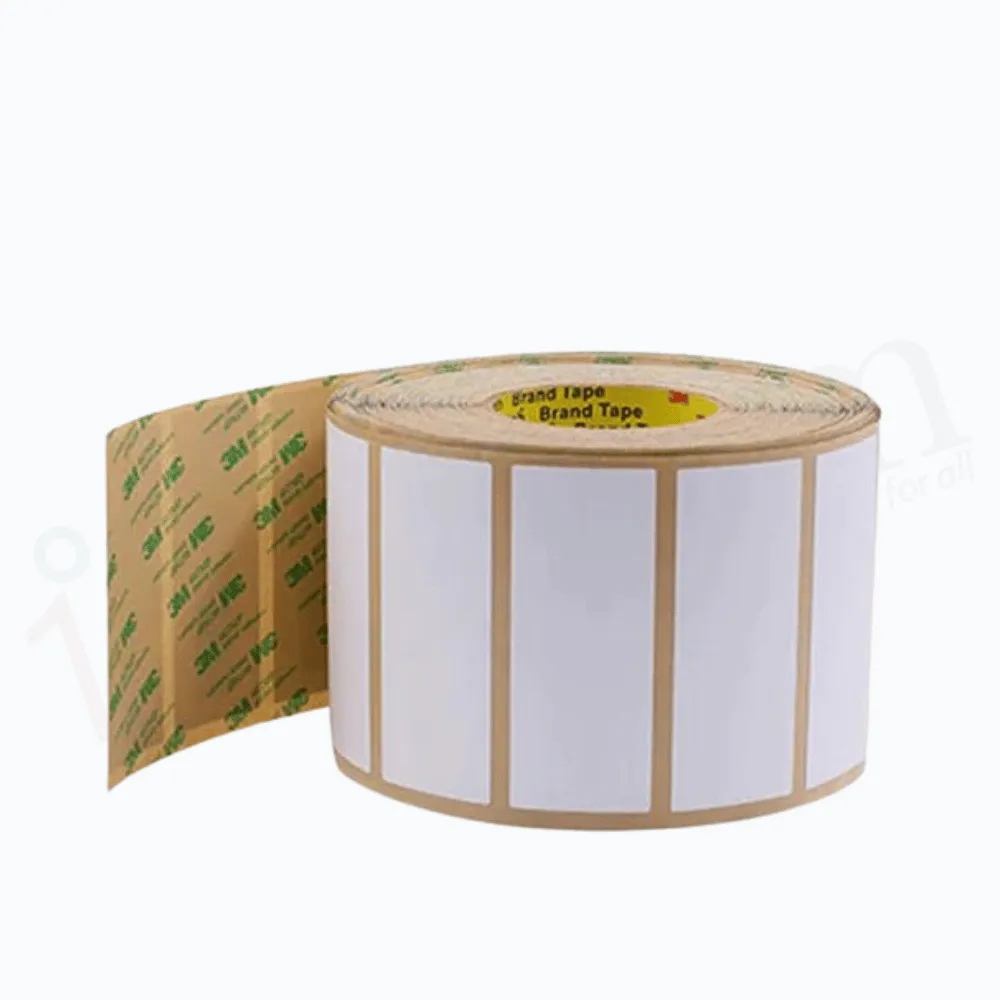
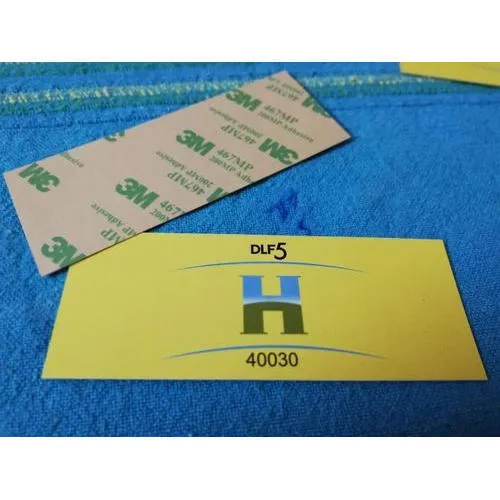
The store carries several windshield formats in the UHF RFID inlays and labels range. The UHF tamper-proof windshield label (IDTS-UTWTH3) has a printed serial number and barcode for easy issuing and reads at 8–10 m from inside the windshield. The printed UHF windshield tag (IDTS-UWTP) can carry your logo and serial number, and the printed RFID windshield labels can be printed with vehicle number, colour code and barcode. Impinj Monza and NXP UCODE chips are common in this kind of tag.
2. Long-range UHF readers
The fixed reader is the brain of the lane. For vehicle access you need a long-range reader with enough transmit power and receive sensitivity to read a windshield tag at 5–12 m. Readers come as integrated units, with the antenna built in, or as modular readers driving external antennas.
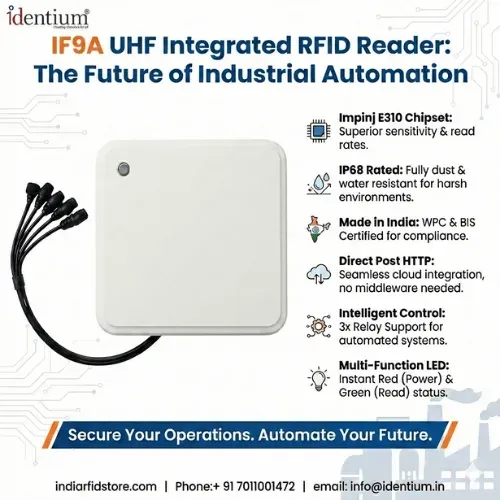
The IF9A integrated UHF reader is a typical lane reader: a 9 dBi built-in antenna, an Impinj E710 chipset, interface options including Wiegand, RS232, RJ45, PoE and 4G, and an optional relay output for the barrier. It is BIS-registered and has WPC ETA. Compare it with other integrated readers or modular RFID readers to match range and interface.
3. Gate readers and antennas
With a modular reader, the external antenna sets the read zone; a high-gain, narrow-beam antenna on a pole beside the barrier helps keep reads to one lane. The RFID antenna range covers gain and beam options, and the antenna guide explains dBi and polarisation.
Purpose-built RFID gate readers combine the reader, antenna and alarm logic in one unit. The HLR200 gate reader reads at up to 4 m and has built-in direction sensors to tell entry from exit, which suits short read zones; for longer pole-mounted reads at a boom barrier, an integrated long-range reader is the usual choice.
Boom barrier and long-range reader setup
For a typical single-lane society or factory entry, the pieces come together like this:
- Reader or antenna position: mounted 4–5 m ahead of the boom barrier, angled at roughly 30–45° towards the approaching windscreen, at a height of about 2–2.5 m. This creates a clean read zone before the vehicle reaches the barrier.
- Read-zone tuning: transmit power is turned down from maximum so the reader only reads the vehicle in the lane, not a tagged car parked 15 m away. Over-powering a reader causes cross-reads and is the most common reason a gate opens for the wrong vehicle.
- Barrier trigger: the reader's relay or Wiegand output connects to the boom-barrier controller. On a valid, authorised tag read, the barrier rises. Loop detectors or the barrier's own safety sensor make sure it only closes after the vehicle has passed.
- Software: a controller, PC or cloud dashboard logs every entry and exit, maintains the whitelist of authorised tags and generates reports.
For a two-way gate, use one reader for entry and one for exit, each with its own antenna, so the software knows the direction and can calculate parking duration or enforce anti-passback.
Where vehicle RFID is used in India
Gated communities and residential societies
This is the strongest growth area. Residents get a windshield tag linked to their flat number and the gate opens automatically. Visitors and cabs get temporary tags or are handled through a separate app or OTP system. The benefits: no security-guard bottleneck at peak hours, a permanent digital log of every vehicle, and no manual sticker checks.
Factories, warehouses and logistics yards
Vehicle RFID at the gate ties into weighbridge automation, dock scheduling and material-movement tracking. A tagged truck is identified at the gate, its gross and tare weights are captured automatically, and the whole in-out cycle is logged without a supervisor keying in registration numbers. That cuts weighbridge queues and closes the door on manual-entry fraud; the RFID weighbridge guide covers the mining and despatch case.
Corporate campuses and paid parking
Employee vehicles are read hands-free at the barrier, and visitor parking is metered by entry and exit timestamps. Malls and airports use the same architecture to let monthly-pass holders skip ticket queues. To accept FASTag itself at a car park, see the FASTag parking guide for operators.
Toll and FASTag
The national example everyone knows: bank-issued FASTags are read at NHAI toll plazas and the toll is deducted from a linked prepaid or bank account. Private toll-style deployments in large townships and ports reuse the same UHF stack. For the move to gantry-based tolling, read the barrier-free tolling guide.
Vehicle RFID vs other access technologies
| Parameter | UHF RFID (865–868 MHz) | ANPR camera | Proximity card (125 kHz) |
|---|---|---|---|
| Read range | 5–12 m | 5–20 m (line of sight) | 2–10 cm (driver must stop) |
| Hands-free while moving | Yes | Yes | No |
| Works in rain, fog and dust | Excellent | Degrades | Excellent |
| Works with a dirty or damaged plate | Yes (the tag is separate) | No | Not applicable |
| Cost per vehicle | Low: one passive tag per vehicle | None per vehicle (plate-based); camera cost per lane | One card per user |
| Tamper resistance | High (tamper-evident tag) | Plate cloning possible | Card sharing possible |
| Best for | Barriers, toll, factory gates | Open surveillance, overflow | Pedestrian doors, small lots |
Many high-security sites run RFID and ANPR together: RFID as the primary trigger and the camera as a verification and audit layer that catches tag swapping.
Tamper-evident tags: why they matter
A vehicle RFID tag is a credential. If it can be peeled off one car and stuck on another, the access-control logic breaks. Tamper-evident windshield tags use a frangible construction: the inlay is designed so the antenna fractures when someone tries to remove it, permanently disabling the tag.
That is what stops a resident lending a tag to a non-resident, or a truck driver moving a tag between vehicles at a weighbridge. When you specify tags, insist on this behaviour; a cheap non-tamper inlay defeats the purpose of the whole system.
Cost breakdown for an Indian deployment
A single-lane gated-community or factory entry is built from the components below. Actual cost depends on volume, read range, interface and IP rating. Tags, readers and antennas on India RFID Store each show a list price before 18% GST, so you can price the RFID side of a lane directly from the product pages; the boom barrier, civil work and software are usually quoted separately.
| Component | Typical role | What moves the cost |
|---|---|---|
| UHF windshield tags (tamper-evident) | One per vehicle | Quantity, custom printing, windshield or metal-mount format |
| Long-range or integrated reader | Reads tags at the lane | Read range, antenna gain, interface (Wiegand, RS232, PoE, 4G), relay output |
| External UHF antenna (modular reader) | Shapes the read zone | Gain, beam width, weatherproofing, cable length |
| Boom barrier and controller | Physical gate | Boom length, duty cycle, safety sensors |
| Software or dashboard | Whitelist, logs, reports | On-premise or SaaS, ERP or weighbridge integration |
| Cabling, pole and installation | Site work | Distance to the controller, civil work, number of lanes |
A two-way (entry and exit) gate needs a second reader and antenna set. Running costs are small: passive tags have no battery and readers draw little power. For full project budgeting, see the RFID project cost and ROI guide.
Choosing the right system for your site
- Small society, single gate, tight budget: one integrated long-range reader with relay output, a boom barrier and tamper-evident windshield tags. Simplest and fastest to deploy.
- Factory or warehouse with a weighbridge or ERP: modular RFID readers with external antennas and TCP/IP output for integration into your software.
- Long lanes, higher speeds or metallised windscreens: a higher-gain antenna or reader plus headlamp-mount on-metal tags.
- Security-critical sites: RFID with ANPR verification and strictly tamper-evident tags.
Whatever the configuration, check two non-negotiables: the hardware is tuned for 865–868 MHz, and the reader model has WPC ETA and BIS registration. That avoids the compliance and performance problems of grey-market imports.
Shop for a vehicle lane
Frequently asked questions
Is FASTag the same technology as gate-access vehicle RFID?
What is the read range of a vehicle RFID windshield tag?
Will the tag work on cars with tinted or heat-reflective windscreens?
Can one vehicle RFID tag be moved between vehicles?
Do I need a licence to use RFID readers in India?
How many tags can one reader handle?
vehicle rfidfastaguhf rfidboom barrieraccess controlparking automationindia rfidlong range reader