GPS and RFID for Mineral Transport Vehicles in India: Compliance Guide 2026
Published 9 Aug 2026Updated 22 Oct 202610 min read
Written and maintained by the RFID team at Identium Tech Solutions Pvt Ltd, New Delhi (India RFID Store).
Short answer: Indian states are moving to a two-part tracking stack for mineral transport vehicles: a GPS/VLTD unit that reports where the truck is, plus an RFID tag that proves which truck physically crossed a mine gate, weighbridge or check post. Jammu & Kashmir's revised Rule 71 of the Minor Mineral Concession Rules 2016 (order reported 18 December 2025) made GPS, RFID registration and QR/watermarked e-Challan compulsory for all mineral transport, with a 26 January 2026 deadline. GPS vendors typically supply only the first half; the RFID half — vehicle tags, gate readers and weighbridge readers — is a separate hardware decision.
This guide is written for mine lessees, crusher and brick kiln operators, transport contractors, fleet managers and compliance officers in India who have been told to "install GPS and RFID". It covers what hardware to buy, which tag type survives a tipper truck, and how the readers tie into e-challan and weighbridge systems.
What exactly do the new mineral transport rules require?
They require three linked things on every mineral-carrying vehicle:
- A working GPS / vehicle location tracking device that reports the truck's position.
- An RFID registration — a tag on the vehicle, registered against its number in the mining department's system.
- A QR-coded or watermarked electronic transit challan for each trip.
In Jammu & Kashmir, the revised Rule 71 order made all three compulsory with a 26 January 2026 compliance deadline.
The obligation is not limited to mine owners. As reported, the J&K rule binds lessees, licensees, permit holders, crusher units and brick kilns alike — so a brick kiln that only receives sand, or a crusher that only despatches aggregate, is inside the scope.
Enforcement runs through an Integrated Mining Surveillance System that fuses four data streams: GPS position, RFID gate and weighbridge reads, e-challan issuance and weighbridge data. A mismatch in any one of them — a challan with no corresponding gate read, or a weighbridge ticket with no RFID identity — is what the system is designed to flag.
Other states have arrived at similar architectures by different routes. Uttar Pradesh's MineMitra platform and Rajasthan's e-Rawanna system require AIS-140 compliant VLTD registration; a vehicle without a valid registered device is blacklisted from receiving e-Transit Passes, which effectively stops it working. Assam's Minor Mineral Concession (Amendment) Rules 2026 add GPS requirements as well. The direction of travel across states is consistent even where the exact rule numbers and deadlines differ.
Why isn't GPS alone enough — why add RFID?
GPS tells you where a device is. RFID tells you which physical vehicle passed a specific point at a specific moment. That distinction matters because almost every form of mineral transport fraud is an identity problem, not a location problem: a GPS unit moved into a different truck, one challan used for two trips, or an empty declared load that was actually full.
A UHF RFID read at a mine gate or weighbridge is a hard, timestamped event tied to a tag that is physically bonded to that vehicle. It works when the mobile network is down, it does not drift, and it cannot be satisfied by a device sitting in a driver's pocket. When the surveillance system compares a GPS position against a gate reader's timestamped entry and exit for the same tag, and against a weighbridge record captured for that same tag, you get corroboration rather than a single claimable data point.
There is an operational payoff too, and it is usually what convinces the finance side. Automatic identification at the weighbridge removes manual number-plate entry, which is a major source of ticket errors and queue time in a busy despatch yard. The mechanics are the same ones described in our guide to vehicle RFID tagging in India.
What RFID hardware does a mineral transport setup actually need?
Four core components: a UHF RFID tag on each vehicle, fixed readers with antennas at every control point (mine gate, weighbridge, crusher entry, check post), a handheld reader for verification and exception handling, and software to map tag IDs to vehicle registration numbers and push events into the state portal or your own despatch system.
- Vehicle tags — passive UHF tags operating in India's 865–868 MHz band. One per vehicle, permanently fixed, registered against the vehicle number.
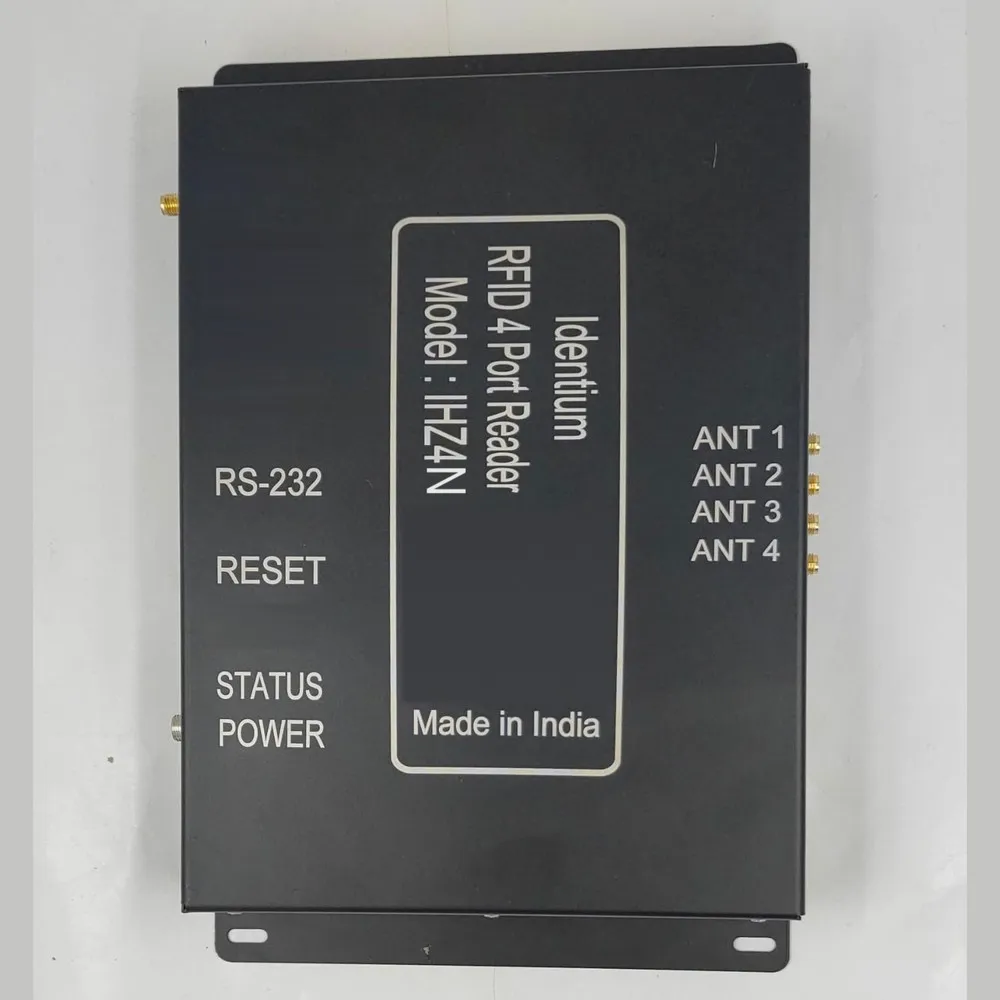
- Gate readers — fixed multi-port UHF RFID readers with external antennas, or integrated readers where the antenna is built in, mounted to cover the full lane width.
- Weighbridge readers — a reader triggered by the weighbridge so the tag ID and the weight land in the same transaction record.
- Handheld readers — RFID handheld readers for spot checks by flying squads, for verifying a tag that failed to read, and for commissioning new vehicles.
- Antennas — circular polarisation for lane coverage where tag orientation varies; higher-gain panels where the read zone must be long. See the RFID antenna range.
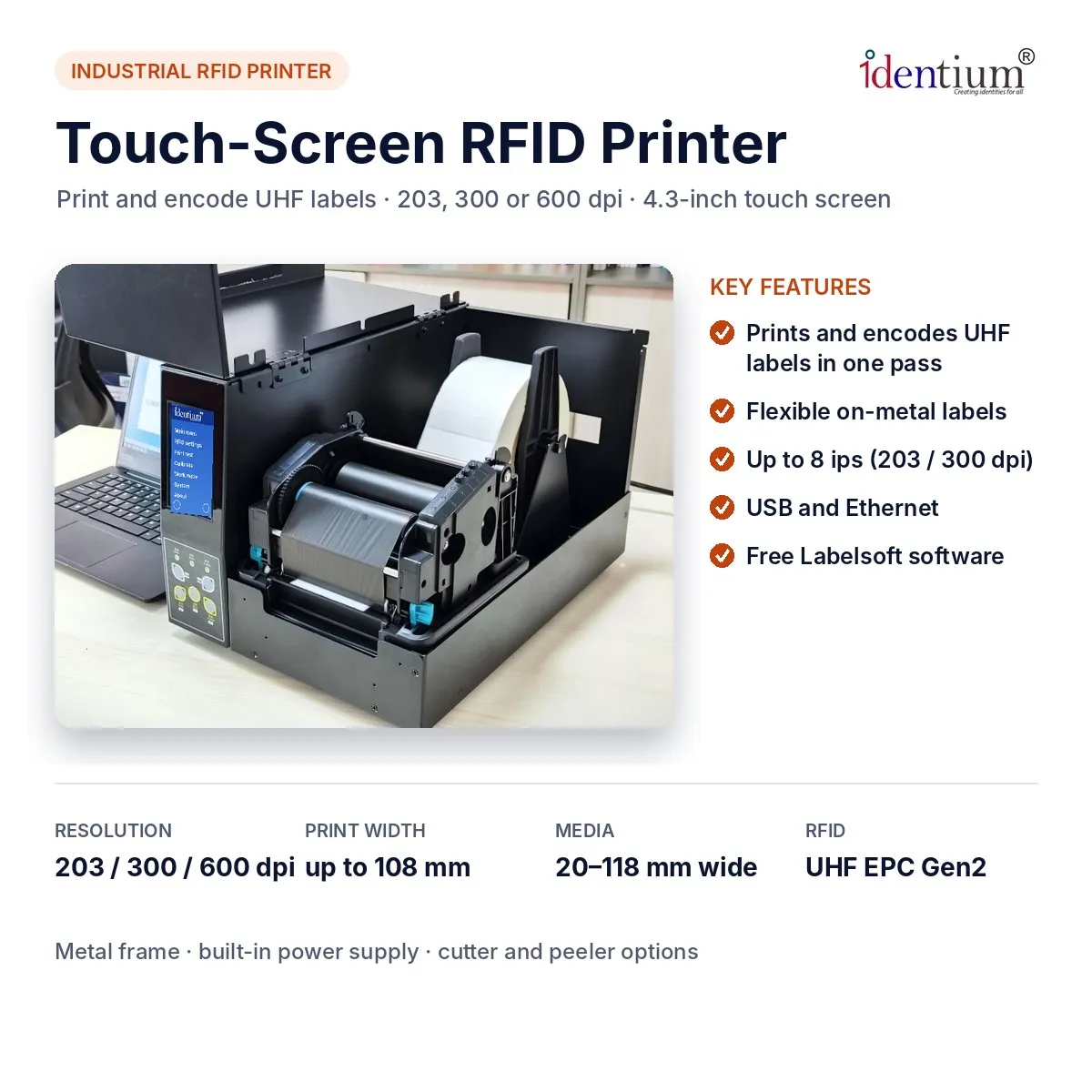
- Printer or pre-encoded tags — if you want vehicle numbers printed on the tag face for visual verification you need an RFID printer; otherwise order tags pre-encoded.
When you order readers, confirm each one is set to India's 865–868 MHz band rather than another region's frequency plan.
Windshield tag or on-metal tag — which should I fit to a tipper?
Use a windshield tag when the vehicle has a clean glass area and you want tamper-evident, one-time-use mounting. Use an on-metal tag when the truck is a dust-caked tipper, the windshield is cracked or replaced often, or the tag must survive quarry conditions for years. Many mining fleets fit both: windshield for the primary read, on-metal as a backup identity.
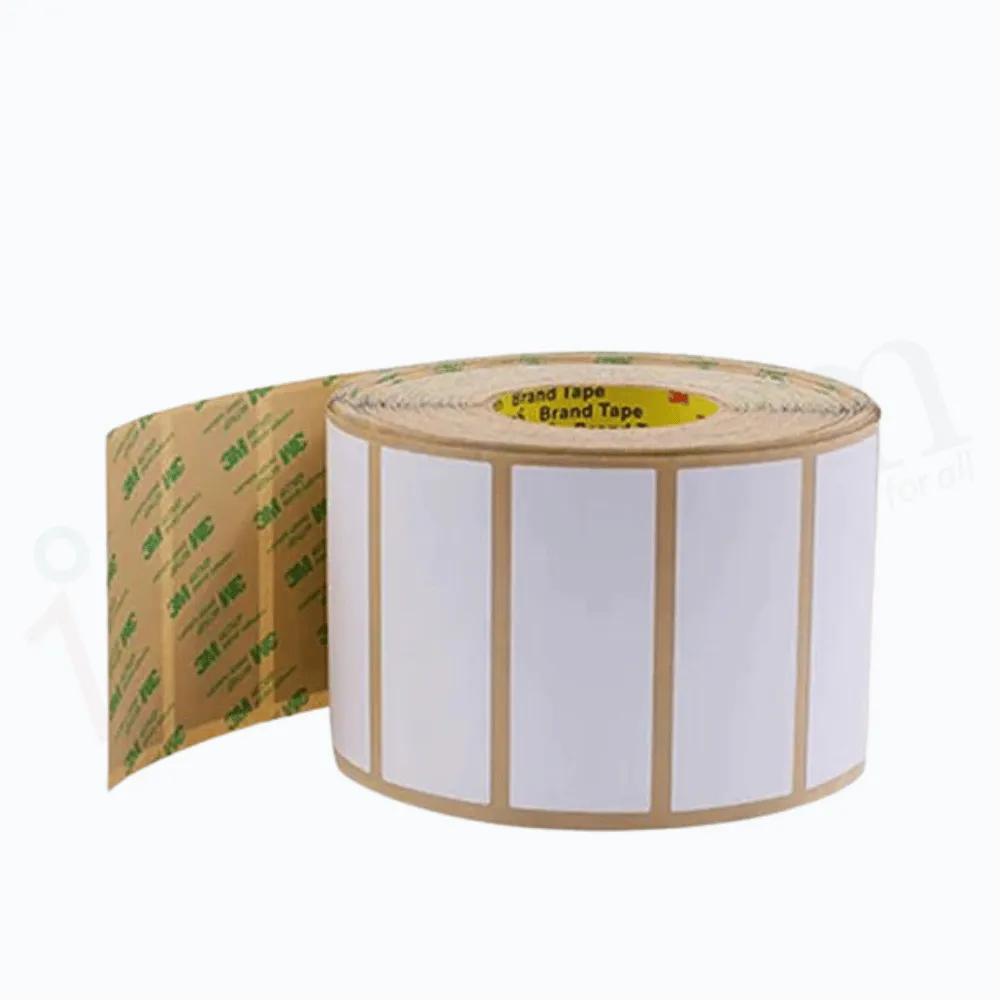
This is the decision GPS vendors cannot make for you, and getting it wrong is a common reason a compliance rollout underperforms. A standard paper or PET label stuck on a steel cab will read poorly or not at all, because metal detunes the tag antenna — that is physics, not a product defect. On-metal RFID tags are built with a spacer or ferrite layer specifically to work when mounted on steel, while tamper-proof windshield labels cover the glass-mounted option.
| Factor | Windshield tag | On-metal / hard tag |
|---|---|---|
| Mounting surface | Inside of glass windscreen | Cab roof, bonnet, chassis rail, bumper bracket |
| Tamper evidence | High — frangible face destroys on removal | Medium — riveted or bonded, removal leaves marks |
| Dust, mud, vibration tolerance | Moderate; needs periodic glass cleaning | High; sealed housings suit outdoor use |
| Typical service life | Shorter — replaced with the windscreen | Longer — multi-year in harsh sites |
| Read reliability at speed | Good with overhead or side antennas | Good; depends on mounting height and orientation |
| Relative unit cost | Lower | Higher |
| Best for | Owned fleets, check-post lanes, mixed traffic | Tippers, dumpers, contractor vehicles, long-term assets |
One practical note for tippers specifically: avoid mounting anywhere the hydraulic body sweeps when tipping, and avoid the rear of the vehicle where reversing impacts are routine. A bracket-mounted hard tag on the cab roof or on a front bumper plate usually gives the cleanest sightline to an overhead gantry antenna. Test the position on your own vehicles before you commit a whole fleet to it.
How do gate and weighbridge readers get installed at a mine?
A gate installation is one reader driving two to four antennas mounted on a gantry or side poles, positioned to create a read zone covering the full lane. A weighbridge installation is usually a single reader with one or two antennas aimed at the vehicle stopping position, triggered by the weighbridge indicator or by a loop or sensor so that one read maps to one weighment.
The engineering points that decide whether a mining gate works reliably:
- Lane discipline. Uncontrolled wide entrances let two trucks read simultaneously and you lose the ability to say which one crossed. Physical channelisation with barriers is cheaper than solving it in software.
- Antenna height and tilt. Overhead antennas tilted down the approach read windshield tags well; side-mounted antennas suit cab-roof and chassis tags.
- Power management. Stay within India's licence-free power limits for the 865–868 MHz UHF band. Turning power up beyond what is permitted is not a legitimate fix for a bad antenna layout, and it creates stray reads from the queue.
- Direction logic. Entry versus exit must be distinguishable, either by separate lanes or by antenna sequencing, so loaded despatch is not confused with empty return.
- Environment. Quarry dust, monsoon water ingress and voltage fluctuation kill more installations than RF problems do. Specify sealed enclosures and clean power.
For sites that want a single-box solution, an integrated reader with an inbuilt antenna reduces cabling and commissioning time, though a multi-antenna RFID gate reader setup gives better coverage on wide lanes. The full layout logic is set out in our RFID gate and portal reader guide.
How does RFID connect to e-challan and weighbridge data?
The tag ID is the join key. Each vehicle's RFID number is registered once against its registration number; from then on, every gate read, weighbridge weighment and e-challan can be linked to the same identity, which is precisely what an integrated mining surveillance system is built to reconcile.
In practice the middleware sits between reader and portal. It de-duplicates the burst of reads a moving tag produces, decides entry or exit, attaches the weighbridge gross and tare, and posts a single clean transaction. Where a state portal accepts machine submissions you push to its interface; where it does not, the same record still serves your internal despatch reconciliation and gives you an audit trail if a challan is later questioned. Our guide to RFID at the weighbridge walks through matching the weighed load to the transit permit.
Exception handling deserves as much design attention as the happy path. Decide in advance what a guard does when a tag does not read: a handheld RFID reader lets them capture the tag at the cab and record a manual-assist event rather than waving the truck through untracked.
What does this cost and how do I phase the rollout?
Budget in three buckets:
- Per-vehicle tags — the cheapest element. Windshield labels sit at the low end; rugged on-metal hard tags cost several times more.
- Per-lane fixed reader infrastructure — the largest capital item, driven by antenna count, poles and enclosures.
- Integration effort — middleware, portal submission and despatch reconciliation.
Tag cost scales with quantity, so price against your actual fleet count. List prices are on each product page, and fleet-scale orders can be quoted through bulk RFID pricing.
A sensible phasing for a mine or crusher facing a compliance deadline:
- Weeks 1–2: fleet audit. List every vehicle, its type, cab surface, windscreen condition and ownership (own versus contractor). This determines your tag mix.
- Weeks 2–3: site survey. Visit every control point. Mark lane widths, power availability, network availability and mounting options.
- Weeks 3–4: pilot. Fit one gate and one weighbridge with a sample of tags. Test in dust and rain, loaded and empty, at realistic speeds.
- Weeks 5–6: bulk tag issue and registration. Map every tag ID to a vehicle number before the trucks need it.
- Week 6 onward: scale. Remaining lanes, handheld rollout to security, and reconciliation reporting.
Contractor vehicles are the usual schedule risk — they turn up unannounced and untagged. Keep a stock of pre-encoded tags and a handheld at the gate so a new vehicle can be commissioned in minutes rather than turned away.
Does the RFID hardware itself need Indian certification?
Yes. RFID readers are radio transmitters, so they need the applicable Indian approvals, and buying uncertified imported readers set to non-Indian frequencies is a real compliance exposure when a regulatory or mining inspection reaches your gate.
The band matters practically as well as legally. A reader configured for another region's UHF band may read poorly against India-tuned tags and can interfere with other licensed users. Ask any supplier for documentation covering the specific model you are buying, not a generic certificate for a product family, and confirm which approvals currently apply with the relevant Indian authority before you order.
Identium's RFID readers are BIS and WPC approved. The full list is on our certifications and approvals page.
Important: mineral transport rules are state-specific and are being amended frequently. The J&K, UP, Rajasthan and Assam requirements described above are as reported at the time of writing. Always verify current requirements, deadlines and technical specifications against the official notification issued by your state's Department of Geology and Mining before finalising procurement.
Need the RFID half of your mining compliance stack? Tell us your vehicle count, gate locations and state, and we will specify the tag mix and reader layout for your site. Request samples to test tags on your own tippers first, or ask for bulk RFID pricing for a full fleet rollout.
Related guides
Frequently asked questions
Is RFID mandatory for mineral transport vehicles across all of India?
Can I use my FASTag as the RFID tag for mining compliance?
What happens if my vehicle's GPS or RFID is not registered?
How far can a gate reader detect a vehicle tag?
Will dust, rain and mud stop the tags working?
How long does a mine gate RFID installation take?
RFID for MiningVehicle TrackingComplianceLogisticsUHF RFID
Cite as: India RFID Store (Identium Tech Solutions Pvt Ltd), “GPS and RFID for Mineral Transport Vehicles in India: Compliance Guide 2026”, https://www.indiarfidstore.com/rfid-resources/rfid-gps-mineral-transport-vehicles-india-mining, updated 22 Oct 2026.
Keep reading
More guides
More in Industries & use cases
- RFID for Cold Chain & Temperature Monitoring in India: A 2026 Buyer's Guide for Pharma, Vaccines, Food & Dairy
- RFID EAS & Loss Prevention for Indian Retail: Stop Shrinkage in 2026
- RFID for E-commerce & D2C Fulfilment in India: Faster Picking, 100% Accuracy & Quicker Returns (2026)
- RFID Livestock & Cattle Ear Tags in India (2026): Dairy Herd Management, Government Schemes & Reader Guide
- RFID in Logistics & Supply Chain in India (2026): Dock-Door Verification, Carton & Pallet Tracking, and 3PL Visibility