How to Implement RFID in Your Warehouse — Step-by-Step Guide for India 2026
Published 11 Apr 2026Updated 12 Nov 202612 min read
Written and maintained by the RFID team at Identium Tech Solutions Pvt Ltd, New Delhi (India RFID Store).
Short answer: A warehouse RFID rollout in India is a structured eight-week project, not a hardware purchase: define KPIs, run an RF site survey, match tags to surfaces, install dock-door portals, integrate with your WMS, then run in parallel before cut-over. The dock-door portals and the WMS integration effort, not the tags, dominate the budget, and inventory accuracy typically moves from the high-80s/low-90s into the 98–99.5% band. Every reader and tag must work in India's de-licensed 865–868 MHz UHF band, and each reader model needs its own WPC ETA.
Implementing RFID in a warehouse is not just buying readers and tags. It is a structured process that, done correctly, delivers 99%+ inventory accuracy and much shorter cycle counts. This guide covers the complete implementation journey for Indian warehouses in 2026.
Phase 1: Define your RFID use cases and KPIs (week 1)
Before purchasing any hardware, define exactly what you want to achieve and how you will measure success.
Common warehouse RFID use cases
- Automated inbound receiving at dock doors (scan-free GRN)
- Faster cycle counting, from days to hours
- Real-time inventory accuracy (target: 98%+)
- Better pick accuracy
- Automated dispatch verification to reduce mis-shipments
Record your baseline KPIs
Measure current inventory accuracy, cycle-count duration, mis-shipment rate and GRN time per truck. You need these baselines to calculate ROI after deployment.
Write the baseline down and have operations and finance sign it off before any purchase order goes out. Once the system is live, nobody remembers what the old cycle count actually took, and an unsigned baseline turns your ROI case into an argument about opinions.
Phase 2: RF site survey (week 2)
This is the step most often skipped, and the biggest reason RFID projects fail. An RF site survey maps the warehouse to identify:
- Metal shelving, racking and equipment that create RF reflections or dead zones
- Interference from existing wireless equipment (Wi-Fi, Bluetooth, other RFID systems)
- The best reader positions for dock doors and counting zones
- The antenna configuration needed to achieve the target read zone
For a single site the survey usually takes about a day and should end in a placement diagram and a hardware specification. Skipping it risks buying the wrong number of readers or mounting them where they cannot deliver the required read rates.
One thing has genuinely changed since the first wave of Indian deployments: sites are now crowded. A single facility may run gate readers, several dock-door portals and a dozen handhelds at once, all sharing the same 865–868 MHz slice. Record everything already transmitting in that band during the survey, and set antenna angles and power levels around it rather than turning power up until reads appear.
Phase 3: Tag selection and tagging strategy (weeks 2–3)
Select tags based on what you are tagging and the environment:
| What you are tagging | Recommended tag | Application method |
|---|---|---|
| Cardboard cartons and packaging | UHF wet inlay label | Adhesive (print-and-apply or pre-printed) |
| Plastic crates and totes | UHF hard tag | Cable tie, screw or rivet |
| Metal pallets and cages | On-metal UHF hard tag | Screw mount or bolted |
| Individual products (retail) | UHF paper label | Print-and-apply or source-tagged |
| High-value tools and equipment | On-metal UHF tag (IP67) | Adhesive or screw mount |
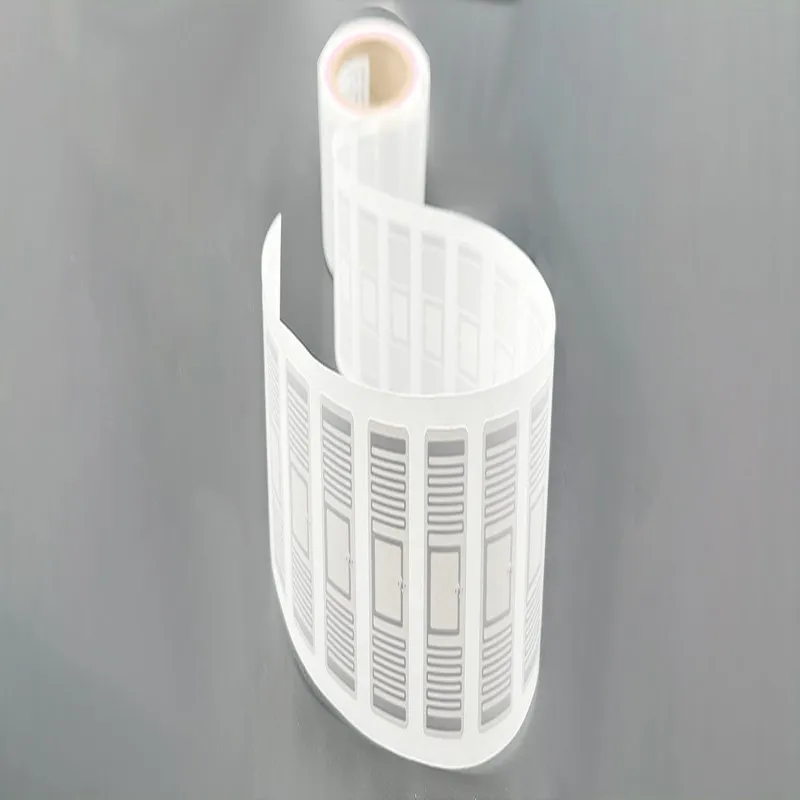
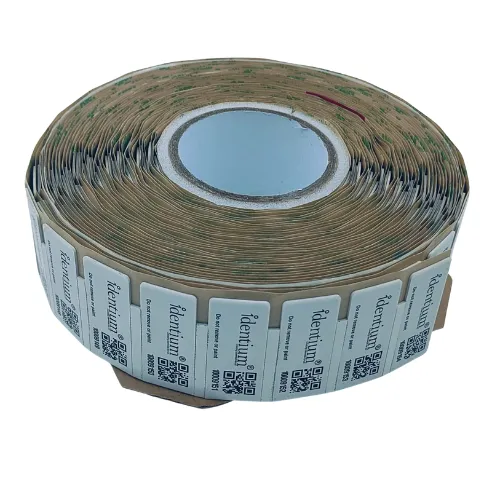
Cartons and items usually take UHF RFID inlays and labels; metal pallets, cages and tools need on-metal RFID tags.
Check the band and the chip, not just the label size
Any tag going into an Indian site must be tuned for the 865–868 MHz band, which matches the ETSI 865–868 MHz range, not the US 902–928 MHz band. A mis-tuned inlay can lose several metres of range on exactly the same reader and antenna.
On the silicon side, most warehouse-grade inlays sold in 2026 are built on the Impinj M800 family or NXP's UCODE series. The practical difference shows up as read sensitivity deep inside a loaded pallet and as available user memory. The NXP UCODE X vs Impinj M800 chip guide walks through which suits which warehouse workload.
Decide your tagging strategy
- Source tagging: tags applied by the supplier at the point of manufacture. Best for consumer goods and apparel where the supplier agrees to apply tags.
- In-house tagging: tags applied at your receiving dock with a print-and-apply system. More control, more labour; common in industrial and 3PL warehouses.
- Tag-on-tote: reusable tags on totes or pallets rather than on individual items. Lower ongoing tag cost, but less granular tracking.
3PL and multi-client inventory: tag at source or at receiving?
For a third-party logistics operator the tagging decision is really two decisions: who applies the tag, and whose number goes inside it. The right answer changes from client to client, so expect to run both models side by side on a multi-client site. This is the decision rule we would use.
| Scenario | Recommendation | Why |
|---|---|---|
| Long-tenure client with few SKUs and a supply chain it controls | Source tagging at the client's vendor or the client's own DC, with tags encoded before the goods reach your dock | Lowest cost to you per unit, because the tag goes on during packing that already happens. The tag cost sits with the client, and your dock only reads and reconciles against the ASN. |
| Short-tenure or seasonal client, or inbound from vendors you do not control | Tag at receiving with an RFID printer-encoder, and price it as a value-added service per carton | A short contract rarely justifies onboarding the client's suppliers, and you cannot enforce tag placement or encoding on a vendor you have no relationship with. Tagging in your own receiving bay keeps both under your control. |
| Mixed-client racking where only some clients arrive tagged | Tag the untagged clients' cartons at receiving rather than leaving them bare | A dock portal or handheld count that sees only some of the cartons in a bay is partially blind: it cannot tell a missing carton from an untagged one. Tagging everything that enters keeps portal counts and cycle counts complete. |
| Returnable crates, totes and pallets | Permanent, reusable hard tags owned by the 3PL and identified under its own prefix | The asset is yours and circulates across clients, so one tag is amortised over every trip and every client. GS1 recommends its GRAI key for returnable transport items, assigned by whoever owns the asset. |
How the tagging cost is billed
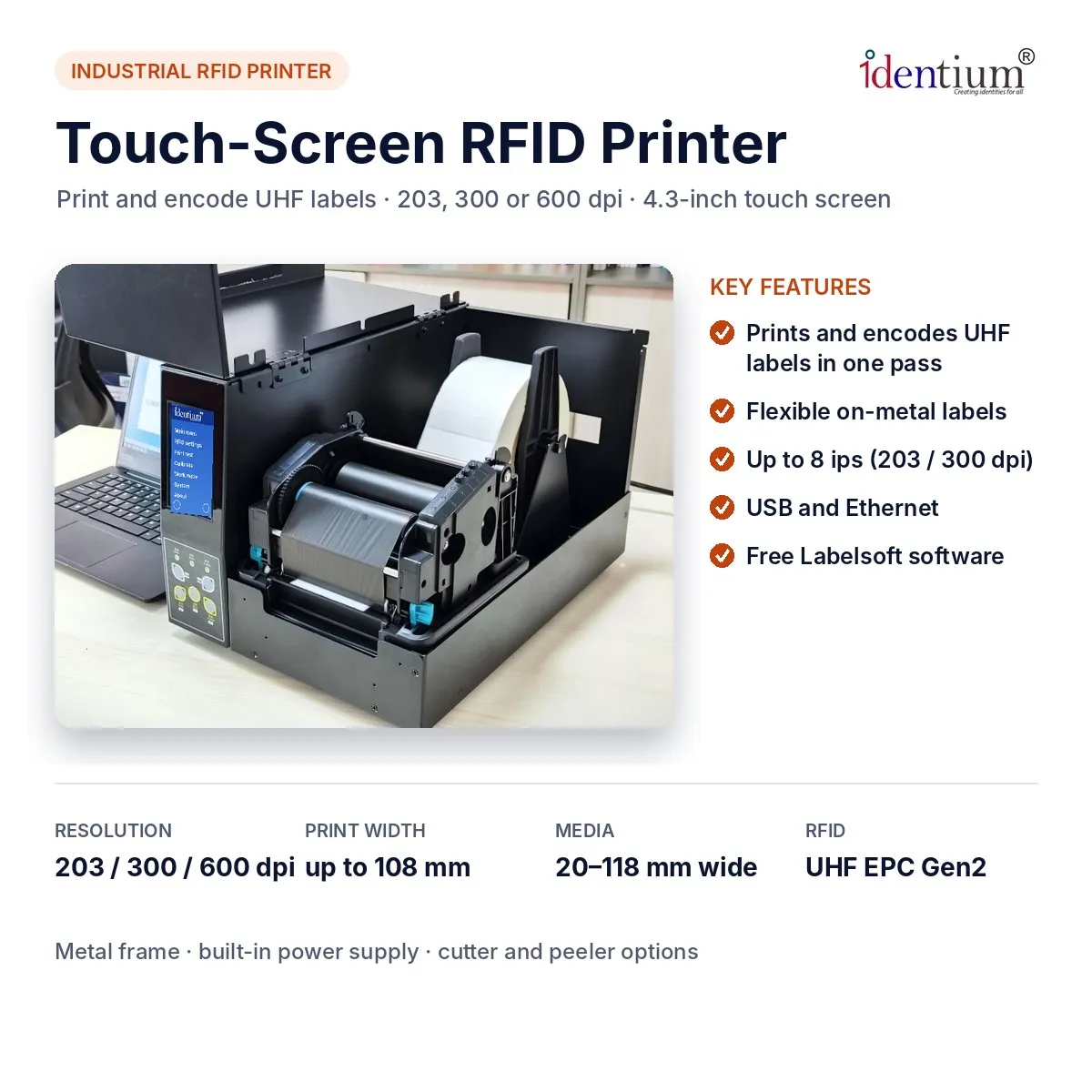
Tagging at receiving is real work: someone has to print, encode, apply and verify a label on every inbound carton or pallet, and it slows the receiving bay. Price it as a value-added service (VAS) line on the client's rate card, charged per carton or per pallet, rather than absorbing it into your storage rate.
Source tagging moves the cost upstream instead. The tag becomes part of the client's packaging cost at its vendor or DC, and your contract carries no tagging line at all.
Where the crossover sits depends on tenure and volume rather than a fixed figure. The longer and steadier a client's inbound, the more it pays to push tagging back to source; the shorter and more irregular, the more sense receiving-side VAS makes. Whichever model you choose, write it into the client contract before go-live, including who pays when a source-tagged carton arrives with a dead or missing tag.
The data rule: encode under the client's prefix, not yours
Whoever applies the tag, the EPC inside it should carry the client's identity. Encode cartons and pallets as a GS1 SSCC, the GS1 key for logistic units such as a case, pallet or parcel, built on the client's own GS1 Company Prefix and using serial ranges the client allocates. Where the client is the brand owner, encode individual items as an SGTIN built on its own GTINs and serial ranges in the same way.
That is not the same as borrowing a prefix: the client issues the numbers, and you only write them to the tag. GS1 allows either the physical builder or the brand owner of a logistic unit to assign its SSCC, so numbering a client's pallets under the client's prefix sits within the standard.
The payoff is that a client whose despatch advice (ASN) and ERP already carry those SSCCs and GTINs sees your dock reads in its own numbers, with no translation table in between. Encode under your own prefix instead and every read has to be mapped back to the client's SKUs and shipment references, and the tags mean nothing to the client's systems or to the next warehouse if the contract moves. The one exception is your own returnable crates, totes and pallets, which carry a GRAI under your own GS1 Company Prefix because they are your assets.
India RFID Store can supply SGTIN-96 tags pre-encoded to a client's own GS1 Company Prefix and serial ranges; the GS1 SGTIN-96 encoding guide sets out what we need from you. For the handover scans between your dock and your client's, see RFID in logistics and supply chain in India.
Phase 4: Infrastructure installation (weeks 3–5)
Dock-door portals
Install 4-port UHF readers above each dock door with 2–4 panel antennas covering the full width of the door. Test the read rate with loaded pallets and aim for 99.5%+ before going live.
Counting zones
Designate specific areas for handheld cycle counting, and make sure Wi-Fi covers them if your handhelds sync over Wi-Fi.
Handhelds and sled readers
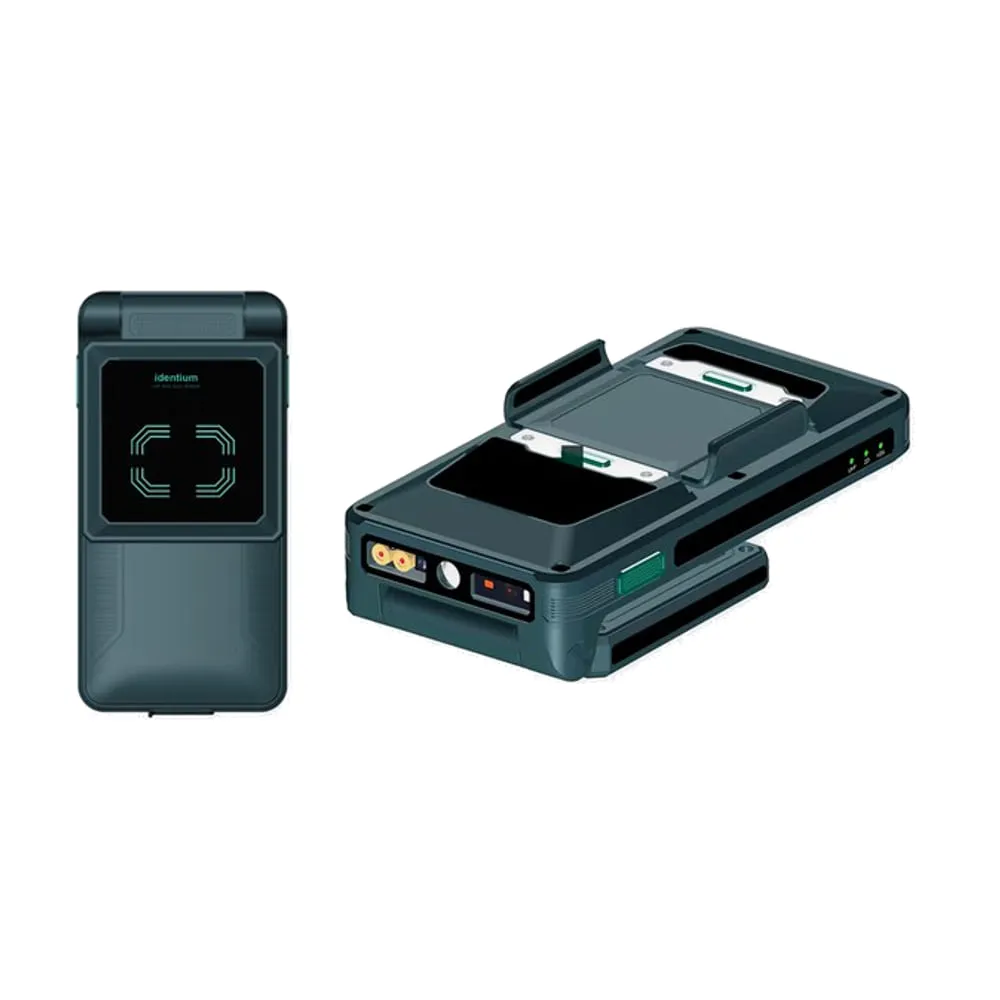
Two families now compete for the same job. Rugged Android handhelds remain the choice for full-shift picking and audits, while Bluetooth sled readers clip onto a phone or tablet your staff already carry and cost considerably less per unit.
The ID-SL15 Bluetooth sled reader, for example, is listed for the 865–868 MHz India/EU band and pairs over Bluetooth with both Android and iOS; check the current read-range, read-rate and battery figures on its product page before you specify it. Rugged units are under RFID handheld readers.
Network infrastructure
Fixed readers need PoE switches, with one PoE port per reader. Run Cat6 cable to the reader mounting positions during installation; it is much harder to retrofit later.
Middleware
RFID middleware filters and aggregates raw tag reads from multiple readers before passing them to your WMS, so the WMS is not flooded with thousands of duplicate reads. Options include middleware from your RFID supplier, middleware supplied by your WMS vendor, or a build on open standards.
For an open-standards build, use GS1's EPCIS 2.0 event standard, which added a REST/JSON API alongside the older SOAP/XML-only interface, paired with the open-source LLRP Toolkit for reader-level control. The RFID software and middleware guide covers the options in more depth.
One correction if you are working from older implementation guides: Fosstrak, the open-source RFID stack those guides usually name, is no longer maintained, and its own repository warns against using it except for migration. Treat it as reference material, not a production option.
Phase 5: WMS integration (weeks 4–6)
Integrating RFID into your warehouse management system (WMS) is typically the longest phase. The key integration points:
- Inbound receiving: dock-door reads automatically create GRN entries in the WMS when the expected ASN matches.
- Inventory updates: handheld cycle-count data syncs to WMS inventory in real time.
- Pick verification: the handheld confirms the correct SKU and quantity before packing.
- Outbound dispatch: dock-door reads confirm the correct cartons were loaded and generate proof of dispatch.
Common WMS platforms in India with RFID support include SAP EWM, Oracle Fusion Cloud Warehouse Management (formerly Oracle WMS Cloud), Increff WMS and Unicommerce, plus custom ERP systems via REST API.
Where you have a choice, model the RFID side as EPCIS-style events (object observed, at this location, at this time, for this business step) rather than as raw reader payloads. That keeps the WMS interface stable when you later add a second site, swap a reader brand, or have to hand movement history to a customer or auditor.
Phase 6: Testing and parallel run (weeks 6–8)
Run RFID in parallel with your existing barcode or manual system for 2–4 weeks and compare results daily. Investigate every discrepancy: they reveal tag-placement issues, reader dead zones and process gaps.
Parallel running also builds staff confidence and surfaces edge cases before full cut-over.
Phase 7: Go-live and training (week 8)
Train all warehouse staff on the new process. Key training points:
- How to orient tagged cartons for the best read rate at dock portals
- Handheld operation: how to start and complete a zone count
- Exception handling: what to do if a tag is not read
- The procedure for damaged tags and replacements
Measuring success
Measure your KPIs at 30, 60 and 90 days after deployment. Typical improvements for carton- and pallet-level warehouse deployments (use them as planning targets, not guarantees):
- Inventory accuracy: from 88–94% to 98.5–99.5%
- Cycle-count time: from 3 days to 4–8 hours
- Receiving time: from 45 minutes per truck to 8–12 minutes
- Mis-shipment rate: down 60–80%
Ready to start? Request a quote with your dock-door count, what you are tagging and which WMS you run, and we will propose a hardware specification.
What changed in 2026
- January 2026: a new tag chip aimed at high-volume logistics. NXP announced its UCODE X tag chip in January 2026, claiming improved read and write sensitivity and lower power consumption than its predecessors, with logistics and inventory management among the target applications. For a warehouse that matters on the hardest read you have: a carton buried inside a shrink-wrapped pallet crossing a dock door. It sits alongside Impinj's M800 family, the other default for warehouse inlays.
- Gen2v3: a question to put in your 2026 RFP. GS1 and the RAIN Alliance have published Gen2v3, the first refresh of the Gen2 air-interface protocol in roughly a decade, with a matching revision to ISO/IEC 18000-63. It is backward compatible with Gen2v2, so existing deployments keep working. What matters for dock doors are the new selective-inventory commands, which let a reader single out only the tags of interest in one step, and the ability to drop transmit power briefly to suppress tags at the edge of a read zone, the exact stray-read problem portals suffer from. Ask every reader vendor whether there is a Gen2v3 firmware path for the model they are quoting.
- More new warehouse space to fit out, with 3PLs leading demand. Colliers India reported in mid-2026 that Grade A industrial and warehousing supply should reach roughly 45–50 million sq ft by the end of 2026, with H1 2026 leasing across the top eight cities up around 12% year on year and third-party logistics operators taking the largest share. If your site is one of these new buildings, run the RF survey before the fit-out: pulling Cat6 to reader positions during construction costs a fraction of retrofitting it around live racking.
- The "warehouse" keeps getting smaller. Public store-level mapping of India's quick-commerce networks counted several thousand dark stores across hundreds of Indian cities by mid-2026, spread across Blinkit, Zepto, Swiggy Instamart, Flipkart Minutes and BigBasket. These are rooms of a few thousand square feet, not 200,000 sq ft sheds, so the pattern changes: handhelds plus one compact read zone rather than a bank of dock-door portals, and a much shorter parallel run. See RFID for dark stores and quick commerce.
- The open-source middleware advice has changed. Fosstrak, named in most older guides including earlier versions of this one, is no longer maintained. Greenfield builds in 2026 should target EPCIS 2.0, whose REST/JSON API is far easier to wire into a modern ERP, alongside the LLRP Toolkit (see Phase 4).
- Compliance paperwork is now a routine online step. UHF RFID at 865–868 MHz stays de-licensed for the user in India, but the equipment still needs WPC Equipment Type Approval per model, applied for through the online self-declaration route on the Saral Sanchar portal, plus BIS registration where it applies. Ask your supplier for the ETA against the exact model number you are buying, not against a product family.
Related
Frequently asked questions
We run a multi-client 3PL warehouse: should our clients tag at source, or should we tag cartons ourselves at receiving?
How much does it cost to implement RFID in a warehouse in India?
How do I stop dock door readers from picking up stray tags on nearby pallets?
Is RFID better than barcode scanning for warehouse inventory?
Will UHF RFID tags bought from overseas suppliers work with Indian readers?
Do I need a WPC licence to run RFID readers in my warehouse in India?
How long does a warehouse RFID rollout actually take in India?
WarehouseImplementationWMSLogistics
Cite as: India RFID Store (Identium Tech Solutions Pvt Ltd), “How to Implement RFID in Your Warehouse — Step-by-Step Guide for India 2026”, https://www.indiarfidstore.com/rfid-resources/how-to-implement-rfid-warehouse-india, updated 12 Nov 2026.
Keep reading
More guides
More in Industries & use cases
- Top 10 RFID Applications in Indian Retail — Inventory, Loss Prevention & Customer Experience
- RFID for Attendance Management in India — Complete Setup Guide 2026
- RFID in Apparel & Fashion Retail India — Complete Implementation Guide
- Top 5 RFID Applications in India 2026 — Use Cases & Case Studies