RFID for Dark Stores and Quick Commerce in India: Where It Pays Off (and Where It Doesn't)
Published 9 Aug 20267 min read
Written and maintained by the RFID team at Identium Tech Solutions Pvt Ltd, New Delhi (India RFID Store).
Short answer: RFID does not belong on every SKU in a dark store, and any vendor who says otherwise is selling you tags you don't need. It earns its money on high-value items, returnable crates and cold-chain totes: anywhere a single miscount costs more than the tag. With 4,081 dark stores live in India as of March 2026 and the network heading past 5,500, near-real-time shelf accuracy is increasingly what separates a 10-minute promise kept from an order cancelled at pick.
This guide is for quick commerce operations heads, dark store cluster managers, 3PL fulfilment leads and procurement teams in India who are under pressure to fix stock accuracy without slowing pickers down. It assumes no prior RFID experience and is deliberately honest about where the technology does not fit.
What is a dark store, and how big is India's network now?
A dark store is a small micro-warehouse closed to walk-in customers, stocked purely to serve delivery orders in a tight radius. As of March 2026 India had 4,081 of them live across Blinkit (1,954), Zepto (1,089) and Swiggy Instamart (1,038), spread across 408 cities, and the combined network is heading past 5,500.
That growth changes the inventory problem in two ways:
- Scale: a cluster manager may now be accountable for stock accuracy across dozens of sites rather than two or three.
- Density: dark stores are packed far tighter than a retail floor, with fast-moving SKUs stacked in narrow racks, so a physical count is slow and disruptive in a way it never was in a supermarket aisle.
Why can't manual counting keep up with 10-minute delivery?
Because the promise is made before anyone has verified the shelf. A 10-minute SLA means the app commits stock to a customer based on a system number, and a picker discovers the truth moments later. Manual cycle counts run at best once a day; in that window shrinkage, damage, mis-picks and mis-put-aways silently move the real number away from the system number.
The symptoms are familiar to anyone running quick commerce in India: rising item-level cancellations, pickers walking to empty bins, substitutions that annoy customers, and a "phantom stock" tail of SKUs the system thinks exist.
Barcode scanning helps at receiving and dispatch, but it only records what someone chose to scan, one line of sight at a time. Between those two events the store is effectively blind. We cover the accuracy mechanics in more depth in our guide to RFID inventory management and retail stock accuracy in India.
What does RFID actually change on the dark store floor?
RFID replaces line-of-sight, one-at-a-time scanning with bulk reading. A passive UHF tag needs no battery and no direct sight of the reader, so a handheld sweep can capture many items in a rack in a single pass, and a fixed reader at a doorway can capture a full crate as it moves through. Counting stops being an event and becomes something close to a continuous background process.
In practice, three things improve:
- Count frequency. A cycle count that used to occupy a team for hours can become a short walk-through, so it can run every shift instead of once a day or less.
- Pick confirmation. A tagged high-value item can be verified as the correct unit at the pack bench without the picker aiming a scanner at a barcode.
- Movement visibility. Crates, totes and trolleys read automatically as they cross a doorway, giving you dispatch and return records without manual entry.
UHF RFID in India runs in the licence-exempt 865–868 MHz band (G.S.R. 853(E), 2021), so this is settled, deployable technology here, not a pilot-only curiosity.
Where does RFID pay off in a dark store, and where does it not?
RFID pays off wherever the cost of not knowing exceeds the cost of the tag. That rules out most low-value FMCG units and rules in high-value SKUs, reusable assets and anything with a batch or expiry consequence. Being clear-eyed about this split is the biggest factor in whether a quick commerce RFID project survives its first cost review.
| Item class in a dark store | Typical unit value | Best method | Why |
|---|---|---|---|
| Sachets, biscuits, staples, daily FMCG | Low | Barcode + cycle count | Per-unit tag cost is a real barrier; the tag can rival the margin on the item |
| Electronics, accessories, premium personal care | Medium to high | Item-level RFID | Shrinkage and mis-pick cost per unit is high; tag cost is a rounding error |
| Returnable crates, totes, roll cages, trolleys | Asset, reused many times | On-metal or rugged RFID | Tag cost amortises over years of reuse; asset loss is a known leakage |
| Cold-chain totes and chilled/frozen cartons | Medium, perishable | Case/tote-level RFID | Batch and dwell-time visibility prevents write-offs worth far more than the tag |
| Apparel, footwear, fashion held in q-commerce | Medium to high | Item-level RFID labels | Size/colour variants are exactly where manual counts fail |
| Loose produce and fresh cut items | Low, variable weight | Weigh + barcode | No stable unit to tag; RFID adds cost without adding certainty |
The honest summary: in a typical Indian dark store, item-level RFID makes sense on a minority of SKUs by count, but those SKUs often carry a disproportionate share of value, shrinkage and customer complaints. Tag economics matter here, and volume changes them significantly; see our RFID tag price guide for India before you build a business case.
Which RFID hardware does an Indian dark store actually need?
A first deployment usually needs three things: tags matched to the item, one or two handhelds per store for counting and searching, and a fixed read point at the dispatch door. You do not need to instrument the whole building on day one, and you should resist any proposal that starts there.
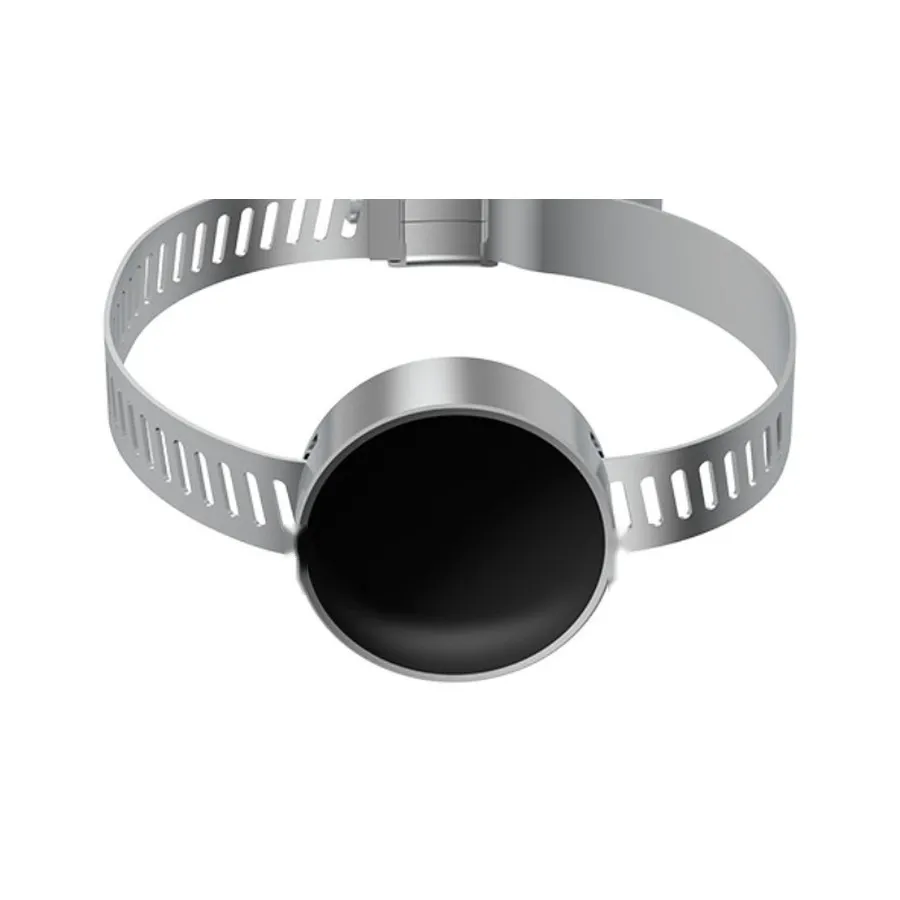
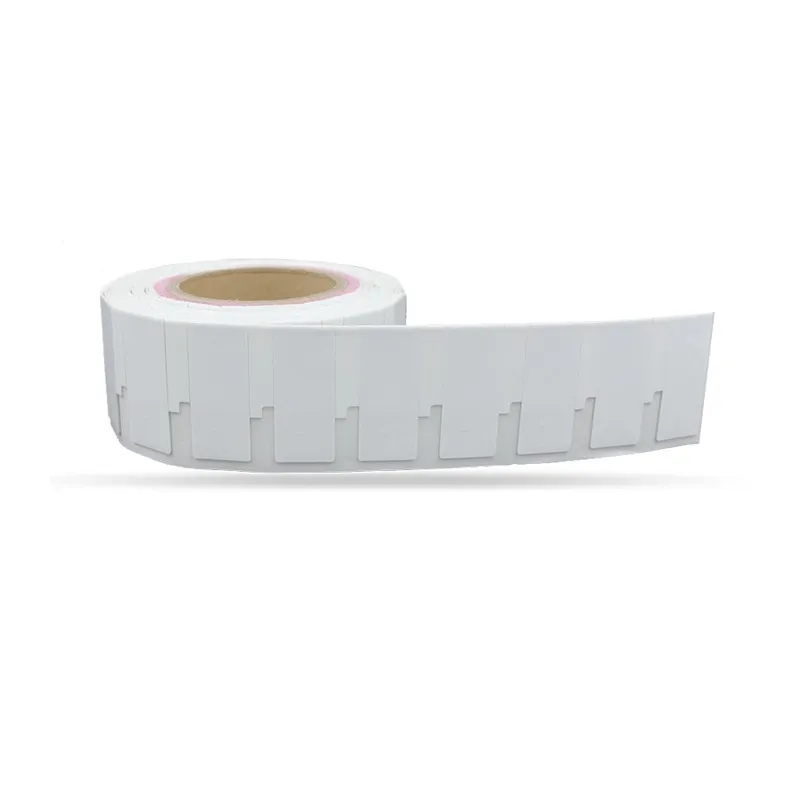
- Tags and labels. Standard paper-faced UHF RFID tags for cartons and general goods; rugged crate tags such as the IDTS-8654 pallet tag for plastic crates; on-metal tags for roll cages and anything mounted on metal shelving.
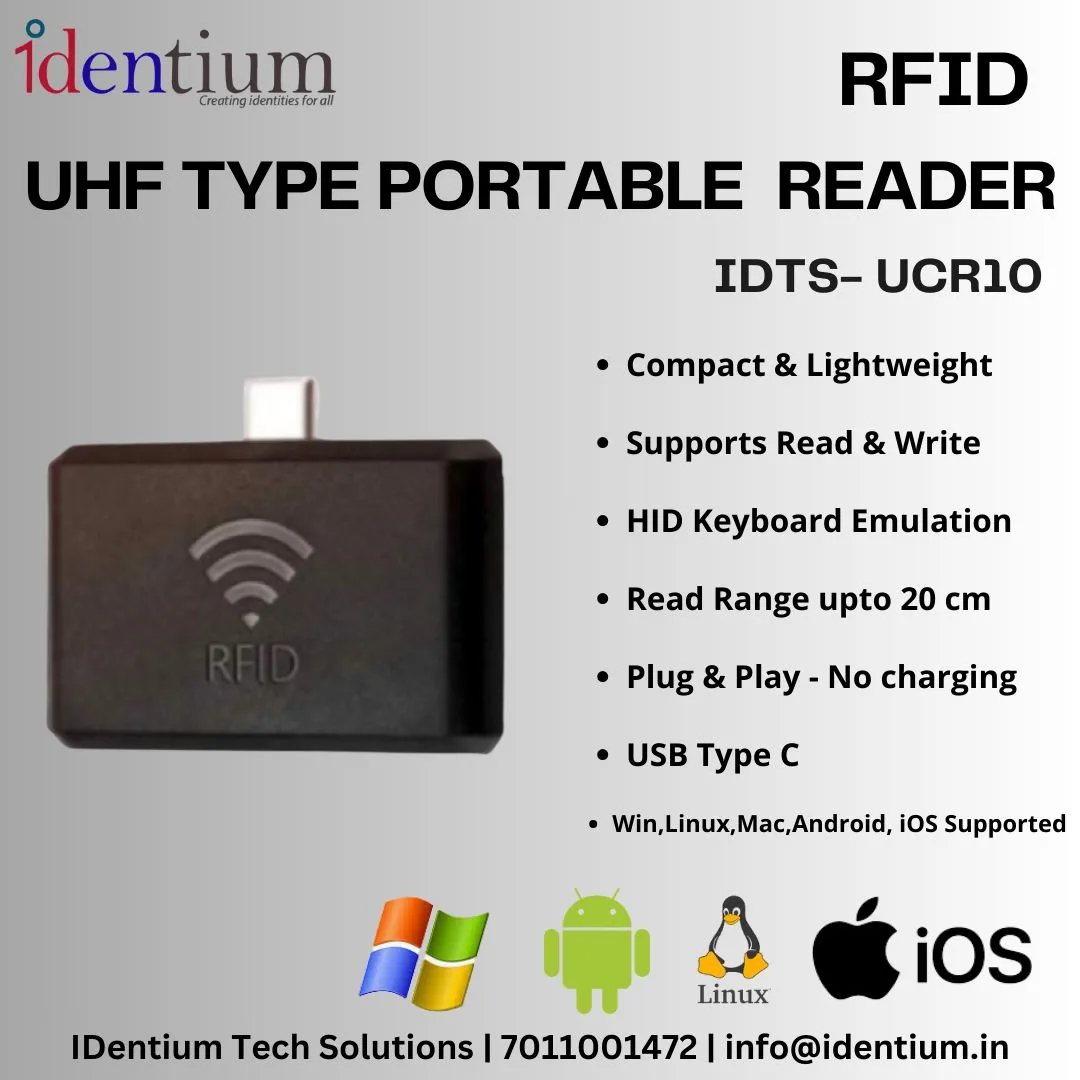
- Handheld readers. One or two RFID handheld readers per store handle cycle counts, bin audits and "find this item" searches. This is the highest-return device in a dark store.
- Fixed read points. An RFID gate reader at the dispatch or goods-in door records crate and tote movement without anyone pressing a button.
- Middleware and integration. Reads are useless until they update your WMS or OMS. Budget properly for this; it is usually the part that decides success.
India RFID Store makes and supplies tags, handheld readers and gate readers in India, which keeps spares and replacements simple for a network rolling out across many sites.
Can RFID fix expiry, batch and cold-chain problems?
Partly, and in a specific way. RFID does not measure temperature by default, but it does let you attach a batch and expiry record to a physical unit and then find that unit instantly. Expiry management stops being a shelf-by-shelf visual check and becomes a query: sweep the rack, and the handheld lists every item expiring within your threshold.
For quick commerce this matters because near-expiry stock in a dark store either gets written off or reaches a customer and generates a complaint. Tote-level tagging in chilled and frozen zones also gives you dwell-time evidence (how long a tote sat outside the cold zone), which is often the missing link in perishable write-off investigations.
For true temperature logging you would add RFID sensor tags, which cost meaningfully more and should be scoped as a separate decision. Our cold chain temperature monitoring guide covers the options.
What does a realistic dark store RFID rollout look like?
Start with one store, one item class and one measurable number. The usual sequence: pilot in a single high-volume site for a few weeks on returnable crates plus your top-value SKU band, measure stock accuracy and crate loss before and after, then extend to a cluster of stores only once the numbers hold.
- Pick a baseline metric before you install anything: item-level accuracy, cancellation rate at pick, or crate attrition per month.
- Tag at the source where you can. Tagging at the mother warehouse or supplier is far cheaper than tagging inside a cramped dark store.
- Test read performance in your actual racking. Metal shelving, foil packaging and liquids all affect UHF reads, and layout fixes are cheap at pilot stage.
- Confirm hardware compliance. Readers should operate in the 865–868 MHz band and the model should hold WPC Equipment Type Approval; our WPC ETA and BIS certification guide for RFID readers explains what to ask a supplier for.
- Plan the integration before the hardware. A reader that cannot write to your WMS is an expensive torch.
- Train pickers on the handheld, not just supervisors. Adoption at floor level decides the outcome.
Regulatory note: hardware approvals, spectrum conditions and labelling requirements in India can change. Verify current requirements against the official WPC / Department of Telecommunications and BIS sources (and, for food and perishables, the applicable food-safety labelling rules) before you finalise a purchase or a network-wide rollout.
If you are scoping a dark store pilot, the fastest way to a real answer is to test tags against your own packaging and racking. Request RFID samples and we will help you match tag types to your crate, cold-chain and high-value SKU classes before you commit to volume.
Related guides
Frequently asked questions
Is RFID worth it for a dark store selling mostly low-value groceries?
How much does RFID improve stock accuracy in practice?
Does RFID replace barcodes in quick commerce?
Which frequency should a dark store use in India?
Can RFID work through metal shelving and foil packaging?
How long does a dark store RFID pilot usually take?
Dark StoresQuick CommerceInventory ManagementUHF RFIDRetail Supply Chain
Cite as: India RFID Store (Identium Tech Solutions Pvt Ltd), “RFID for Dark Stores and Quick Commerce in India: Where It Pays Off (and Where It Doesn't)”, https://www.indiarfidstore.com/rfid-resources/rfid-dark-store-quick-commerce-inventory-india, published 9 Aug 2026.
Keep reading
More guides

More in Industries & use cases
- RFID for Gas Cylinder Tracking in India: PESO Rules, On-Metal Tags and Fill-Cycle Traceability
- GPS and RFID for Mineral Transport Vehicles in India: Compliance Guide 2026
- RFID EAS & Loss Prevention for Indian Retail: Stop Shrinkage in 2026