RFID vs QR Code in India (2026): Cost, Speed, Durability & Which Wins
Published 18 Jul 20265 min read
Choosing between RFID and QR codes is one of the first questions Indian businesses ask when they start digitising inventory, assets or retail stock. This guide is for operations, warehouse and store managers who need a practical comparison of cost, scan speed, durability and real use-cases, so you pick the right technology rather than over-spending on the wrong one. It sets cheap printed QR codes against bulk, no-line-of-sight RFID scanning and shows when each wins.
The core difference: line of sight vs radio waves
A QR code is a printed optical pattern. A camera or scanner must "see" each code, one at a time, with reasonable lighting and a clean surface.
RFID is fundamentally different. An RFID tag contains a tiny chip and antenna that respond to radio waves from a reader, so tags can be read without being seen: through cartons, in bulk and at a distance.
That single distinction drives every cost, speed and durability trade-off below. QR is cheap and universal but manual and one-at-a-time. RFID costs more per item but reads hundreds of tags per second, hands-free.
RFID vs QR code: side-by-side comparison
| Parameter | QR code | UHF RFID |
|---|---|---|
| Cost per label | Effectively free when printed on a label you already print | Higher; paper inlays are the cheapest RFID option, on-metal and hard tags cost more |
| Reader / hardware cost | Any smartphone, or a low-cost dedicated 1D/2D scanner | Handheld, desktop and fixed/gate readers cost more, but read many tags at once |
| Line of sight | Required: must see each code | Not required: reads through cartons and packaging |
| Scan speed | One at a time, roughly 1–2 seconds each | Bulk: hundreds of tags per second |
| Read range | A few cm to about 30 cm | 1 to 10+ m (UHF passive) |
| Durability | Fails if smudged, torn, faded or dirty | Works when dirty; on-metal and ruggedised variants survive heat, moisture and abrasion |
| Data and security | Static, easily copied | Unique serialised ID, lockable memory, harder to clone |
| Best for | Low volume, consumer-facing, tight budgets | High volume, fast counts, valuable or reusable assets |
Cost in India: where the money actually goes
On paper QR looks unbeatable because the label is nearly free. But total cost of ownership depends on labour. QR needs a person to point a scanner at every item, every time. RFID front-loads cost into tags and readers, then cuts the recurring labour cost of counting.
- QR wins on unit cost: a printed code adds essentially nothing when you are already printing a shipping or price label.
- RFID wins on labour: a full-store or full-warehouse stock count that takes a team two days with barcodes can take a few hours with an RFID handheld reader.
- Volume matters: the per-tag cost of UHF RFID inlays and labels depends heavily on order quantity, so price a rollout on a quote for your real volumes, not on a sample-pack price.
A simple rule of thumb for Indian operations: if you scan the same items repeatedly (cycle counts, gate in/out, returnable assets), RFID's labour savings are what pay back the hardware, and you can test the payback with your own figures in the RFID ROI calculator. If items are scanned once and forgotten, QR is hard to beat.
Speed and bulk scanning: RFID's decisive advantage
This is where RFID separates from QR. Imagine 60 garments in a carton at a Tirupur or Ludhiana warehouse. With QR you open the box and scan each tag individually. With UHF RFID you wave a handheld near the closed carton, or move it through an RFID gate reader, and all 60 read in a couple of seconds without opening the box.
For fast-moving retail, apparel and logistics, that no-line-of-sight, bulk-read capability is the entire business case. It enables live inventory accuracy, faster dispatch and shrinkage reduction that QR cannot match.
Durability: which survives the Indian shop floor?
QR codes are printed, so anything that damages the print destroys the data: grease in a factory, monsoon moisture, cold-storage condensation, UV fade, tearing or a smudged thermal label. In dusty, humid or high-abrasion environments this failure rate adds up.
RFID tags are far more forgiving; a dirty tag still reads. For metal surfaces, machinery, tools, gas cylinders and IT assets, on-metal RFID tags are built to survive heat, chemicals and years of handling. For laundries, jewellery and harsh outdoor use there are specialised variants, such as washable laundry tags and RFID jewellery tags, that no printed code can match.
Use-case verdict: retail, assets and inventory
Retail and apparel
RFID generally wins for organised retail and apparel chains that need real-time stock accuracy, quick counts and self-checkout. For a single small kirana or boutique with limited SKUs and budget, QR on the price label is often enough to start.
Asset tracking (IT, tools, equipment)
RFID is the clear choice. Fixed assets are scanned repeatedly during audits, and metal-mount tags plus a handheld turn a multi-day audit into an afternoon. This is the core of our RFID asset management solution.
Inventory and warehousing
For high-throughput warehouses, 3PLs and manufacturing WIP tracking, RFID's bulk reads and gate-based automatic capture change how the operation runs. For low-volume spares or documents scanned occasionally, QR remains a sensible, cheap option.
Can you use both together?
Yes, and many Indian businesses do. A common hybrid is QR on consumer-facing packaging (for warranty, product information and marketing) plus RFID on the carton or asset for internal tracking. You can also start on QR to prove a process, then upgrade high-value or high-frequency touchpoints to RFID as volumes justify it.
Getting the hardware right in India (BIS and WPC)
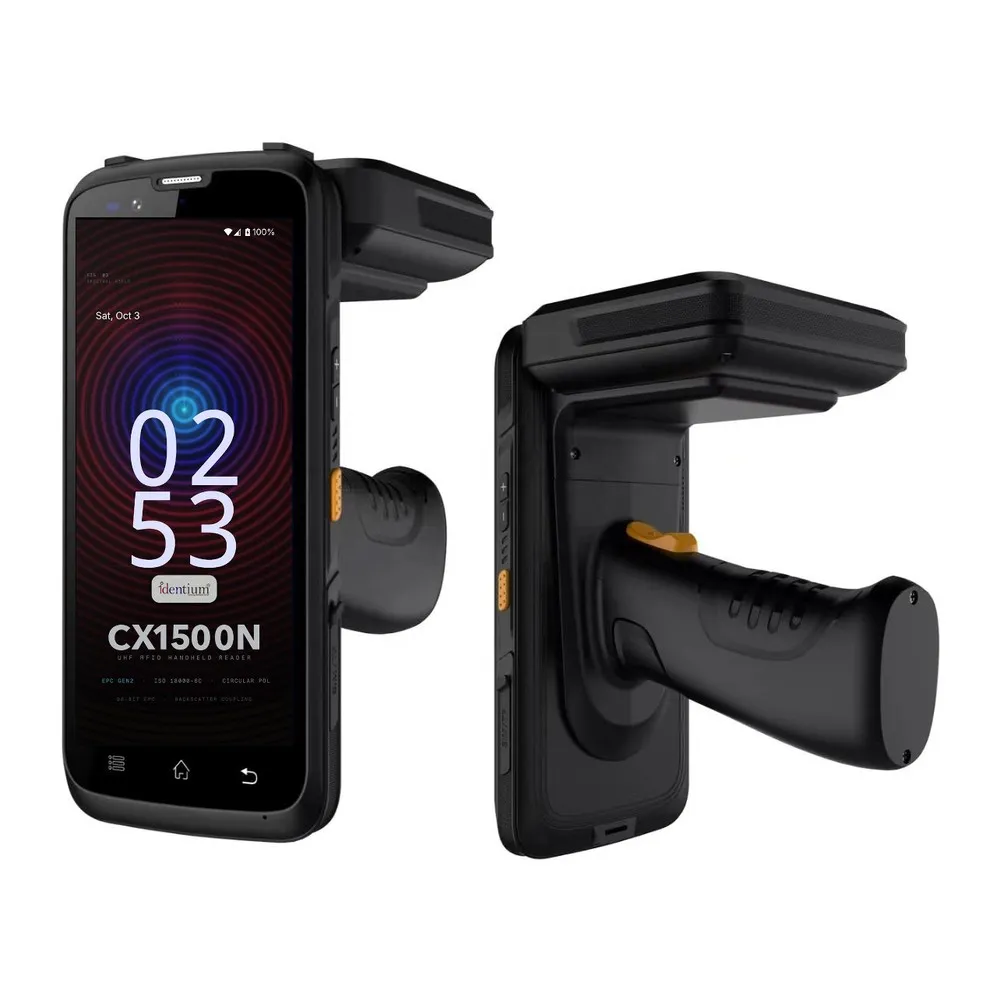
UHF RFID in India operates in the licence-exempt 865–868 MHz band, and each UHF reader model needs WPC Equipment Type Approval. Some reader models are also BIS-registered. In our catalogue, the CX1500N, IF9A, IHZ4 and MUBR01 readers hold both WPC ETA and BIS registration; the full model list is on our certifications page. Passive tags and labels have no BIS category, so a BIS certificate applies to the reader, not the tag.
Choosing compliant hardware from the start avoids interoperability and legal problems later. To compare options for your use-case, browse UHF RFID tags and RFID handheld readers with their list prices, or request a quote and our team will help you size the right combination of tags and readers for your retail, asset or inventory project.
Related guides
Frequently asked questions
Is RFID better than QR code for inventory in India?
How much does a UHF RFID tag cost in India?
Do I need a special reader for RFID, or will a phone work?
Will RFID tags work on metal and in humid or dusty conditions?
Can RFID and QR codes be used together?
Are your RFID readers and tags BIS and WPC approved?
RFID vs QR CodeRFID IndiaAsset TrackingInventory ManagementUHF RFIDRetail Technology