RFID for E-commerce & D2C Fulfilment in India: Faster Picking, 100% Accuracy & Quicker Returns (2026)
Published 18 Jul 20265 min read
Indian D2C brands and e-commerce fulfilment teams are chasing three numbers at once: pick rate, order accuracy and the cost of processing returns.
This guide is for founders, warehouse managers and operations heads running their own fulfilment (or a growing 3PL) who want to know how UHF RFID speeds up picking and packing, pushes order accuracy close to 100%, and cuts returns and quality-check (QC) time. It stays practical: real hardware, budget ranges in rupees, and India-specific workflows for apparel, beauty, footwear and accessories.
Why RFID fits Indian D2C fulfilment
Barcodes need line of sight and one scan per item. In a busy Bhiwandi, Gurgaon or Bengaluru warehouse pushing hundreds of orders an hour, that single-scan bottleneck is where mis-ships, delays and labour cost pile up.
UHF RFID reads many tags at once without aiming a scanner, so an entire multi-item order can be verified in about a second. For D2C categories with many variants (shades, sizes, colours), that difference compounds across every pick, pack and return.
Identium Tech Solutions, which runs India RFID Store, makes and supplies the tags, readers and printers referred to below from New Delhi. Whatever you buy, make sure the readers are set to India's licence-exempt 865–868 MHz UHF band.
Faster picking and packing
The biggest early win is at the pick face and the pack bench.
Batch and cluster picking
- Read whole totes at once: a picker waves a handheld over a tote and confirms all items for a batch in one sweep instead of scanning each barcode.
- Put-to-light replacement: RFID confirms the correct item entered the correct order bin, reducing training time for seasonal and festive staff.
- Cycle counts on the move: a walk-through count of a shelf takes minutes, not a shift, so stock stays accurate and phantom out-of-stocks drop.
Print-and-apply at source
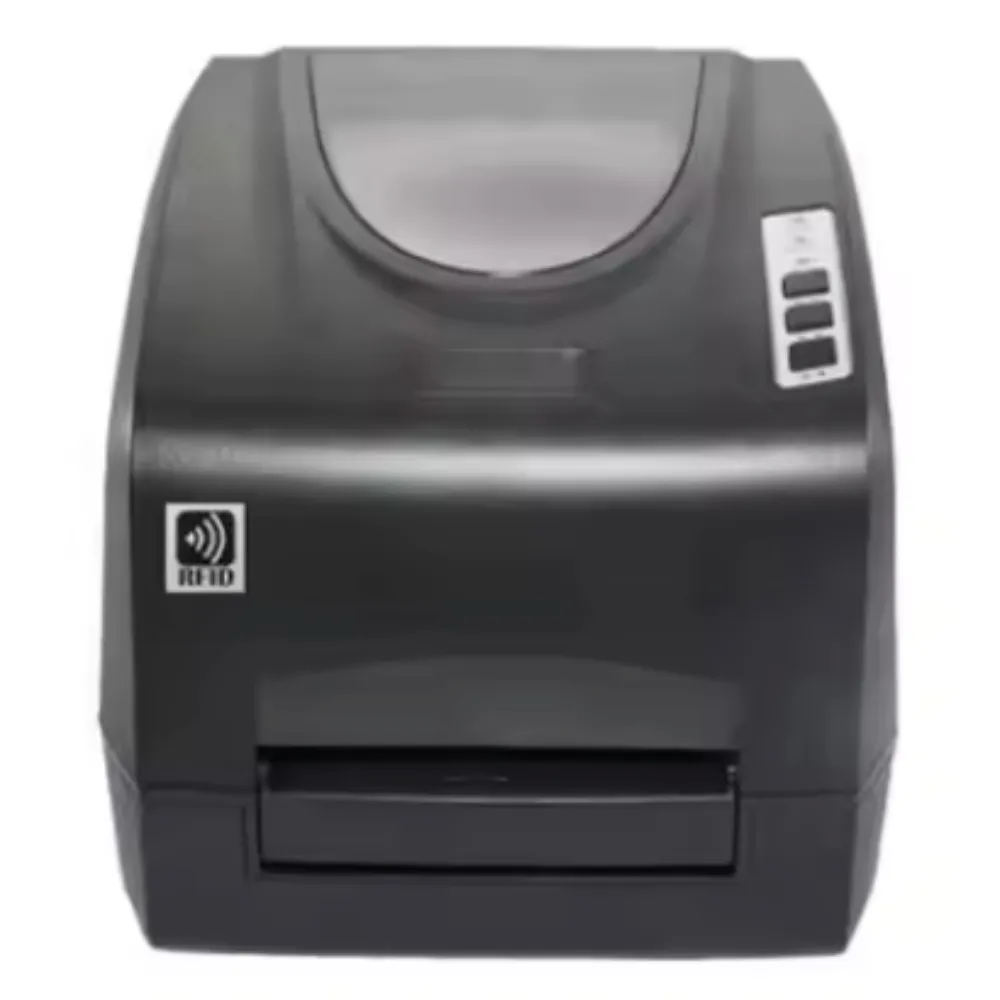
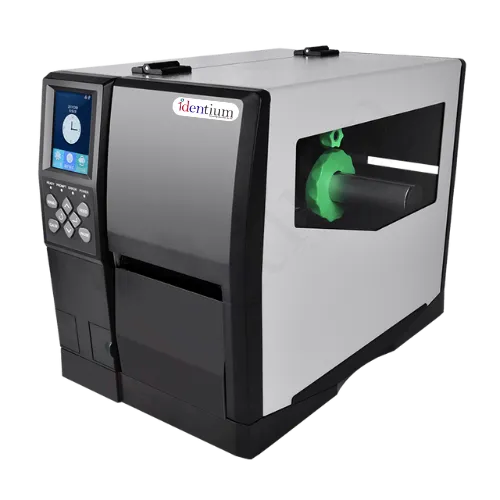
Tag items as they arrive from your manufacturer, or during kitting, using an RFID label printer such as the IT4RL desktop RFID printer and encoder. Apparel and accessories can carry a woven label or hangtag inlay; cartons get a smart label.
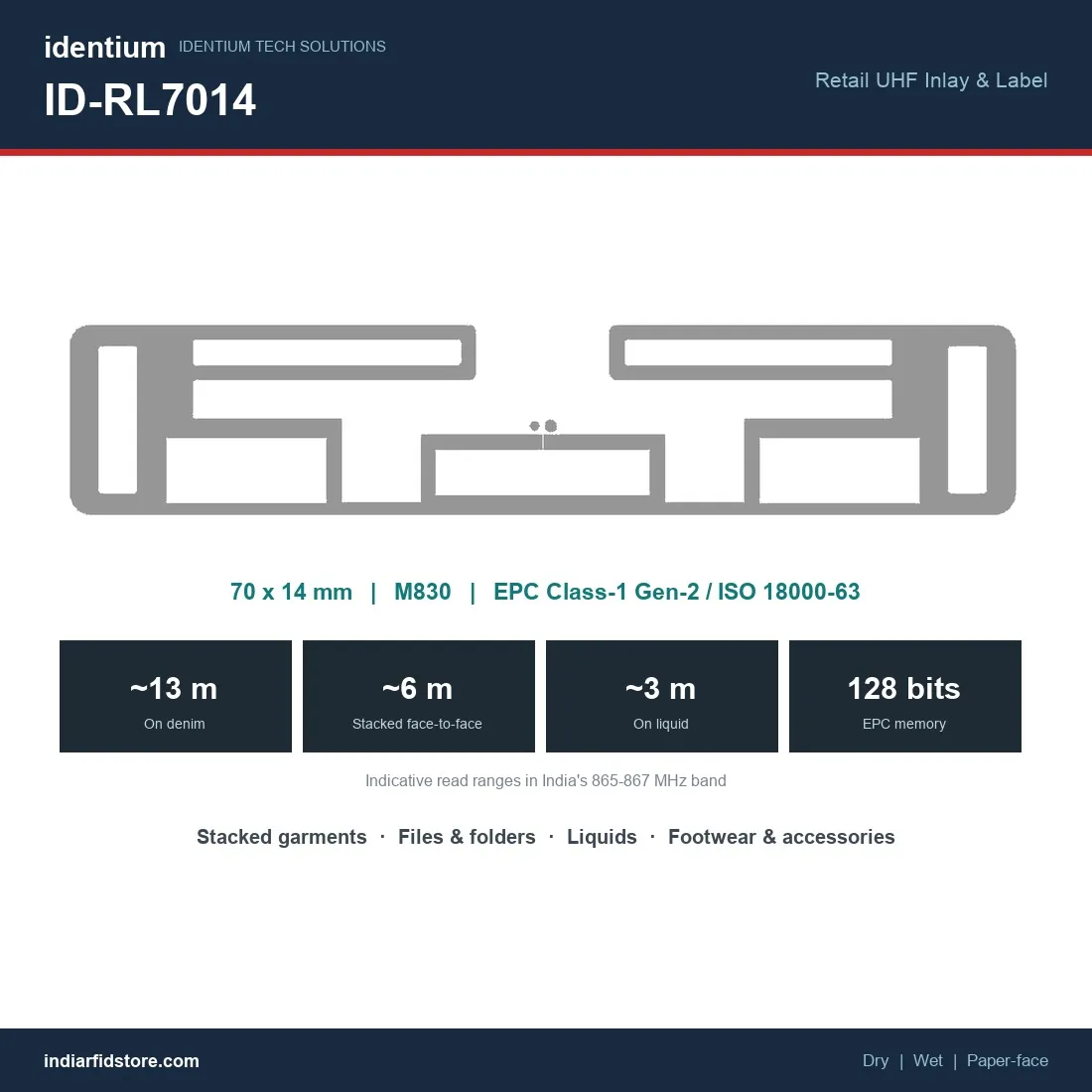
Browse UHF RFID inlays and labels for garment hangtags and carton labels, and UHF RFID tags for durable hard tags on reusable totes and bins.
Order-accuracy checks at pack-out
This is the step that protects your marketplace ratings and your RTO economics. At the pack station, the packed order passes a fixed reader or a small tunnel or gate. The system reads every tag inside the parcel and compares it with the order manifest before the shipping label prints.
- Wrong item? The station blocks the label and flags the operator.
- Missing item? A short-ship is caught before dispatch, not after a customer complaint.
- Extra item? Prevents costly leakage on high-value beauty and jewellery orders.
Pack benches typically use a UHF 4-port reader with a shielded antenna, while outbound docks verify sealed cartons with a fixed RFID gate reader. For mobile audits and spot checks anywhere in the warehouse, a rugged UHF handheld reader does the job.
Speeding up returns and quality check (QC)
Returns are where Indian D2C bleeds margin. High COD and RTO volumes mean parcels come back constantly, and each one must be identified, inspected and restocked. RFID makes the intake almost instant:
- Instant identification: read the returned item's tag to pull up the original order, with no barcode hunting on crumpled packaging.
- Fraud and swap detection: confirm the returned unit is the exact one that shipped, catching empty-box and swapped-item returns.
- Faster grading: QC staff scan, grade (A/B/reject) and route to restock or refurbishment in one motion, shortening the refund cycle.
- Accurate restock: good units go back to available inventory straight away, improving sell-through.
Barcode vs RFID for D2C: a quick comparison
| Parameter | Barcode | UHF RFID |
|---|---|---|
| Line of sight | Required | Not required |
| Items per scan | One | Dozens at once |
| Typical pack-out verification time | 5–15 seconds per order | About a second per order |
| Order-accuracy ceiling | Around 99% (human error) | 99.9% or better (system-enforced) |
| Returns identification | Manual, slow | Automatic on read |
| Per-item consumable | Near zero (printed) | One RFID label per item |
| Best fit | Low-value, low-volume | High-SKU D2C, high returns |
What hardware you actually need
A working D2C RFID setup is modular: start at pack-out and returns, then extend to picking. Each product page in the store shows its current list price before 18% GST.
| Component | Role | Where to find it |
|---|---|---|
| UHF labels and inlays | Item and carton tagging | UHF RFID Inlays & Labels |
| RFID label printer | Print and encode in-house | RFID Printers |
| Handheld reader | Picking, counts, returns intake | RFID Handheld Readers |
| Fixed 4-port reader and antenna | Pack-station verification | UHF RFID 4-Port Readers and RFID antennas |
| RFID gate or tunnel | Outbound dock verification | RFID Gate Readers |
Rollout costs and ROI in India
A single-line pack-and-returns pilot for a mid-size D2C warehouse (one pack station, one returns bench, a printer, a handheld and starter labels) often lands in the ₹2–5 lakh range for hardware, plus per-tag consumables. Treat that as a planning range, before GST. Where does it pay back?
- Fewer wrong shipments: each mis-ship costs a reverse-logistics trip, a replacement shipment and often a rating hit. Pack verification removes most of them.
- Labour productivity: pack-out and cycle counts speed up several times over, letting the same team absorb festive-season spikes without proportional hiring.
- Faster refunds: quicker returns QC frees working capital and improves customer trust.
Payback depends on your order volume and current error rate; the RFID ROI calculator gives a first estimate. Once the pilot proves itself, extend RFID to inward GRN and inventory for full stock visibility.
To spec a pack-out, returns and picking setup for your warehouse, request a quote with your SKU count and daily order volume, or request RFID samples to test labels on your own products first.
Related guides
Frequently asked questions
Can RFID really deliver 100% order accuracy for D2C packing?
Which RFID frequency should Indian e-commerce warehouses use?
Are the readers legal and approved for use in India?
Do I have to tag every product, or can I start small?
How does RFID help reduce RTO and return fraud?
What is a realistic budget to start an RFID fulfilment pilot?
RFID for e-commerceD2C fulfilmentwarehouse RFIDorder accuracyreturns managementUHF RFID India