RFID in Logistics & Supply Chain in India (2026): Dock-Door Verification, Carton & Pallet Tracking, and 3PL Visibility
Published 18 Jul 2026Updated 3 Oct 20266 min read
If you run distribution, warehousing or a 3PL operation in India, mis-shipments, manual dispatch scanning and blind spots in outbound loading are quietly eating your margins. This guide is for supply chain and warehouse managers who want to know exactly where UHF RFID pays off in logistics: dock-door and dispatch verification, carton and pallet tracking, and end-to-end 3PL visibility. It also covers how to roll it out in an Indian distribution centre without over-investing.
Why RFID makes sense for Indian logistics right now
Barcode-based dispatch works, but it forces a person to line-of-sight scan every carton, one at a time, at the exact moment they are under pressure to load a truck. RFID removes that bottleneck: a passive UHF tag on each carton or pallet can be read from a metre or more away, in bulk and in any orientation, as goods move through a dock door. For a fast-moving FMCG, pharma, apparel or auto-parts DC, that turns dispatch from a manual chokepoint into an automatic checkpoint.
The three problems RFID solves best in Indian supply chains are:
- Shipping the wrong SKU or the wrong quantity to a customer.
- Not knowing what actually left the building versus what the invoice says.
- Losing visibility the moment a shipment is handed to a 3PL.
All three can be addressed with passive UHF RFID, which in India runs in the licence-exempt 865–868 MHz band.
Where RFID delivers ROI in the supply chain
Dock-door and dispatch verification
This is the single highest-ROI use case. You mount antennas on either side of an outbound dock door (or build a portal), and as a pallet moves through, the reader captures every carton tag and reconciles it live against the sales order or dispatch advice. If a carton belonging to a different order is on the pallet, or a carton is missing, the system flags it before the truck is sealed.
A well-tuned RFID gate reader setup can read 40–100 or more tags in a single pass, turning a 10-minute manual count into a verification that takes seconds.
Carton and pallet tracking inside the DC
Tagging at carton level with UHF labels, and aggregating cartons to a pallet-level tag, creates a parent-child hierarchy. You can then track where a pallet is by putting fixed readers at key zones (inbound, put-away, staging, outbound), or use a handheld to locate a specific pallet on a crowded floor. This ends the "we know it's in the warehouse somewhere" problem that delays dispatch.
Reducing mis-shipments and claims
Mis-shipments trigger returns, re-shipping cost and customer penalties; retail chains in India routinely levy fill-rate and accuracy debits. RFID-based outbound verification can push dispatch accuracy towards 99.9% when tagging is consistent. Just as important, it gives you a permanent read log: when a customer claims a short shipment, you have a timestamped record of exactly which tags left your dock.
3PL and in-transit visibility
Once goods leave your DC, RFID gives you clean handover data: the 3PL reads the same tags at its inbound gate, so both parties agree on what was received. Some Indian 3PLs now run RFID portals at hub-and-spoke transhipment points, so a carton is read automatically at each node. Even without readers at every hub, a shared tag standard (for example SGTIN encoding in the EPC) means the same tag is readable across your network and your logistics partner's.
If you are the 3PL in this handover and hold stock for several clients, our warehouse implementation guide covers whether to have clients tag at source or to tag cartons at receiving, and why the EPC should carry the client's own GS1 company prefix rather than yours.
Barcode vs RFID for dispatch: a direct comparison
| Factor | Barcode dispatch | UHF RFID dispatch |
|---|---|---|
| Scan method | Line-of-sight, one at a time | Bulk, no line-of-sight, in motion |
| Cartons per minute | About 10–20 (manual) | Hundreds (automatic at the gate) |
| Dispatch accuracy | Depends on operator diligence | Typically 99.5–99.9% |
| Audit trail | Manual, easy to skip | Automatic, timestamped read log |
| Tag or label cost | Lowest (printed barcode) | Higher per label, low per read |
| Best fit | Low volume, low value | High volume, accuracy-critical |
In practice most Indian DCs run a hybrid: barcode for internal low-value moves, and RFID where accuracy and speed matter, which means outbound dispatch and high-value SKUs.
The hardware stack you actually need
A logistics RFID deployment is modular, and you do not need everything on day one. The typical building blocks:
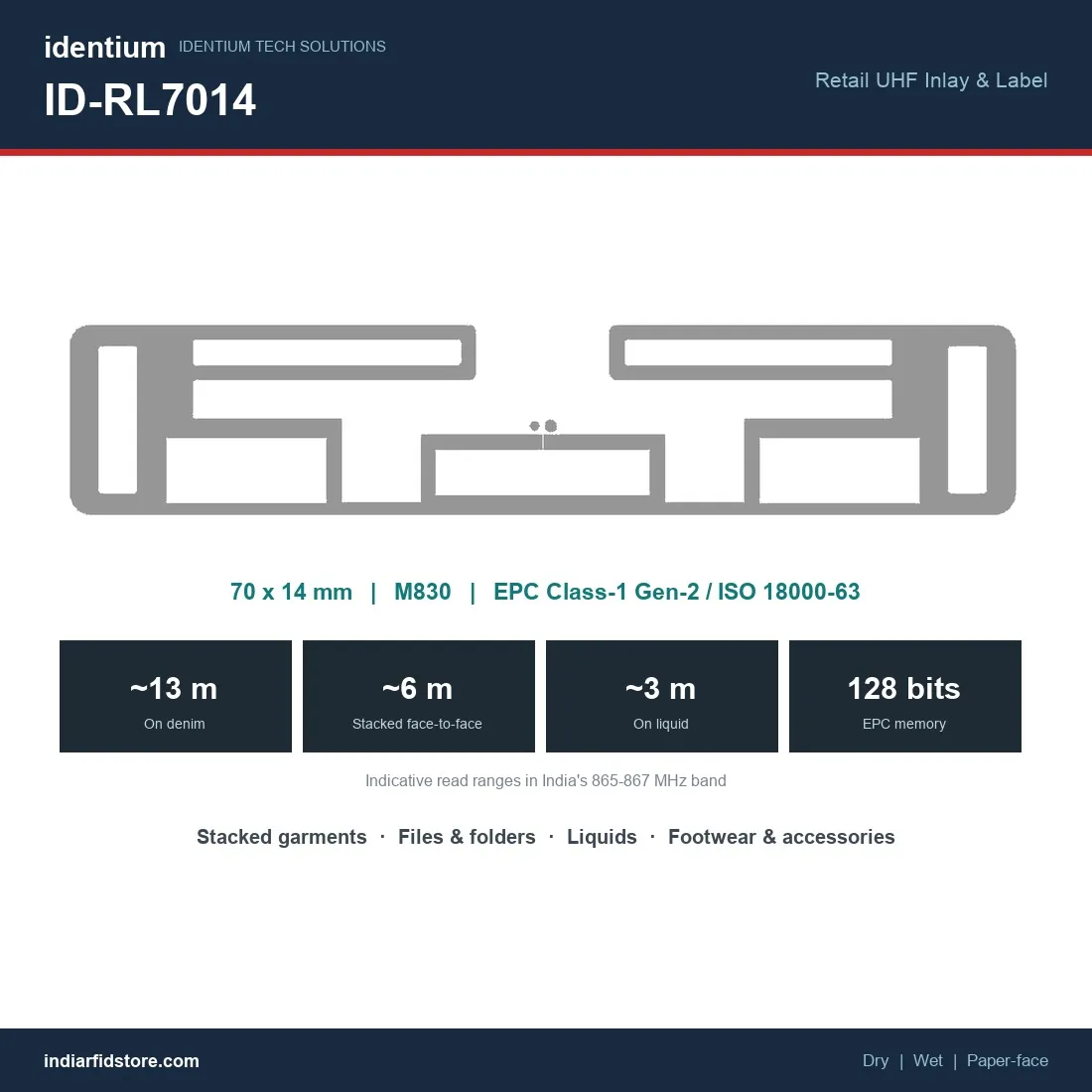
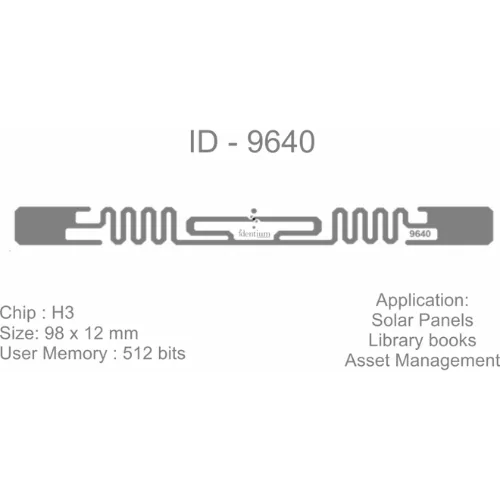
- Carton and pallet tags: low-cost UHF RFID inlays and labels for cardboard cartons, and rugged UHF hard tags for reusable pallets, crates and returnable assets. For metal cages and steel pallets, use on-metal RFID tags so reads are not detuned.
- Dock-door readers: a fixed 4-port reader with antennas on each side of the door, or an integrated gate reader. Multi-port UHF 4-port readers let one reader cover a full portal.
- Handheld readers: RFID handheld readers for cycle counts, pallet location ("Geiger" search) and exception handling on the floor.
- RFID printers: RFID printer-encoders to print and encode carton labels in-line as goods are packed.
India RFID Store, run by Identium Tech Solutions in New Delhi, supplies each layer of this stack: tags, labels, readers, antennas and printers. Whoever you buy from, check that UHF readers are set to India's 865–868 MHz band, and ask for the specific model's WPC ETA and BIS registration; our WPC ETA and BIS checklist explains what to ask for.
Indicative rollout cost in INR
Costs vary with volume, read environment and integration depth. These are indicative starting ranges for planning a single dock door, not quotes; each product page on the store shows its current list price.
| Component | Typical role | Indicative INR (starting from) |
|---|---|---|
| UHF carton label (per piece) | Carton-level tagging | ₹8–₹20 each (volume-dependent) |
| Rugged or on-metal pallet tag | Reusable pallet or crate | ₹80–₹400 each |
| Fixed 4-port UHF reader | Dock-door portal | ₹60,000–₹1,20,000 |
| RFID antenna (each) | Portal coverage | ₹6,000–₹15,000 |
| UHF handheld reader | Cycle count and search | ₹45,000–₹1,10,000 |
| RFID printer | In-line label encoding | ₹1,00,000–₹2,50,000 |
These ranges exclude GST and integration or middleware. Tags are your recurring cost, so the economics improve sharply when you tag high-value or accuracy-critical SKUs first.
A practical rollout roadmap for an Indian DC
- Pick one dock door. Instrument a single outbound door and prove dispatch verification against real orders. Measure the accuracy improvement and the time saved.
- Decide your tagging point. Tag at packing, in-line with a printer-encoder, so every carton is RFID-enabled before it reaches staging. Fix your EPC encoding scheme early; SGTIN-96 is common.
- Tune the read zone. Metal racking and liquid or dense product all affect reads in the 865–868 MHz band. Adjust antenna angle and power, and add shielding, so you read the right pallet and not the next lane.
- Integrate with your WMS or ERP. Reads are only useful when reconciled live against orders, so wire the reader middleware into SAP, Oracle or your WMS.
- Extend. Once one door is stable, replicate across doors, add inbound verification, and align tag standards with your 3PL for handover reads.
Starting with one door de-risks the project and gives finance a clean ROI number before you scale, which is usually the fastest way to get an Indian rollout approved.
Choosing the right tag for the read environment
Tag selection makes or breaks read reliability. Cardboard and textiles read easily; metal and liquids do not. Use standard label inlays for cartons, and move to on-metal or hard tags for steel cages, drums and reusable plastic pallets.
For pharma and cold chain, factor in condensation and temperature swings. Testing two or three tag families on your actual SKUs avoids the classic mistake of a single tag type failing on half your product mix; request samples and trial them at the door before you commit.
To scope a single-door pilot, browse gate readers and carton labels, then request a quote with your door count, pallet volume and SKU mix.
Related guides
Frequently asked questions
What RFID frequency is legal for logistics in India?
How much does it cost to RFID-enable one dock door?
Can RFID read cartons stacked on a pallet without unloading them?
Do we need to replace our barcode system entirely?
Will RFID work across our 3PL partners?
How do we reduce false reads from adjacent dock doors?
RFID logisticssupply chaindock door verificationpallet tracking3PLwarehouse RFID