RFID EAS & Loss Prevention for Indian Retail: Stop Shrinkage in 2026
Published 18 Jul 2026Updated 4 Oct 20267 min read
Retail shrinkage in India quietly eats into margins that are already thin, and most apparel and electronics stores discover the loss only at the year-end stock-take.
This guide is for retail owners, loss-prevention managers and store operations teams who want to understand how RFID-based Electronic Article Surveillance (EAS) differs from traditional AM/RF gates, and how a single RFID tag can protect against theft while keeping inventory accurate. It compares the technologies, sets out what to budget for and shows what a practical rollout looks like in an Indian store.
The real cost of shrinkage in Indian retail
Shrinkage combines external theft, internal (employee) pilferage and administrative errors. For Indian apparel and consumer-electronics retailers, total shrink is commonly estimated at 1.5% to 3% of sales, and a large share is simply items that walk out unbilled.
The traditional answer has been EAS hard tags and pedestals at the door, but those systems answer only one question: did a tagged item pass the gate? They tell you nothing about which SKU left, whether it was scanned at billing, or how much stock is actually on the floor. That blind spot is exactly where RFID changes the economics.
Traditional EAS vs RFID security gates
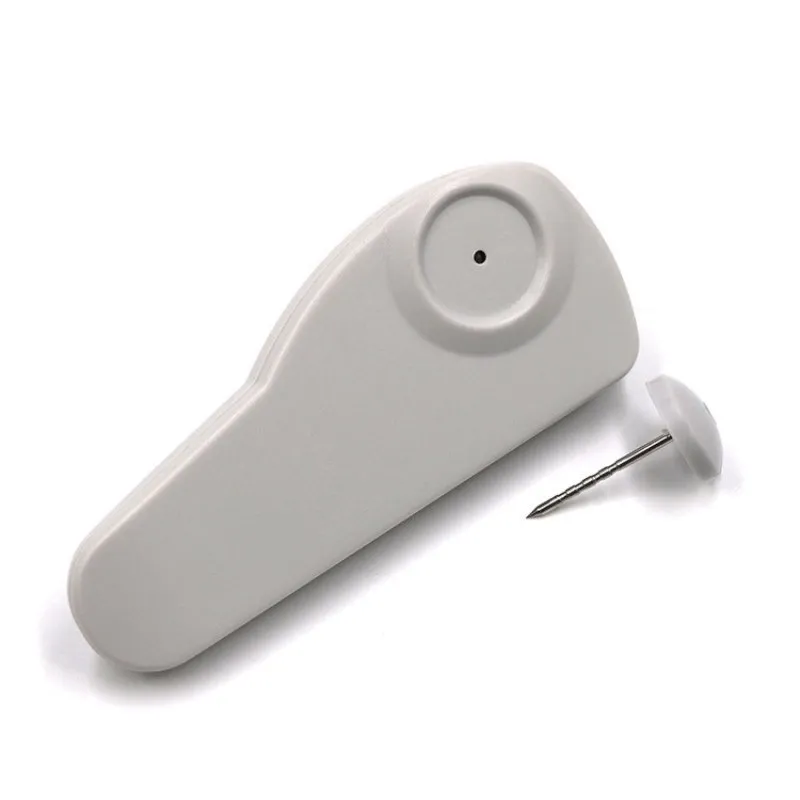
Classic EAS uses acousto-magnetic (AM) or radio-frequency (RF) hard tags and labels that are deactivated or removed at the counter. RFID EAS instead reads the unique EPC number encoded in each UHF tag, so the exit gate knows the item's identity, not just its presence.
| Factor | Traditional EAS (AM/RF) | RFID security gates (UHF) |
|---|---|---|
| Item identity at exit | No; only a "tag present" alarm | Yes; reads the exact SKU and serial (EPC) |
| Inventory / stock accuracy | None | Live floor and backroom counts |
| False alarm handling | Frequent and hard to verify | Cross-checks against billed items |
| Tag reuse | Hard tags reused; soft labels single-use | Labels single-use; hard tags reusable |
| Per-item consumable cost | Low (soft RF label) | Low to moderate (RFID label or tag) |
| Compliance in India | Standard EAS frequencies | 865–868 MHz UHF band; check the reader's WPC ETA |
Do you still need AM/RF, or can you phase it out?
Once RFID labels are on the floor, the next question is whether the AM/RF pedestals at the door can go. The answer depends on how much of your stock is tagged, what you sell and how old the existing gates are.
| Scenario | Recommendation | Why |
|---|---|---|
| Apparel, footwear and soft goods on an open floor, with every saleable item RFID-tagged | RFID only: retire the AM/RF pedestals | The RFID gate reads each item's EPC and checks it against the billing log, so an alert names the SKU. An AM/RF pedestal only reports that some tag passed. The same RFID label also runs your cycle counts. |
| Phased rollout, with only part of the stock tagged so far | Run both: keep the AM/RF pedestals live until essentially all saleable stock is tagged | An RFID gate cannot see an item that carries no RFID tag. Until tagging is complete, untagged stock is protected only by the legacy system. |
| Concealable high-value goods such as small electronics, accessories and cosmetics | Consider dual-technology protection: keep AM pedestals beside the RFID gate, or use a combined UHF + EAS label such as the ID-6535-U8 UHF + EAS dual inlay once you have confirmed which EAS technology it triggers | A foil-lined booster bag shields the tag, and holding an item tight against the body also weakens the 865–868 MHz UHF signal, so a shielded tag may pass an RFID gate unread. AM pedestals detect on a different, low-frequency magnetic principle, so a layered setup makes a shoplifter defeat two detection methods instead of one. Heavy enough foil shielding can still defeat any standard gate, so staff vigilance matters too. |
| AM/RF pedestals that were installed recently and still work well | Run both until the next hardware refresh | There is rarely a business case for ripping out working gates that are not yet depreciated. RFID labels deliver stock-accuracy gains on their own, and the exit hardware can switch over at refresh time. |
If you choose a dual label, confirm that its EAS function matches the pedestals already at your door: share the make and type of your existing gates with us and test RFID samples at your exit before placing a bulk order.
How RFID EAS works at the exit
An RFID exit lane pairs a reader with directional antennas, or uses a ready-built RFID gate reader at the door. When a tagged item passes, the gate captures its EPC and checks it against the point-of-sale log. If the item was billed, there is no alarm; if it was not, the gate triggers an alert and can log the exact SKU, time and camera frame.
Because the system works in India's 865–868 MHz UHF band, use readers with WPC Equipment Type Approval and ask for the certificate for the exact model. Our WPC ETA and BIS compliance checklist explains what to check.
- Directional detection: antennas are tuned so only items crossing the threshold trigger, reducing nuisance alarms from nearby shelves.
- POS integration: the gate suppresses alarms for billed EPCs, cutting the "beep at everyone" fatigue that plagues legacy EAS.
- Evidence, not guesswork: every alert names the product, so staff know whether an alarm is a high-value electronics item or a low-value garment before approaching a customer.
One tag, two jobs: theft protection plus stock accuracy
The strongest argument for RFID over traditional EAS is that the same tag pays for itself twice: the RFID label used for security is the same label used for inventory. Staff run a weekly cycle count with a UHF handheld reader, which reads hundreds of tags per second.
Stock accuracy commonly climbs from the 65–75% typical of barcode processes to 95% or more within a couple of count cycles. Higher on-shelf availability lifts sales, while the exit gate handles loss prevention: one investment, two returns.
Choosing tags for apparel vs electronics
Apparel and footwear
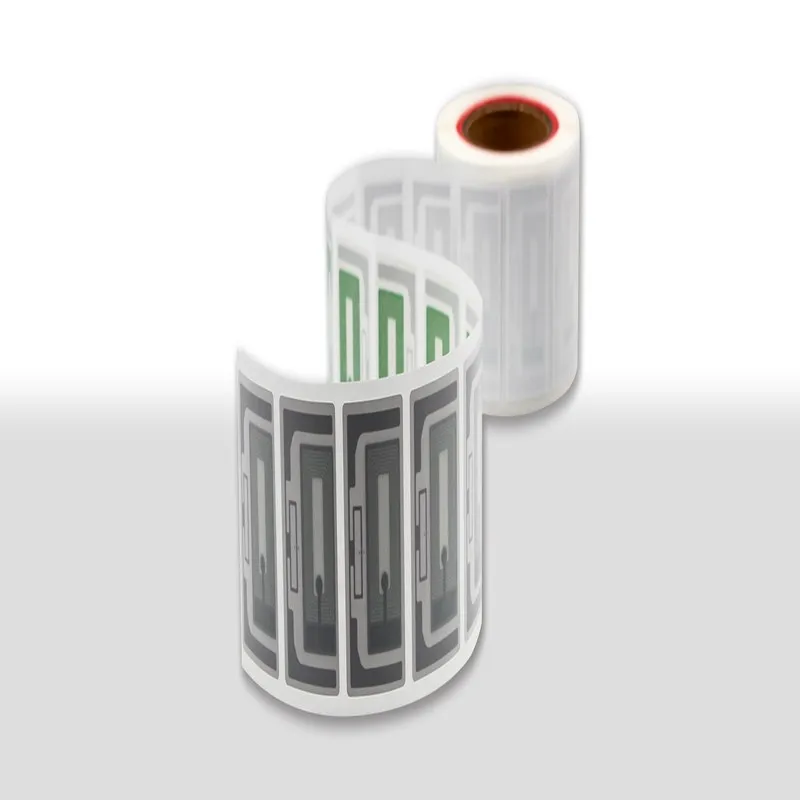
Garment tags are usually paper or fabric RFID labels applied as hangtags or sewn-in inlays. They are low-cost, disposable and easy to encode in bulk at goods-in. Options in the catalogue include the RFID Garment Tag 1570-U8, a long, narrow tag for seams or hang-tags, and the reusable UHF ABS hard tag for apparel. Browse UHF RFID inlays and labels and RFID specialty labels for more formats.
Electronics and high-value goods
Phones, laptops and appliances contain metal and battery packs that detune ordinary tags, so they need on-metal RFID tags. These are more rugged and cost more per piece than paper labels. For open-display electronics, combine an on-metal RFID tag with a physical security cradle for layered protection.
What an RFID loss-prevention setup costs in India
Costs vary with store size and how reliable the reads must be. The table shows what to budget for; each product page in the store shows its current list price before 18% GST.
| Component | Typical role | Budget note |
|---|---|---|
| RFID exit gate (per lane) | Theft detection at the door | The largest fixed item; an installed lane is commonly budgeted at about ₹1.5–4 lakh, depending on antenna count, reader and integration |
| Handheld reader | Cycle counts, floor search | One per store is usually enough to start |
| Apparel RFID labels | Tagging, inventory and EAS in one label | Per-item consumable; cost depends on chip, format and volume |
| On-metal tags | Electronics and metal or battery items | Higher per-piece cost than paper labels |
| Desktop reader or RFID printer | Encoding and printing in the back office | One-time item, shared across all stock |
The lane figure is an indicative planning range, before GST and installation. A single-lane apparel store can typically start meaningful loss prevention for well under ₹3 lakh in fixed hardware, plus per-item labels. For multi-store chains, right-sizing antenna counts and reader placement keeps you from overspending on gates.
Deployment tips for Indian stores
- Tag at source or at goods-in: encoding labels during inward GRN is faster than tagging on the floor and keeps data clean.
- Mind the read zone: position antennas to cover the full doorway width but avoid reading the billing counter or nearby racks.
- Train staff on named alerts: because RFID EAS identifies the SKU, define clear escalation for high-value and low-value alarms.
- Combine with cameras: link gate alerts to CCTV timestamps for evidence during disputes.
- Insist on approved hardware: use 865–868 MHz readers and ask for the WPC ETA certificate for the exact model.
To plan a store or a chain, request a quote with your door widths, SKU mix and existing EAS gates, and we will suggest the gate, reader and tag combination to test.
Related guides
Frequently asked questions
Can RFID replace my existing EAS system entirely?
Is RFID legal for retail use in India?
Will RFID tags on electronics work despite the metal and battery?
How much does an RFID security gate cost in India?
How much can RFID reduce shrinkage?
Do customers have to remove RFID tags at billing?
RFID EASRetail Loss PreventionRFID Security GatesShrinkage ReductionApparel RFIDIndian Retail