GS1 and EPC Encoding for Indian Retail Suppliers: SGTIN-96 Explained
Published 9 Aug 20268 min read
Written and maintained by the RFID team at Identium Tech Solutions Pvt Ltd, New Delhi (India RFID Store).
Short answer: An EPC (Electronic Product Code) is the unique identifier written into an RFID tag's memory, and SGTIN-96 is the GS1 encoding scheme that retail RFID mandates in India normally ask for. It packs your GS1 Company Prefix, an item reference and a serial number into 96 bits, usually shown as 24 hexadecimal characters, so every individual garment or carton carries its own identity, not just a product code.
This guide is for Indian apparel, footwear, FMCG and accessories suppliers whose retail customer has just mandated RFID-tagged, serialised shipments, and for the operations and IT teams who now have to deliver it. No prior GS1 knowledge is assumed.
What exactly is an EPC, and how is it different from the barcode on my label?
The barcode carries a GTIN, which identifies the product. The EPC in the RFID tag carries an SGTIN, which identifies the individual item: the same GTIN plus a serial number. Two identical size-M black t-shirts share one barcode, but each must carry a different EPC.
The GTIN is printed as an EAN-13 or ITF-14 barcode. The EPC is written into the EPC memory bank of a UHF Gen2 (ISO/IEC 18000-63) chip, which in India operates in the licence-exempt 865–868 MHz band. One label usually carries both, with the barcode on the face and the encoded EPC in the inlay behind it, so tills keep scanning barcodes while the stockroom counts by RFID.
| Attribute | GTIN (printed barcode) | SGTIN EPC (in the tag) |
|---|---|---|
| Identifies | A product or SKU | One physical item |
| Unique per unit? | No, shared by all units | Yes, the serial makes it unique |
| Typical format | 13 or 14 digits, e.g. 8901234567890 | 24 hex characters, e.g. 30361F49C8377540000F4241 |
| Check digit | Included and printed | Not stored; software recalculates it |
How is an SGTIN-96 actually built?
SGTIN-96 is a set of fields that together total 96 bits. Those 96 bits are written into the tag and displayed as 24 hex characters.
- Header (8 bits): a fixed value that identifies the scheme as SGTIN-96.
- Filter value (3 bits): a hint about packaging level, explained below.
- Partition (3 bits): says where the company prefix ends and the item reference begins.
- GS1 Company Prefix and item reference (44 bits between them): the item reference includes its indicator digit, and the partition value sets where the split falls.
- Serial number (38 bits): the part that makes each unit unique.
A worked example
Using a company prefix from the 890 range issued in India:
- GS1 Company Prefix: 8901234 (7 digits)
- Item reference: 56789, with indicator digit 0, so the field value is 056789
- Printed GTIN-13: 8901234567890 (the trailing 0 is the check digit)
- Serial number: 1000001 for the first unit, 1000002 for the next, and so on
- Filter value: 1, a point-of-sale trade item
- Resulting EPC: 30361F49C8377540000F4241
GS1 also writes the same identity as urn:epc:id:sgtin:8901234.056789.1000001, which is the form most middleware and EPCIS systems exchange internally. The check digit never appears in the EPC: it is recalculated, not stored. So a hex string that looks nothing like your barcode still decodes back to exactly that GTIN.
The serial field is large enough that running out of numbers is not a practical concern at retail volumes, so the only real discipline is never reusing one. If your customer needs alphanumeric serials, GS1 defines SGTIN-198, which stores a longer alphanumeric serial but needs a chip with a larger EPC memory bank. Confirm that before you buy inlays.
Which partition and filter value should I use?
The partition value tells a reader where your company prefix ends and the item reference begins, because GS1 prefixes vary in length. You do not choose it freely. It follows from how many digits your prefix has, and encoding software sets it automatically once the prefix is entered correctly.
| Partition | Company Prefix digits | Prefix bits | Item reference digits (incl. indicator) | Item reference bits |
|---|---|---|---|---|
| 0 | 12 | 40 | 1 | 4 |
| 1 | 11 | 37 | 2 | 7 |
| 2 | 10 | 34 | 3 | 10 |
| 3 | 9 | 30 | 4 | 14 |
| 4 | 8 | 27 | 5 | 17 |
| 5 | 7 | 24 | 6 | 20 |
| 6 | 6 | 20 | 7 | 24 |
The filter value is a hint to readers about packaging level, so a dock-door portal can ignore item tags and count only cases. The values you will meet most often are:
- 1: a retail point-of-sale item
- 2: a full case
- 4: an inner pack
- 6: a unit load, such as a pallet
- 0: anything else
Take the filter value from your customer's tagging specification rather than guessing.
Why do retailers insist on serialised EPCs instead of one repeated number?
Because duplicate EPCs break the count, and they are a common reason supplier files get rejected. RFID counting works by collecting unique EPCs, so 500 t-shirts sharing one EPC report as one item, not 500. Serialisation is what turns a radio read into a stock count, which is why retailers audit supplier files for uniqueness before approving you.
Serialised EPCs also deliver what the retailer bought RFID for: faster cycle counts, accurate omnichannel stock, exit-gate loss prevention and shipment verification at receiving. Our guide to RFID in apparel and fashion retail in India covers the store-side workflow. On the supplier side, a few rules keep serials clean:
- Allocate serial ranges centrally: one system owns the counter, not each packing line.
- Never restart serials at 1 for a new season, style or purchase order.
- If a label is misprinted or voided, retire that serial; do not re-issue it.
- Keep an as-shipped file mapping EPC to GTIN, PO, carton and dispatch date.
- Treat a reworked or re-tagged garment as a new serial, and log the change.
What does a GS1 India membership actually give me?
GS1 India is the Indian member organisation of GS1 and the body that issues an Indian company its GS1 Company Prefix: the licensed number block from which you create your own GTINs and, from those, your SGTIN EPCs. Without a prefix of your own you cannot legitimately issue EPCs, because the prefix is what stops your numbers colliding with another company's.
Membership typically covers the licensed prefix, capacity to create a defined quantity of GTINs, access to GS1 standards and data services, and use of related identifiers such as GLNs for locations and SSCCs for logistic units. Fees, the size of the number block and what is bundled are all set by GS1 India and change from time to time, so confirm the current terms with GS1 India directly rather than relying on a figure quoted online.
Two common mistakes: encoding under a prefix borrowed from a customer or label vendor, which is not permitted; and applying afresh when your packaging or QA team already holds a prefix.
How do I encode the tags: printer-encoder, desktop encoder or pre-encoded stock?
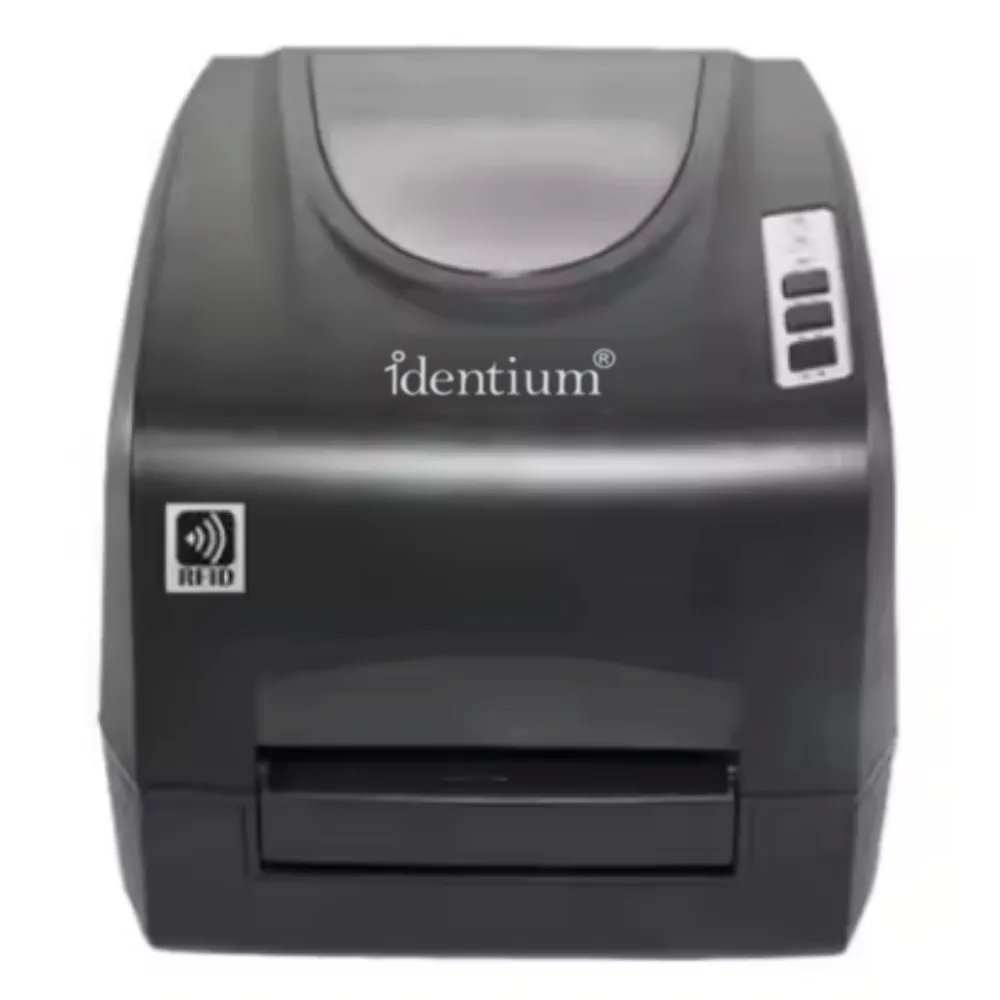
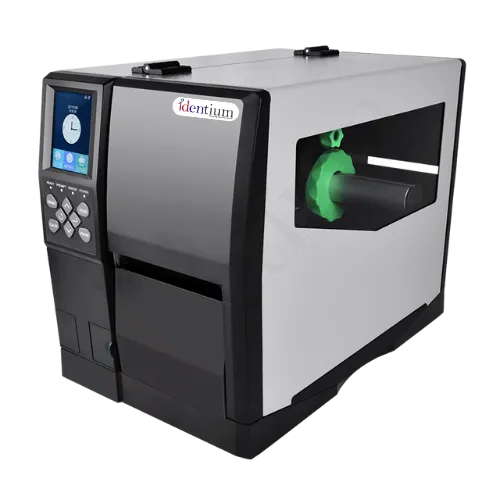
Most suppliers tagging in-house use an RFID printer-encoder: a thermal transfer printer with a built-in UHF module that writes the EPC into the inlay and prints the barcode, size and MRP on the same label in one pass, verifying each tag before it leaves the printer. Desktop encoders and pre-encoded stock cover the other two cases.
| Approach | Best for | Watch out for |
|---|---|---|
| RFID printer-encoder | Print-and-apply in your own packing hall | Needs correct label pitch and inlay position |
| Desktop encoder plus pre-printed labels | Samples, rework, low volumes | Manual matching of printed GTIN to encoded EPC |
| Pre-encoded tags from your supplier | Suppliers with no in-house printing | You hand over serial ranges in advance, so plan orders further ahead |
A workable in-house encoding flow
- Issue the job. Your ERP issues a job file of GTIN, serial range and quantity.
- Build the label. Label software such as BarTender or NiceLabel builds the label and the EPC once you enter the prefix, item reference, indicator digit and serial source.
- Encode and verify. The printer writes each tag, reads it back, then voids and reprints any failure, so operators only handle good labels. A well-set-up line voids only a small fraction of labels; persistent voids usually point to inlay position or RF power rather than bad tags.
- Return the as-encoded file. The list of encoded EPCs goes back to your system and feeds the ASN or EPCIS file at dispatch. This is where most projects stall; see our guide to RFID software and middleware integration.
Ordering tags pre-encoded
If you hold a GS1 India company prefix but have no printer-encoder, tags can be ordered with SGTIN-96 EPCs already written to your prefix and serial plan. Send the prefix, the GTIN or GTIN list, the serial range or start serial, the filter value and the quantity per GTIN. The matching GTIN, serial and barcode can be printed on the same label so the printed and encoded identities agree, which removes the most common error in a first rollout. The prefix itself must come from GS1 India; a tag supplier cannot issue one.
What to buy
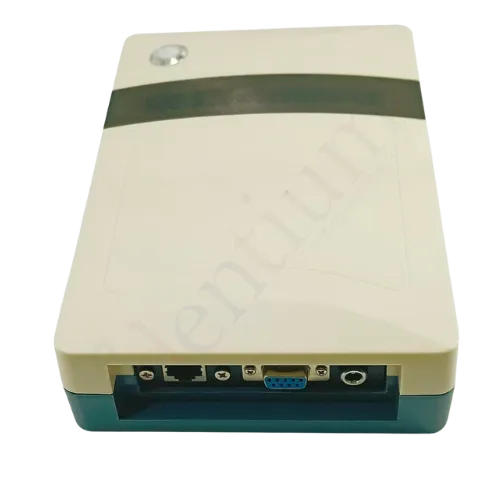
India RFID Store supplies each part of the chain: UHF RFID inlays and labels for garments and cartons, RFID printers and printer-encoders such as the IT4RL desktop RFID printer and encoder, and desktop UHF readers for encoding in sample rooms and at rework benches. Tag cost depends on inlay type and quantity; our RFID tag price guide for India explains the variables.
What should I check before the first RFID-tagged shipment leaves?
Run a small pilot, a few hundred pieces of one style, and validate it end to end before you scale. The checks below catch most of the problems that hold up a first shipment, and all can be done in-house with a handheld or desktop reader.
- Decode sample tags and confirm the EPC maps back to the printed GTIN, with the right partition and filter value.
- Verify every serial in the batch is unique, including across styles and colours.
- Confirm the retailer's required tag placement, label format and inlay type; some specify a tested inlay or a published performance grade.
- Read a full sealed carton and confirm every unit is detected, not just most of them.
- Test metallic and liquid-adjacent items separately: foil-backed packs and metal hardware need on-metal tags, not a paper inlay.
- Send a test EPC file to your customer and get written confirmation that it parses before full production.
GS1 standards, retailer tagging manuals and Indian radio rules all change over time. Treat this article as orientation, and verify the current EPC Tag Data Standard and your customer's tagging specification against official GS1 and GS1 India sources, along with current WPC and BIS requirements for any reader hardware, before you commit to a production run.
Facing an RFID mandate from a retail customer? India RFID Store can match inlays, printer-encoders and readers to your customer's specification. Request RFID samples and encode a test batch against your own GTINs before committing to volume.
Related reading
- Walmart's RFID mandate in 2026: what Indian suppliers must do
- EU Digital Product Passport and RFID for Indian exporters
- RFID inventory management and stock accuracy in Indian retail
- Indian Railways RFID tags: CRIS specifications and GS1 encoding
- RFID tags for solar modules: EPC plus user-memory encoding
Frequently asked questions
Can I buy RFID tags pre-encoded with my own GS1 company prefix in India?
What information is needed to pre-encode our tags?
Do I need my own GS1 membership if my retail customer already has one?
What is the difference between SGTIN-96 and SGTIN-198?
Can I reprint a label if a tag fails encoding?
Will tags encoded in India work at an overseas retailer?
How long does it take to go from mandate to first compliant shipment?
GS1EPC EncodingRetail ComplianceRFID LabelsApparel RFID
Cite as: India RFID Store (Identium Tech Solutions Pvt Ltd), “GS1 and EPC Encoding for Indian Retail Suppliers: SGTIN-96 Explained”, https://www.indiarfidstore.com/rfid-resources/gs1-sgtin-96-epc-encoding-guide-india-retail-suppliers, published 9 Aug 2026.
Keep reading
More guides
More in Technology explained
- RFID Data Security in India (2026): Is RFID Safe? Cloning, Skimming & Encryption Explained
- RFID vs QR Code in India (2026): Cost, Speed, Durability & Which Wins
- UHF vs HF vs LF vs NFC RFID — Which Frequency Should You Choose? (India 2026 Guide)
- NFC vs RFID — What's the Difference? India Guide 2026
- UHF vs HF vs LF RFID — Which Frequency Is Right for Your Application? India 2026
- How Does RFID Work? Complete Beginner's Guide India