RFID Diesel Bowser and HEMM Fuel Automation in Indian Coal Mines: Tender Scope, Nozzle Authorisation and Tag Selection
Published 6 Sept 2026Updated 12 Oct 20268 min read
Short answer: An RFID diesel bowser automation system puts a rugged on-metal tag on every HEMM's fuel tank neck and a reader at the bowser's dispensing nozzle or automatic fuelling terminal. The pump opens only once the machine is identified, and every litre is logged against it with time, date and quantity, plus operator ID where driver cards are included. Coal and Mines PSU tenders in a tender aggregator's West Bengal RFID category in early September 2026 were buying this kind of system, at least two of them scoped as one bowser plus ten HEMMs in a Rs 40–45 lakh band. The hard part is not the software; it is choosing a tag that survives vibration, heat, diesel splash and pressure-washing on a dumper.
What are the September 2026 coal-PSU diesel bowser tenders buying?
The titles point to a bundled retrofit: RFID identification on a mobile bowser plus tags on HEMMs. Whether a pump interlock is in scope is not visible in the listing, so confirm it in the tender document.
The titles span supply, providing and fixing, and separately repair and maintenance. Expect hardware, installation and service to be scoped somewhere in the set, but check each document for what is bundled.
The listing below (tenderdetail, West Bengal RFID category) was captured on 5 September 2026. It does not name the issuing company, so treat the buyer as unidentified until you open the document.
| Tender title (abridged) | Indicative value | Closing date |
|---|---|---|
| Providing And Fixing RFID System For Diesel Bowser And HEMM | Not shown | 9 Sep 2026 |
| RFID Based Diesel Bowser Automation System For HEMMs Deployed | Not shown | 11 Sep 2026 |
| Providing And Fixing Of RFID Systems In 1 No. Diesel Bowser And 10 Nos. HEMMs | Rs 40–45 lakh band | 12 Sep 2026 |
| Repair / maintenance of RFID systems, 1 bowser and 10 HEMMs | Rs 40–45 lakh band | 12 Sep 2026 |
| Automation Of Diesel Bowser And RFID Reader | Rs 40–45 lakh band | 5 Sep 2026 (closed) |
Exact figures on the listing are generalised to a band here, and one title's site name is left out pending confirmation of its state.
The deployment unit is small and repeatable, one bowser and about ten machines, so a mine with several bowsers tenders this repeatedly; Coal and Mines buyers accounted for 10 of 83 Indian RFID tenders tracked in 2026. The listings state no frequency band, tag count, reader count or read range, so assume none.
Why is diesel accountability so hard on a HEMM fleet?
Because the fuel goes to the machine, not the machine to the fuel. Dumpers, dozers, excavators and drills work in the pit on long shifts, so a bowser fills them where they stand, at night, in dust, often with nobody watching the nozzle. In many operations the record is still a handwritten slip.
That leaves four gaps a paper log cannot close:
- Fuel booked against the wrong machine.
- Quantities rounded, or written after the fact.
- Top-ups that reach no sheet.
- No way to reconcile bowser issue against receipt at shift end.
Consumption per machine, the number that tells an engineer whether a machine is going bad, becomes an estimate. RFID does not stop misuse; it makes each dispensing event a record no one typed.
How does the authorise-dispense-log loop work at the nozzle?
The sequence in these systems is generally:
- Identify. The tank-neck tag is read as the nozzle comes to it.
- Authorise. The terminal checks that machine against its list.
- Dispense. The terminal releases the pump or control valve.
- Log. The flow meter reading is captured against the machine.
- Upload. The transaction is stored and sent to the fuel-management software.
One fuel-systems vendor describes its own product the same way: authorisation happens through an RFID reader in the automatic fuelling terminal (AFT), the AFT matches the bowser details and authorises the pump or control valve, and after fuelling it transfers the data wirelessly to its software, with records kept by vehicle number, time and date. That is one vendor's account of its own product, quoted to show the shape of the loop, not an industry norm or an Identium specification.
The interlock is the whole point. If the valve opens without a successful read, the system is a logger, not a control. Ask in writing what the terminal does when a tag is unreadable: refuse, allow on a supervisor override code, or flag an exception. Then check that answer against how the mine runs at 2 a.m.
Which RFID tag survives on a dumper's fuel tank neck?
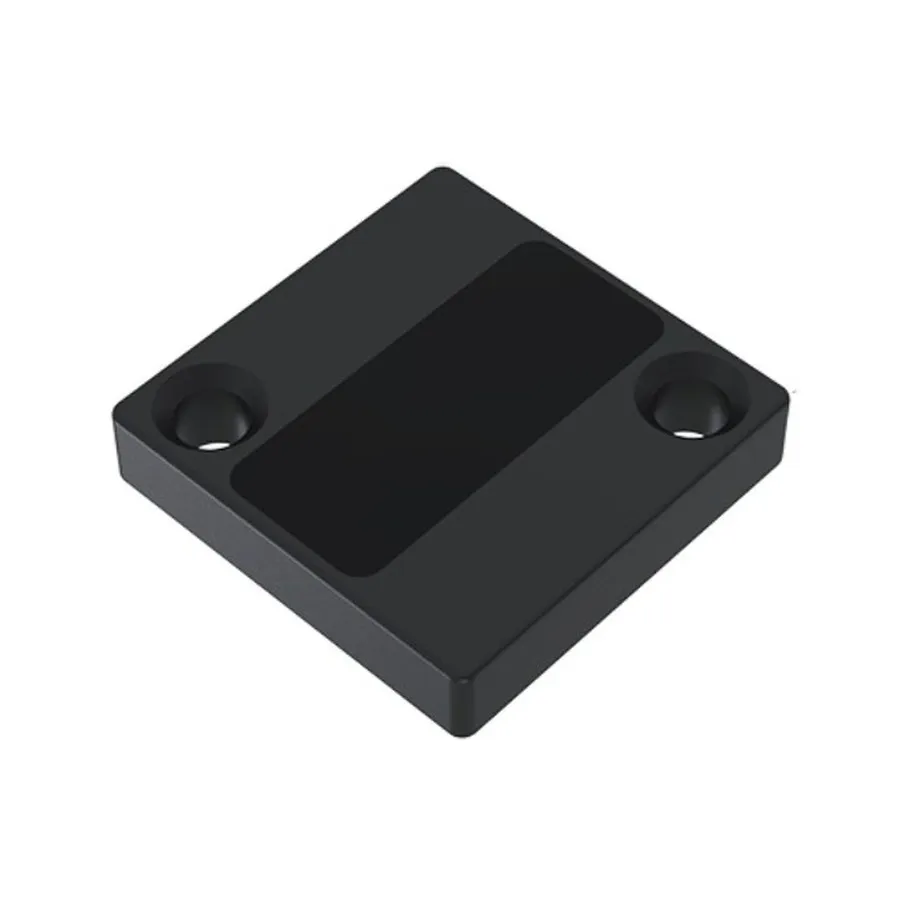
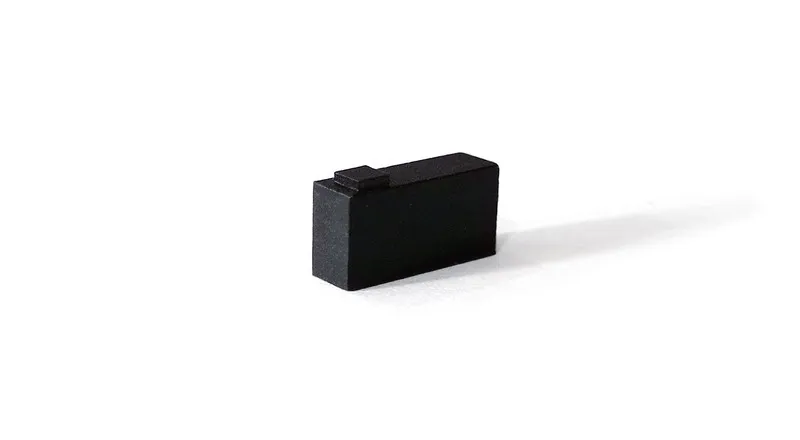
Not a paper or PET inlay label: those detune on metal and delaminate under diesel. A tag near a HEMM tank neck lives with vibration, engine-bay heat, diesel and oil splash, coal dust and high-pressure washing, all while mounted on steel. The tag line item, not the software, is where these projects fail in year two.
| Tag type | Where it fits | Watch-outs |
|---|---|---|
| On-metal UHF hard tag, moulded housing | Tank neck bracket, filler cap surround, chassis plate | Needs a mechanical mount; adhesive alone rarely lasts |
| UHF PCB or ceramic on-metal tag | Tight spots where a housing will not fit | Smaller antenna usually means shorter range; check the datasheet at your offset |
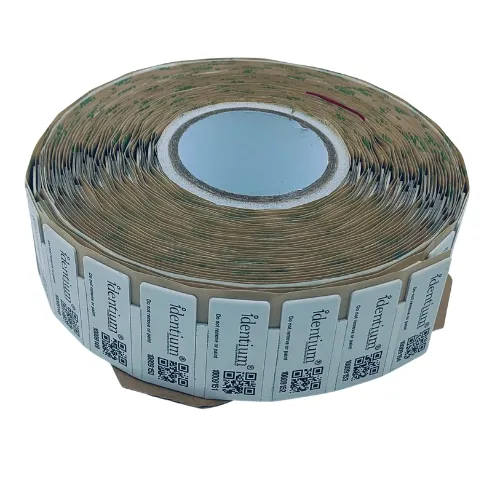
| Flexible rugged on-metal label | Curved tank shoulders, non-flat surfaces | Confirm surface preparation and adhesive on an oily machine |
| Operator or driver ID card | Presented at the bowser terminal | Decide whether card loss blocks fuelling or only flags it |
| Bowser vehicle ID tag | On the bowser, for gate and depot reads | Same on-metal physics as the HEMM tag |
India RFID Store lists on-metal RFID tags in housed and flexible types, and RFID PCB and ceramic tags for compact mounting, such as the IDTS-2626 on-metal PCB tag (26 × 26 mm, screw mount). Not every PCB tag is an on-metal type, so confirm anti-metal construction on the datasheet before you shortlist one for a steel tank neck.
For tank-neck mounting, specify on-metal UHF tags with a mechanical mount. The tender listings state no frequency band, so write it into the scope yourself: 865–868 MHz, the licence-exempt UHF RFID band in India under G.S.R. 853(E), 2021. For mounting offsets and detuning, see our guide on how to choose on-metal RFID tags in India.
What goes on the reader side of a bowser?
Three reader roles show up in a bowser package; confusing them is a common costing mistake.
| Position | Device | Job |
|---|---|---|
| Nozzle or automatic fuelling terminal | Embedded UHF reader module, small antenna | Read only the machine being fuelled and release the pump or valve |
| Bowser console or cabin | Fixed UHF reader with antenna, plus card reader | Identify bowser and operator, hold the transaction record |
| Workshop, store and audit | UHF handheld reader | Commission and verify tags, re-read machines during audit |
For nozzle and terminal integration, RFID reader modules are usually the right building block, since the integrator controls antenna placement and interlock logic; RFID handheld readers cover commissioning and audit. Do not take a read range from a brochure: use the datasheet of the tag and antenna you are quoting, at the actual mounting offset.
Why does one package include repair and maintenance?
One likely reason: fuel-automation retrofits degrade in predictable ways. Tags get sheared off by a hose, brackets crack from vibration, nozzle antennas take a knock, enclosures let in dust and water, and machines get re-tagged after an overhaul without the master list being updated. Once a handful of machines are untagged the system stops being trusted, and the manual slip returns.
Build for that from day one:
- A tag spares pool.
- A fixed bracket design per machine class.
- The tag-to-machine mapping under change control, with a named owner.
- A scheduled handheld audit sweep.
A contract covering the terminal but not the tags leaves the weakest link uncovered.
What should a diesel bowser RFID scope document specify?
- Machine count and classes to be tagged, plus bowser tags and a spares quantity.
- Mounting method per class, and who fabricates the brackets.
- Frequency band and air-interface standard, and any required encoding scheme.
- Nozzle read behaviour at the filler position, and what happens on a failed read.
- Interlock definition, with the pump released only on authorisation and the override policy stated.
- Record fields: machine ID, operator ID, bowser ID, litres, time, date, and location if GPS is included.
- Upload method, data retention and the report formats the fuel department will use.
- Ingress protection and operating temperature per field device, quoted from datasheets.
- Commissioning plan, acceptance test, spares list, and service and AMC terms that cover tags as well as electronics.
If the mine also runs despatch controls on mineral transport vehicles, keep that scope separate: different tag positions, different gate hardware. Our guide to RFID and GPS for mineral transport vehicles in India covers it.
What bid paperwork should contractors check?
In a PSU tender the paperwork often decides the award rather than the technology. Expect clauses on Make in India and Class-I local supplier status, GeM, prior experience and OEM authorisation, and radio equipment to be supplied with the relevant Indian approval and compliance documents.
Identium Tech Solutions manufactures RFID tags and readers in India, which matters when a bid asks for domestic manufacturing evidence rather than a trading certificate. On the approvals side, the CX1500N handheld and the IF9A, IHZ4 and MUBR01 readers hold WPC ETA. Our guide to RFID government tenders in India walks through the documentation set.
If the tender or the mine's safety department calls for hazardous-area certified equipment in the fuelling zone, resolve it before you quote. Our standard commercial readers and tags are not supplied with hazardous-area approvals, and substituting them is not a site-level decision. Verify against the regulator and the tender documents before bidding.
What is a sensible first deployment?
Start with three tagged machines and one nozzle, not ten. Prove the read at the filler position on a dumper, a dozer and an excavator, prove the tag survives a wash cycle and a fortnight of shift work, then scale.
The tag, reader module and handheld ranges are linked above; ask for the datasheet of the exact part before you write it into a scope document. For a multi-bowser fleet, see bulk RFID pricing and ask for a package quote against your machine list.
Related guides
Frequently asked questions
Does RFID stop diesel pilferage on its own?
Where exactly should the tag go on a HEMM?
What frequency should an Indian mine specify?
Do operators need ID cards as well as machine tags?
How many tags should a package include per machine?
RFID diesel bowserHEMM fuel managementcoal mine RFIDon-metal RFID tagsmining RFID tendersfuel automation India