Metro RFID Tokens & Smart Cards: What an AFC Spec Asks of a Card
Published 22 Oct 20269 min read
Short answer: an automatic fare collection (AFC) system asks a token or card for things a plain ID tag never has to offer: a chip rated for many rewrites, data that survives a power cut mid-tap, mutual authentication with the gate reader, and a body that lives in pockets for years.
Kolkata Metro's 2026 purchase of RFID tokens spells those requirements out, and this guide reads them line by line, then maps them to the HF tokens, cards and reader-writers in our catalogue for smaller closed-loop operators. Status on 22 October 2026: the token purchase was reported on 14 April 2026 as an electronic bidding process for 2 lakh tokens in phases, the first lot 70,000; we have not seen an award notice.
This guide is for city bus undertakings, feeder and campus shuttle operators, ferry services, amusement parks, clubs and any operator that issues a token or a stored-value card and reads it at a gate or validator. Kolkata is the worked example because its token procurement is one of the clearest public descriptions of what an Indian AFC system asks of its fare media. The lessons apply to a depot issuing 2,000 cards as much as to a metro.
Kolkata's token purchase: the figures
Millennium Post reported on 14 April 2026 that Metro Railway, Kolkata would procure 2 lakh contactless RFID smart tokens to "maintain reserve stock for operational continuity", delivered in phases starting with 70,000. "The procurement will be carried out through an electronic bidding process." According to the paper's sources, the reserve is for contingencies including technical glitches in the AFC system, and existing token stock was "limited and insufficient for current requirements". The report gives the ridership the stock serves: 2,359.81 lakh passengers in 2025–26, up from 1,925.23 lakh in 2023–24 and 1,769.16 lakh in 2022–23.
The technical requirements reported for the tokens are the core of this guide:
- chips supporting at least 10,000 write cycles, with data retention of up to five years;
- "duplication of transaction data to prevent loss during power interruptions";
- "mutual authentication with metro readers";
- durability against repeated handling, dust and moisture, and operation from −5 °C to 60 °C;
- continued function under electromagnetic interference, UV exposure and X-rays.
Tokens and smart cards continue alongside QR tickets; the paper says QR code tickets, "both paper-based and mobile", are seeing increased adoption. Metro Railway's own ticketing rules explain the roles. The smart card is touched on the gate at entry and again at exit, with the fare deducted from the card. The smart token "is meant for single journey", "is captured at the exit gate on completion of journey", and a counter-bought token must be used to enter the paid area within 45 minutes or it becomes invalid. A lost token "is not replaced under any circumstances".
Reading the spec line by line
Write cycles. A token is written at the counter or vending machine with the journey details, read and updated at the entry gate, and read again and captured at the exit. On our own rough arithmetic, a token recirculated once a day takes about three writes a day, so 10,000 cycles is around nine years of daily service.
A stored-value card is rewritten at every tap, so endurance matters even more. Ask the supplier for the chip's datasheet endurance figure rather than accepting a line on a quotation, and note that a tag whose memory is locked after personalisation cannot serve as a token at all.
Retention and duplicated transaction data. Retention is the chip's rating for keeping data without power: five years means a card left in a drawer still carries its balance. Duplicating transaction data is a data-layout decision: the latest transaction is written with a backup record, so a tap interrupted by a power cut or a card pulled away too early does not leave the balance half-written. That depends on the chip family and on how the operator's software lays out the card's memory, so specify both.
Mutual authentication. The gate reader proves to the card that it is a genuine reader, and the card proves to the reader that it is a genuine card, before any balance is read or written. Chips in the DESFire class support this with AES keys held in the chip; a card that carries only a serial number can be read by any reader.
Our RFID data security guide explains cloning and skimming for each chip class. For an operator the practical point is that the keys are its own asset: hold them, diversify them per card, and never accept cards shipped with default keys for live use.
Environment. −5 °C to 60 °C, dust, moisture, handling, interference, UV and X-ray tolerance describe a token that lives in trouser pockets, falls on platforms, passes through baggage scanners and sits in a vending-machine hopper. The body (an ABS or PVC token, or a laminated PVC card) is specified separately from the chip, and the tests differ: drop and humidity cycles for the body, read-after-exposure for the chip.
Token, card or QR: which medium for which rider
Kolkata keeps all three, and its card terms show why. On 24 September 2025 PTI reported that Kolkata Metro was raising smart-card validity from one year to ten years, with a new card's validity starting at its first gate swipe, and cutting both the minimum issue price and the refundable security deposit, with the recharge bonus continuing. The stated aims were to popularise smart cards and ease crowding at booking counters, and more than 50,000 cards had been sold that month. The card is the regular rider's medium, the token the occasional rider's, and QR the phone-first rider's.
A token also has an operational advantage that the rules above illustrate: it is captured at the exit, so stock recirculates and stays under the operator's control, whereas a card leaves with the rider. The cost of that advantage is the reserve the Kolkata purchase is building, because tokens are lost, pocketed and damaged.
The bigger shift in Indian transit cards is open-loop payment. In a Rajya Sabha reply published by PIB on 4 December 2023, the Ministry of Housing and Urban Affairs said Delhi Metro "has plans to replace Closed Loop Delhi Metro Smart Cards with Open Loop National Common Mobility Cards (NCMC) in a phased manner", and that "other metro rail systems are also progressively shifting to NCMC from Closed Loop Card System".
An NCMC is a bank-issued card, so it is not something a card printer sells. Closed-loop media, the operator's own tokens and cards, remain the tool for systems that do not take bank cards: feeder buses, campuses, parks, clubs and private shuttles.
What a smaller operator can copy
Three things transfer directly from a metro spec to a depot, campus or park. First, write the endurance and retention figures into the purchase order and ask for the chip datasheet. Second, decide on mutual authentication before the first card is issued, because a fleet of simple memory cards cannot be upgraded in place. Third, test the token or card body against your own environment: a bus validator in a desert summer and a hill-station ferry gate are different places.
What does not transfer is the scale. A metro specifies its own key management and gate software; a bus operator buys a validator and a back office and needs media the validator maker supports. So the first question to a card supplier is which chip family your validator supports, and the second is who encodes the keys. Our RFID cards buyer guide walks through the chip families, and NFC vs RFID explains why fare media are 13.56 MHz HF rather than UHF.
A purchase-order checklist for fare media
Whatever you buy, from us or anyone else, put these lines in the purchase order so that the supplier answers them in writing:
- the chip family and exact chip, matched to what your validator or gate reader supports;
- the chip's rated write endurance and data retention, from its datasheet;
- whether the card supports mutual authentication, who generates and loads the keys, and how keys are diversified per card;
- the memory layout your software expects, including where the backup transaction record sits;
- the body material, thickness and operating temperature, and the print on each face (logo, serial number, terms);
- the serial-number scheme and whether serials are printed, encoded or both, so a lost card can be blocked by number;
- a sample batch for read tests on your own readers before the volume order.
The same list works for a token, a coin tag or a card. It also makes quotations comparable, because two suppliers quoting "13.56 MHz card" can mean very different chips.
Tokens, cards and reader-writers from the catalogue
For closed-loop systems and for trials, the catalogue has the fare-media shapes and the desk equipment to encode and test them. None of these is offered as meeting any metro's specification; check each chip's data against yours.
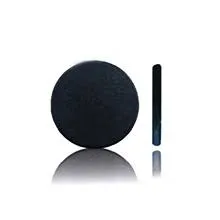
- HF RFID Token Tag (small, 13.56 MHz), ₹25 + GST: a small passive HF token that is carried or attached to what it identifies, made for tool tracking and access control and the right shape for a token trial.
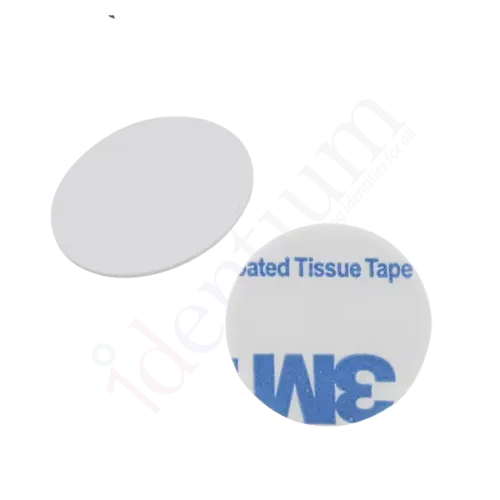
- PVC RFID Coin tag, ₹25 + GST: a sealed 25 mm or 30 mm disc, 3.5 mm thick, IP67, rated −25 °C to +65 °C, with a MIFARE Classic 1K, NTAG213 or ICODE SLIX chip, and a custom logo and serial number printed on it.
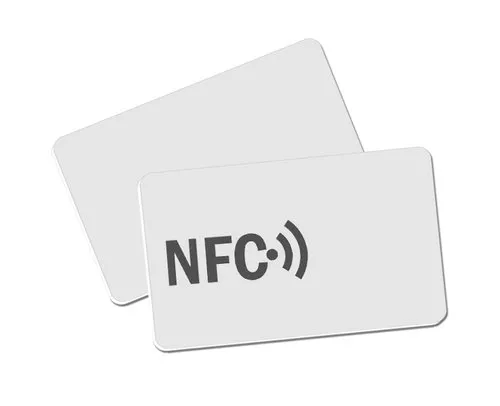
- NFC Card 13.56 MHz (NTAG, MIFARE Classic, DESFire, ICODE SLIX), ₹20 + GST: the stored-value or pass card, ordered in the chip family your validator supports; the DESFire EV1/EV2 option adds AES-128 encryption where mutual authentication is required.
- HF RFID Card 13.56 MHz, plain PVC, ₹10 + GST, and the Printed RFID ID Card, ₹30 + GST: staff, student and pass cards with the operator's print.
- HF Desktop Reader Writer, ₹4,500 + GST: the USB unit for the issuing desk that enrols, encodes and checks 13.56 MHz cards and tokens from a PC, with an SDK for your issuing software.
- RFID IP Reader IDTS-HRW560 with Wi-Fi and PoE, ₹10,000 + GST: a network reader that sends every tap to a server over Wi-Fi or TCP/IP, for a depot gate or a test bench, in an HF or LF version.
Tokens, coin tags and cards are consumables with a minimum order of 500 pcs. Browse HF RFID and NFC hard tags, HF cards and HF RFID readers, and for stored value at events, our IDPay RFID cashless payment system page.
Shop the products in this guide
- HF RFID Token Tag and PVC RFID Coin tag: token shapes for a closed-loop trial.
- NFC Card 13.56 MHz: the stored-value card, in the chip family your validator supports.
- Plain HF card and Printed RFID ID Card: staff and pass cards.
- HF Desktop Reader Writer and RFID IP Reader IDTS-HRW560: issuing desk and networked reading.
Planning a token or card system? Tell us the validator or gate you use, the chip family it supports and the number of riders, and request token and card samples to test on your own readers before you order in volume.
Sources
- Millennium Post, 14 April 2026: Kolkata Metro to procure 2 lakh RFID tokens as backup
- Metro Railway, Kolkata: Ticketing (smart card and smart token rules)
- PTI via The Week, 24 September 2025: Kolkata Metro increases validity of smart cards to 10 years
- PIB, Ministry of Housing and Urban Affairs, 4 December 2023: Introduction of smart cards by Delhi Metro (closed-loop cards to open-loop NCMC)
Frequently asked questions
Why does a metro token need 10,000 write cycles?
What is mutual authentication, and does a bus card need it?
Which frequency do metro tokens and cards use?
Token or card for a small closed-loop system?
Does India RFID Store supply tokens to Kolkata Metro?
Transit TicketingHF RFIDSmart CardsRFID TokensPublic Sector
Keep reading
More guides
More in Regulations & tenders
- Haryana RFID House Tags for Waste Collection and the SWM Portal
- Trailer RFID Tags and AIS-140 Tractors: MoRTH Draft Status 2026
- FSSAI Non-Retail Container Labels 2027: Lot Numbers and RFID
- FASTag Parking System: How to Accept FASTag at Your Parking Lot