How to Buy RFID Tags from India: A First-Time Importer's Guide
Published 30 Aug 2026Updated 4 Oct 202610 min read
Short answer: Buying RFID tags from India follows the same commercial path as any hardware import: lock the technical specification first, validate physical samples on your own readers, then agree artwork, encoding data, volume pricing, Incoterms and payment terms in writing before the first production run. Indian factories build to the 865–868 MHz allocation, which matches the ETSI 865–868 MHz band, so tags tuned for Indian supply drop straight into EU, UK, GCC, Nigerian and South African deployments.
This guide is written for the first-time importer — a distributor, systems integrator, brand owner or procurement manager outside India who has shortlisted an Indian RFID manufacturer and now needs to run the purchase like a professional buyer rather than a trial order. It walks the commercial process end to end, and it deliberately avoids quoting numbers, because minimum order quantities, lead times and pricing tiers change by product, chip availability and season. Confirm every one of those with the supplier before you commit.
What do I need to specify before I ask an Indian supplier for a quote?
Specify six things: operating band and destination market, chip family, form factor and dimensions, mounting surface and attachment method, any printing or encoding you want done at the factory, and the environment the tag must survive. A quotation built on those six answers is comparable across suppliers. Anything less invites guesswork and re-quoting.
Most stalled enquiries fail at the specification stage, not at the price stage. A supplier who receives "I need UHF tags, please send price" cannot answer usefully, because the same words describe a lightweight paper label and a rugged moulded on-metal tag. Send a short specification sheet instead:
- Destination market and band — name the countries where the tags will actually be read, not just where your office is. This determines antenna tuning.
- Chip family — memory size, EPC bank length, whether you need a user memory bank, and any brand protection or tamper features.
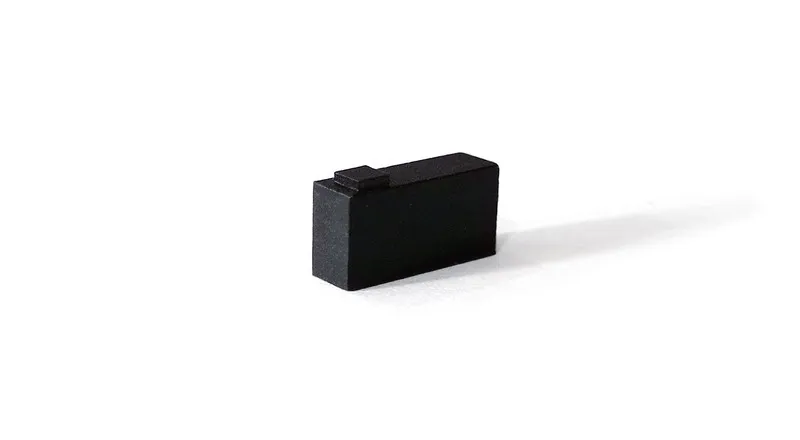
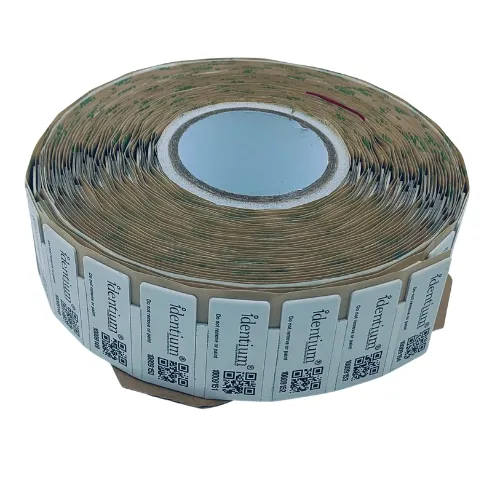
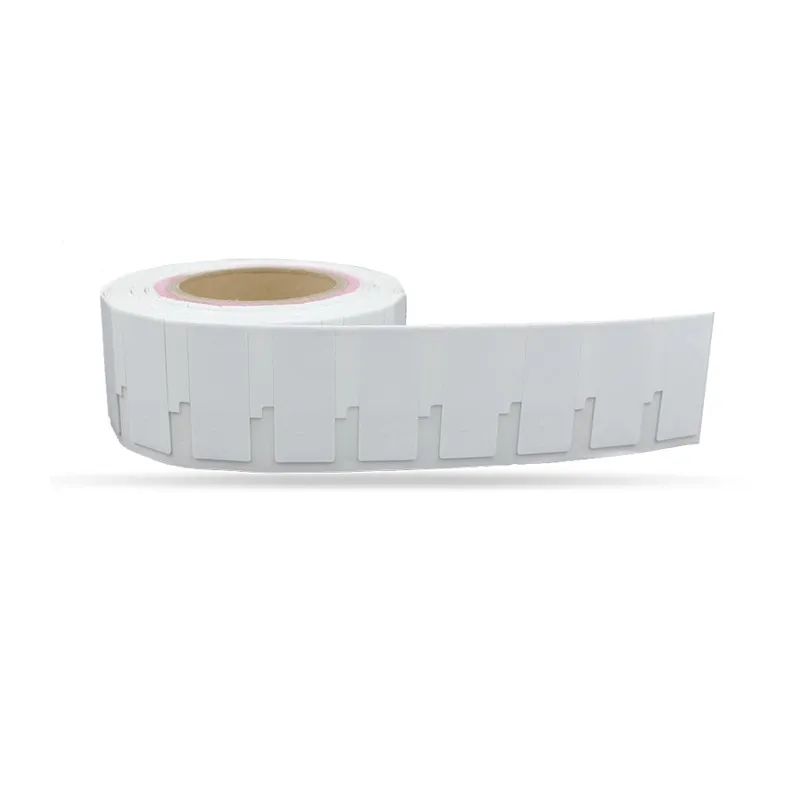
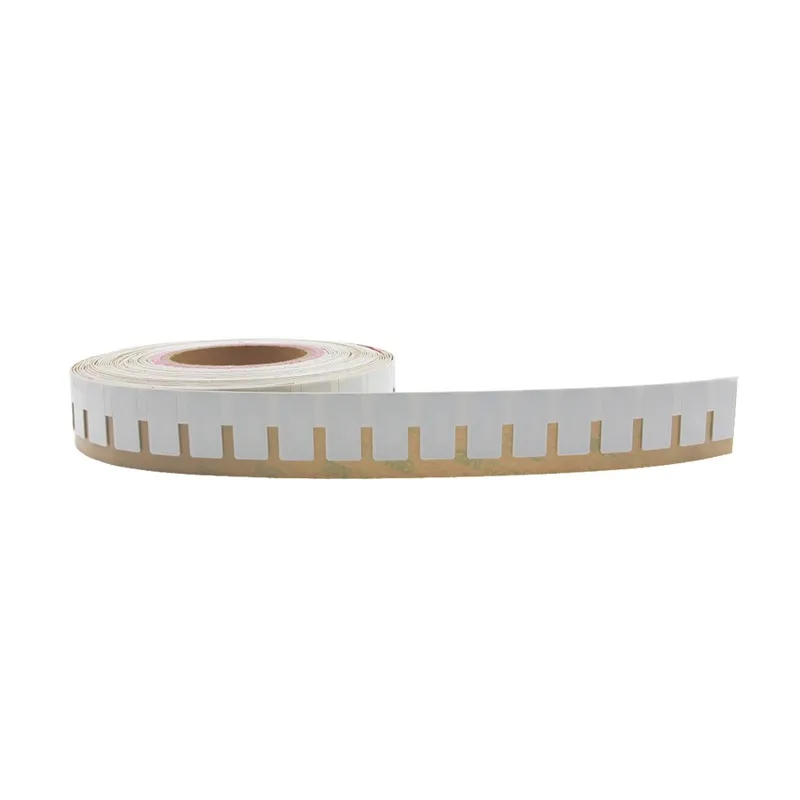
- Form factor and dimensions — inlay, printed label, hard tag, wristband, card, ceramic or PCB tag; give a maximum footprint your application can accept.
- Mounting surface — cardboard, plastic, glass, liquid-adjacent or metal. Metal and liquids change the answer completely.
- Attachment — permanent acrylic adhesive, removable adhesive, rivet or screw holes, cable tie slot, sewn-in pocket, or heat-seal.
- Print and encode requirements — human-readable text, barcode, logo, serialisation scheme, and whether tags must arrive pre-encoded and locked.
- Environment — temperature range, UV exposure, washing or autoclave cycles, chemicals, and expected service life.
If the surface is metallic, start in the on-metal RFID tags range rather than trying to make a standard label work. For cartons, apparel and retail packaging, the UHF RFID inlays and labels category is the right starting point, and the broader UHF RFID tags catalogue covers the hard-tag and specialty variants in between. If you are still deciding between UHF, HF and LF, settle that first with the frequency selection guide, because it changes every downstream decision.
Will RFID tags tuned for India work on my readers?
Yes, if you operate in an ETSI-band region. India's UHF RFID allocation is 865–868 MHz, licence-exempt within the permitted limits under G.S.R. 853(E), 2021, and it is the same band as ETSI EN 302 208 (865–868 MHz). Tags built for Indian supply are therefore a drop-in match for the EU, UK, GCC states, Nigeria and South Africa; readers use the same band but still need the destination country's own equipment approval.
The nuance is the inlay antenna. Most EPC Gen 2 (ISO/IEC 18000-63) inlays are broadband across roughly 860–960 MHz, so they will respond anywhere in that span — but the antenna is optimised for a target band, and reading an ETSI-tuned inlay on an FCC-band reader costs you range. If your deployment spans multiple regulatory regions, tell the supplier up front and ask for the globally-tuned variant of the same inlay, or split the order into region-specific SKUs.
| Supply origin / band | Native UHF band | Drop-in for ETSI regions? | Practical implication |
|---|---|---|---|
| India (WPC allocation) | 865–868 MHz | Yes — matches ETSI 865–868 MHz | Same stock serves EU, UK, GCC, Nigeria, South Africa without retuning |
| China (domestic allocation) | 920–925 MHz | No | Reader SKUs and tuned inlays differ; verify band before ordering |
| United States (FCC) | 902–928 MHz | No | Needs FCC-band readers and inlays tuned for the higher band |
South-East Asia and Latin America largely follow FCC or other regional allocations, so confirm the exact national allocation with the destination regulator before you place a production order for those markets.
How do I evaluate the samples I receive?
Test samples on your own readers, in your own building, against your real product and packaging. A read-range figure from a supplier's lab tells you very little about your warehouse, your dock door and your metal racking. Request samples of two or three candidate constructions so you are comparing, not just confirming.
A useful sample evaluation covers:
- Read range on the real item — tag the actual product, not a cardboard stand-in, and measure at your normal reader power setting.
- Orientation sensitivity — rotate the item through all axes and note where reads drop out.
- Population read rate — read a full case or pallet, not one tag, and record the percentage found per pass.
- Adhesion — apply, wait, then try to peel. Test on cold, dusty and slightly oily surfaces if that reflects reality.
- Print and encode integrity — verify that the printed human-readable data matches the encoded EPC on every sample.
- Environmental stress — run your own wash, freeze, heat or UV cycle if the application demands it.
Keep a signed retained sample of the construction you approve. That physical reference becomes the acceptance standard for every later shipment, and it settles disputes faster than any email thread. You can start that process through the RFID sample request route.
How are artwork, printing and encoding data agreed?
Artwork and encoding are agreed as two separate approvals: a visual proof for anything printed, and a data specification for anything encoded. Both should be signed off before production starts, because a factory cannot un-encode a locked tag or reprint a converted roll without scrapping material.
For printing, send vector artwork with fonts outlined, specify the exact placement and the bleed, and confirm whether the print is thermal transfer at the factory or left blank for you to print on arrival. For encoding, supply the numbering scheme in full — the prefix, the serial range, the starting number, the increment, and whether the EPC bank must be locked or left rewritable. If you are supplying a retailer that mandates GS1 identifiers, work the scheme out against the SGTIN-96 EPC encoding guide before you send it, and state clearly who owns the serial number ranges so two orders never collide.
Also agree what the factory returns to you: most importers want an encoding report or serial manifest per roll or per carton so their WMS can be pre-loaded before the goods land.
How do MOQ, volume pricing and lead time actually work?
Treat all three as variables, not constants. Minimum order quantity is driven by the tooling and material a construction needs; unit price steps down at volume breaks the factory sets per product; lead time depends on chip availability, whether printing and encoding are involved, and how much of the order is standard catalogue stock. Confirm current figures with the supplier for your exact item.
Some patterns hold generally. Standard catalogue inlays and labels carry the lowest entry quantity because the material is already running. Custom-moulded hard tags, bespoke sizes and special substrates carry a higher one, because a mould or a die has to exist.
Adding printing raises the setup component; adding serialised encoding raises it again but usually scales cheaply once running. Ask the supplier to quote at two or three quantity points so you can see the shape of the curve rather than a single number, and ask what the price includes — plain tags, printed, encoded, or encoded and locked. Volume terms for repeat programmes are handled through bulk RFID pricing rather than the published catalogue rate.
On lead time, ask for it as a process, not a promise: sample approval, artwork sign-off, material inward, production, quality check, and dispatch readiness. Knowing which step is the long pole tells you where to push.
Which Incoterm should a first-time importer choose — EXW, FOB, CIF or DAP?
Choose the Incoterm that matches how much of the shipment you want to control. EXW gives you everything and the most work; DAP gives the seller almost everything up to your door. FOB and CIF sit in between and are the common middle ground for sea freight. Whatever you pick, name it explicitly in the purchase order with the named place.
| Incoterm | Export clearance | Main carriage | Insurance | Import clearance & duty | Typically suits |
|---|---|---|---|---|---|
| EXW (Ex Works) | Buyer | Buyer | Buyer | Buyer | Importers who already have a forwarder appointed at the origin port |
| FOB (Free On Board) | Seller | Buyer | Buyer | Buyer | Sea freight buyers who control their own shipping line |
| CIF (Cost, Insurance & Freight) | Seller | Seller | Seller (minimum cover) | Buyer | Buyers who want a landed-at-port figure |
| DAP (Delivered At Place) | Seller | Seller | Seller's risk to named place | Buyer | First-time importers wanting the simplest handover |
Two points catch new importers out:
- CIF insurance is minimum cover only. If your cargo value or risk profile warrants more, arrange your own policy.
- The buyer clears imports under every term in this table and pays duties and taxes in the destination country. Do not assume DAP means "delivered duty paid".
Ask your customs broker which classification applies to RFID inlays, labels and readers in your country, and confirm the current rate with them or the destination customs authority — never with the supplier.
What payment terms and export documents should I expect?
Expect a deposit against the proforma invoice with the balance tied to a defined milestone, and expect the supplier to be more flexible on terms once you have a delivery history. Documentation is standardised: the commercial invoice, packing list and transport document form the core, with supporting certificates depending on the destination.
A typical first-order document set includes:
- Proforma invoice — the quotation you actually sign, showing specification, quantity, Incoterm, named place and payment terms.
- Commercial invoice and packing list — with carton counts, net and gross weights and dimensions for your broker.
- Bill of lading or air waybill — confirm whether it is an original or a telex release before goods sail.
- Certificate of origin — often required for preferential duty treatment; ask early, because it is issued at export.
- Test or conformity documents — relevant mainly to readers and powered devices; tags are passive, but destination rules vary.
- Encoding manifest — if tags ship pre-encoded, request it as a deliverable in the purchase order.
Pay only to the supplier's own verified banking details, obtained through a channel you initiated. Payment-diversion fraud targets first-time import relationships specifically, and a bank-detail change arriving by email mid-order deserves a phone call to a number you already had.
What quality and inspection checkpoints protect my order?
Build three checkpoints into the purchase order: approval of a pre-production sample, an in-process or pre-shipment check with a defined read-rate acceptance criterion, and your own goods-inward verification. Written acceptance criteria are what turn a quality complaint into a resolvable claim rather than an argument.
- Pre-production sample — signed off against your retained reference, covering construction, print and encoding.
- Encode verification — ask whether every tag is read-verified during conversion and what happens to the ones that fail.
- Pre-shipment sampling — an agreed sampling plan with a stated acceptable read rate and a stated action on failure.
- Labelling and traceability — roll or carton identifiers that let you trace a defect back to a production batch.
- Goods inward — sample from multiple cartons on arrival, not just the top one, and log results against the batch number.
Supplier credentials matter here too. Certification status for any readers in the order, published catalogue depth and a willingness to put acceptance criteria in writing are all reasonable things to check before your first purchase order. India RFID Store is the online catalogue of Identium Tech Solutions, a New Delhi business founded in 2010 and incorporated as Identium Tech Solutions Pvt Ltd in 2022. It makes and supplies RFID tags, labels, cards, wristbands and readers, and every product page shows a list price.
Ready to start? Send us your destination market, application surface, quantity horizon and any printing or encoding requirement, and we will come back with a specification proposal and sample options. Request samples, or see export supply for international buyers.
Related reading
Frequently asked questions
Can I buy RFID tags from India in a small trial quantity first?
Do Indian-made RFID tags work in the United States?
Who handles export clearance if I buy on EXW terms?
Can the factory encode my EPC data before shipping?
How do I confirm lead time and MOQ for my specific tag?
What certifications should an Indian RFID manufacturer hold?
RFID sourcingRFID importUHF RFID tagsIncotermssupplier evaluationIndian manufacturing