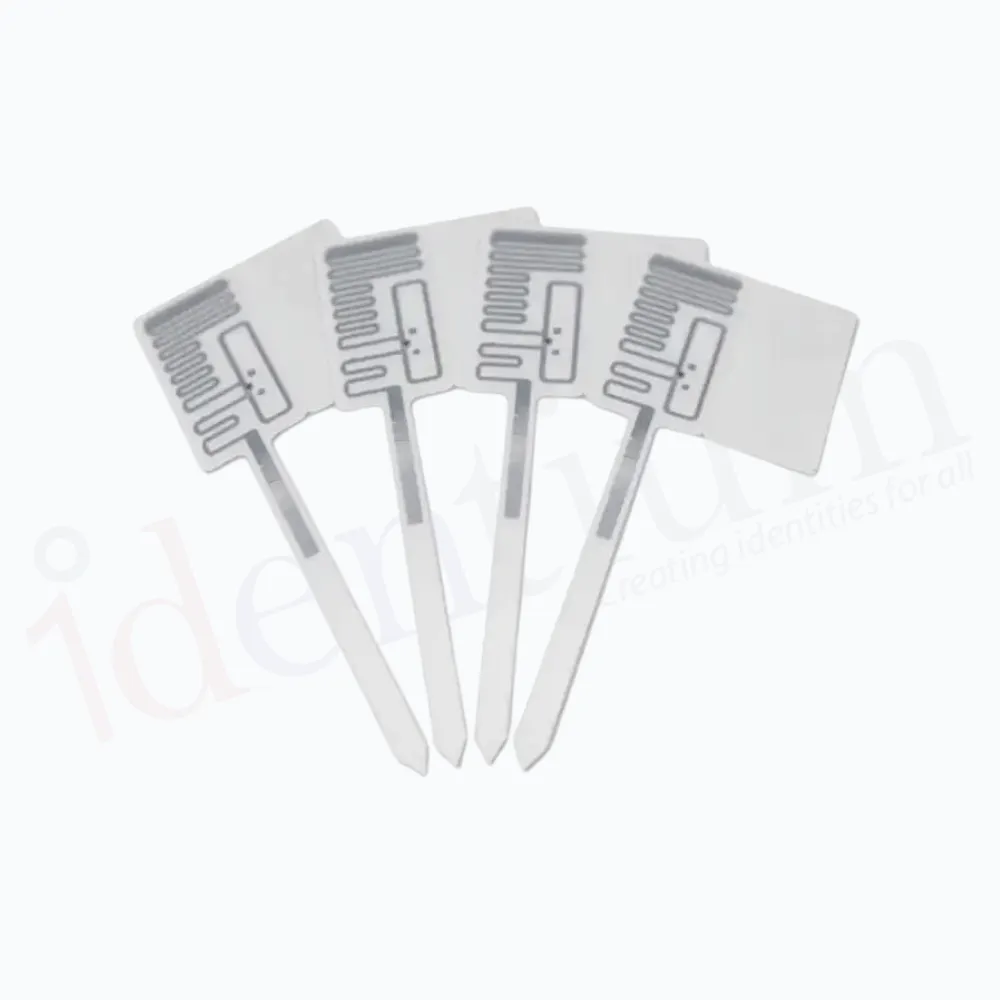
RFID Tags Supplier for UAE and GCC Buyers: A Sourcing Guide from India
Published 30 Aug 2026Updated 4 Oct 20268 min read
Short answer: The GCC uses the ETSI EN 302 208 UHF RFID allocation of 865–868 MHz, and India's WPC-notified band covers the same 865–868 MHz range. Indian-manufactured UHF tags, inlays, antennas and readers are therefore drop-in compatible with deployments in the UAE, Saudi Arabia and Qatar: no retuning, no antenna redesign and no read-range penalty from a band mismatch. Hardware built for China's 920–925 MHz domestic band or the US 902–928 MHz band does not offer the same guarantee.
This guide is for distributors, systems integrators, IT resellers and procurement managers in the UAE, Saudi Arabia, Qatar and the wider Gulf who are evaluating India as a source of RFID hardware, either to stock and resell or to supply a project pipeline. It assumes you already know what RFID is and are now deciding where to buy it from.
Does Indian RFID hardware work on the GCC's frequency band?
Yes, directly. The Gulf follows the ETSI EN 302 208 UHF RFID allocation of 865–868 MHz, and India's WPC allocation is the same 865–868 MHz range. A tag antenna or reader front end tuned for the Indian band is already tuned for the ETSI band, so performance carries over without modification.
This is the single most important technical fact in a GCC sourcing decision, and it is a structural advantage Indian supply holds over Far East supply.
| Origin / market | UHF RFID band | Drop-in for GCC (865–868 MHz)? |
|---|---|---|
| India (WPC) | 865–868 MHz | Yes: matches the ETSI band |
| EU / UK (ETSI EN 302 208) | 865–868 MHz | Yes: same allocation |
| China (domestic) | 920–925 MHz | No: different band, different tuning |
| USA / Canada (FCC) | 902–928 MHz | No: different band, different reader SKU |
| Much of South-East Asia / Latin America | Regional or FCC-style allocations | Usually not: verify per country |
One caveat is worth understanding. Most EPC Gen 2 (ISO/IEC 18000-63) inlays are electrically broadband across roughly 860–960 MHz, so a 920 MHz-optimised inlay will still respond at 866 MHz. It just responds worse: the chip is broadband, but the printed antenna is not.
Peak read range, orientation tolerance and dense-tag performance all degrade when an inlay is interrogated outside the band it was optimised for, and those losses show up in the field, not on the datasheet. For the underlying physics in plain language, see our UHF, HF and LF frequency guide.
The practical consequence for a Gulf buyer: when you request samples, insist that the inlay's target band is stated on the specification sheet. "Global 860–960 MHz" on its own tells you nothing about where the antenna peaks.
Which RFID applications are driving demand across the GCC?
Four application clusters account for most Gulf RFID volume: retail and gold/jewellery inventory, hospitality and healthcare linen, logistics and free-zone warehousing, and asset tracking and access control. Each needs a different tag construction, and mixing them up is the most common and expensive specification error a first-time buyer makes.
- Retail and gold/jewellery inventory. Gold souks and organised jewellery chains run high-value, small-item, dense inventory: thousands of pieces in a single display case, each needing daily or shift-wise counts. This calls for small, low-detuning RFID jewellery tags in a string or barbell format, chosen for reliable reads in dense stacks rather than maximum range.
- Hotel and hospital laundry and linen. Large hotel groups and hospital laundries track linen through industrial wash, tunnel finishers and pressing. That is a durability problem, not a range problem: you need sealed, sewn-in or heat-sealed washable laundry tags rated for repeated wash-and-press cycles, plus tunnel or cage readers that can count a full trolley in one pass.
- Logistics, free zones and warehousing. Free-zone operators, 3PLs and re-export hubs use pallet and carton labelling, dock-door portals and yard checks. Here the volume sits in UHF RFID tags and printable inlays, paired with fixed portal or UHF RFID readers at the dock.
- Asset tracking and access control. IT asset registers, tool cribs, oil and gas equipment and facility access. Anything mounted on steel racking, server chassis, pipework or vehicles needs on-metal RFID tags with a ground-plane spacer; a plain paper label on metal reads at a fraction of its rated distance, or not at all.
Why does India's proximity matter to a Gulf importer?
Geography changes the shape of the supply relationship, not just the freight bill. The India-to-Gulf trade lane is short and well served by both sea and air. Compared with East Asian sourcing, the practical effects are:
- Air freight is a realistic option, not a panic measure. On a short lane, sending a carton of tags by air to close a project gap is proportionate. On a long lane it usually is not.
- Sample loops are quick. You can send a real sample of the asset (the actual metal enclosure, linen item or jewellery box), have tags tuned and tested against it, and get results back within a sensible commercial window.
- Working hours overlap. Indian and Gulf business hours overlap for most of the day, so an engineering query does not cost you a full day of turnaround.
- Smaller replenishment orders stay economic. A short lane makes it viable to hold lean stock and top up, rather than committing to one large annual buy.
We deliberately avoid quoting transit times or freight rates here, because they move with carrier schedules, fuel, port congestion and your own Incoterms. Ask your supplier and your freight forwarder for current figures for your specific port pair, and get them in writing.
How does sourcing from India compare with sourcing from China for a GCC buyer?
Both origins can supply competent EPC Gen 2 hardware at volume. The differences that matter to a Gulf buyer are band alignment, freight leg length, communication overhead and how far the supplier will go on customisation for a mid-sized order.
| Sourcing factor | Indian origin | Far East origin |
|---|---|---|
| Band match to GCC | 865–868 MHz stock matches the ETSI band; no retuning | Domestic stock is 920–925 MHz; ETSI variants must be specified and confirmed |
| Freight leg to the Gulf | Short; sea and air both practical | Long; sea dominates and air is comparatively expensive |
| Sample and test iteration | Fast round trips on physical samples | Slower round trips; more reliance on datasheets |
| Time-zone overlap | Substantial overlap with GCC hours | Partial overlap; more asynchronous |
| Customisation at mid volumes | OEM encoding, printing and custom formats commonly available | Often geared to very high volumes |
| Language of engineering support | English throughout | Varies by supplier |
India RFID Store is the online catalogue of Identium Tech Solutions Pvt Ltd, a New Delhi RFID business founded in 2010, with a list price and specifications on every product page. Our standard UHF stock is built for the 865–868 MHz band, so it serves ETSI-band markets without modification.
What should you ask an RFID supplier before you place a GCC order?
Ask for evidence, not adjectives. A serious supplier will answer all of these in writing, and the answers become your acceptance criteria if a shipment underperforms.
- What band is the inlay antenna optimised for? You want an explicit ETSI / 865–868 MHz answer, not just "860–960 MHz global".
- Which chip is inside, and what is the EPC memory size? The chip family determines memory layout, encoding options and how the tag behaves in dense populations.
- Can you supply a read-range curve or test data for our substrate? Range on cardboard, on metal and on liquid-adjacent goods are three different numbers.
- Can you pre-encode and pre-print to our data scheme? If you need serialised EPCs, barcodes and human-readable text on the same label, confirm it is done at the factory rather than by you on arrival.
- What documentation ships with the goods? Packing list, specification sheets, declarations of conformity and any test reports you will need for your own customer or for the destination regulator.
- How is pricing structured by volume? Ask for a quotation against realistic annual offtake rather than a single order, so you can plan replenishment without over-committing.
- What is the reorder consistency policy? Confirm the second batch will use the same inlay and chip, not a substitute.
On regulatory approvals in your own market: requirements for importing and operating radio equipment differ by GCC state and change over time. Do not accept a supplier's blanket assurance. Confirm the current position with the telecommunications regulator in the destination country or with your customs broker, and ask your supplier for whatever technical documentation that process requires.
How should you specify tags for Gulf operating conditions?
Ambient heat, direct sun on outdoor assets, dust and air-conditioned indoor swings affect adhesive and encapsulation choices more than they affect RF performance. Standard paper-face pressure-sensitive labels are fine inside a conditioned warehouse and poor on an outdoor yard asset.
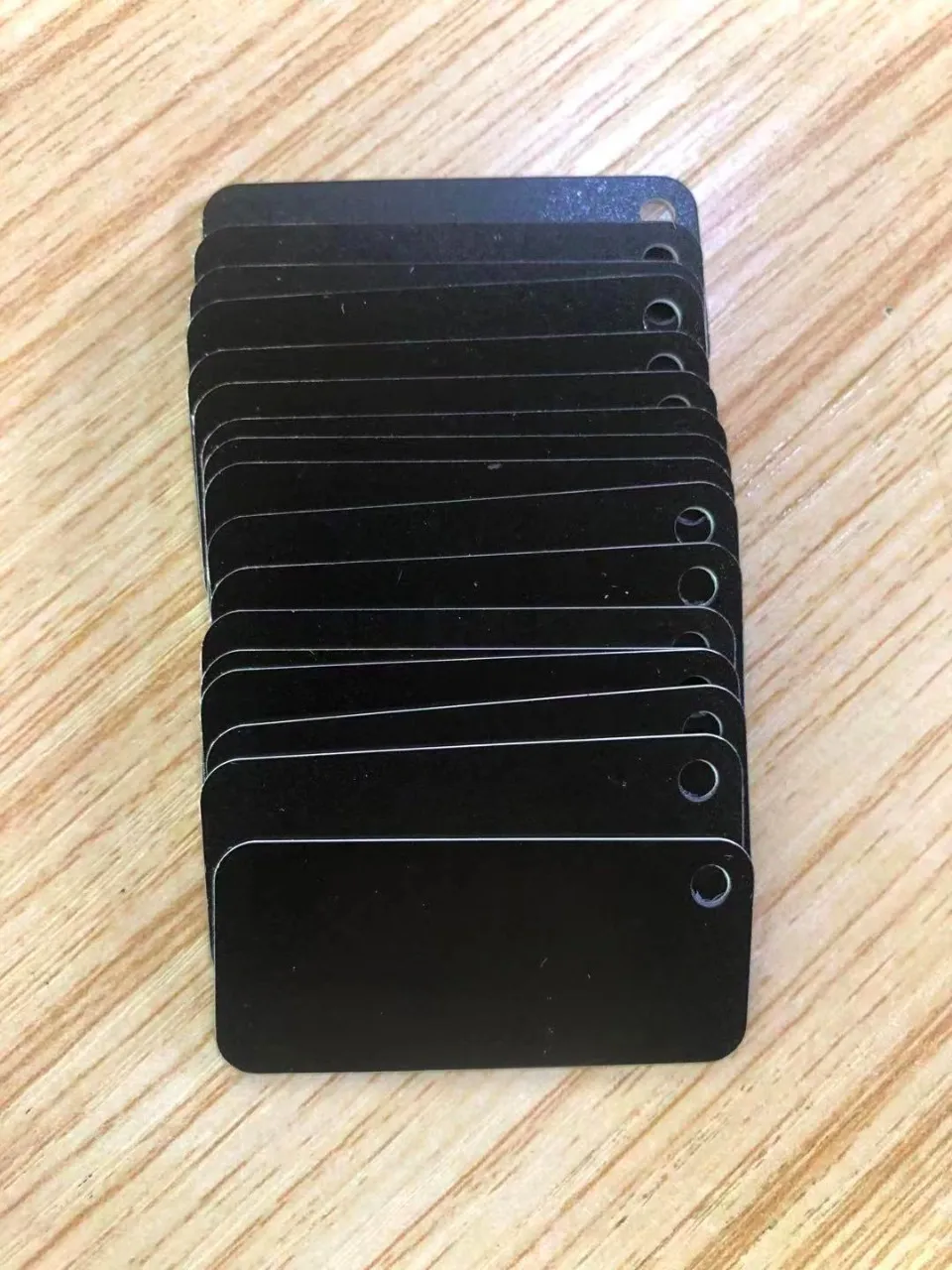
- Outdoor and yard assets: specify a sealed hard tag or an encapsulated construction rather than a paper label.
- Vehicles, containers and metal racking: on-metal construction with a proper spacer, and a mounting method (adhesive, rivet or cable tie) that suits the surface.
- Laundry and linen: confirm the wash-cycle rating and whether the tag is sewn, pocketed or heat-sealed, and test on your actual fabric before committing.
- Retail and jewellery: prioritise small form factor and dense-read reliability over headline range.
- Always: ask for a sample tested on your real asset, in your real environment, before a volume order. No datasheet substitutes for that.
What does a sensible first order look like?
Start with a sample set, not a container.
- Describe the item. Send the supplier a description of what you are tagging, ideally with a physical example.
- Agree the construction. Choose the tag construction against test results on that item, not against a datasheet.
- Place a modest first order. Cover one site or one department with the first production run.
- Scale and lock the specification. Once field performance is confirmed, scale up and fix the specification so reorders stay identical.
Identium builds tags, readers and antennas for exactly this pattern: 865–868 MHz stock that needs no retuning for ETSI markets, with encoding and printing to your data scheme. If you are sourcing for the UAE, Saudi Arabia, Qatar or anywhere else on the 865–868 MHz allocation, request RFID samples and tell us what you are tagging; we will reply with an export quotation alongside the samples.
Related guides
Frequently asked questions
Will Indian RFID tags read properly on readers already installed in the UAE?
Do I need different tags for a project in Saudi Arabia versus one in Europe?
Can Indian suppliers pre-encode tags with our own EPC numbering?
What happens if I buy tags built for the Chinese 920–925 MHz band?
Do I need approval to import RFID readers into a GCC country?
Should I order samples before committing to volume?
RFID UAEGCC RFID sourcingETSI 865-868 MHzIndian RFID manufacturerUHF RFID export
_Z1rUEkv.webp)
_x6I00.webp)