Passive vs Active RFID — Key Differences India Guide 2026
Published 11 Apr 2026Updated 24 Nov 20268 min read
Written and maintained by the RFID team at Identium Tech Solutions Pvt Ltd, New Delhi (India RFID Store).
Short answer: Passive RFID tags carry no battery, cost a few rupees each at volume and are read at anything from a centimetre to about 15 metres, because the reader itself powers them. That is why they win any job involving thousands of items. Active RFID tags carry their own battery, broadcast on 2.4 GHz and can be picked up hundreds of metres away, so they suit a much smaller number of high-value or free-roaming assets that must be located continuously. Most Indian sites end up passive for stock and inventory, and active only for the handful of things that move unpredictably across a large yard or plant.
What is the difference between passive and active RFID?
RFID (radio frequency identification) comes in two fundamental types: passive and active. Understanding the difference is the first step in choosing the right RFID system for an Indian project. This guide covers both types, their pros and cons and typical use cases, and helps you decide which fits.
The two are not competitors; they answer different questions. Passive answers "is this item here, and what is it?" Active answers "where exactly is this asset right now?"
Passive RFID: no battery, powered by the reader
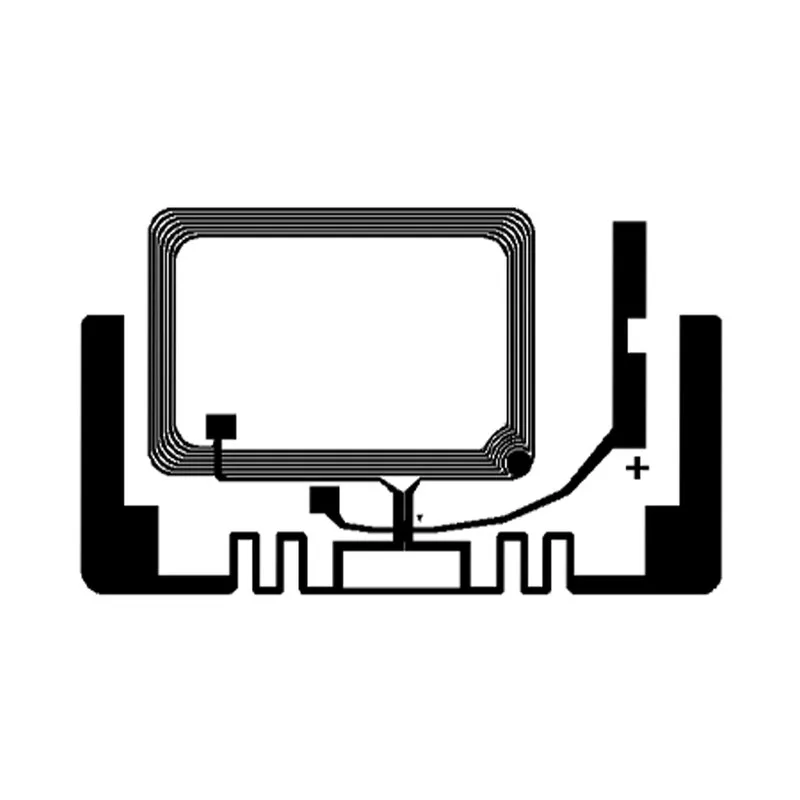
A passive RFID tag has no internal battery. It harvests power from the radio wave emitted by the RFID reader: the tag's antenna picks up the reader's RF energy, uses it to power the chip, and responds by sending its data back to the reader.
Because there is nothing to charge or replace, a passive tag is effectively a printed consumable. You buy it by the thousand and forget about it.
Key characteristics of passive RFID
- No battery: a long service life, typically 10–20 years or more.
- Read range: 0–15 metres depending on frequency, chip sensitivity, tag size and reader power.
- Very low cost: plain UHF paper inlays and labels work out to a few rupees each at volume; on-metal, ceramic and hardened tags cost substantially more. Current India cost bands are in our RFID project cost and ROI guide.
- Thin and flexible: can be embedded in labels, cards and wristbands.
- Frequencies: LF (125 kHz), HF (13.56 MHz) and UHF (860–960 MHz globally; India's licence-exempt band is 865–868 MHz).
- Sensing without a battery: passive UHF and NFC temperature sensor labels record a value at the moment of the scan.
- Read at checkpoints: a passive tag responds when it is in a reader's field, so it suits gates, portals, desks and handheld counts; for continuous reporting over longer range, see active RFID below.
Passive RFID use cases in India
- Warehouse inventory management (UHF, 2–8 m range)
- Retail item-level tracking (UHF, 1–5 m)
- Access control and attendance (HF/LF, under 10 cm tap)
- Library book tracking (HF, 13.56 MHz)
- Hospital patient wristbands (HF, NFC)
- Event ticketing and cashless payments (HF, NFC)
- Vehicle identification at gates and highway toll gantries (UHF windshield tags, including FASTag)
- Checkpoint cold-chain temperature checks using battery-free RFID sensor tags
Active RFID: battery-powered, continuous broadcast
An active RFID tag has its own battery and broadcasts its ID at regular intervals (for example every 1–3 seconds). It does not need to be powered by the reader; it transmits independently.
That independence is the whole point. An active tag keeps announcing itself even when nobody is scanning, which is what makes true real-time location possible.
Key characteristics of active RFID
- Built-in battery: service life typically 2–7 years, depending on how often the tag broadcasts.
- Long read range: commonly 50–150 metres indoors, and up to around 400 metres in clear line of sight with 2.4 GHz tags and long-range readers.
- Real-time location: supports real-time location systems (RTLS).
- Cost: active tags sit in a higher price class than plain paper UHF labels, as each carries a battery and radio, and long-range 2.4 GHz readers are priced above a passive fixed reader.
- Housed tag: the battery sits in an enclosure, so active tags mount on assets, vehicles and badges; for thin label applications, choose passive tags.
- Frequencies: 2.4 GHz, 915 MHz or 433 MHz active systems.
- Compliance: the 2.4 GHz band is licence-exempt in India, but the equipment still needs WPC Equipment Type Approval; 433 MHz short-range devices also face tight power and duty-cycle limits.
Active RFID use cases in India
- Real-time forklift and vehicle tracking in large warehouses or yards
- AGV (automated guided vehicle) positioning in manufacturing plants
- High-value asset tracking over large areas such as hospitals and airports
- Worker safety monitoring in mines, construction sites and oil refineries
- Container tracking in large ports and logistics yards
- Continuous cold-chain logging, where a reading is needed every few minutes rather than at a checkpoint
Passive vs active RFID: comparison table
| Feature | Passive RFID | Active RFID |
|---|---|---|
| Power source | Reader field (no battery) | Internal battery |
| Read range | 0.1 cm – 15 m | 20 m – 400 m |
| Tag cost (India) | Very low: a few rupees per paper label at volume | Orders of magnitude higher per tag |
| Tag lifespan | 10–20+ years | 2–7 years (battery life) |
| Real-time location | Zone-level, at read points | Yes (RTLS capable) |
| Tag size | Very thin (label or card) | Larger (battery adds bulk) |
| Best for | High-volume item tracking | Long-range asset location |
| Infrastructure cost | Lower | Higher |
Which should you choose?
Choose passive RFID if
- You need to track thousands of items (inventory, retail, logistics)
- Cost per tag is a priority
- Items pass through defined checkpoints (gates, portals, desks)
- A read range of 1–8 metres is sufficient
- A reading at each checkpoint answers your question, and you do not need a position between checkpoints
Choose active RFID if
- You need the real-time location of assets over a large area
- Items do not pass through defined checkpoints (free-roaming)
- You need 50 m or more of range
- Per-item cost matters less (high-value assets)
- You can budget for battery or tag replacement every few years
A practical Indian rule of thumb: count the assets. Below a few hundred moving, high-value assets across a large site, active usually pays for itself. Above a few thousand items, the tag bill alone makes active impossible and passive is the only sensible answer. For a side-by-side breakdown of the two architectures, see UHF passive vs active RFID compared for Indian projects.
Shop passive and active RFID
- Passive tags and credentials: RFID tags (UHF, HF and LF), RFID cards and RFID wristbands.
- Passive readers: RFID readers and antennas, including handheld readers.
- Battery-free sensing: RFID sensor tags for checkpoint temperature readings.
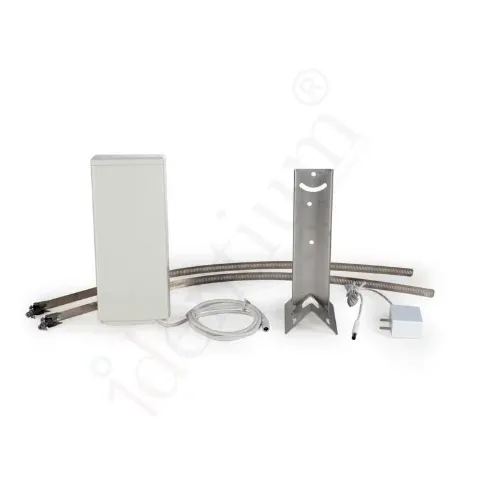
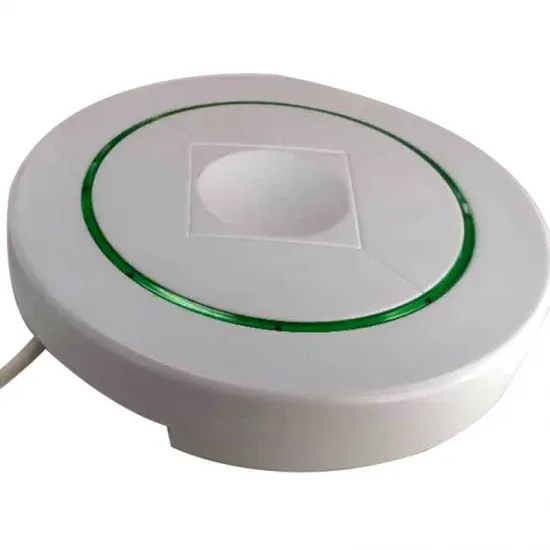
- Active RFID: 2.4 GHz active RFID tags and readers: long-range readers, battery-powered active tags and cards, and RTLS infrastructure. The F529 2.4 GHz active RFID reader is an outdoor base station listed at up to 400 m (directional), with four antennas that report which direction a tag is in; for doorways and building entrances the F530 indoor active reader logs active tags indoors and on school buses.
- Bluetooth LE tracking: battery-powered BLE beacons and asset tags for equipment, pallets and fixed assets.
What changed in 2026
- May 2026: India's first barrier-free tolling runs on passive tags, not active ones. NHAI switched on the country's first Multi-Lane Free Flow (MLFF) toll point at the Choryasi plaza on the Surat–Bharuch section of NH-48 in Gujarat, with overhead gantries reading ordinary passive FASTag windshield stickers at highway speed alongside ANPR cameras. Further MLFF points followed on the Delhi–Jaipur stretch of NH-48 and on NH-44 in June 2026. It is the clearest public demonstration yet that passive UHF copes with fast-moving vehicles without any battery in the tag. Background: our MLFF barrier-free tolling and RFID gantry guide.
- January 2026: passive chips took another step up in sensitivity. NXP announced UCODE X, a RAIN RFID tag chip it positions as offering industry-leading read and write sensitivity and the lowest power consumption in its class, aimed at smaller labels and items that were previously hard to tag. Impinj's M800 series (M830 and M850, with the Gen2X feature set expanded in late 2025) remains the other mainstream option; the two are compared in our UCODE X vs Impinj M800 chip guide. Every such generation narrows the read-range gap that used to be the main argument for going active.
- September 2026: cold chain no longer forces you into active tags. Battery-free passive sensor labels are now catalogue items: the ID-SE-AS3213T passive UHF temperature sensor label lists a read range of up to about 6 metres, and the ID-SE-FM13DT160 NFC temperature sensor logger records temperature data for later readout. If your requirement is a verified temperature reading at each handover point rather than a continuous log, that removes the battery, and its replacement cost, from the design entirely.
- September 2026: the cheapest way into passive RFID is a phone plus a sled. The ID-SL15 Bluetooth sled reader clips onto a phone or tablet and reads up to 15 m outdoors at more than 200 tags per second, with a 6,500 mAh battery, Bluetooth 5.2, IP54 sealing and an India/EU 865–868 MHz band option. A sled running on a phone the team already owns costs less than an entry-level Android handheld, and far less than a single long-range active reader, so a passive pilot is now the cheapest way to prove a site. Current India price bands are in our UHF handheld reader price guide.
- November 2026 to May 2027: people-tracking picks up a compliance clock. The Digital Personal Data Protection Rules, 2025 were notified on 13 November 2025 with an 18-month runway: the Consent Manager framework becomes operational on 13 November 2026, and the full notice, consent, retention and breach obligations apply from 13 May 2027. Active RFID badges that log where a named employee stood all day are personal data; asset-only tagging is not. Scope people-tracking pilots against that timeline (our DPDP rules and attendance tracking guide covers the detail), and prefer asset tags where the location of a person is not actually what you need.
Related guides
Frequently asked questions
How much does a complete passive RFID system cost in India?
Will UHF RFID tags bought from the US or Europe work in India?
How many antennas do I need for an RFID gate at a warehouse door?
Is active RFID the same as GPS tracking?
Which is better for vehicles inside a factory?
Do I still need active tags for cold-chain temperature monitoring?
Do RFID readers need WPC or BIS approval in India?
Active RFIDPassive RFIDRTLSBuying Guide
Cite as: India RFID Store (Identium Tech Solutions Pvt Ltd), “Passive vs Active RFID — Key Differences India Guide 2026”, https://www.indiarfidstore.com/rfid-resources/passive-vs-active-rfid-india, updated 24 Nov 2026.
Keep reading
More guides


More in Technology explained
All guides: Technology explained