RFID Asset Tracking System — Fixed Asset Audit Guide (India 2026)
Published 18 Jul 20267 min read
For most Indian enterprises, the annual fixed-asset audit is a dreaded, weeks-long exercise. Teams walk floor to floor with a printed register, squinting at faded barcode stickers and ticking asset codes by hand. By the time the count closes, the numbers rarely reconcile with the books, and the auditor flags "ghost assets" (on the register but physically missing) and "zombie assets" (on the floor but written off).
An RFID asset tracking system replaces that with a scan-as-you-walk workflow that verifies thousands of assets an hour, produces an audit-ready exception report and keeps your Fixed Asset Register (FAR) continuously accurate.
This guide explains how RFID asset tracking works in the Indian context: the right tags, handheld and fixed-reader hardware, software and ERP integration, CARO 2020 and GST audit compliance, and the real ROI. Everything here assumes passive UHF hardware tuned for India's 865–868 MHz band.
Why fixed-asset audits fail: the problem RFID solves
Physical verification of property, plant and equipment (PPE) is not optional in India. Under CARO 2020, the auditor must comment on whether management has physically verified fixed assets "at reasonable intervals" and whether material discrepancies were properly dealt with in the books. Traditional methods make accurate verification almost impossible at scale:
- Line-of-sight bottleneck: barcodes and asset stickers must be found and scanned one at a time. On a machine tucked behind others, or a laptop inside a drawer, the tag is simply never found.
- Manual data-entry errors: ticking codes on paper and re-keying them into Excel introduces transposition errors that inflate discrepancies.
- Sticker degradation: paper labels on shop-floor machinery, DG sets and outdoor infrastructure fade, peel and become unreadable within months.
- No movement trail: when an asset moves between departments, branches or GST registrations, the register is rarely updated, which creates reconciliation problems at year-end.
RFID removes the line-of-sight constraint. A passive UHF tag responds to a reader's RF energy from a distance, through cardboard and plastic and around obstructions, so an auditor captures an asset without touching or even seeing it.
How an RFID asset tracking system works
A complete deployment has four layers. Getting each one right for Indian conditions is what separates a system that works from one that gathers dust.
1. Passive UHF tags on every asset
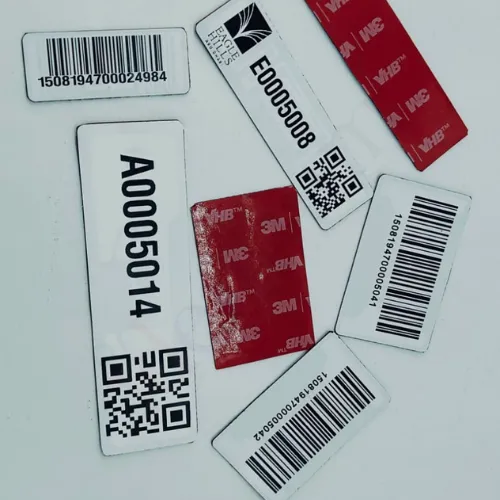
Each asset carries a UHF RFID tag encoded with a unique EPC (Electronic Product Code) that maps one-to-one to the asset's entry in your FAR. These are passive, battery-free tags built to the EPC Gen2 / ISO 18000-63 standard and tuned to India's licence-exempt 865–868 MHz band, where readers may transmit up to 2 W e.r.p. Regional tuning matters: tags optimised for the US 902–928 MHz band underperform on the Indian frequency.
2. Handheld readers for the walk-around audit
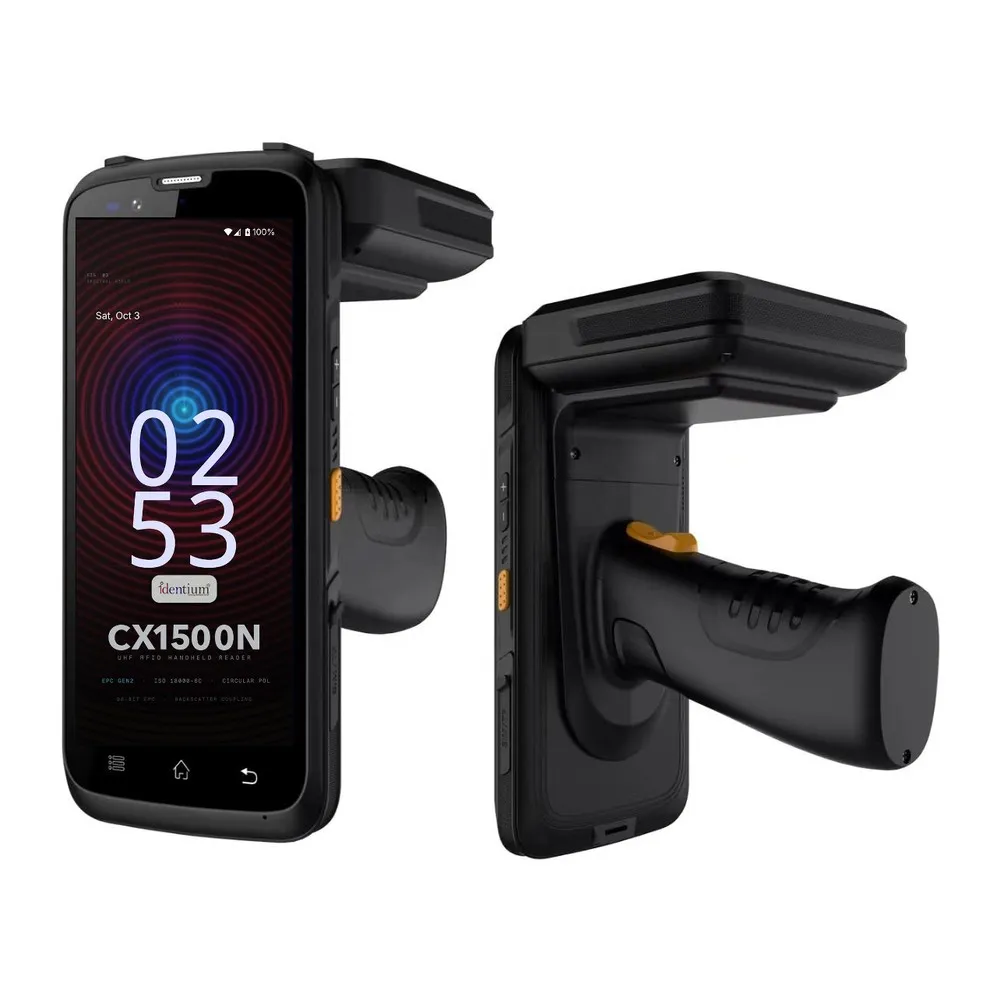
An Android-based UHF RFID handheld reader is the workhorse of the audit. The auditor walks each zone while the reader continuously interrogates tags within roughly 3–15 m (depending on tag and environment) and streams unique reads to the audit app. One operator can verify several thousand assets an hour, against a few hundred manually.
3. Fixed readers at high-value chokepoints
For server rooms, tool cribs, laboratories and warehouse gates, a 4-port fixed UHF RFID reader with panel or gate antennas monitors assets automatically. It logs every time a tagged laptop, instrument or high-value tool crosses the doorway, giving real-time custody records and unauthorised-movement alerts with no manual scanning.
4. Software that reconciles against the register
The middleware or asset app de-duplicates reads, time- and zone-stamps each asset, and reconciles the live count against the FAR. The output is a clean three-bucket exception report: found and matched, missing (ghost) and unexpected or unregistered (zombie). This is where the real value sits; the tag cost is minor next to the reconciliation and compliance output.
Choosing the right asset tag: on-metal vs poly label
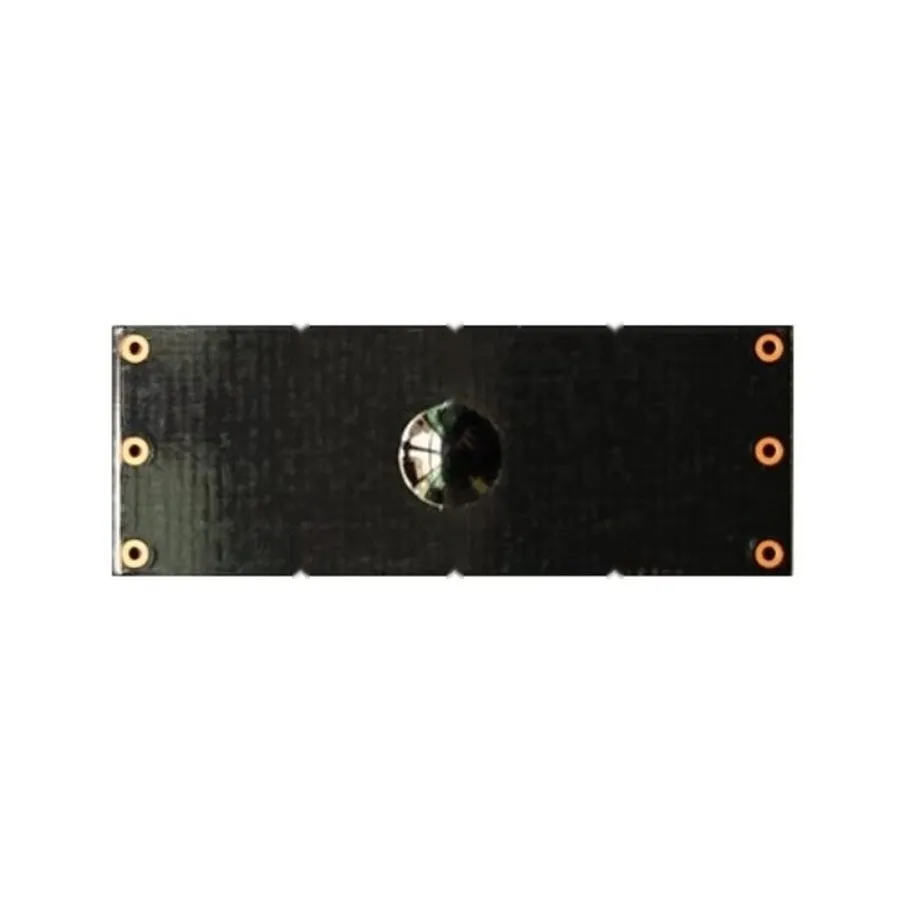
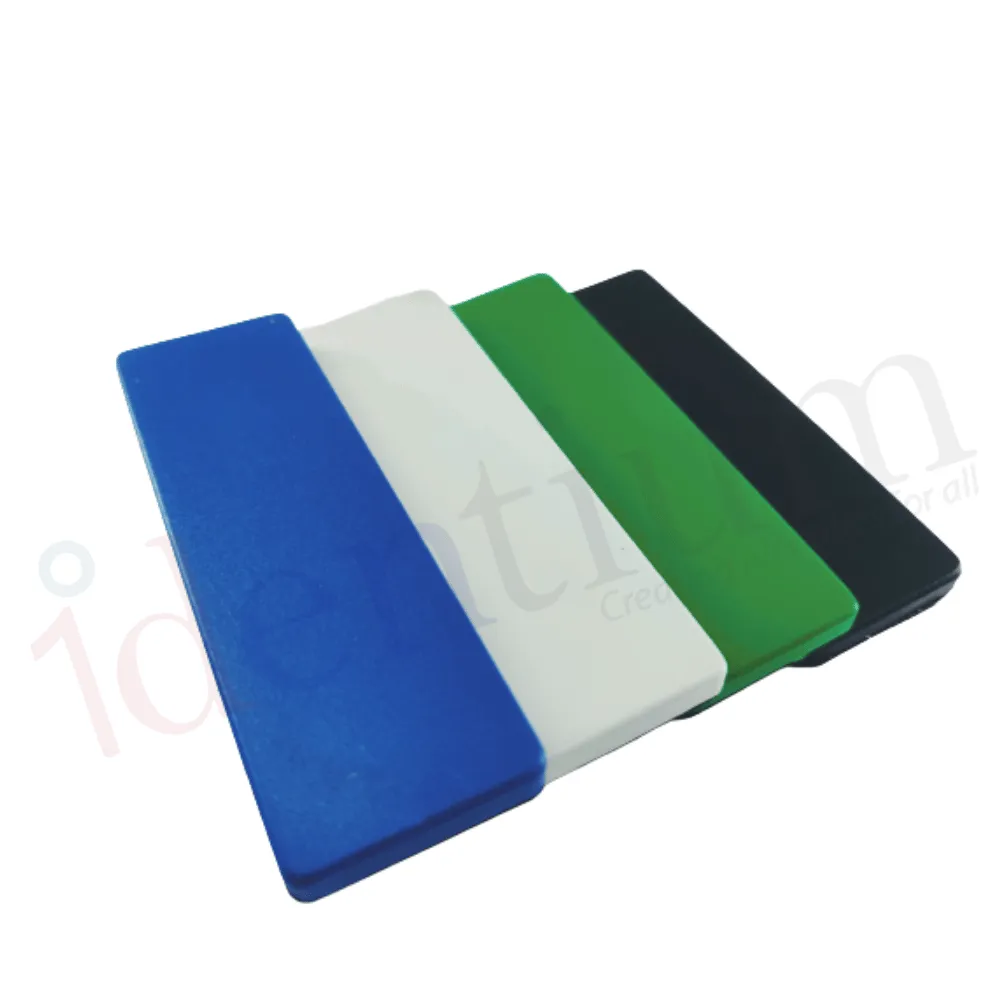
Tag selection is the most common point of failure in Indian deployments. Metal and liquids detune ordinary "wet inlay" label tags: stick a standard paper label directly on a steel cabinet or a machine and the read range collapses to near zero. The fix is a purpose-built on-metal RFID tag with a ground-plane spacer that lets the antenna work on conductive surfaces.
| Parameter | On-metal hard tag (ABS/PC/PCB) | Poly/label tag (PET/paper) |
|---|---|---|
| Best for | IT hardware, machinery, tools, DG sets, panels, racks | Furniture, cartons, files, plastic and wooden assets, documents |
| Mounting surface | Metal and non-metal (anti-metal design) | Non-metal only |
| Read range on metal | A few metres for miniature tags, up to 10–25 m for large hard tags (model dependent) | Negligible: detunes on metal |
| Attachment | Screw, rivet, or industrial adhesive/VHB | Peel-and-stick adhesive |
| Durability | Typically IP67/IP68, heat- and chemical-resistant, multi-year life | Indoor, low-abrasion use |
| Cost tier | Higher per tag; for high-value assets | Low per tag; for high-volume assets |
A practical rule: any asset sitting on or made of metal gets an on-metal hard tag, and low-value non-metal items get an economical poly label. As examples from the catalogue, a small PCB tag such as the IDTS-4216 on-metal tag suits laptops, tools and IT assets, while a large hard tag such as the UMLT long-range metal tag covers machinery and racking that must be read from a distance. Browse the full UHF RFID tag range to match a form factor to each asset class, and see the on-metal tag selection guide for the details.
The RFID handheld audit workflow, step by step
A well-run RFID audit is repeatable and fast. This is the field workflow Indian finance and admin teams follow:
- Tag and enrol. Encode each tag's EPC and bind it to the asset code, description, location, cost and purchase/depreciation details in the register. Photograph the asset and fix the tag in a consistent position.
- Zone the site. Divide the premises into audit zones (floors, departments, rooms) so reads are location-stamped and exceptions are traceable.
- Walk and capture. The auditor walks each zone with the handheld in continuous-read mode. A live counter shows tags captured, and a "Geiger" proximity mode helps locate a specific missing asset.
- Reconcile on the spot. The app flags missing and unexpected assets per zone straight away, so the team can re-check before leaving the floor.
- Sign-off report. Export the exception report (matched, ghost and zombie assets) as audit evidence for management and the statutory auditors.
What took a five-person team two weeks typically takes one or two people a couple of days, with far higher accuracy. For large or multi-building campuses, pair the handhelds with the right fixed reader and antenna mix from the RFID readers range.
Software and ERP / FAR integration
RFID data is only useful when it flows into your system of record. Indian deployments usually integrate at one of three levels:
- Standalone asset app: a dedicated RFID asset-management app holds the register and generates audit reports. This suits SMEs without a heavy ERP.
- ERP module sync: two-way integration with SAP, Oracle, Tally, Zoho or Microsoft Dynamics, so RFID counts reconcile directly against the FAR module and depreciation schedule.
- API/middleware: reader middleware pushes clean, de-duplicated events to your database via REST APIs, feeding custody logs, movement alerts and dashboards.
The key design principle: RFID should update the register, never create a parallel shadow register. One source of truth keeps finance, admin and audit aligned. The RFID software and middleware guide covers the integration options in more depth.
GST, CARO and statutory audit compliance in India
RFID directly strengthens several Indian compliance obligations:
- CARO 2020, Clause 3(i): auditors must report on maintenance of PPE records, physical verification at reasonable intervals, and treatment of material discrepancies. An RFID exception report is defensible, timestamped verification evidence.
- Companies Act 2013 and depreciation: correctly separating live from written-off assets keeps depreciation schedules and the balance sheet clean and avoids overstated asset values.
- GST on asset transfers: when a capital asset moves between states, or between distinct GST registrations of the same entity, it can attract GST and require a tax invoice, delivery challan and e-way bill. RFID movement logs give finance a reliable trail to confirm the right documents were raised.
- Income Tax block of assets: reliable physical-existence data supports correct block-of-assets treatment and disposal accounting.
In short, RFID turns asset verification from an anecdotal paper exercise into hard digital evidence, which is exactly what statutory and internal auditors want to see.
ROI: what RFID asset tracking actually returns
The business case in India rests on four levers:
- Audit labour: RFID commonly cuts physical-verification time by 70–80%, freeing finance and admin staff during the year-end crunch.
- Ghost-asset write-offs: removing phantom assets from the register can reduce insurance premiums and the property-tax and depreciation exposure you were carrying on assets no longer present.
- Loss and shrinkage: fixed-reader custody alerts curb the "walk-away" loss of laptops, instruments and tools.
- Utilisation: knowing where high-value equipment actually is prevents duplicate purchases and idle capital.
Most mid-sized Indian deployments recover their hardware investment within one to two audit cycles once labour savings and recovered ghost-asset carrying costs are counted. Passive tags have no battery and a multi-year life, so ongoing costs are minimal. The RFID ROI calculator gives a first payback estimate for your asset base.
Building your RFID asset audit kit
India RFID Store, run by Identium Tech Solutions in New Delhi, supplies the on-metal tags, poly labels, handheld readers, fixed readers and asset software used in RFID asset audits. Whether you are tagging one server room or auditing thousands of assets across several plants, start with the RFID asset tags, the handheld readers and the RFID asset management solution, or request a quote with your asset count and asset types.
Related guides
Frequently asked questions
What frequency should RFID asset tags use in India?
Can RFID tags work on metal assets like machines, racks and laptops?
How many assets can one handheld reader audit per hour?
Do I need fixed readers, or are handhelds enough?
Will RFID integrate with my existing ERP or Tally-based FAR?
Is RFID asset tracking acceptable for CARO 2020 statutory audits?
RFID asset trackingfixed asset auditUHF RFID Indiaasset tagshandheld readersFAR reconciliationCARO 2020GST compliance