RFID Surgical Instrument Tracking: CSSD and Autoclave Tags
Published 25 Oct 20267 min read
Written and maintained by the RFID team at Identium Tech Solutions Pvt Ltd, New Delhi (India RFID Store).
Prices checked on 22 Oct 2026 against the catalogue.
Short answer: RFID tracks surgical instruments by fixing a heat-tolerant tag to each instrument set's tray or container, or to individual instruments, and reading it at every step of the CSSD cycle: receipt from theatre, washing, assembly, sterilisation, storage, issue and return. The tag has to survive repeated washing and steam sterilisation, which most ordinary tags do not, so the published hospital cases used purpose-built tags and tested them through real sterilisation cycles. Choose a tag whose specification gives a high-temperature rating, test samples through your own washer-disinfector and autoclave, and read them at the CSSD counter with a short-range desktop reader.
A tray that reaches theatre one clamp short, or a set that nobody can find on the morning of a list, costs a hospital time it does not have. Central sterile services departments (CSSD) already record most of what happens to a set on paper or in a sterilisation log. RFID turns those records into reads: the tray, or the instrument, identifies itself at each counter, and the software keeps the history. This guide covers where the read points go, whether to tag trays or instruments, what published tests say about tags surviving sterilisation, which catalogue tags carry high-temperature ratings, and how to run a pilot.
Where does RFID fit in the CSSD cycle?
Each step where a set changes hands becomes a read point. A short-range reader at the counter reads the tag, and the software records the step, the time and the member of staff.
- Receipt from theatre (dirty side): the returned set is read in, so the department knows what came back and from which theatre.
- Washing and disinfection: the set is linked to the washer-disinfector load.
- Inspection and assembly: instruments are checked against the set list. With instrument-level tags, the software shows what is missing; with tray-level tags, the count stays a checklist.
- Packing and sterilisation: the set is linked to the sterilizer load and cycle record.
- Sterile store and issue: stock counts with a handheld, and issue to a named theatre.
- Use and return: the theatre team reads the set in and out, and the cycle starts again.
The result is a history for every set: where it is now, which loads it went through and how often it is used, which also helps plan maintenance and replacement. For how RFID supports accreditation work, see the NABH and JCI section of our hospital RFID guide; we do not repeat it here.
Should you tag the tray or each instrument?
| Level | What you tag | What you learn | Practical limits |
|---|---|---|---|
| Tray or container | One tag fixed to the container, tray frame or handle | Where each set is, which loads it went through, how often it is used | Does not show a missing instrument; the set count stays manual |
| Instrument | A miniature tag bonded or fixed to each instrument | Set completeness, use count and history per instrument | The tag must not affect the instrument's function or cleaning, the fixing must survive every cycle, and tagging takes skilled labour |
Starting at tray level is usually simpler, because a container frame has room for a robust, screw-fixed tag and the tag does not touch the instruments. Instrument-level tagging comes later, set by set. Fixing anything to a surgical instrument changes it, so agree the tag, the position and the bonding method with the instrument manufacturer and your infection-control team before the first tag goes on.
Will an RFID tag survive the autoclave? What published tests show
Two published cases are worth reading before any trial.
- University of California, San Diego (RFID Journal, April 2009): the medical center tracked between 200 and 250 surgical trays at its Thornton Hospital campus with battery-powered real-time location tags made to survive steam autoclave and liquid sterilisation. The article notes that most RFID tags could not survive the heat and moisture of the process. The hospital tested the tags over three days, putting them through multiple sterilisations at six to seven times the stress they would normally meet, and reported no tag failure in the first five months of use. The tags went on the outer tray, not on the instruments.
- Tokyo Healthcare University (GS1 Healthcare conference, Geneva, June 2010): a presentation on ceramic HF tags (13.56 MHz, 6 mm across and 2 mm thick) fixed to instruments. In laboratory tests, 50 tags went through 50 sterilisation cycles with no failures. At a medical institute, 68 instruments went through 15 autoclave cycles and 77 through 31 washer-disinfector cycles with no malfunction or loss of communication, and no tag broke or came away. The data written to the tags followed GS1: a GTIN with a serial number.
Both cases point the same way: survival depends on the tag's construction, the way it is fixed and the exact process (steam, pressure, detergents, ultrasonic baths), and each programme tested its tags through real cycles first. A temperature rating on a datasheet is a starting point, not proof that a tag will last a given number of cycles in your department.
Which catalogue tags carry high-temperature ratings?
The table lists only what each product page states. None of these tags is sold as validated for a particular number of sterilisation cycles, which is why the pilot below matters.
| Tag | Temperature rating (product page) | Size and fixing | Suits | Price |
|---|---|---|---|---|
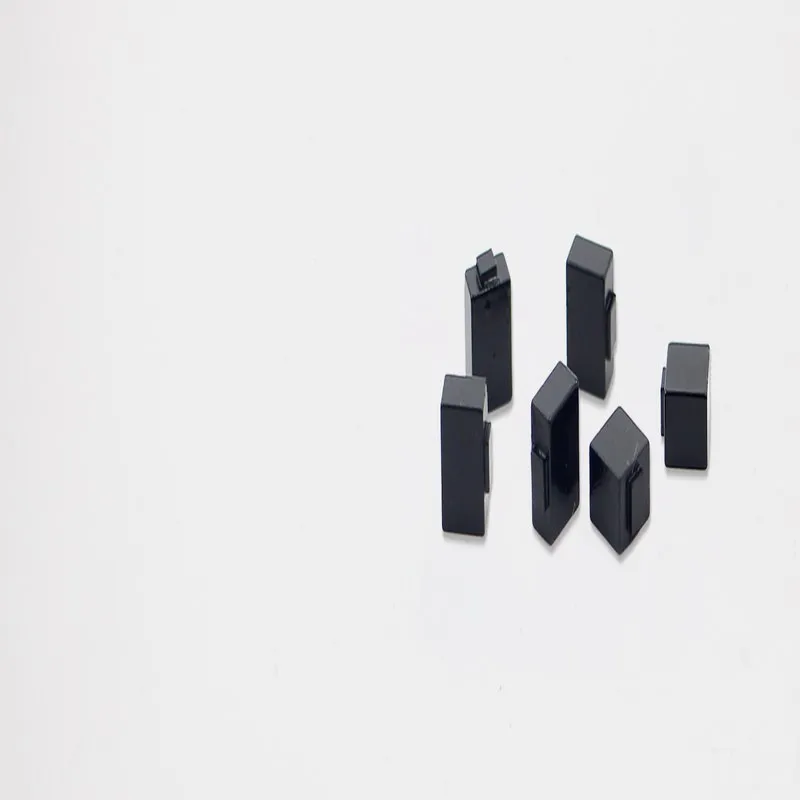
| Ceramic UHF tag ID-C6012 | Operating −40 °C to +85 °C; survival −40 °C to +250 °C (autoclave); IP68 | 4 × 4 × 3 mm; epoxy bonding or embedded | Individual instruments, where a 4 mm tag can be bonded | ₹443 + GST |
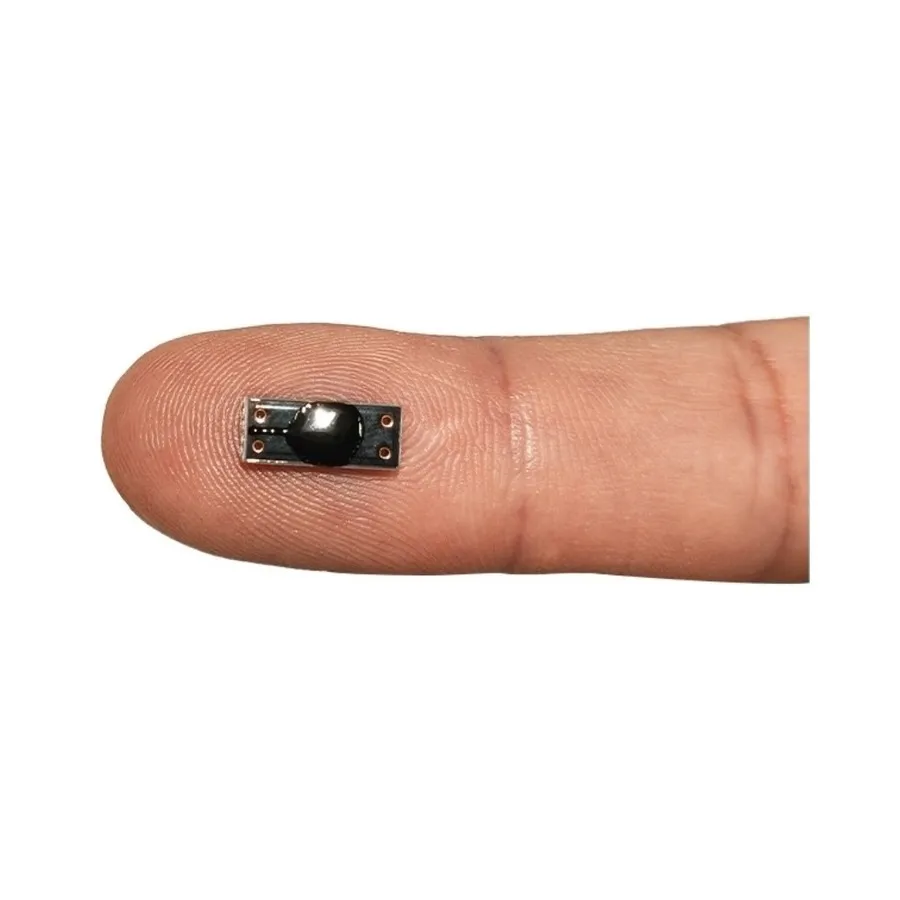
| IDTS-1004 miniature on-metal PCB tag | Operating −20 °C to +150 °C | 10 × 4 × 2.8 mm; four plated corner holes | Instruments and small containers | ₹89 + GST |
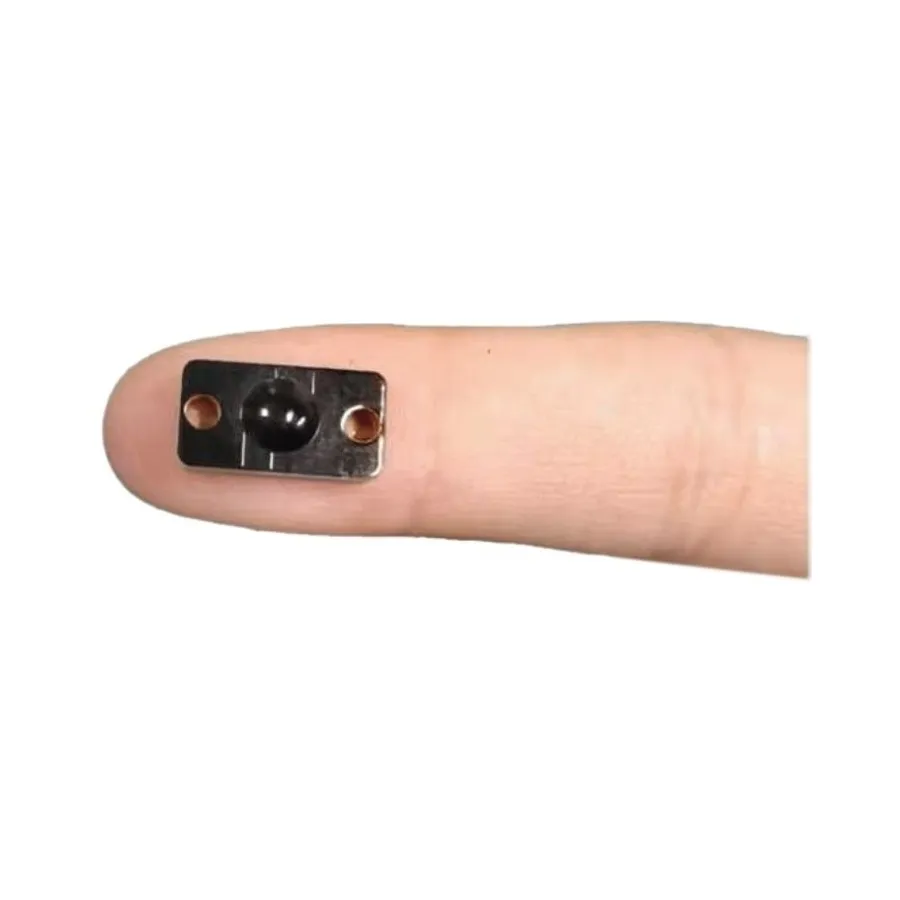
| IDTS-1307 on-metal PCB tag | Operating −20 °C to +150 °C | 13 × 7 × 3 mm body; two 2 mm holes | Tray frames and container handles | ₹89 + GST |
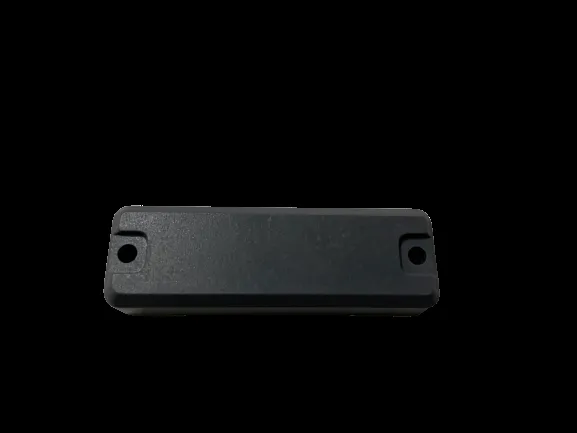
| High-temperature on-metal tag IDTS-UMHT | −25 °C to +200 °C continuous; up to +275 °C for 30 min; IP68 | 60 × 19 × 10 mm | Containers, baskets and sterilizer racks | ₹450 + GST |
| Steelcode ceramic high-temperature tag | Ambient −30 °C to +300 °C | 13 × 38 × 7.7 mm; epoxy, or rivet through a 3.4 mm hole | Containers and sterilizer racks | ₹300 + GST |
All five are passive UHF tags, sold with a minimum order of 500 pcs. The ID-C6012 is the only one whose product page names autoclave survival, and its operating range is lower than its survival range, so it is read before and after the cycle, not during it. More shapes are in the PCB and ceramic tag range and the on-metal tag range.
HF or UHF for surgical instruments?
Both are used. The GS1 case used HF tags, which read at a few centimetres: a natural fit for checking instruments one by one at an assembly table. UHF tags, like all five in the table above, can be read several at a time from a little further away, which suits reading a whole tray at a packing table or counting a sterile store shelf. Pick one frequency for the department, because the readers and the software follow the tags.
Which readers go at the CSSD counter and in the store?
| Where | Reader | From the product page | Price |
|---|---|---|---|
| Packing and assembly table (UHF tags) | UHF desktop reader 103 | Reads and writes several tags at once, up to 30 cm and adjustable, so it reads the tray on the table rather than the next one; serial or HID output, no driver or separate power supply | ₹15,000 + GST |
| Instrument-by-instrument checks (HF tags) | HF desktop reader HRD20 | 13.56 MHz, USB powered, 5–10 cm | ₹2,000 + GST |
| Sterile store counts | CX1000 UHF handheld | A handheld running IDOS, Identium's own OS built on Android 15 | ₹30,000 + GST |
What goes on the tag and in the software?
Write an identifier, not a record. The GS1 case used the instrument's GTIN plus a serial number, which keeps the tag meaningful across hospitals and suppliers; on UHF tags the same idea is carried as an EPC, explained in our SGTIN and EPC encoding guide. The set lists, load and cycle records, counts and maintenance history live in the CSSD software, which receives reads from the counter readers through middleware; our middleware guide describes the options.
How do we pilot instrument tracking?
- Pick one specialty's sets and tag the containers first.
- Put tag samples through your own washer-disinfector and autoclave for the number of cycles a tag must last, reading them after every cycle and checking the fixing.
- Add instrument-level tags only on instruments where the manufacturer agrees the position and the bonding method.
- Run the read points for a full cycle of lists and compare the records with the paper log.
Our RFID pilot plan gives a reusable test protocol, and you can request tag samples; readers are bought, not sampled. For RFID across the rest of the hospital, from wristbands to equipment, see the healthcare patient tracking system and our guide to RFID in Indian hospitals.
Sources
Cite as: India RFID Store (Identium Tech Solutions Pvt Ltd), “RFID Surgical Instrument Tracking: CSSD and Autoclave Tags”, https://www.indiarfidstore.com/rfid-resources/rfid-surgical-instrument-tracking-cssd-autoclave-tags-india, published 25 Oct 2026.
Frequently asked questions
Can RFID tags go through an autoclave?
Should we tag each surgical instrument or only the tray?
Which RFID reader is used at the CSSD packing table?
Is HF or UHF better for surgical instrument tracking?
Is it safe to fix an RFID tag to a surgical instrument?
Does NABH require RFID for instrument tracking?
HealthcareCSSDSurgical InstrumentsHigh-Temperature TagsHospital RFID
Keep reading
More guides



More in Industries & use cases
- RFID for IT Asset Tracking in India: Laptops, Servers, Racks
- Logistics Data Bank Passes 10 Crore RFID-Tracked Containers: Gate Lessons for CFS, ICD and Factory Yards
- FASTag Readers at a Private Warehouse Gate: What CWC's Smart Warehousing Rollout Shows (2026)
- Pet Microchips in Chennai: The Rs 10,000 Abandonment Fine, Scanners in 40 Vehicles and ISO 11784 Chips Explained