RFID for IT Asset Tracking in India: Laptops, Servers, Racks
Published 25 Oct 20268 min read
Written and maintained by the RFID team at Identium Tech Solutions Pvt Ltd, New Delhi (India RFID Store).
Prices checked on 22 Oct 2026 against the catalogue.
Short answer: Tag each IT asset with a UHF RFID tag made for its surface: a flexible on-metal label or a small on-metal PCB tag on metal laptops and server chassis, and a plain printable label on plastic monitors and peripherals. Write the asset number from your IT asset register into each tag, then audit rooms and racks with a handheld, check devices in and out at the helpdesk with a USB-C reader, and log assets leaving with a fixed reader at the IT store door. Tags in this guide start at ₹7 + GST, and every item is linked to its catalogue page.
IT teams in India usually meet RFID at audit time. A barcode audit needs a clear view of every sticker, which on a populated rack or a cupboard full of laptops means pulling equipment out, one item at a time. A UHF RFID tag answers a reader's radio query without line of sight, so an auditor can confirm what is in a room or a rack by sweeping a reader past it. This guide covers which tag goes on which device, where to place it, which reader suits which job, how the reads reach your IT asset management (ITAM) tool or CMDB, and what a first order looks like.
Which RFID tag goes on which IT device?
The deciding question is the surface. An ordinary UHF label detunes when it is stuck directly on metal, so a metal laptop lid or a server chassis needs an on-metal tag, which carries its own spacer or ground layer. Plastic housings take the cheaper plain label. The read ranges below are the figures on each product page; real distance depends on the reader, its antenna and the asset.
| Device | Surface | Tag | From the product page | Price |
|---|---|---|---|---|
| Laptop with a metal body | Aluminium or magnesium lid or base | UHF on-metal label UML, flexible and printable | Six sizes from 30 × 15 mm to 80 × 40 mm; 0.2–6 m on metal | ₹65 + GST |
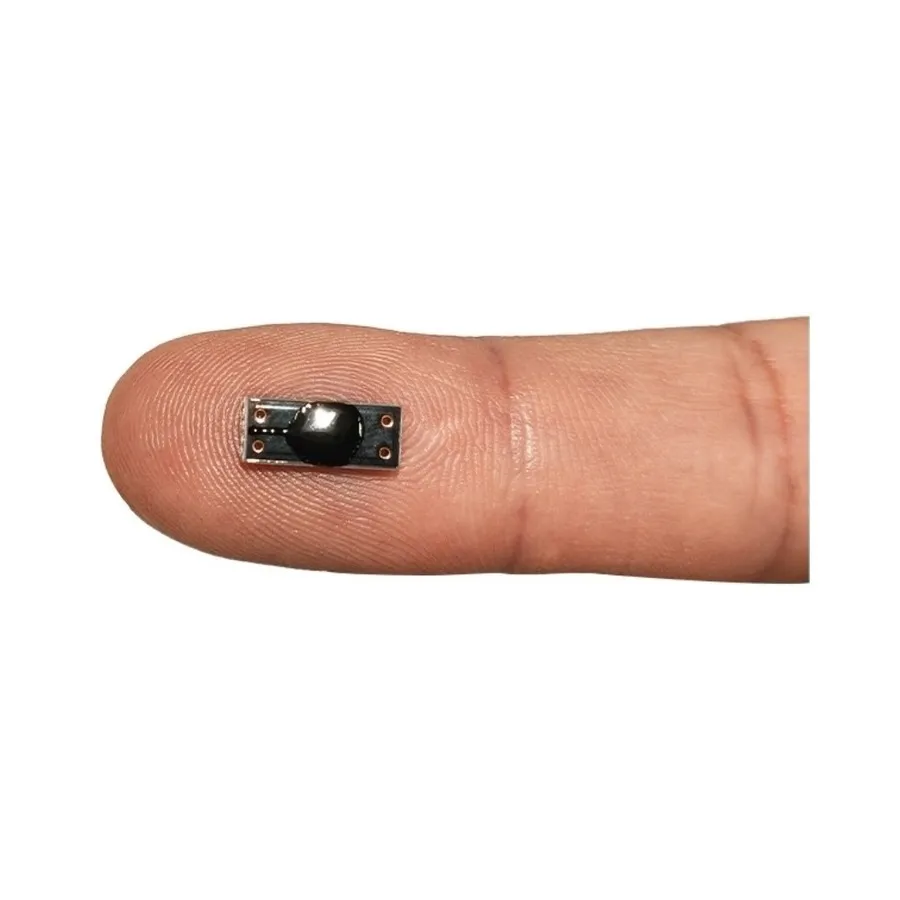
| Laptop or small network module where space is tight | Metal | IDTS-1004 miniature on-metal PCB tag | 10 × 4 × 2.8 mm; approx. 1.2 m on metal; four plated corner holes | ₹89 + GST |
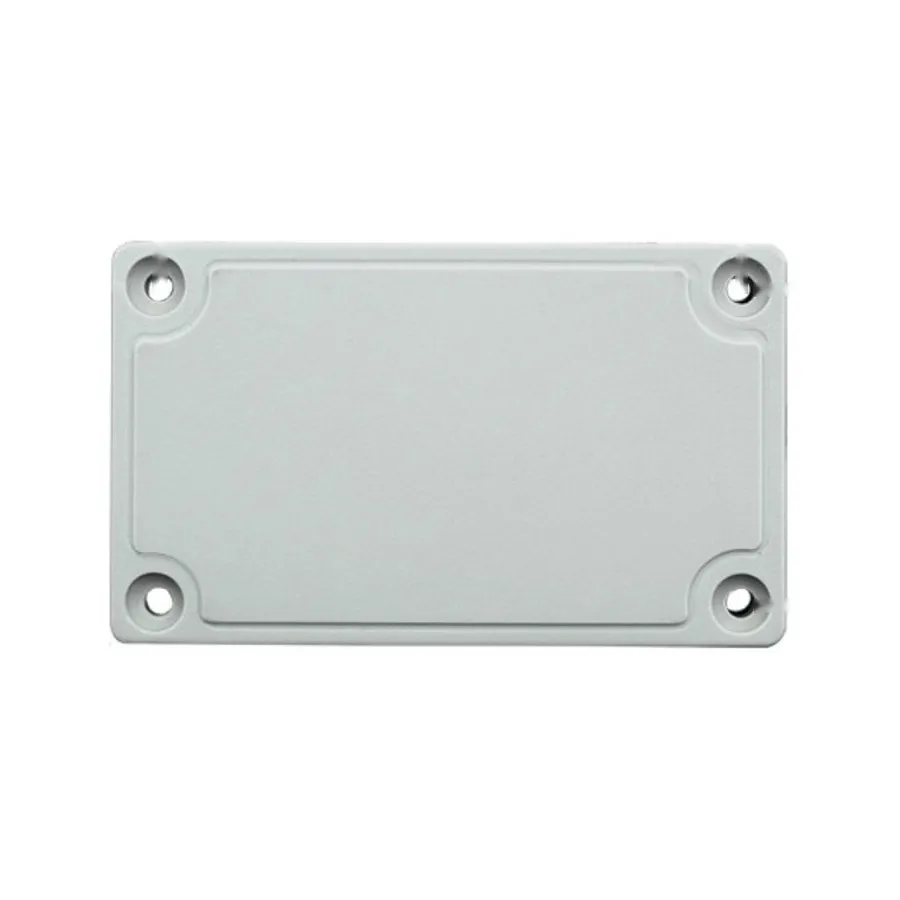
| Rack server, switch, storage shelf, UPS | Steel chassis or bezel | IDTS-7545 anti-metal asset tag | 75 × 45 × 6 mm ABS; approx. 5 m on metal; four 3.3 mm corner holes for screws or rivets | ₹89 + GST |
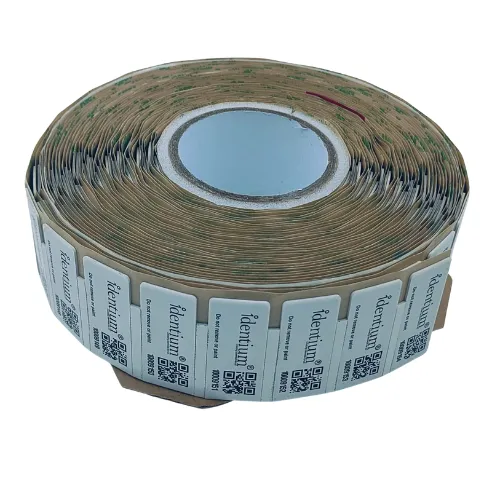
| Monitor, printer, docking station, desk phone | Plastic | ID-5030-M4 printable asset label | Up to 6 m; prints the asset number and barcode while the tag is encoded | ₹8 + GST |
| Plastic laptop base or laptop sleeve | Plastic | ID-9640 slim laptop tag | Up to 6 m; not reliable stuck directly on metal | ₹7 + GST |
Every tag above is a passive UHF tag for India's 865–868 MHz band, sold with a minimum order of 500 pcs per type. Our guide to choosing on-metal tags explains why metal changes the choice and compares the wider range of on-metal RFID tags.
Where should the tag go on a laptop, a server and a rack?
Placement matters as much as the tag. A few rules hold for most estates:
- Laptops: put the tag on the base near an edge, clear of the vents, rubber feet and the maker's serial label, and use the same spot on every unit of a model so auditors know where to aim. Test one unit of each laptop model before you tag the fleet, because body materials differ even within one brand.
- Rack servers and switches: tag the front face, on a bezel, front ear or handle that faces the aisle. A tag on a side panel ends up sandwiched between metal neighbours once the rack fills up, and those tags are the ones a sweep misses.
- The rack itself: a larger tag on the rack frame or door gives every audit a location marker, so the software can record which rack each device was seen in.
- Orientation: a tag is a flat antenna and reads best when the reader's antenna faces it. Keep tags the same way round across a rack or a cupboard.
- One tag per asset, with the number printed on it: if a tag fails to read, the auditor can still type the printed number in, and the record stays complete.
Can a handheld read servers inside a populated rack?
Partly, and only at short range. Tags on the front face of each device, read with the rack door open, are usually picked up as the auditor moves the handheld slowly down the rack. Tags on side panels, behind cable bundles or inside closed metal enclosures are often missed, because the surrounding metal shields and reflects the signal.
Plan audits rack by rack rather than expecting to read an aisle from its end: open the door, sweep the front, then the rear, and compare the count with the register for that rack before moving on. Anything not read goes on a short list for a second, closer pass. The tag ranges in the table are measured on single tags, not on tags buried in a full rack, so trial your own racks during the pilot.
Which reader suits which job: desk, sweep or door?
| Workflow | Reader | How it works | Price |
|---|---|---|---|
| Check-in and check-out at the IT helpdesk | UCR10 UHF portable reader | Plugs into the USB Type-C port of an Android phone or tablet, or a USB-C iPhone, and runs on its power; up to 1.5 m, so it reads the laptop on the counter rather than the queue behind it | ₹12,000 + GST |
| Room, cupboard and rack audits | CX1000 UHF handheld | A dedicated handheld running IDOS, Identium's own OS built on Android 15, for audits that cover a floor or a data centre hall | ₹30,000 + GST |
| IT store or server-room door, logging assets that leave | IF9A integrated reader | A fixed reader with a built-in 9 dBi antenna, BIS and WPC approved; connects over Ethernet, PoE, RS232, USB or Wiegand, with an optional relay | ₹24,000 + GST |
A door reader reports which tags passed; it does not decide whether the movement was allowed. Your software makes that call, for example by checking whether a gate pass or a check-out record exists for that laptop, and then alerts the helpdesk or the guard. For more choice, see all RFID handheld readers.
What goes on the tag, and how does it reach your ITAM or CMDB?
Keep the tag simple. Write the asset number from your register, or a code that maps to it, into the tag's EPC memory and lock it so it cannot be changed by accident. Everything else stays in the register: the user, the cost centre, the location, the configuration and the dates. A tag that holds only a number gives nothing away if a laptop is lost, which is the approach our guide to RFID data security recommends. You can encode at the desk with a reader or have labels printed and encoded on an RFID printer, which also prints the barcode and asset number on the face.
On the software side, every reader in this guide returns tag numbers: the UCR10 and the CX1000 to an app on the device, the IF9A over the network or a serial link. A small middleware layer turns those raw reads into events such as "asset A123 seen in rack R07 at 11:40 by auditor S", removes duplicates and passes the result to your ITAM tool or CMDB through its import or API. Our RFID middleware guide covers the options, from keyboard-mode exports to API integration.
RFID is a way of capturing data, not a management standard. The international standard for running IT asset management, ISO/IEC 19770-1:2017, specifies requirements for an IT asset management system and applies to all types of IT assets and all sizes of organisation; it does not set technical requirements for specific asset types. ISO/IEC 19770-5 provides the overview and vocabulary for the family. An RFID audit trail is evidence your ITAM process can use; it does not replace the process.
What does a first order for about 1,000 assets look like?
Most estates need two or three tag types and two readers to start. Each tag type has a minimum order of 500 pcs, so a first order for about 1,000 assets usually covers one batch of each type the estate needs, with the rest held as spares for new equipment.
| Line | Item | Unit price |
|---|---|---|
| Metal laptops | UHF on-metal label UML | ₹65 + GST |
| Monitors, docks and peripherals | ID-5030-M4 printable asset label | ₹8 + GST |
| Servers, switches and UPS units | IDTS-7545 anti-metal asset tag | ₹89 + GST |
| Small devices where space is tight | IDTS-1004 miniature on-metal tag | ₹89 + GST |
| Audits | CX1000 UHF handheld | ₹30,000 + GST |
| Helpdesk check-in | UCR10 UHF portable reader | ₹12,000 + GST |
| Optional: IT store door | IF9A integrated reader | ₹24,000 + GST |
Software, integration and the labour of tagging are quoted per project. The RFID asset management solution page shows how the pieces fit together, and our fixed asset audit guide covers the finance side of a tagging programme.
How should we pilot it before tagging everything?
Pick one floor and one row of racks, and include at least one unit of every laptop model and server type you own. Tag them, run the same audit several times on different days, and record what was read, what was missed and why. Then fix the placement rules before rolling out. Our RFID pilot plan gives a test protocol you can reuse, and you can request tag samples to try on your own hardware; readers are bought, not sampled. If you prefer to start from a bundle, the RFID evaluation kits pair a reader with sample tags.
Should IT asset tags be RFID or barcode?
Use both on the same label. A printable RFID label carries the asset number and a barcode on its face and the same number in its chip, so a barcode scanner, a human and an RFID reader all get the same answer. RFID earns its place in audits of racks, cupboards and stores where barcodes are slow to reach; the barcode remains the fallback. Our comparison of RFID and barcodes goes through the trade-offs.
Sources
Cite as: India RFID Store (Identium Tech Solutions Pvt Ltd), “RFID for IT Asset Tracking in India: Laptops, Servers, Racks”, https://www.indiarfidstore.com/rfid-resources/rfid-it-asset-tracking-laptops-servers-india-guide, published 25 Oct 2026.
Frequently asked questions
Which RFID tag should I use on a laptop?
Can an RFID handheld read servers inside a closed rack?
Does the RFID tag store information about the laptop or its user?
How does RFID data get into our ITAM or CMDB software?
Can an RFID reader at the door stop a laptop leaving the building?
How much does RFID IT asset tagging cost in India?
IT Asset ManagementAsset TrackingOn-Metal TagsUHF RFIDData Centres
Keep reading
More guides



More in Industries & use cases
- Logistics Data Bank Passes 10 Crore RFID-Tracked Containers: Gate Lessons for CFS, ICD and Factory Yards
- FASTag Readers at a Private Warehouse Gate: What CWC's Smart Warehousing Rollout Shows (2026)
- Pet Microchips in Chennai: The Rs 10,000 Abandonment Fine, Scanners in 40 Vehicles and ISO 11784 Chips Explained
- NICU Infant Security with RFID Wristbands: What Surat's New Civil Hospital Switched On (2026)