Logistics Data Bank Passes 10 Crore RFID-Tracked Containers: Gate Lessons for CFS, ICD and Factory Yards
Published 22 Oct 20269 min read
Prices checked on 22 Oct 2026 against the catalogue.
Short answer: On 14 August 2026 the government announced that the Logistics Data Bank (LDB) has tracked 10 crore export-import containers since its launch in 2016. It provides visibility of all of India's EXIM container movement through RFID-based technology, across 19 ports, 32 container terminals, 103 inland container depots, 439 container freight stations, 89 manufacturing SEZs, 5,569 railway stations, 269 toll plazas and three integrated check posts, and handles over 1.5 crore container searches a month.
The lesson for a CFS, ICD or factory yard is that UHF reads at fixed checkpoints on moving trucks work at national scale. You can run the same read-point model inside your own gate with your own tags. LDB is a national service with its own platform; nothing here suggests that private operators can read or use its tags or data.
Most Indian yards still record a container's arrival the way they did twenty years ago: a clerk writes the container and truck numbers at the gate, and the yard plan is updated when someone remembers. LDB has shown, at the scale of the whole country, that tagging the thing that moves and putting readers where it must pass turns those manual entries into automatic events. This guide sets out what LDB is and how its model works, then turns it into a plan for a private yard, with the hardware and prices from our catalogue.
The milestone in figures
| Item | What the government reported |
|---|---|
| Containers tracked | 10 crore EXIM containers since the 2016 launch (announced 14 August 2026) |
| Coverage | 100 per cent of India's EXIM container movement, through RFID-based technology |
| Ports and terminals | 19 ports and 32 container terminals |
| Inland network | 103 inland container depots; 439 container freight stations, empty yards, parking plazas and industrial zones; 89 manufacturing SEZs |
| Road and rail | 5,569 railway stations, 269 toll plazas and three integrated check posts |
| Use | Over 1.5 crore container searches a month on average |
| Technology | RFID, IoT, big data and cloud, giving near real-time visibility across ports, rail, industrial zones, borders and highways |
| Analytics | Dwell time, transit time, and port and terminal performance |
| Operator | NICDC Logistics Data Services Limited (NLDSL), a joint venture set up on 30 December 2015 by the Government of India, through the National Industrial Corridor Development and Implementation Trust, and a Japanese IT company |
LDB 2.0, launched in September 2025, added tracking of export containers on the high seas and multimodal visibility by container, truck or trailer number and by railway forwarding note number, through the Unified Logistics Interface Platform (ULIP), along with a live heat map of container locations.
How container-level RFID tracking works
The government's 2016 release on Jawaharlal Nehru Port, the first port to implement LDB tagging (from 1 July 2016), describes the model in one sentence: an RFID tag is attached to each container, which is then tracked through RFID readers installed at different locations, covering its movement by rail or road up to the ICDs and CFSs, with the information from various agencies joined in a single window.
Strip away the scale and there are four parts:
- A tag on the thing that moves. One tag per container, linked to the container number when it is fitted.
- Readers at choke points. Gates, terminals, rail sidings and toll plazas: places every container has to pass.
- Events, not snapshots. Each read becomes an event: this tag, at this place, at this time.
- A platform that joins events up. Dwell time and transit time are simply the differences between events, which is why LDB can report them.
The releases do not say which tags or readers LDB uses, and we make no claim about that. What matters for a private yard is the model, not the vendor.
What LDB already gives you without any hardware
Before buying a single reader, use what the national system publishes. LDB's container tracking is available through a single-window platform at ldb.co.in, which is how stakeholders search containers today, at over 1.5 crore searches a month. The government's release says the platform provides analytics on dwell time, transit time, and port and terminal performance, enabling stakeholders, in the release's words, to monitor logistics operations and identify bottlenecks. LDB 2.0 added tracking of export containers after they leave Indian ports, and multimodal lookups by truck or trailer number and railway forwarding note through ULIP. None of this needs tags of your own; it is the baseline that your yard system should add to, not duplicate.
What a CFS, ICD or factory yard can copy
CWC has already applied the same idea inside container freight stations. A government release of November 2025 describes its Smart EXIM Warehouse System for CFSs, ICDs and general warehouses: gate automation integrated with port and rail systems that fetches vehicle and container details automatically, FASTag-based entry, automatic record generation, yard management with a digital twin that tracks containers and equipment, and inventory linked to the ERP and WMS. That is the read-point model at the scale of one facility.
For your own yard, start with three decisions.
1. What to tag
- Trucks and trailers you see every week: a windshield label on each regular truck, so the gate recognises it without a typed number.
- Your own equipment and returnable assets: pallets, bins, trolleys and handling equipment, with rugged tags fixed where they will not be knocked off.
- Not the containers already carrying LDB tags. Those tags belong to LDB's system. Plan your yard around tags you issue, and look containers up on LDB's platform or through your terminal and line systems.
2. Where to read
| Read point | What it tells you | Typical hardware |
|---|---|---|
| Gate in | Which truck arrived, and when | Integrated reader or fixed reader with a high-gain antenna aimed at the windscreen zone, plus a vehicle trigger |
| Weighbridge | The weight against the same visit | One antenna from a multi-port reader |
| Stuffing or destuffing dock | Which pallets went into or out of which load | Fixed reader with panel antennas at the dock door |
| Yard blocks | Where equipment and returnable assets are | Handheld audits, or fixed readers at block entries |
| Gate out | When the visit ended; turnaround time | Same as gate in, on the out lane |
3. What to do with the reads
Each read should create an event in your terminal operating system, WMS or ERP, matched to the truck's appointment and the container number captured at the gate. Exceptions (an unknown tag, a plate that does not match, a truck with no tag) go to a supervisor's screen instead of stopping the lane. Our RFID middleware and integration guide covers how reads become records, and our warehouse gate guide works through a gate-in step by step.
Your yard: hardware from the catalogue, with prices
| Job | Product | What the listing says | Price |
|---|---|---|---|
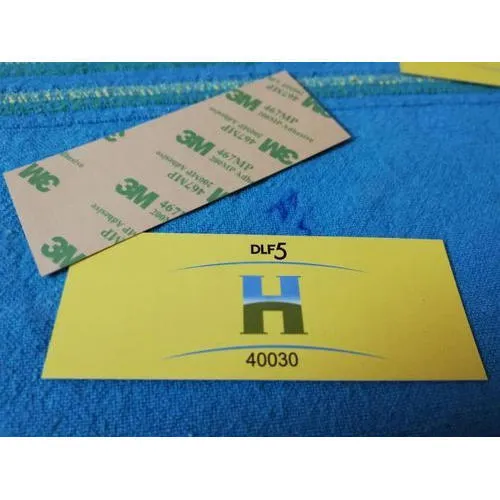
| Truck tag (tamper-evident) | UHF tamper-proof windshield label | Cannot be removed and refitted intact; serial number and barcode printed; over 8–10 m listed when fixed inside the windscreen | ₹25 + GST |
| Truck tag (printed) | Full-colour printed windshield label | 110 × 40 mm, vehicle number, department or logo printed; 1–5 m at gate lanes | ₹25 + GST |
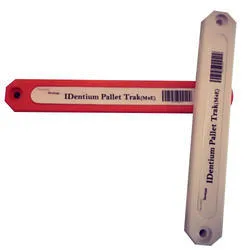
| Pallets and returnable assets | UHF pallet tag IDTS-UPT | 128 × 19 mm ABS/PC tag for non-metal surfaces; up to 12 m listed at 2 W ERP | ₹45 + GST |
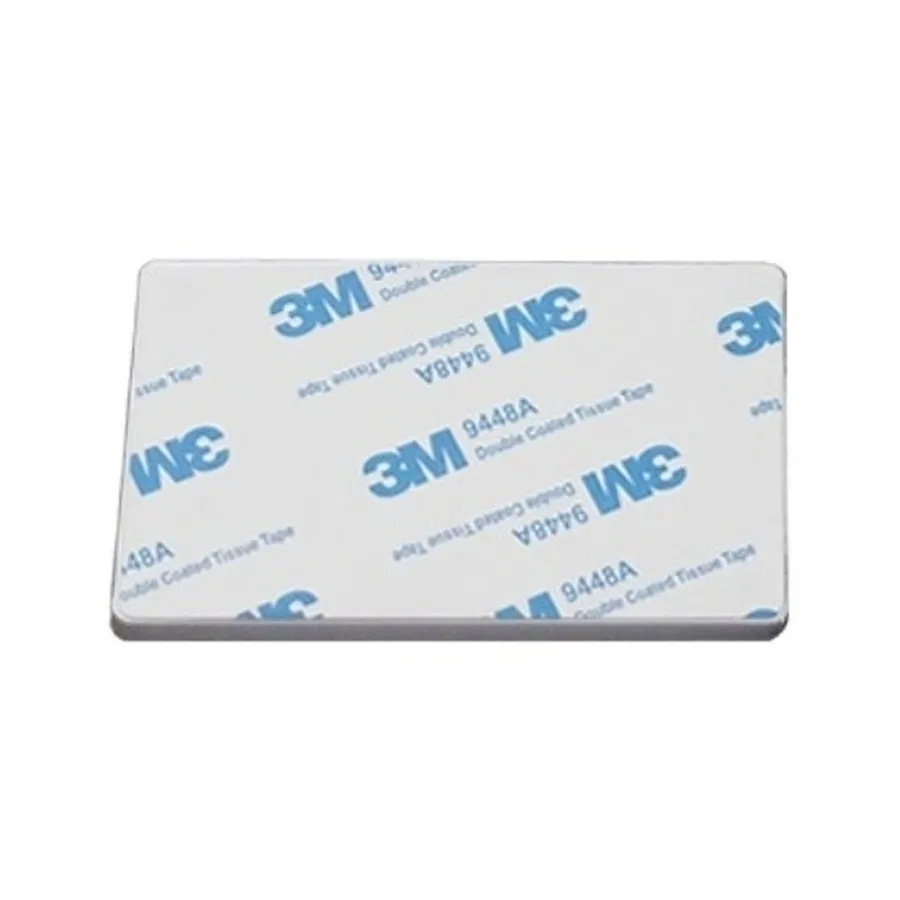
| UHF pallet tag IDTS-8654 | 86 × 54 mm white ABS with screw holes and adhesive; about 5 m listed; non-metal surfaces | ₹89 + GST | |
| Gate reader (wired) | IF9A integrated reader | Built-in 9 dBi antenna; up to 25 m effective; Ethernet, PoE, Wiegand and more; bulk reads up to 1,000 tags/s | ₹24,000 + GST |
| Gate reader (no LAN) | IF9A 4G reader | Built-in 4G; pushes reads straight to a cloud server | ₹40,000 + GST |
| Several read points from one reader | IHZ4 four-port reader with 12 dBi circular antennas | Four antenna ports, inputs and relays for triggers and barriers; IP67 antenna for 865–868 MHz, up to 30 m listed with an Identium four-port reader | ₹55,000 + GST plus ₹11,000 + GST per antenna |
| Yard audits | CX1500N UHF handheld | Up to 33 dBm transmit power; 1D/2D barcode imager for container and document barcodes | ₹58,000 + GST |
Tags are sold at a minimum order of 500 pcs and readers from 1 unit. Read ranges are listed figures and depend on the tag, mounting and site. Every UHF reader model used in India needs WPC Equipment Type Approval; the IF9A, IHZ4 and CX1500N models are BIS-registered and WPC type-approved, as listed on our certifications page. More options are under vehicle tags and windshield stickers, UHF RFID tags and integrated readers.
E-seals and tracking tags are different jobs
Export containers stuffed and sealed at the factory carry RFID e-seals: one-time bolt seals whose number is tied to the shipping documents and which show whether the container was opened after sealing. A tracking tag is different: it is reusable, it carries an ID rather than proof of integrity, and its value comes from the reads it produces as it moves. A yard often handles both, at the same gate. Our guide to RFID e-seals for export containers covers the customs rules and the reader you need for seals.
Start with one gate
A national system like LDB was built in phases, starting with one port. A yard should start the same way:
- Pick the gate with the worst queue. That is where an automatic read saves the most time and where the before-and-after numbers will be clearest.
- Tag your regular trucks first. Issue windshield labels to the transporters who visit every week and link each label to the vehicle number once, at issue.
- Log reads alongside the manual register for two weeks. Compare the two daily: every vehicle in the register should appear in the read log, and the gaps tell you where the antenna or the trigger needs work.
- Turn on dwell-time reporting. Once gate-in and gate-out reads are reliable, the time between them is your turnaround time, by transporter and by shift.
- Then add read points. The weighbridge, the stuffing dock and the yard blocks follow, each one adding an event to the same visit.
What drives the cost of a yard system
The tags and readers above are the visible part of the bill. The rest depends on your site:
- The number of read points. Every gate lane, weighbridge and dock door is a reader or an antenna, plus a pole or mount, power and network.
- Cabling and civil work. Long antenna cables lose signal, so readers usually sit near the lane; trenching and poles can cost more than the electronics.
- Software and integration. Mapping reads to trucks, containers and appointments in your terminal or warehouse system can be the largest single task.
- Tags for your own fleet and assets. Windshield labels for regular trucks are a one-time cost per vehicle; pallet and asset tags scale with the pool.
Our RFID project cost and ROI guide shows how to budget, and the RFID logistics and supply chain system page shows the complete setup. For a yard or gate project, ask for a quote with a site plan and the number of vehicles a day.
Sources
All fetched on 22 October 2026.
- PIB, Ministry of Commerce and Industry, 14 August 2026: Logistics Data Bank tracks 10 crore EXIM containers, provides visibility across logistics chain
- PIB, Ministry of Shipping, 4 July 2016: Jawaharlal Nehru Port becomes first port in country to implement logistics data tagging of containers
- PIB, Ministry of Commerce and Industry, 20 September 2025: Union Minister launches Logistics Data Bank (LDB) 2.0
- PIB, Ministry of Consumer Affairs, Food and Public Distribution, 18 November 2025: Digital upgrades to food storage and logistics, including CWC's Smart EXIM Warehouse System
Frequently asked questions
What is the Logistics Data Bank?
How many containers has the Logistics Data Bank tracked?
Can my CFS or yard read the RFID tags on LDB containers for its own system?
Which RFID tag should a container yard use for trucks?
How is an RFID e-seal different from an RFID tracking tag?
What does an RFID gate read point cost?
LogisticsContainer TrackingPorts & ICDsGate AutomationUHF RFID
Keep reading
More guides
More in Industries & use cases
- Pet Microchips in Chennai: The Rs 10,000 Abandonment Fine, Scanners in 40 Vehicles and ISO 11784 Chips Explained
- NICU Infant Security with RFID Wristbands: What Surat's New Civil Hospital Switched On (2026)
- RFID Chip Running Test for Police Recruitment PET: Lap Timing, Anti-Swap Checks and What Tenders Ask For
- Stray Cattle and Dog RFID Tagging for Municipal Corporations in India (2026 Guide)