RFID vs BLE vs UWB vs GPS: Which Tracking Tech to Use
Published 25 Oct 20267 min read
Written and maintained by the RFID team at Identium Tech Solutions Pvt Ltd, New Delhi (India RFID Store).
Short answer: Passive UHF RFID tells you that a tagged item passed a read point or is within a reader's range; it does not give a continuous position. For location, Bluetooth Low Energy (BLE) beacons with gateways give room- or zone-level tracking at about 10 m, and Bluetooth AOA anchors bring that under 1 m. UWB is the most precise indoor option, at about 10 cm, but costs several times more per tag and anchor. GPS works outdoors, for vehicles and people on the move, not inside buildings. Many sites combine them: RFID for counting items at doors and shelves, BLE for people and high-value equipment, GPS for vehicles on the road.
"Can RFID track where my things are?" is a common question, and the honest answer depends on what "where" means: which doorway an item last passed, which room it is in, which corner of the room, or which street. Four technologies compete for that job. This guide compares them using the accuracy figures on our BLE beacons and AOA positioning page and product specifications, plus one published test of Bluetooth direction finding, so you can match each to the job it does well.
Identification at read points is not the same as location
A passive UHF RFID tag has no battery. A reader powers it with its own signal and the tag answers with its number, so the system learns that this item was in this reader's field at this time. The RAIN Alliance, the industry body for UHF RFID, describes a read range from a few centimetres to several metres; a fixed reader such as the IF9A reads in bulk, up to 1,000 tags a second. Between read points the system knows nothing, which is why RFID is built around doors, gates, conveyors, shelves and handheld counts.
Location systems work the other way round. A BLE or UWB tag carries a battery and broadcasts on its own, and fixed receivers work out where it is, again and again. A GPS receiver calculates its own position from satellite signals. Both give a position over time; neither counts a whole carton of tagged items in one pass the way an RFID reader does.
The four technologies side by side
| Passive UHF RFID | BLE with gateways (RSSI) | Bluetooth AOA | UWB | GPS | |
|---|---|---|---|---|---|
| What it tells you | Which items passed or sit within a read point | Which zone or room a tag is in | A tag's position | A tag's position | A receiver's position outdoors |
| Accuracy | The reader's read zone | About 10 m | Under 1 m | About 10 cm | Degrades near buildings; not for indoor use |
| Tag battery | None | Yes | Yes | Yes | Device with its own power |
| Infrastructure | Readers and antennas at read points, or handhelds | Gateways; can reuse Bluetooth mesh nodes | Dedicated anchors | Dedicated anchors | Satellites; the receiver needs open sky |
| Relative tag and anchor cost | Far less per tag (no battery) | 1× | 1× | 5–10× | Not comparable |
| In our catalogue | Yes | Yes | Yes | No | No standalone trackers |
The Bluetooth, AOA and UWB figures are those in the comparison table on our BLE and AOA positioning page, which also compares Wi-Fi RSSI positioning (about 10 m, with a poorer tag battery). The GPS row follows the US government's GPS.gov page, which lists signal blockage by buildings, bridges and trees, indoor or underground use, and signals reflected off buildings or walls among the common causes of inaccuracy.
How Bluetooth AOA finds a tag
The Bluetooth SIG, which manages the Bluetooth standard, describes two direction-finding methods. In Angle of Arrival (AOA), the tag transmits from a single antenna and the receiver, a fixed locator, has several antennas arranged in an array, from which it works out the angle the signal arrives from. In Angle of Departure (AoD) the roles swap: the array transmits, and a single-antenna device such as a smartphone works out its own position, which suits indoor navigation. For tracking assets and people, AOA is the method: asset tracking and worker safety are among the SIG's listed uses.
What does that achieve in practice? A study by Pau, Arena, Gebremariam and You, published in Sensors in 2021, tested Bluetooth 5.1 direction finding in a laboratory of about 25 × 15 m. It estimated positions with a hybrid of AOA and signal strength (RSSI), using one 4 × 4 antenna array installed at 2 m height and moved between four anchor positions. The total average distance error was 0.7 m. Averages at individual test locations ranged from 0.29 m at the best spot to 1.52 m at the worst.
Two lessons follow: sub-metre accuracy is realistic on average, and the layout of anchors and the spot in the room still matter.
That matches how our ID-AOA-GW25 anchor is specified: 0.1–1 m with AOA-capable Identium tags, depending on mounting height and layout, covering a radius of up to about twice its installation height (a 3 m ceiling gives about a 6 m radius), with several anchors tiling a larger area.
RSSI zones or AOA positions: what the hardware looks like
Both BLE methods use the same class of battery tag; the difference is the receivers. Our category page explains when RSSI zones are enough and when AOA is worth it, so here is just the shopping list:
- Tags. An AOA-capable beacon such as the ID-BLE-L01 industrial beacon (IP68, rated −40 °C to +85 °C) costs ₹1,250 + GST, with a minimum order of 100 pcs. See the full range of BLE beacons and asset tags and wearables and work cards; each product page gives its price and says whether the model supports AOA.
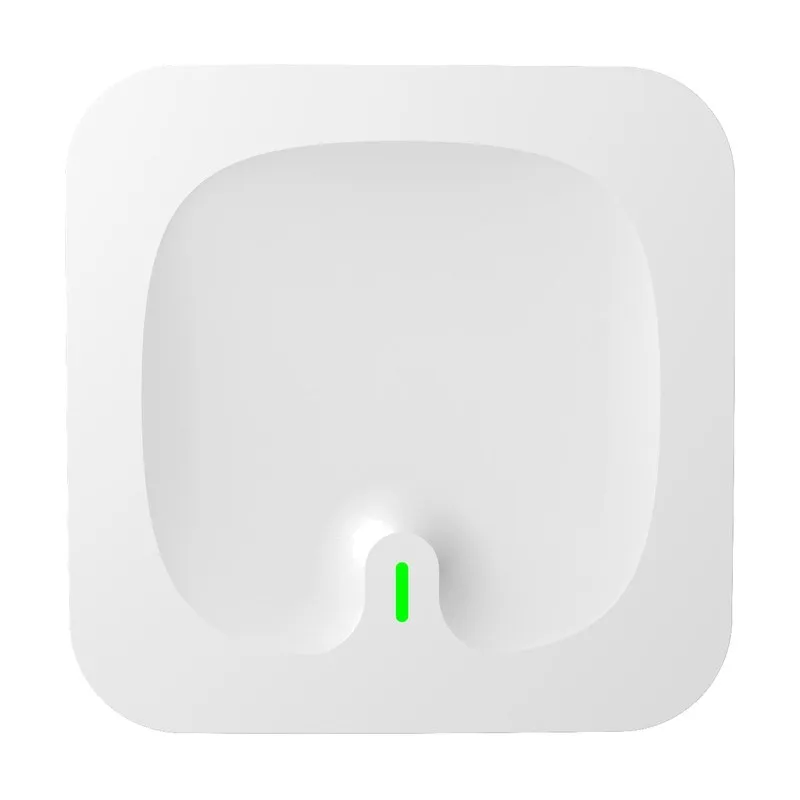
- Gateways for RSSI zones. The ID-BGW-02 gateway (₹28,000 + GST) forwards sightings to your server over Ethernet, Wi-Fi or 4G using UDP, TCP or MQTT, and takes PoE or a DC supply.
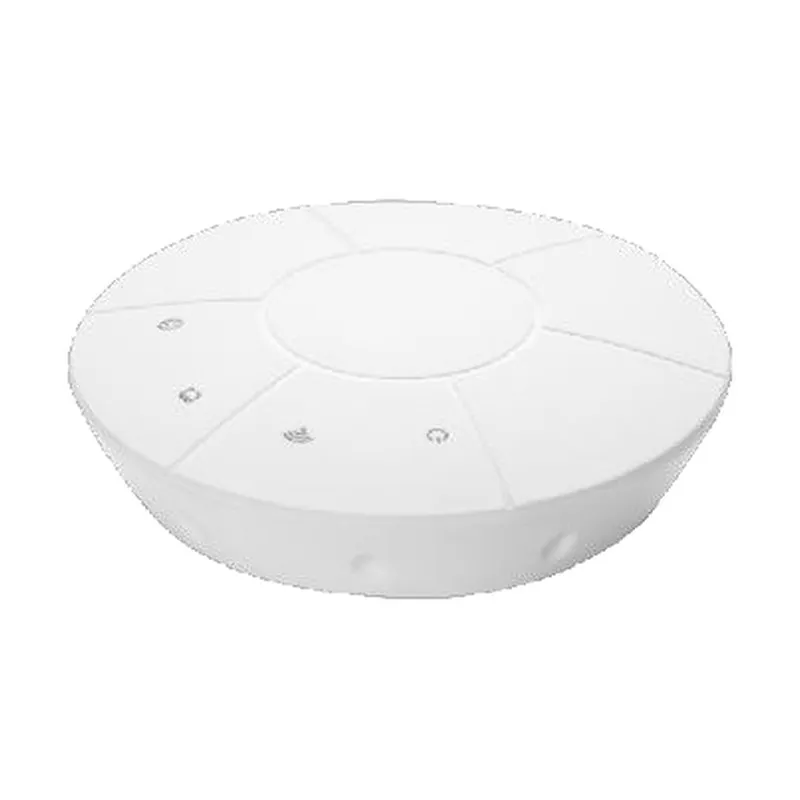
- Anchors for AOA positions. The ID-AOA-GW25 (₹55,000 + GST) sends angle data to the positioning server.
A common path is to pilot with gateways for zone-level tracking, then add anchors only in the areas that need sub-metre positions, as long as the tags you bought are AOA-capable. Browse BLE gateways and AOA anchors for both.
Where passive RFID still wins
For counting things rather than following them, passive UHF is hard to beat. The tags need no battery and cost far less than a BLE tag: a printable sticker such as the ID-9503-M4 is ₹7 + GST, minimum order 500 pcs. A reader at a dock door or gate records every tagged carton that passes, and a handheld counts a whole rack in one walk. You can also get room-level history from RFID by placing a reader at each doorway, and a handheld's single-tag finder helps you home in on one item within reading range.
The limits are the flip side: no reading between read points, and no position as a coordinate. Our passive vs active RFID guide and the UHF vs active RFID comparison cover the middle ground, including 2.4 GHz active RFID for long-range reading across yards and campuses.
Where GPS fits
GPS is the answer for vehicles on roads and people outdoors, not for stock in a building, because satellite signals are blocked or reflected indoors and degraded near buildings and trees. We don't sell standalone GPS trackers. RFID works alongside GPS: see GPS and RFID for transport vehicles. The CX1500N handheld has built-in GPS, and windshield tags with a lane reader identify vehicles at gates.
Where UWB fits
Ultra-wideband (UWB) gives the finest indoor positions, about 10 cm in the comparison table, at the cost of dedicated anchors, a tag and anchor cost five to ten times that of Bluetooth, and higher power use. It suits jobs where centimetres matter. We don't offer UWB. For indoor location we offer BLE: gateways for room- or zone-level tracking, and AOA anchors that position AOA-capable tags to 0.1–1 m.
Which to choose: a quick guide by job
- Count stock, check goods through doors and gates, find files or tools: passive UHF RFID. See our asset tracking and audit guide.
- Know which room equipment or staff are in: BLE beacons or work cards with gateways.
- Sub-metre positions indoors, for example equipment in a hospital or carts on a factory floor: Bluetooth AOA anchors with AOA-capable tags. Our healthcare guide covers hospital use.
- Centimetre positions indoors: UWB, from a specialist supplier.
- Vehicles on the road: GPS, with RFID at the gates for identification.
If you are unsure which applies, test before you buy: our 30-day RFID pilot plan shows how to measure read points on your own site.
Sources
- Pau G, Arena F, Gebremariam YE, You I. Bluetooth 5.1: An Analysis of Direction Finding Capability for High-Precision Location Services. Sensors 2021;21(11):3589 (25 × 15 m lab; total average error 0.7 m; per-location averages 0.29–1.52 m), accessed 25 October 2026
- Bluetooth SIG: Bluetooth Direction Finding (Angle of Arrival and Angle of Departure), accessed 25 October 2026
- GPS.gov: GPS Accuracy (causes of inaccuracy, including signal blockage and indoor use), accessed 25 October 2026
- RAIN Alliance: What is RAIN technology (read range from a few centimetres to several metres), accessed 25 October 2026
Cite as: India RFID Store (Identium Tech Solutions Pvt Ltd), “RFID vs BLE vs UWB vs GPS: Which Tracking Tech to Use”, https://www.indiarfidstore.com/rfid-resources/rfid-vs-ble-vs-uwb-vs-gps-tracking-india-which-technology, published 25 Oct 2026.
Frequently asked questions
Can RFID track location in real time?
Is BLE better than RFID for asset tracking?
How accurate is Bluetooth AOA indoor positioning?
What is the difference between UWB and RFID?
Can passive RFID replace GPS for vehicle tracking?
What is the minimum order for BLE tags?
Asset TrackingBLEUHF RFIDIndoor PositioningGPS
Keep reading
More guides


More in Technology explained
- NFC Tag Detected on Your Phone: Meaning & How to Use It
- Is RFID Blocking Necessary? An RFID Maker's Honest Guide to E-Passports, Contactless Cards and Wallets in India
- Why Your Zudio, Westside or Decathlon Clothes Carry an RFID Tag, and What Garment Vendors Supply
- How Far Will My UHF RFID Tag Read? Link Budget Explained for India