Will 5G Ambient IoT Replace RFID? India Buyer's View 2026
Published 25 Oct 20267 min read
Written and maintained by the RFID team at Identium Tech Solutions Pvt Ltd, New Delhi (India RFID Store).
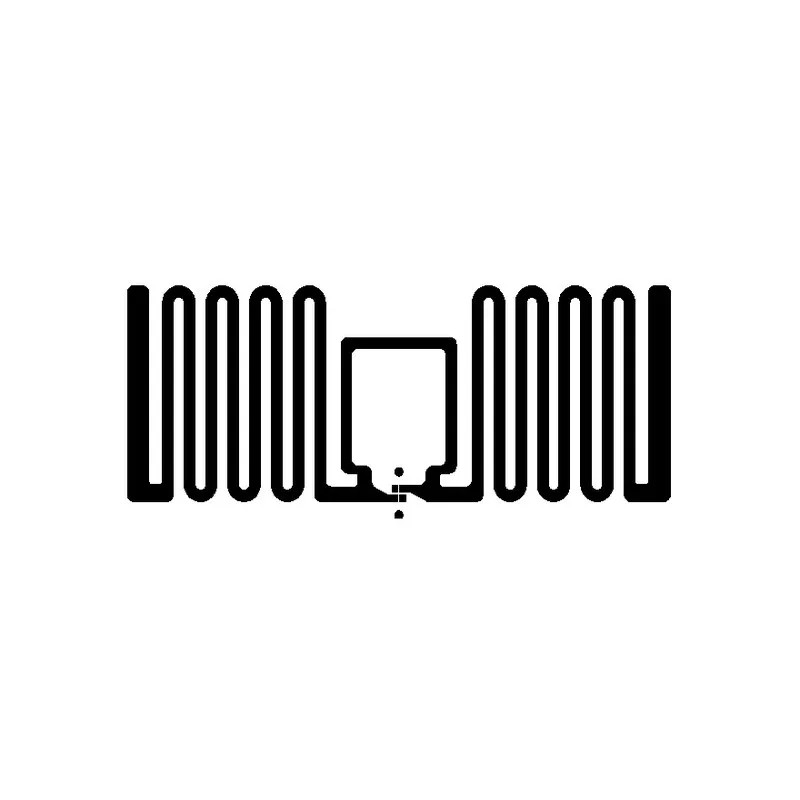
Short answer: No, not in 2026 and not for the jobs RFID is bought for today. 3GPP's ambient IoT device is defined in Release 19 for indoor inventory and indoor command, read by a mobile base station on operators' licensed spectrum, and its more advanced device types are targeted for Release 20, whose protocol details are targeted for March 2027. RAIN RFID already runs on India's licence-exempt 865–868 MHz band, reads up to 1,000 items a second, and a passive UHF label such as our ID-2044 lists at ₹6 + GST.
"Ambient IoT" has become one of the most searched phrases around RFID, usually with a worried question attached: is RFID about to be replaced by 5G? This guide answers from a buyer's side, using only what the standards bodies themselves publish: 3GPP's pages on the Release 19 ambient IoT work and on the Release 20 schedule, the RAIN Alliance's description of RAIN RFID, and India's rules for the 865–868 MHz band. Where the sources are silent, for example on Indian operators' plans or on when devices will ship, this guide is silent too.
What 3GPP means by ambient IoT
3GPP, the body that writes the 4G and 5G standards, describes ambient IoT as new IoT technology for passive devices, battery-less or with limited energy storage, powered by harvesting energy from their environment, with ultra-low complexity, a small form factor, and complexity and power consumption orders of magnitude lower than its existing low-power IoT technologies such as NB-IoT. In 3GPP's words, it is meant for use cases those technologies cannot otherwise serve.
The Release 19 work item defines what 3GPP calls device 1:
- Power: about 1 µW peak power consumption, with energy storage. Where the energy comes from (ambient radio, heat or a dedicated energy supply node) is left unspecified in Release 19.
- Radio: no amplification in either direction. The device receives with a simple envelope detector and replies by backscattering a carrier wave supplied from outside, using on-off keying or BPSK.
- Use cases: indoor inventory and indoor command, with the device and the base-station reader both indoors and talking to each other directly.
- Spectrum: FR1 licensed FDD spectrum, with the reader's commands in downlink spectrum and the device's replies and the carrier wave in uplink spectrum.
- Access: network-triggered. A device only speaks when the reader addresses it, and contention is resolved with slotted ALOHA, so an inventory of hundreds of devices can be read in a few seconds.
- Identity: each device gets a globally unique permanent identifier whose parts can correspond to, for example, an operator network ID or an electronic product code (EPC).
Read that list as an RFID engineer would and the family resemblance is plain: a battery-free device, backscatter, a reader that starts every exchange, slotted-ALOHA inventory and an EPC-style identity. The differences are who owns the reader and whose spectrum it uses.
What RAIN RFID is
RAIN is the name the RAIN Alliance uses for passive UHF RFID, the technology behind the UHF labels, tags and readers sold today, built on the EPC Gen2 air interface (also issued as ISO/IEC 18000-63). The Alliance describes a standards-based wireless system in which tags and readers both implement the RAIN air-interface protocol and tags are numbered under ISO standards or the GS1 EPC Tag Data Standard. It gives these working figures: up to 1,000 items identified per second, read ranges from a few centimetres to several metres, no line of sight needed, and more than 1 billion RAIN chips shipped every week in 2024.
In India, RAIN readers run in the 865–868 MHz band under G.S.R. 853(E) of 10 December 2021, without a licence, at up to 2 W e.r.p. on four channels centred at 865.7, 866.3, 866.9 and 867.5 MHz. The reader model needs WPC equipment type approval; the user needs no licence. Our WPC ETA and BIS checklist explains what to ask for.
Side by side
| 3GPP ambient IoT (Release 19) | RAIN RFID | |
|---|---|---|
| Reader | A mobile network base station | A reader you buy and own: fixed, handheld, desktop or module |
| Spectrum | FR1 licensed FDD (operators' bands) | 865–868 MHz in India, licence-exempt |
| Licence in India | Operator spectrum | None for the user; the reader model needs WPC ETA |
| Device power | About 1 µW peak, with energy storage | Passive, no battery; powered by the reader's field |
| How the device replies | Backscatter on a carrier wave supplied from outside | Backscatter of the reader's signal |
| Use cases in the standard | Indoor inventory and indoor command | Inventory, tracking, authentication across retail, logistics, assets and more |
| Identifier | Permanent device ID that can carry an EPC | EPC, numbered under ISO or GS1 EPC TDS |
| Status | Release 19 normative work; more advanced devices targeted for Release 20 | In use; tags and readers sold from stock |
The timeline, from 3GPP's own pages
- Release 18: 3GPP's groups analysed ambient IoT use cases, deployment scenarios, device constraints and design targets.
- Release 19: a study item explored the radio aspects, then the work item that defines device 1, described above.
- Release 20: more advanced devices studied for Release 19, one adding a reflection amplifier and one a very low-cost active device, are targeted for Release 20, as is possibly a topology in which a phone relays between device and base station.
- Release 20 schedule: 3GPP gives an 18-month roadmap. Stage 1 (service requirements) froze in June 2025; Stage 2 (architecture) was planned to reach about 80% by June 2026 and a final freeze in September 2026; Stage 3 (protocol details) is targeted for March 2027, followed by the ASN.1/OpenAPI freeze in June 2027.
- After that: 3GPP describes Release 20 as the final "5G-Advanced only" release and the release for 6G studies, with Release 21 for 6G normative work.
A frozen standard is where product design starts, not where products arrive. Chips, base-station software and operator services follow it, and none of the 3GPP pages gives dates for those. So any plan that waits for ambient IoT is waiting for a date nobody has published.
What ambient IoT would take in India
Because 3GPP's ambient IoT uses licensed FDD spectrum with the base station as the reader, a working system needs a mobile network that supports it, with coverage indoors where the items are. In practice that makes ambient IoT a service from a network operator rather than equipment you install yourself, which is a different buying decision from RAIN RFID, where you own the reader and the band needs no licence. The 3GPP pages say nothing about India specifically, and this guide does not guess at operators' plans.
3GPP's own coexistence work also shaped the first release: its radio group studied ambient IoT next to 5G NR, found coexistence feasible, and focused on outdoor macro base stations with the ambient IoT system indoors. That matches the indoor inventory use case. The same page expects later, more advanced devices to improve coverage, capacity and data rates, which is work for Release 20 and beyond.
Is RFID obsolete? What to do in 2026
No. RAIN is shipping at more than a billion chips a week, it works in India's licence-exempt band today, and 3GPP's ambient IoT work borrows its ideas rather than replacing them, down to allowing an EPC inside the device identifier. A sensible 2026 plan:
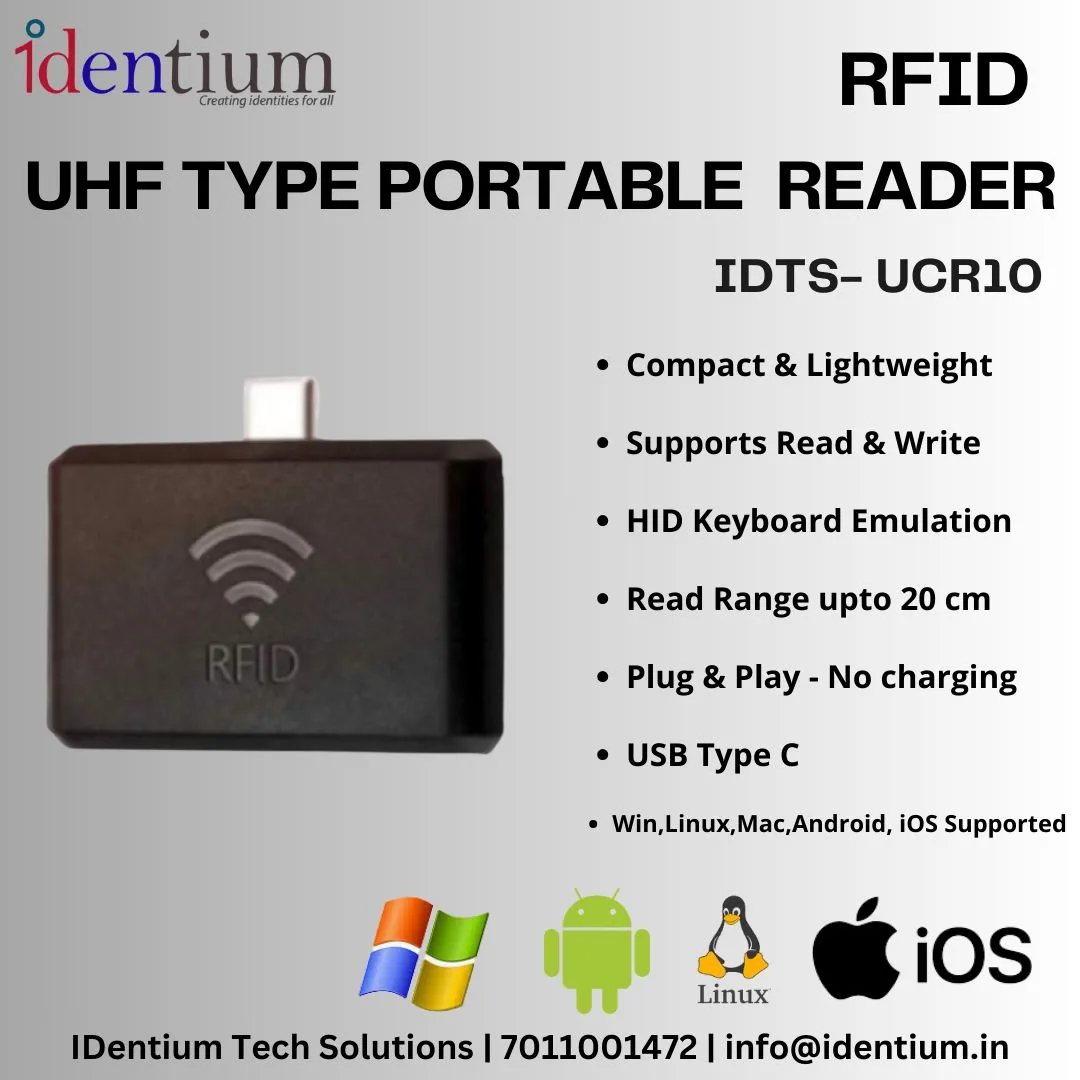
- Buy what works now. If you need item-level counts, gate reads or asset audits this year, use RAIN RFID: readers type approved for India and tags to the current Gen2 standard. Our RFID readers and UHF labels and inlays are listed with prices.
- Get your numbering right. Encode EPCs to a scheme you control, ideally GS1-based where goods leave your premises. Identifiers outlive readers, and EPC numbering is what both worlds share. Our SGTIN-96 encoding guide shows how.
- Choose chips with care. Read sensitivity, memory and protection features differ between chips; our chip guide compares current ones.
- Keep the software open. Middleware that takes reads from any source, and passes events to your ERP or WMS, will accept new kinds of reader later. See RFID software and middleware.
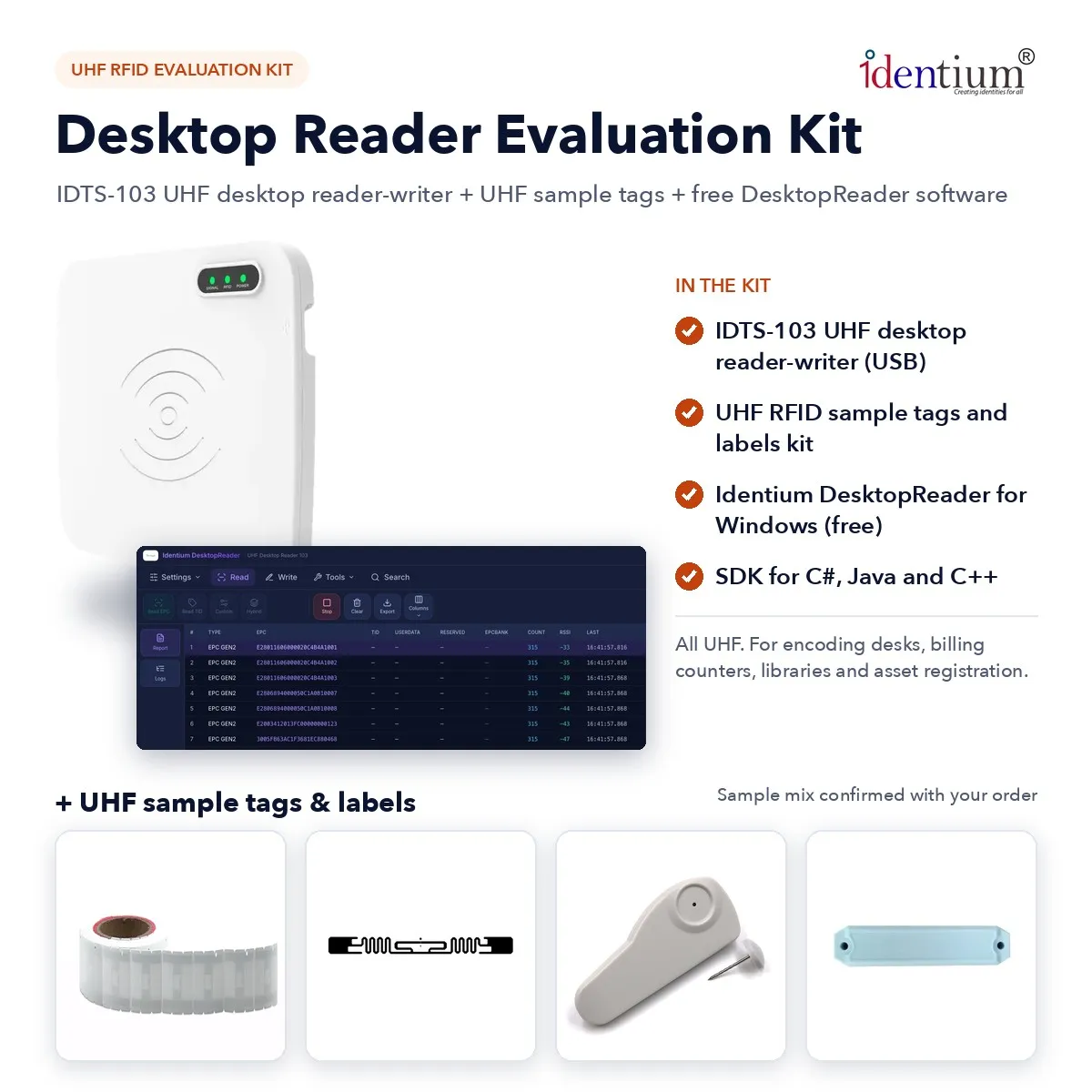
- Test before you commit. An RFID evaluation kit (a reader plus sample tags) shows what RAIN does with your own items in a week.
Then watch the standards. When 3GPP freezes the Release 20 protocol and operators announce services, the question will become a practical one: which of your use cases would be cheaper read by a network than by a reader you own. For now, passive vs active RFID is the more useful comparison.
Sources
- 3GPP: Release 19 Ambient IoT, by the RAN1 A-IoT rapporteurs (device 1, use cases, spectrum, identifier, Release 20 outlook), last updated January 2026, accessed 25 October 2026
- 3GPP: Release 20 (5G-Advanced schedule: Stage 1 June 2025, Stage 2 September 2026, Stage 3 March 2027, ASN.1/OpenAPI June 2027), accessed 25 October 2026
- RAIN Alliance: What is RAIN (read rate, range, chips shipped in 2024, numbering), accessed 25 October 2026
- Gazette of India: G.S.R. 853(E), 10 December 2021, rules for the 865–868 MHz band (licence exemption, Table IV, type approval), accessed 25 October 2026
Cite as: India RFID Store (Identium Tech Solutions Pvt Ltd), “Will 5G Ambient IoT Replace RFID? India Buyer's View 2026”, https://www.indiarfidstore.com/rfid-resources/ambient-iot-5g-tags-vs-rain-rfid-india-2026, published 25 Oct 2026.
Frequently asked questions
Will 5G replace RFID?
What is ambient IoT?
Can I buy ambient IoT tags in India in 2026?
Is RFID obsolete?
What is the difference between ambient IoT and RAIN RFID?
Which spectrum would ambient IoT use in India?
Ambient IoT5GRAIN RFIDUHF RFIDStandards
Keep reading
More guides
More in Technology explained
- Is Your Aadhaar Card RFID? Which Indian Cards Use RFID/NFC
- UHF Tag Memory: EPC, TID, User Memory, Lock & Reuse
- RFID vs BLE vs UWB vs GPS: Which Tracking Tech to Use
- 10 Things People Get Wrong About RFID in India
- NFC Tag Detected on Your Phone: Meaning & How to Use It
- Is RFID Blocking Necessary? An RFID Maker's Honest Guide to E-Passports, Contactless Cards and Wallets in India