Is Your Aadhaar Card RFID? Which Indian Cards Use RFID/NFC
Published 25 Oct 20266 min read
Written and maintained by the RFID team at Identium Tech Solutions Pvt Ltd, New Delhi (India RFID Store).
Short answer: No. UIDAI lists the security features of the Aadhaar PVC card as a tamper-proof QR code, micro text, a ghost image, the issue and print dates, a guilloche pattern and an embossed Aadhaar logo: no chip and no antenna. The QR code is what a scanner reads. The everyday cards and tags in India that do contain a radio chip are the e-passport, contactless debit and credit cards, metro smart cards and tokens, many office and hostel access cards, and the FASTag on a car's windscreen.
The question comes up for good reasons. The Aadhaar PVC card is the size and feel of a bank card, UIDAI's own order page asks what is "smart" about it, and phones now pop up "NFC tag detected" when they touch a wallet. As a company that makes RFID cards, tags and readers, we can tell you which of the cards in your wallet a reader can actually talk to, and which it cannot. The government facts below come from the official pages listed under Sources, except where we link one of our own guides.
What UIDAI says is on the Aadhaar PVC card
On its Order Aadhaar PVC Card page, UIDAI answers the question "What are the security features of Aadhaar PVC Card?" with this list:
- Tamper proof QR Code
- Micro text
- Ghost image
- Issue Date & Print Date
- Guilloche Pattern
- Embossed Aadhaar Logo
Every item on that list is printed or embossed. The one machine-readable feature is the QR code, which the same page describes as giving instant validation through scanning: it is read by a camera, not by a radio reader. The page also says that the Aadhaar letter, the Aadhaar PVC card and e-Aadhaar are different forms of Aadhaar that are equally valid and acceptable, and none of the three relies on a chip.
So an RFID reader or an NFC phone held against an Aadhaar PVC card has nothing to detect. If your phone reports an NFC tag when you touch your wallet, it has found another card in it, most likely a bank or metro card.
Which everyday cards and tags do use RFID or NFC
| What you carry | Radio chip? | Type | Read from | What protects it |
|---|---|---|---|---|
| Aadhaar letter, PVC card or e-Aadhaar | No | QR code and printed features | A camera scanning the QR code | Tamper-proof QR code and printed security features |
| Indian e-passport | Yes: an RFID chip and antenna inlay | Contactless chip | Close range | Data digitally signed, using Public Key Infrastructure |
| Contactless debit or credit card | Yes | NFC contactless (13.56 MHz) | A tap at the terminal | No-PIN taps capped at 5,000 rupees per transaction; your bank's on/off and limit controls |
| Metro smart card or token | Yes | Contactless HF (13.56 MHz) | A tap at the gate | The fare system's own security |
| Office, hostel or campus access card | Usually | 125 kHz or 13.56 MHz | A few centimetres | Depends on the card: older 125 kHz cards are easy to copy |
| FASTag | Yes | Passive UHF tag | Metres, at toll and parking lanes | Built to be read; it carries a tag ID |
| Pashu Aadhaar ear tag (cattle) | No | 12-digit bar-coded ear tag | A barcode scanner or the eye | Not applicable |
The sections below explain each row, and our NFC vs RFID guide explains how 13.56 MHz NFC relates to the wider family of RFID frequencies.
The e-passport: a chip by design
Passport Seva, run by the Ministry of External Affairs, describes the ePassport as a combined paper and electronic passport with a Radio Frequency Identification (RFID) chip and an antenna embedded as an inlay, holding the holder's personal particulars and biometric information. You can recognise one by a small gold-coloured symbol printed below the front cover. The data is printed in the booklet and also digitally signed in the chip, which lets immigration officials anywhere check that it has not been altered; Passport Seva names Public Key Infrastructure as the technology behind that.
Existing passports stay valid until they expire, and each passport office switches to ePassports as it is enabled.
Can someone read it in a crowd? Our guide to whether RFID blocking is necessary goes through the published research on range and access control.
Contactless bank cards: NFC with an RBI limit
A debit or credit card with the contactless symbol carries an NFC chip. The Reserve Bank of India's circular RBI/2020-21/71 of 4 December 2020 raised the limit for contactless card payments without an additional factor of authentication, such as a PIN, to 5,000 rupees per transaction, from 1 January 2021.
The RBI's FAQ on card transactions adds that this applies to contactless payments at shops, not ATM transactions, and only where the EMV standards are followed. Above that amount, the PIN or another factor is still needed. The circular also keeps your choice of contact or contactless mode, and refers to the RBI's January 2020 instructions under which you can switch contactless transactions on or off, or set a limit, with your bank.
Metro cards, office cards and hostel cards
Metro smart cards and tokens are contactless HF fare media: our guide to metro RFID tokens and smart cards reads an actual metro specification line by line. Office, hostel and campus cards are more varied. Many are 125 kHz proximity cards, which carry little protection and can be copied with brief access; others are 13.56 MHz cards, some with encryption. Our RFID data security guide explains the difference, and organisations choosing new cards can compare them in our RFID card buyer's guide.
FASTag
Your FASTag is a passive UHF RFID tag made to be read from a distance at toll and parking lanes; our FASTag and vehicle RFID guide explains how it works.
Other "Aadhaars": Pashu Aadhaar and Battery Pack Aadhaar
Two newer identity schemes borrow the Aadhaar name, and neither of them is an RFID card either.
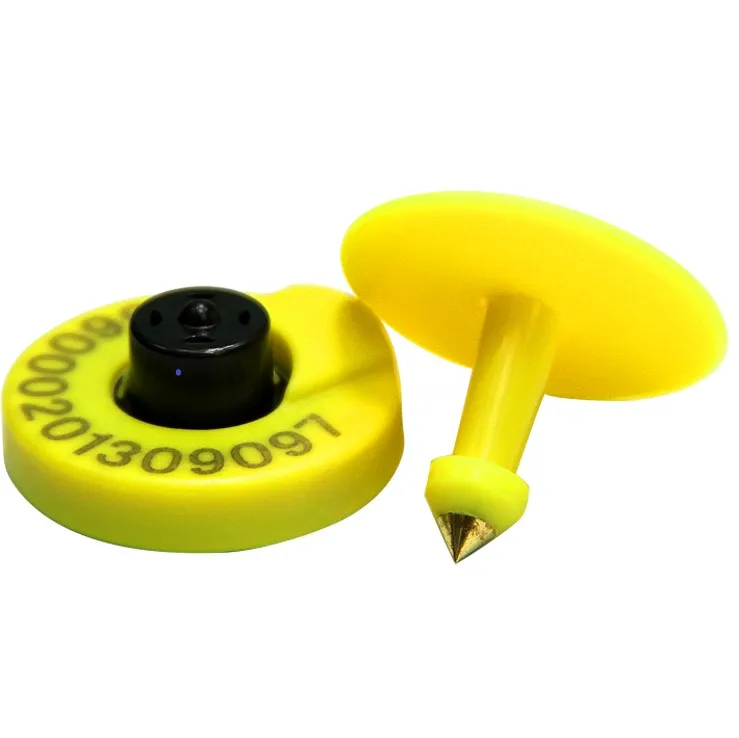
- Pashu Aadhaar, for livestock. According to a PIB research note of January 2026, a unique 12-digit bar-coded tag ID in the form of an ear tag is being issued to all livestock animals under the National Digital Livestock Mission, and this code is named Pashu Aadhar. It acts as the key for recording vaccination, breeding and treatment. The same note mentions RFID bull tags at semen stations, which shows where RFID does appear in the dairy system. Where a scheme or cooperative specifies an electronic animal tag, our livestock ear tag guide covers the 134.2 kHz standard, and the tags themselves are in animal and pet RFID tags.
- Battery Pack Aadhaar, for EV batteries. MoRTH's draft guideline gives each battery pack an alphanumeric ID marked as text and a QR code; as our Battery Pack Aadhaar guide explains, the draft does not mandate RFID, although manufacturers may add it on the production line.
How to check a card yourself
- Use an NFC phone. Turn NFC on and hold the card flat against the back of the phone. A bank, metro or 13.56 MHz office card will usually make the phone react; an Aadhaar PVC card will not.
- Remember what a phone cannot see. A phone reads only 13.56 MHz. It cannot detect 125 kHz proximity cards or UHF tags such as a FASTag, so "nothing happened" does not always mean "no chip".
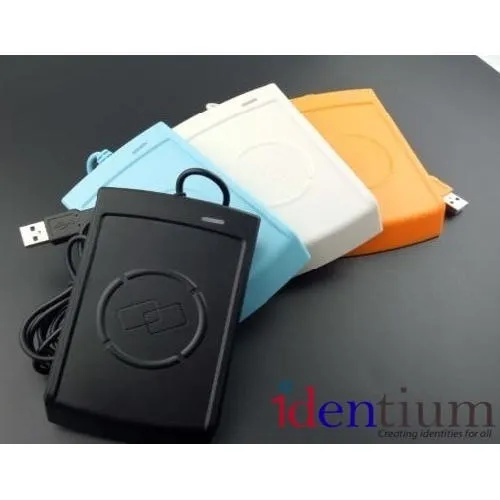
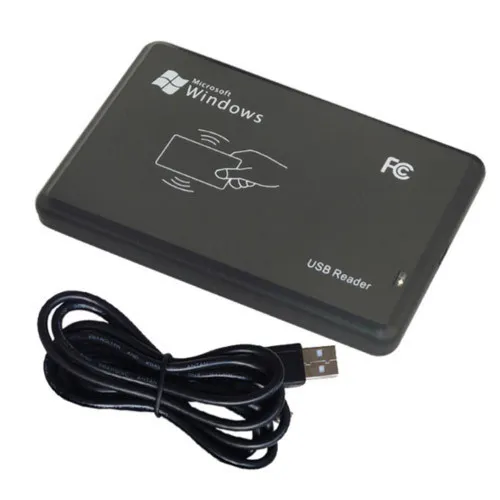
- For bulk checks, use a desk reader. Offices enrolling staff cards use a USB reader: the HRD20 (₹2,000 + GST) reads 13.56 MHz cards at 5–10 cm, and the IDTS-LFPPR (₹1,500 + GST) reads 125 kHz cards at 5–8 cm.
If you want a sleeve for the cards that do have chips, read our RFID blocking guide first: for most people the bank's own controls do more.
Sources
- UIDAI, myAadhaar: Order Aadhaar PVC Card (FAQ: What are the security features of Aadhaar PVC Card?; forms of Aadhaar), accessed 25 October 2026
- Passport Seva, Ministry of External Affairs: ePassport FAQ, accessed 25 October 2026
- Reserve Bank of India, circular RBI/2020-21/71, 4 December 2020: Card transactions in contactless mode, relaxation in requirement of Additional Factor of Authentication, accessed 25 October 2026
- Reserve Bank of India: FAQs on card transactions, accessed 25 October 2026
- PIB Research, 9 January 2026: Digitalizing India's Dairy Sector (Pashu Aadhaar, 12-digit bar-coded ear tag), accessed 25 October 2026
Cite as: India RFID Store (Identium Tech Solutions Pvt Ltd), “Is Your Aadhaar Card RFID? Which Indian Cards Use RFID/NFC”, https://www.indiarfidstore.com/rfid-resources/is-aadhaar-card-rfid-which-indian-cards-use-rfid-nfc, published 25 Oct 2026.
Frequently asked questions
Does the Aadhaar card have an RFID chip?
Does the Aadhaar PVC card work with NFC?
What is the QR code on the Aadhaar card for?
Which Indian cards have an RFID or NFC chip?
How do I know if my passport is an e-passport?
Is the Pashu Aadhaar ear tag an RFID tag?
AadhaarE-PassportNFCContactless CardsConsumer Guide
Keep reading
More guides
 Is RFID Blocking Necessary? An RFID Maker's Honest Guide to E-Passports, Contactless Cards and Wallets in India9 min read
 Pet Microchips in Chennai: The Rs 10,000 Abandonment Fine, Scanners in 40 Vehicles and ISO 11784 Chips Explained11 min read
 Why Your Zudio, Westside or Decathlon Clothes Carry an RFID Tag, and What Garment Vendors Supply9 min read
More in Technology explained
- UHF Tag Memory: EPC, TID, User Memory, Lock & Reuse
- RFID vs BLE vs UWB vs GPS: Which Tracking Tech to Use
- 10 Things People Get Wrong About RFID in India
- NFC Tag Detected on Your Phone: Meaning & How to Use It