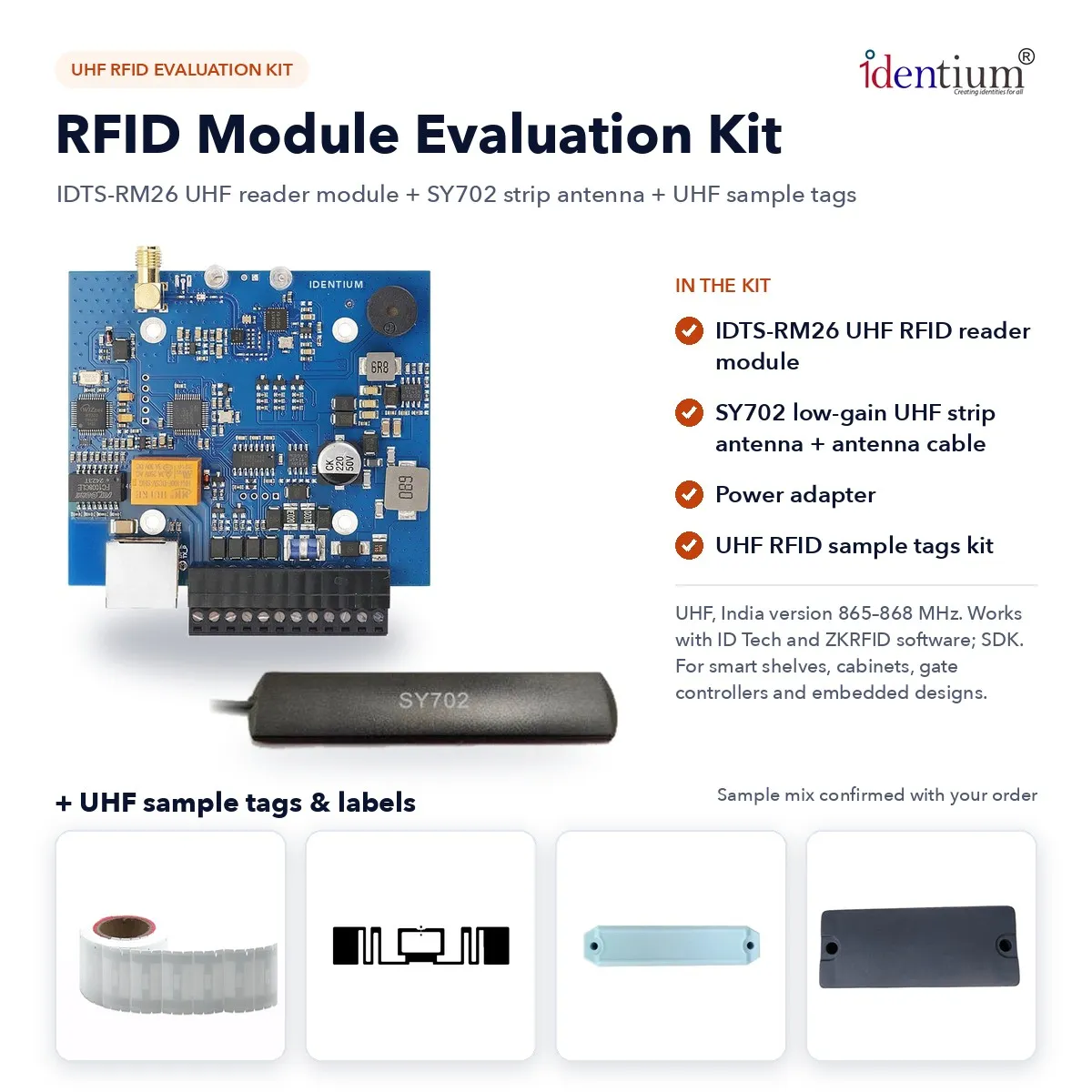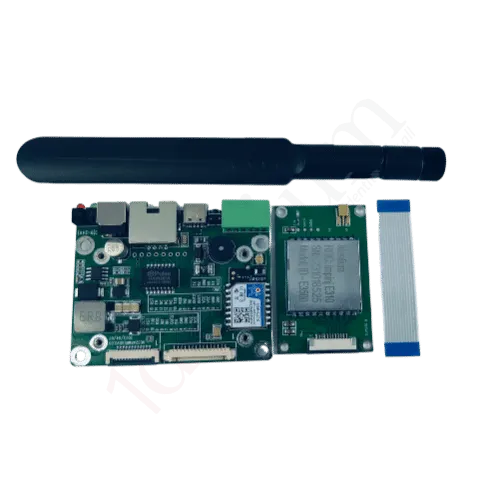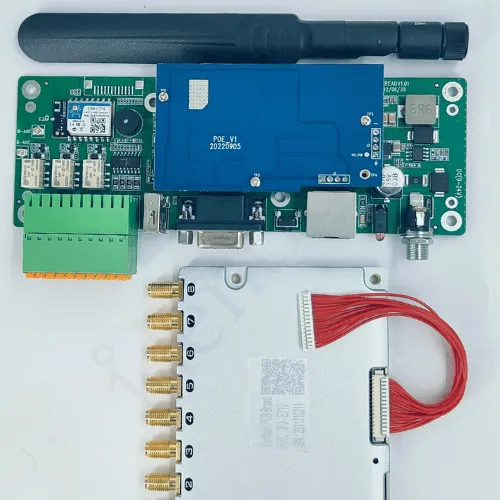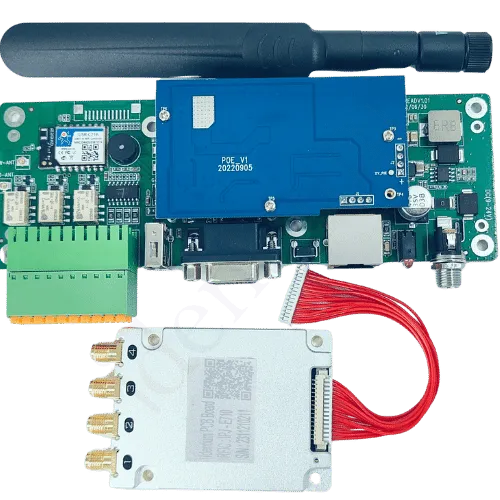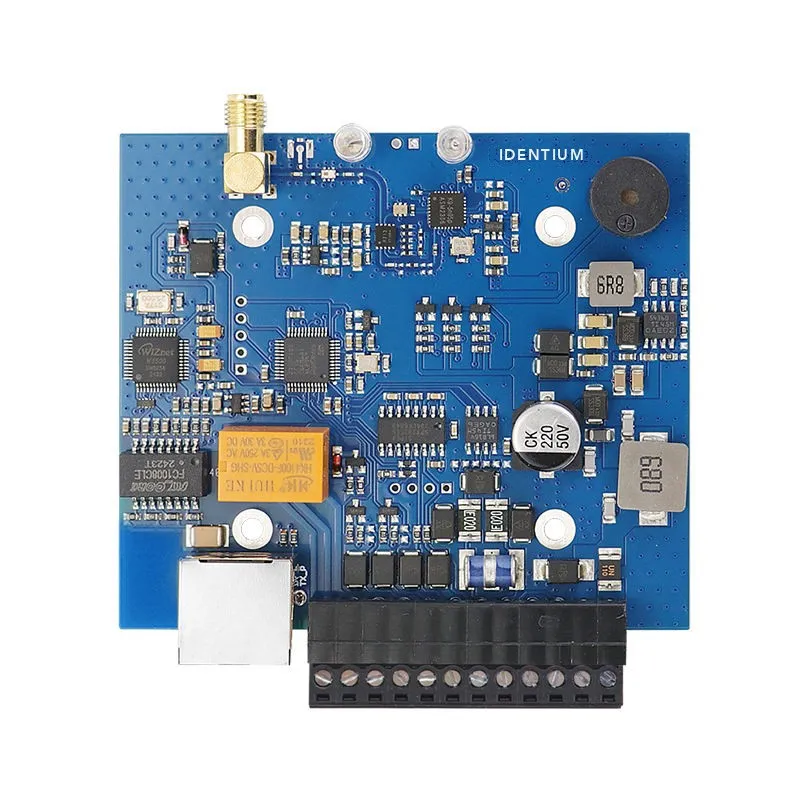
IDTS-RM26
UHF RFID Reader Module IDTS-RM26 (Ethernet, RS485, Wiegand, Relay)
Price on request
Per piece
Shop by category
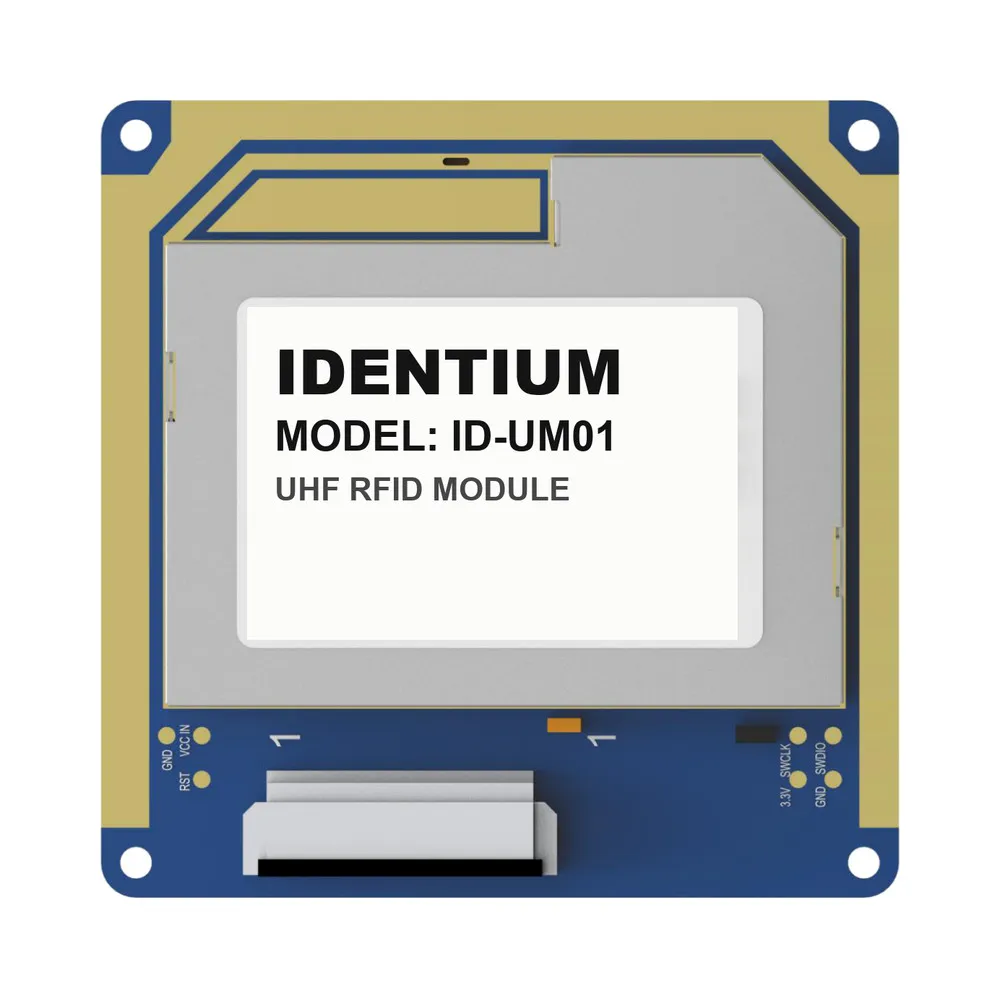
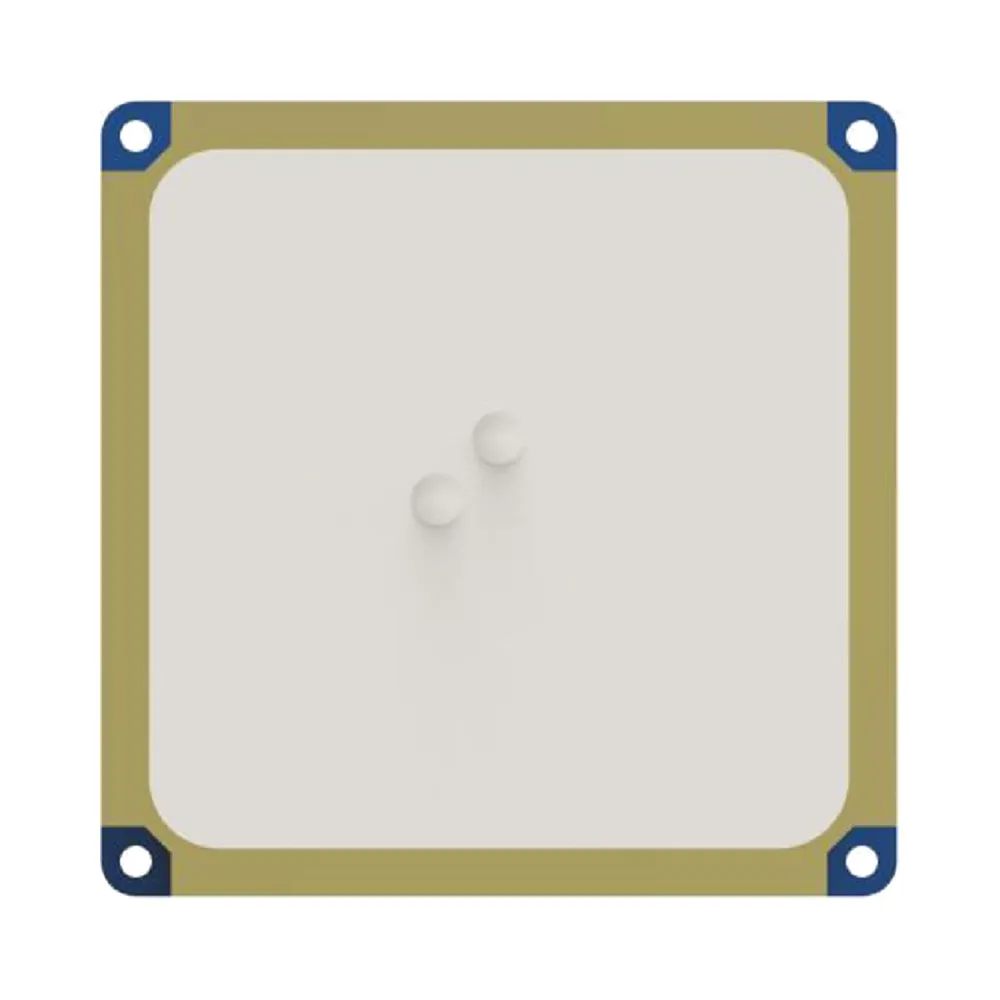
A 45.5 mm square UHF RFID reader module with its 2.5 dBi ceramic antenna built in, for engineers embedding UHF reading in handheld terminals, desktop encoders, kiosks and portable devices. E310 chip, 5–33 dBm output, over 350 tags/s peak, UART and GPIO.
Price on request
Min. order 1 pieceThe final price for your quantity is confirmed in the quote
Sold by India RFID Store, the online catalogue of Identium Tech Solutions Pvt Ltd, an RFID manufacturer in New Delhi, India, in business since 2010.
Key features
The ID-UM01 is a UHF RFID reader module with its antenna built in: a 45.5 × 45.5 × 9.3 mm assembly carrying an E310 reader chip and a 2.5 dBi ceramic patch antenna, so your device needs no external antenna, coax or RF connector. It reads EPC Gen2 tags at a peak rate of over 350 tags per second and at over 4 m, depending on the tag and its surroundings, and takes commands over UART. It is sold from 1 unit (price on request); ask us for evaluation samples and SDK access.
It is made to be built into handheld terminals, desktop encoders, all-in-one readers, kiosks and portable devices for warehousing, logistics, production-line and inspection work. An anti-collision algorithm identifies moving or stationary tags, and carrier cancellation keeps it stable in electrically noisy places. It reports RSSI and phase per tag, inventories temperature-sensing tags and buffers up to 1,000 tags.
There is no antenna to source and no coax to route. A patch antenna reads mainly from its face, so keep that face behind plastic, clear of metal, batteries and displays, and route inter-board cabling close to ground and away from the antenna. The trade-off is reach: over 4 m suits a handheld, encoder or kiosk, while a dock door, a gate lane or several read zones need a reader with antenna ports.
The hardware covers 860–960 MHz, which includes India's 865–868 MHz band. One regional profile is active at a time, preset before dispatch or set by command; profiles include India, Europe, North America, Japan, Korea, Vietnam and China. Output is adjustable from 5 to 33 dBm in 1 dB steps, with 30 dBm the maximum on the regional builds for India, Europe, the US, Japan, Korea and Vietnam. Use EPC Gen2 tags tuned for the same band from the UHF RFID tags range.
SDKs for Windows, Linux and Android, with C, C#/.NET and Java APIs, let one module serve a Windows encoder, a Linux kiosk or an Android handheld.
When you order, confirm the destination market, the band and any radio type-approval your product needs. For evaluation samples, SDK access or integration support, request a quote.
For Ethernet, RS485 or Wiegand with an external antenna, see the IDTS-RM26 and the other UHF RFID reader modules.
Also consider the UHF RFID reader module, UART, 865–868 MHz, a generic development module for microcontroller prototypes.
| Model | ID-UM01 |
|---|---|
| Type | UHF RFID reader module with integrated antenna, for embedding in your own device |
| Chip | Impinj E310 |
| Processor | ARM Cortex-M4 (32-bit) with FPU, MPU and DSP, up to 200 MHz, 512 KB flash |
| Protocol | EPCglobal UHF Class 1 Gen 2 (ISO 18000-6C) |
| Frequency | Hardware covers 860–960 MHz, which includes India's 865–868 MHz band; one regional profile active at a time, preset before dispatch or set by command; confirm the band with your order |
| Regional profiles | India 865–868 MHz, Europe 865–868 MHz, North America 902–928 MHz, China 920–925 MHz, Vietnam 918–923 MHz, Japan 916–921 MHz, Korea 917–921 MHz, open 860–960 MHz; others within 860–960 MHz on request |
| Frequency step | 250 / 500 kHz; frequency error ±10 ppm at 25 °C |
| Operating mode | Fixed frequency or frequency hopping, selectable |
| Output power | 5–33 dBm (±1 dB), adjustable in 1 dB steps; 30 dBm maximum on the regional builds for India, Europe, the US, Japan, Korea and Vietnam |
| Power flatness | ±1 dB; accuracy −2 to 0 dB |
| Receive sensitivity | −73 dBm at 10 % BER |
| Adjacent channel leakage | −45 dB (1st adjacent), −65 dB (2nd adjacent) |
| Spurious emissions (conducted) | −60 dBm 2nd harmonic, −50 dBm 3rd harmonic |
| Antenna | Integrated ceramic patch, 2.5 dBi; no external antenna, cable or connector needed |
| Read range | Over 4 m with the integrated antenna; depends on the tag and its surroundings |
| Peak inventory rate | Over 350 tags/s |
| Tag buffer | 1,000 tags at 96-bit EPC |
| Tag data | RSSI and phase per tag; temperature-tag inventory supported |
| Measurement accuracy | Tag RSSI ±3 dB and phase ±5° at −60 dBm; module temperature ±4 °C |
| Interface | UART (TTL), 9600–921600 bps; default 115200 bps, 8N1 |
| GPIO | 2 inputs and 2 outputs, 3.3 V TTL |
| Connectors | 12-pin FFC/FPC, 1.0 mm pitch, bottom-contact drawer type (full interface); 5-pin harness connector, 1.25 mm pitch, optional (power and UART only) |
| 12-pin FPC pinout | 1 VCC, 2 VCC, 3 GND, 4 GND, 5 EN, 6 OUT2, 7 IN1, 8 IN2, 9 RXD, 10 TXD, 11 RST (active low), 12 OUT1 |
| 5-pin harness pinout | 1 GND, 2 EN, 3 RXD, 4 TXD, 5 VCC |
| Enable (EN) | HIGH = active; LOW = power-down; drive EN high to run, don't leave it unconnected |
| Start-up | About 100 ms after power-up; commands sent earlier are not answered |
| SDK | Windows, Linux and Android SDKs; C, C#/.NET and Java APIs |
| Desktop software | Works with Identium ReaderSense: configuration, live inventory, AISense tuning, Auto Mode HTTP POST |
| Supply voltage | 3.6–5.25 V DC |
| Consumption, peak | 6.5 W (1.3 A at 5 V) at 33 dBm; 5 W at 30 dBm |
| Consumption, standby | 0.85 W normal standby; 0.03 W low-power standby |
| Power-down | 0.25 mW |
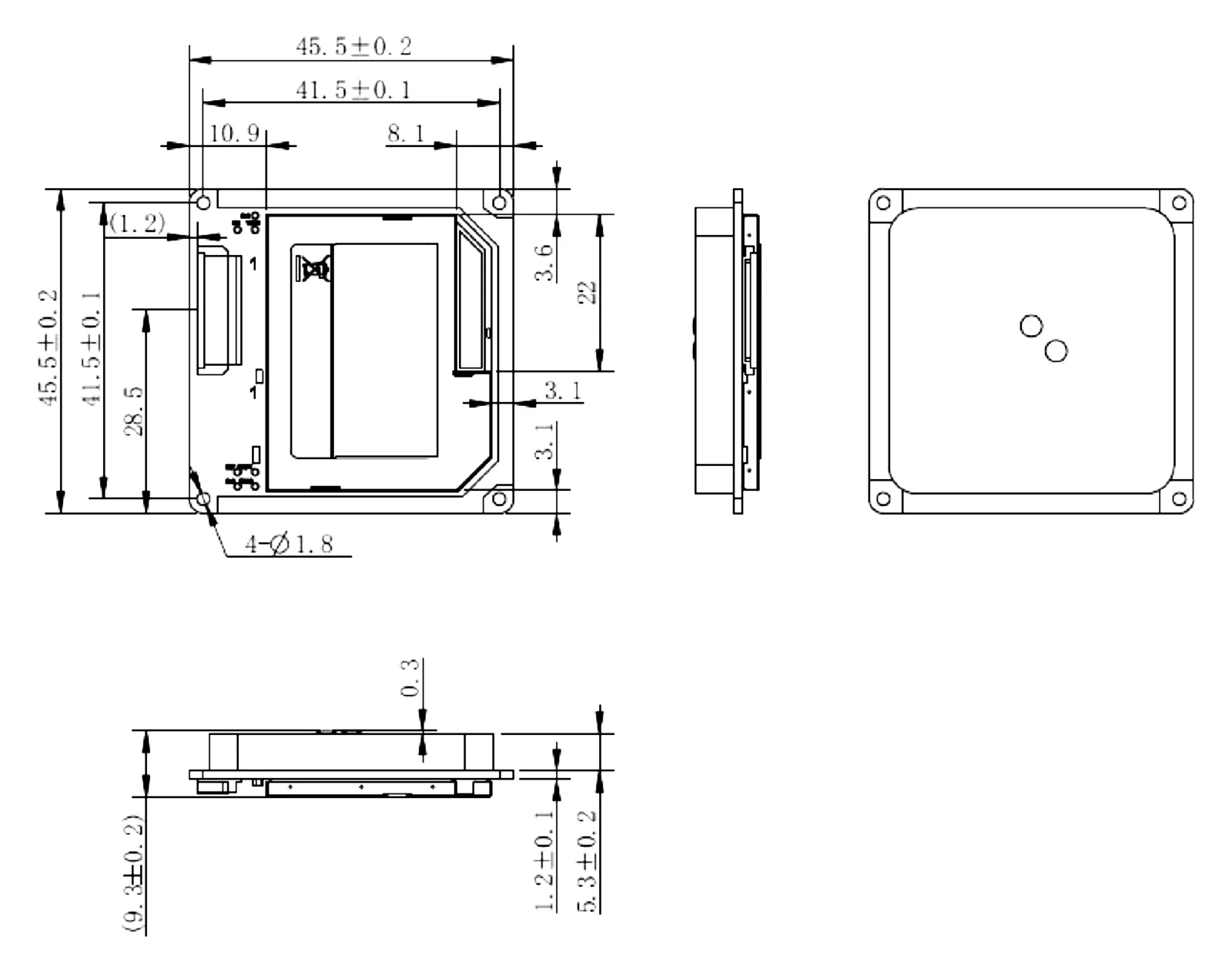
| Dimensions | 45.5 × 45.5 × 9.3 mm (L × W × H) |
| Mounting | 4 × Ø1.8 mm mounting holes |
| Weight | 39.2 g |
| PCB | FR4, gold plated |
| Shield | Stainless steel |
| Cooling | External heat sink, air cooled |
| ESD | ±2 kV contact discharge at the antenna port (IEC 61000-4-2 level 1) |
| Operating temperature | −25 °C to +65 °C |
| Storage temperature | −40 °C to +85 °C |
| Humidity | 5–95 % RH, non-condensing at +25 °C |
4 downloads for the ID-UM01.
Buying guides
IDTS-RM26
Price on request
Per piecePrice on request
Per pieceRM26-EVK
₹9,999 + GST
Per pieceIDBOT
Product finder & instant answers