

PoE Injector, IEEE 802.3at (30 W), Gigabit, for RFID Readers
A single-port IEEE 802.3af/at injector that puts up to 30 W of power onto the Ethernet cable so a PoE-capable RFID reader needs no mains socket at the read point. Gigabit data passes through unchanged. Use it when the network switch does not supply PoE itself.
Price on request
Min. order 1 pieceThe final price for your quantity is confirmed in the quote
- 7-day replacement · 1-year warranty against manufacturing defects
- Blue Dart next-day delivery
Key features
- IEEE 802.3af/at (PoE+), up to 30 W at the injector, 48–56 V DC on the cable, typical for the class
- 10/100/1000 Mbps data pass-through
- One data-in port and one data-plus-power out port (RJ45)
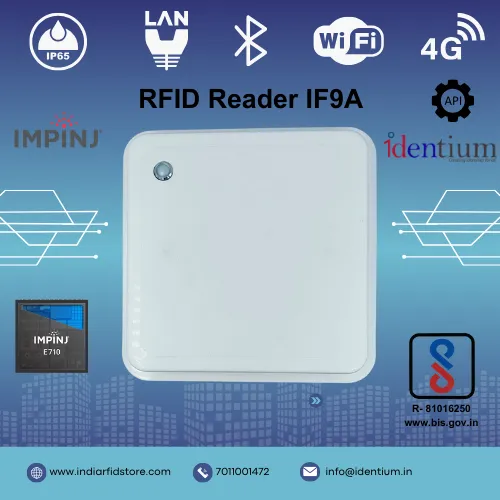
- Powers the PoE readers listed here: IF9A, ICL4P, HRW560, PoE IHZ4, EA500
- Up to 100 m of Cat5e or better cable to the reader, typical for the class
- Standard
- IEEE 802.3af/at (PoE / PoE+)
Overview
Powering a reader over its network cable
A reader with a PoE port draws its power from the same Ethernet cable that carries its data, so a dock door, gantry or ceiling position needs one cable instead of a cable and a mains socket. The injector sits between an ordinary switch and the reader: the switch's cable goes into the data port, and the cable to the reader comes out of the data-plus-power port with up to 30 W on it, typical for the IEEE 802.3at class. Gigabit traffic passes through unchanged.
Readers it suits
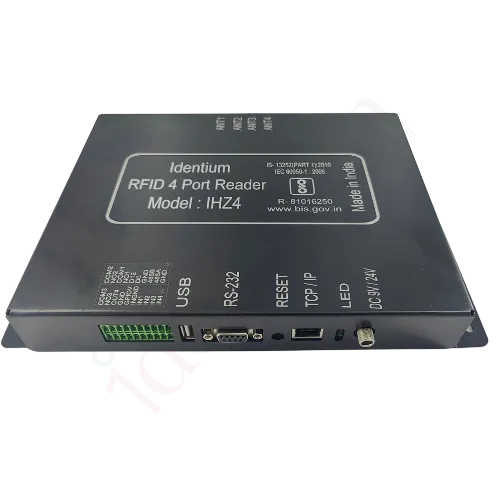
Our products that list PoE in their specifications include the IF9A integrated reader, the ICL4P 4-port board, the HRW560 HF/LF IP reader, the PoE IHZ4 multi-port reader and the EA500 ceiling array reader, whose page recommends 802.3at. Check the PoE class in the reader's own spec row: an 802.3at injector also powers an 802.3af device, but an 802.3af injector cannot power a reader that needs the higher class.
Installing it
Keep the total cable length from the injector to the reader within 100 m of Cat5e or better, typical for the class, and place the injector where it has a mains socket and ventilation, such as the network rack. One injector powers one reader; for several PoE readers a PoE switch is usually simpler. Request a quote with the reader model, and we confirm the match before shipping. More cables and mounts are under RFID accessories.
Where to use the PoE Injector, IEEE 802.3at (30 W), Gigabit, for RFID Readers
- Readers at dock doors without a mains socket
- Ceiling readers
- Gate and lane readers
- Small sites without a PoE switch
Specifications
Datasheet (PDF)| Standard | IEEE 802.3af/at (PoE / PoE+) |
|---|---|
| Output | Up to 30 W at the injector; 48–56 V DC on the cable, typical for the class |
| Data | 10/100/1000 Mbps pass-through |
| Input | 100–240 V AC |
| Ports | 1 × data in (RJ45), 1 × data + power out (RJ45) |
| Cable | Cat5e or better, up to 100 m to the powered device, typical for the class |
| Mounting | Desk or wall; typical for the class |
Frequently asked questions
Do I need 802.3af or 802.3at for the IF9A?
Can one injector power two readers?
Does the injector work with a 100 Mbps reader?
Related products


Retractable Badge Reel for RFID Access Cards
Price on request
Min. order 500 pcs
ID Card Holder with Lanyard for RFID Cards (CR80, Vertical / Horizontal)
Price on request
Min. order 500 pcs