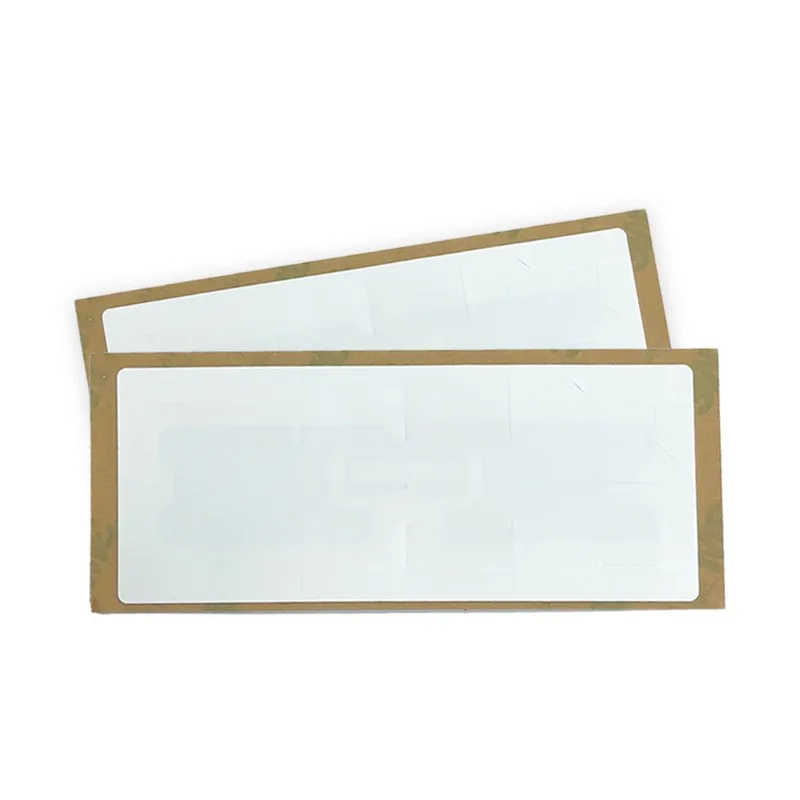
UHF RFID Car Windshield Label 2294-U9 (NXP UCODE 9)
A UHF RFID windshield label on the NXP UCODE 9 chip for identifying cars and other vehicles at boom barriers, parking entries and yard gates, read at up to 6 m by a lane reader.
- Model:
- ID-2294
- Brand:
- Identium
- Chip:
- NXP UCODE 9
- Protocol:
- EPC Gen2 / ISO 18000-6C
- Frequency:
- 860–960 MHz (covers India 865–868 MHz)
- Read range:
- Up to 6 m (depends on reader, antenna and lane set-up)
- Datasheet:
- PDF · 94 KB
- Listing updated:
₹7
per piece + 18% GST
Min. order 500 piecesThe final price for your quantity is confirmed in the quote
- 7-day replacement · 1-year warranty against manufacturing defects
- Blue Dart next-day delivery
- Samples ₹250 (1–2 pcs, incl. shipping) · request a sample of this label
Sold by India RFID Store, the online catalogue of Identium Tech Solutions Pvt Ltd, an RFID manufacturer in New Delhi, India, in business since 2010.
Key features
- NXP UCODE 9 chip, EPC Gen2 / ISO 18000-6C
- Made for vehicle and heavy-asset identification at gates
- Read range up to 6 m, depending on reader antenna and lane set-up
- Thin, flexible substrate that follows windscreen curvature
- 860–960 MHz response, covering India's 865–868 MHz band
- Works with standard UHF RFID readers and printers
Overview
RFID car windshield label for gate and parking access
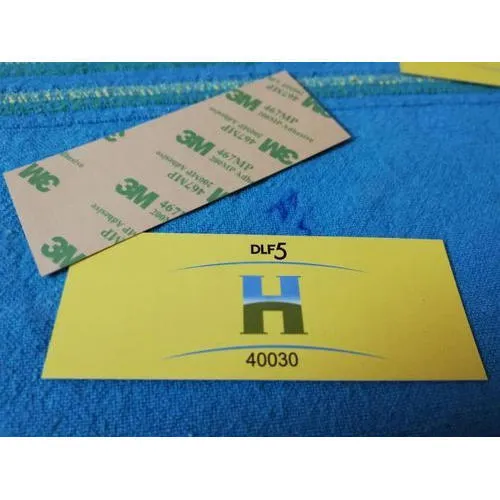
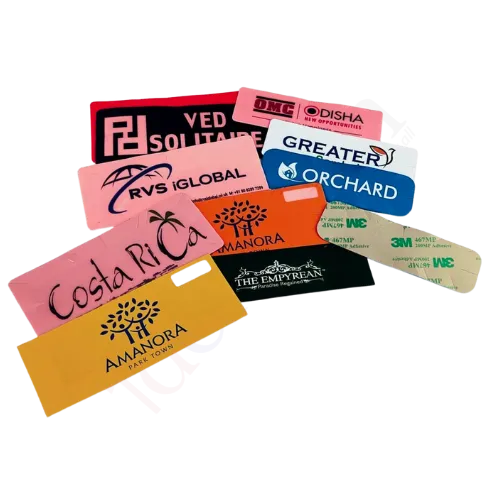
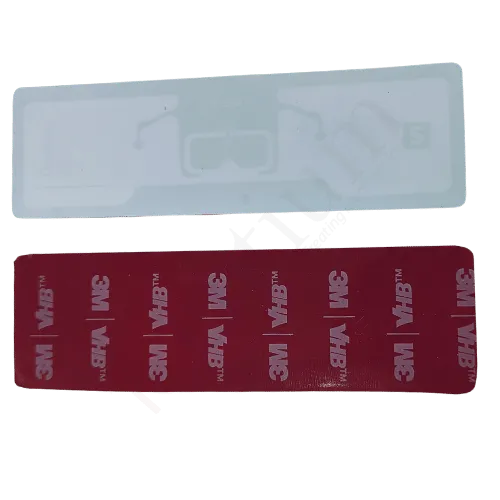
The 2294-U9 is a UHF RFID label for vehicle identification, built on the NXP UCODE 9 chip. Fixed to the windscreen, it is read by a UHF reader at the lane from up to 6 m, so a boom barrier can open for registered vehicles without the driver showing a card or the guard filling in a register.
Typical sites
- Housing societies and gated townships separating resident and visitor cars
- Office campuses and hospitals managing staff parking
- Factory and warehouse gates logging trucks, often alongside weighbridge software
- Bus and fleet depots recording vehicle entry and exit
Fitting and lane set-up
- Register. Record each label's unique ID against the vehicle number and owner in your access or parking software.
- Fit. Clean the inside of the glass, then press the label on high up on the windscreen, clear of tint bands and the dashboard.
- Test. Drive a few vehicles through the lane. Solar-control glass with a metal layer can block UHF, so try such cars before a full rollout.
A pole-mounted integrated UHF reader facing the traffic is the usual lane reader. If labels must break when someone peels them off, see the tamper-proof windshield label.
Where the ID-2294 is used
- Housing society gates
- Campus staff parking
- Factory truck gates
- Fleet depot entry
- Weighbridge vehicle ID
- Monthly parking passes
Specifications
Datasheet (PDF)| Chip | NXP UCODE 9 |
|---|---|
| Protocol | EPC Gen2 / ISO 18000-6C |
| Frequency | 860–960 MHz (covers India 865–868 MHz) |
| Read range | Up to 6 m (depends on reader, antenna and lane set-up) |
| Form factor | UHF RFID windshield label |
| Material | Thin, flexible substrate; RoHS-compliant materials (maker's declaration) |
| Mounting | Inside of the vehicle windscreen |
| Compatible with | Standard UHF RFID readers and printers |