RFID File Tracking System for Offices & Record Rooms
A complete RFID system for tracking physical files and documents. Tagged files are logged automatically as they leave or enter a room, a handheld reader finds a specific file on the shelf, and cloud software keeps every movement on record.
- Brand:
- Identium
- Frequency:
- UHF, 865–868 MHz (India)
- Protocol:
- EPC Gen2 / ISO 18000-6C
- Datasheet:
- PDF · 176 KB
- Listing updated:
₹1,50,000
per piece + 18% GST
Min. order 1 pieceThe final price for your quantity is confirmed in the quote
- Quoted per project
Sold by India RFID Store, the online catalogue of Identium Tech Solutions Pvt Ltd, an RFID manufacturer in New Delhi, India, in business since 2010.
Key features
- UHF RFID tag on each file or folder
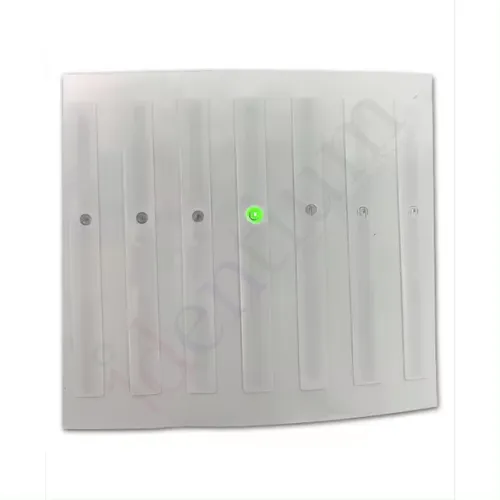
- Fixed readers at capture points log every file out and in
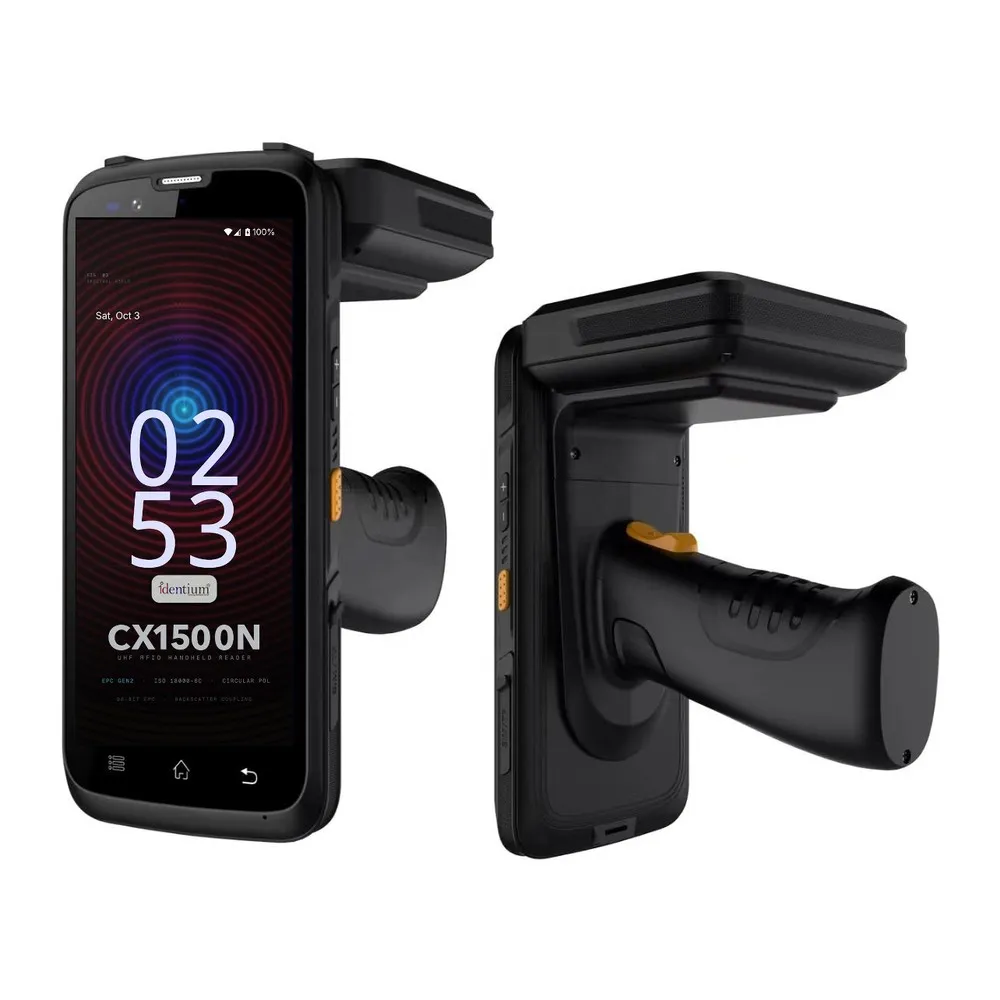
- Handheld reader pinpoints a specific file inside the room
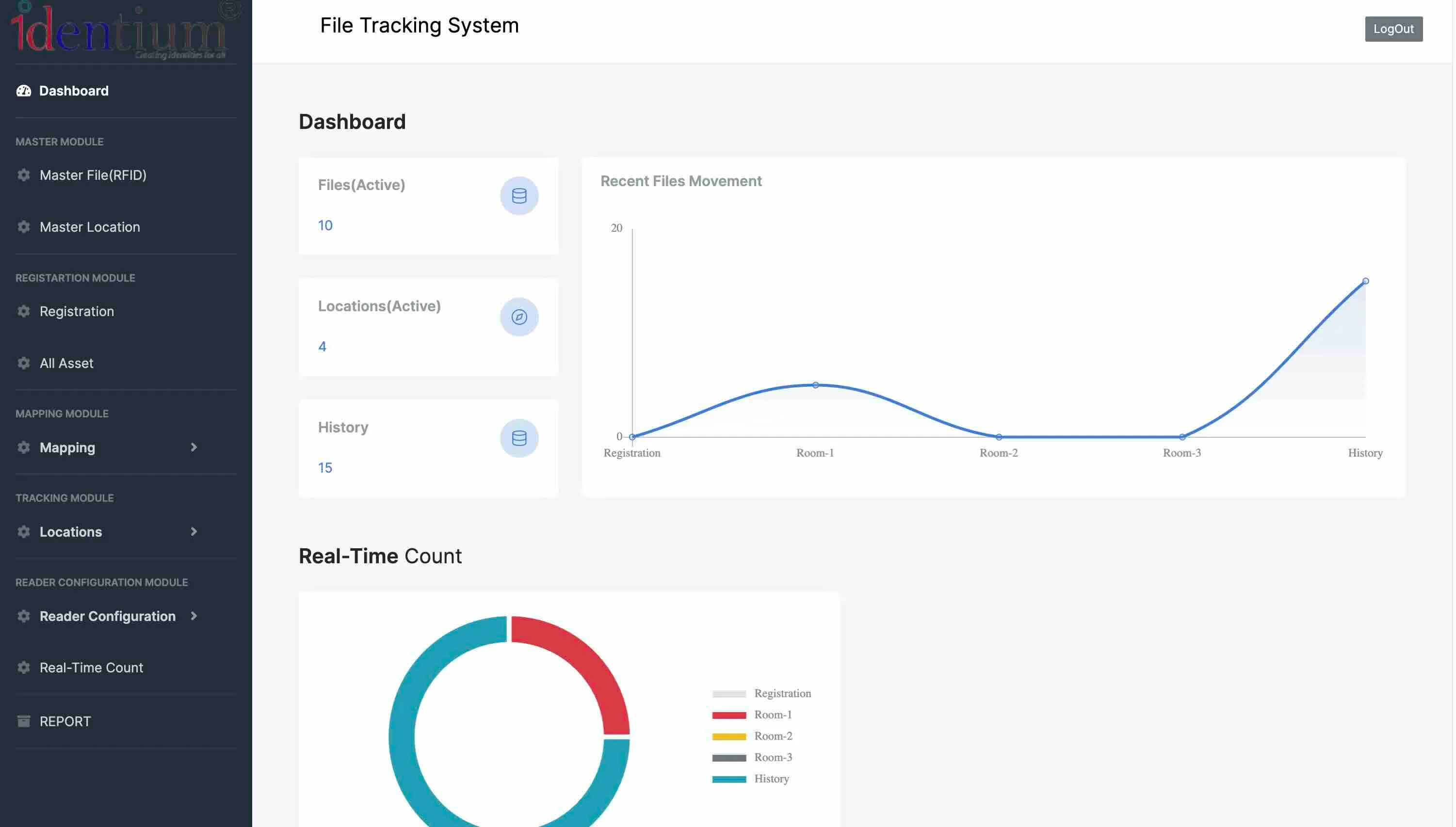
- Cloud-based software shows where each file was last recorded
- All movement records stored digitally, replacing the paper register
- Sized to your number of files, capture points and handhelds
Overview
How the RFID file tracking system works
Files go missing when nobody records who took them. This RFID file tracking system tags every physical file and reads it automatically as it moves, so the movement register keeps itself.
- Tag the files. Each file or folder gets a UHF RFID tag, linked in the software to its file number.
- Log movement at capture points. Fixed readers at identified capture points record a file whenever it is taken out of a room or put back.
- Find it on the shelf. The cloud-based software shows where a file was last recorded, and a handheld reader then pinpoints the exact tag in that room.
- Keep the history. Every movement is stored digitally, so there is no paper register to sign or lose.
Where file tracking pays off
Any office where a missing file holds up work: government departments and record rooms, courts and registry offices, bank and NBFC loan file custody, hospital medical records departments, and legal or HR archives. Government offices planning a record-room clean-up can read our guide to RFID file tracking in government offices.
Planning the installation
- Choose capture points carefully. Put fixed readers at the doorways and issue counters that files actually pass through, not on every wall.
- Watch out for steel. Steel almirahs and compactor racks affect UHF reads, so place the tag on the cover or spine and keep it clear of metal where possible.
- Encode what you already use. Linking each tag to the existing file number means searches match your current register.
- Search at walking pace. Handheld sweeps along dense shelves read best when done slowly.
What decides the cost
The system is sized to your site: the number of files to tag, the number of capture points that need fixed readers and the number of handheld readers for searching. Handheld options are listed under RFID handheld readers.
Where to use the RFID File Tracking System for Offices & Record Rooms
- Government record rooms
- Courts & registry offices
- Bank loan file custody
- Hospital medical records
- Legal & HR archives
- Corporate document stores
Product videos
Specifications
Datasheet (PDF)| Tagging | UHF RFID tag on each file or document folder |
|---|---|
| Frequency | UHF, 865–868 MHz (India) |
| Protocol | EPC Gen2 / ISO 18000-6C |
| Capture points | Fixed RFID readers at identified capture points |
| File search | Handheld RFID reader to pinpoint a tag within a room |
| Software | Cloud-based; all records stored digitally |
| System sizing | By number of files, capture points and handheld readers |
Frequently asked questions
How does an RFID file tracking system work?
Can we find the exact location of a file?
Where should the tag go on a file?
Can the system use our existing file numbers?
What does an RFID file tracking system cost?
Used in these RFID solutions