RFID Pilgrim Tracking in India: Amarnath Yatra Cards, Char Dham Route Readers and Kumbh Wristbands Explained
Published 6 Sept 2026Updated 12 Oct 20268 min read
Short answer: RFID pilgrim tracking in India has settled into three patterns: an identity card issued after e-KYC (the Amarnath Yatra 2026 model in Jammu), tags read at checkpoints along a route (announced for Char Dham in 2026 on an NDMA recommendation), and entry/exit wristbands that give a live headcount inside a venue (the published plan for Maha Kumbh 2025). Each needs a different credential, reader type and data path into the command centre, and that choice belongs in the tender, not the deployment week.
This guide is for shrine boards, disaster-management authorities, district and mela administrations, and the integrators who bid for their crowd-safety contracts. It is a deployment explainer, not a regulatory notice. Of the three patterns, only the Amarnath 2026 card issuance is reported as having taken place; the Char Dham route readers were announced and the Kumbh wristbands were a published plan.
Why has pilgrim tracking moved from registration lists to live monitoring?
Registration says how many people intend to travel, not how many are on a road or at a ghat right now. RFID closes that gap by turning each registered pilgrim into a timestamped read at a fixed point.
The approach has been recommended at national level. In a meeting with State Disaster Management Minister Madan Kaushik, reported on 11 April 2026, the NDMA recommended that RFID tags be issued to all pilgrims, citing the Amarnath Yatra as the precedent, so that registration data becomes a live system with "real-time tracking of devotees" (The Statesman, 11 April 2026).
How does the Amarnath Yatra 2026 RFID card work?
At Amarnath in 2026, on-the-spot registration and RFID card issuance began in Jammu ahead of the yatra. Token holders underwent e-KYC and RFID registration the day after token issuance, so the credential is tied to a verified identity, not a booking reference.
The flow is two-stage (token one day, e-KYC and RFID registration the next), which spreads the crowd across two days but means each pilgrim is handled twice. Token issuance was distributed across 18 counters in Jammu district, with 1,600 tokens on the opening day, ahead of a yatra that ran from 3 July to 28 August 2026 (DD News, 1 July 2026).
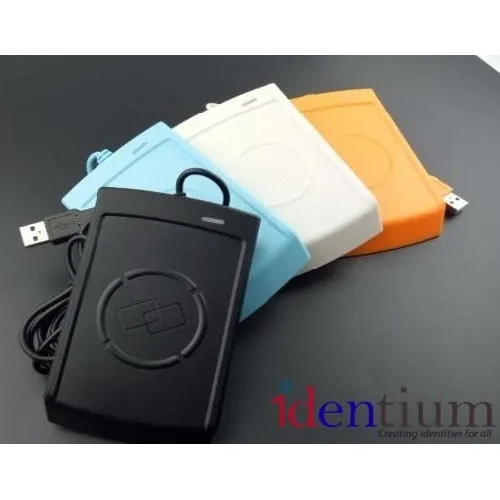
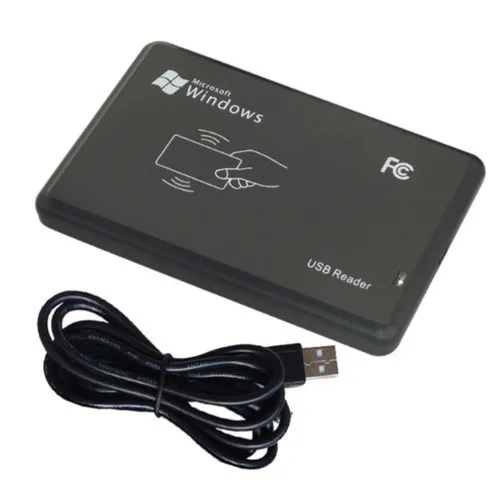
Because the reported flow separates token counters from next-day registration, plan card printing and encoding capacity, including a desktop reader at each desk (HF or UHF, to match the card), for the registration stage, not the token stage.
What has Char Dham announced with route readers?
Uttarakhand's announced approach for the Char Dham season that opened in April 2026 would add the missing half of that model: readers in the field. The state said it would issue RFID tags to pilgrims and install readers along the routes to the shrines, so a pilgrim becomes a movement record rather than a one-time database entry.
ANPR cameras are to track vehicles, and AI analysis of CCTV is intended to estimate pilgrim numbers at specific locations. RFID is the layer that would return an identified, auditable count, so everything rests on where the checkpoints sit.
How are Kumbh wristbands meant to produce a live headcount?
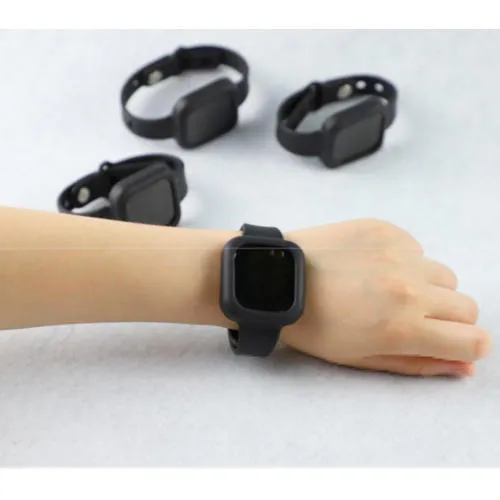
The Kumbh pattern asks a different question: occupancy, not identity. Reporting published ahead of Maha Kumbh 2025 (13 January to 26 February 2025), planned for a scale beyond 400 million expected visitors, described wristbands that would record entry and exit times through RFID readers positioned throughout the venue (IDTechWire, 31 December 2024).
Entry minus exit works only if read points are paired and unavoidable; a ghat with three approach lanes and one unmonitored gap will drift, and the error only grows. This is where RFID gate readers and correctly aimed antennas earn their cost: cover the full opening, not the headline range.
How do the three patterns compare?
| Pattern | Indian example | Credential | Reader placement | What the command centre gets |
|---|---|---|---|---|
| e-KYC-linked ID card | Amarnath Yatra 2026, Jammu | RFID card issued after e-KYC | Issuance counters (reader placement not reported) | Verified identity, issuance audit trail |
| Route checkpoints | Char Dham 2026, Uttarakhand (announced) | RFID tag issued to pilgrims | Along the routes to the shrines | Intended: movement between points, live tracking |
| Entry/exit headcount | Maha Kumbh 2025, as planned | Wristband | Throughout the venue | Entry and exit times |
Card or wristband: which credential should an authority issue?
Choose by wear duration and by whether a person must verify the holder visually. A multi-week yatra with identity checks wants a printed photo card on a lanyard; a dense mela wants a band that cannot be swapped between people. The table below is framed around the pilgrimage duty cycle (multi-week wear, water exposure at ghats and issuance at scale) rather than event use.
| Credential | Best for | Wear duration | Watch-outs |
|---|---|---|---|
| PVC/PET card, HF | Identity-first issuance, staff passes | Weeks, on a lanyard | Needs a tap; gets pocketed |
| PVC/PET card, UHF | Hands-free checkpoint reads | Weeks, on a lanyard | Body-shadowing; specify the read zone |
| Tyvek wristband | Single-day headcount, high volumes | Hours to a few days | Lowest cost; not for weeks of wear |
| Fabric wristband | Multi-day passes, staff and vendors | Days to weeks | Needs a locking clasp |
| Silicone wristband | Reusable zone passes, water exposure | Across seasons | Needs cleaning between uses |
India RFID Store sells both sides of that decision: RFID cards in HF and UHF, and RFID wristbands, including disposable and silicone bands. A pilot can test two credential types on one reader estate.
HF tap or UHF hands-free at pilgrim checkpoints?
HF is the tap-to-read family used in access and transit cards: near-touch distance and deliberate presentation, which is a feature at an issuance desk. UHF reads across a lane without cooperation, which is what makes hands-free headcount possible. It also means a pilgrim can be read while walking past a gate they never entered, unless the antenna pattern is shaped to the lane.
In India, passive UHF RFID runs in the 865–868 MHz band, licence-exempt under G.S.R. 853(E) of 2021; HF runs at 13.56 MHz. Allocations and certification rules change, so verify the current position with WPC/DoT and BIS, and ask for each reader model's type-approval evidence, before writing a specification.
Where do readers go on a mountain route versus a crowded ghat?
The two environments fail in opposite ways. A route has few people at any one point but little power, no shelter and long gaps between checkpoints; a ghat has enormous instantaneous density but short distances and good infrastructure.
| Environment | Read point | Practical constraint | Typical hardware |
|---|---|---|---|
| Mountain route | Transit halt, base camp, shrine approach | Power and backhaul; rain, cold, dust | Integrated reader with inbuilt antenna, rugged enclosure, buffering |
| Dense ghat or gate | Paired entry and exit lanes | Every lane covered, or the count drifts | Gate or portal readers, external antennas, lane dividers |
| Issuance counter | e-KYC desk, card encoding | Throughput drives queue length | Desktop reader plus card printer per counter |
At fixed points, portal geometry matters more than headline range; see our RFID gate, portal and tunnel reader guide before you fix lane layouts. For the roaming layer, a Bluetooth UHF sled paired to a volunteer's own phone turns them into a mobile verification point; see the handheld RFID readers range.
How does RFID link to e-KYC and lost-person reunification?
The tag should carry an ID number and nothing else. Names, photographs and e-KYC records belong in the authority's database, resolved from that ID over an authenticated connection, so a dropped wristband never becomes a data breach.
Reunification is where that pays back publicly. A separated child or elderly pilgrim carrying a numbered credential is resolved at a help desk with a handheld, giving the registered contact and the last known read point. Design the desks and escalation path before the hardware, and print a human-readable serial on every credential.
Are other temple bodies planning the same thing?
At the planning stage, yes. Tirumala Tirupati Devasthanams' published AI plan describes a data layer aggregating real-time data from surveillance cameras, RFID trackers and ticketing systems (Deccan Chronicle, 13 December 2024). That is an architecture, not a deployment, so ask any bidder to name the site where their system runs.
What should a Simhastha 2027 specification contain?
Planning for Simhastha 2027 at Nashik–Trimbakeshwar is under way. The Technical Advisory Committee met on 31 July 2026 at the NTKMA headquarters under the chairmanship of Deepankar Chowdhury (IIT Bombay), reviewing crowd management, disaster-risk reduction, surveillance, communication infrastructure, command-and-control and early-warning mechanisms, with site visits to Ramkund, Panchvati, Kapila Sangam and Trimbakeshwar.
That review did not announce an RFID system: RFID headcount is a proven option, not a decision taken. The checklist below is a suggestion for an RFP.
- State the outcome, not the product: live occupancy per zone, with an auditable identity behind each count.
- Fix the credential class and wear duration, and the issue volume per counter per day.
- Specify the air interface: UHF EPC Gen 2 for hands-free points, HF/NFC for tap points, with type-approval evidence.
- Require paired entry and exit read points at every zone boundary, each named in the bill of quantities.
- Set field-hardware floors: local buffering with resync when backhaul drops, plus IP rating, temperature range and mains-failure behaviour.
- Ask for throughput evidence: credentials encoded and printed per hour per counter, demonstrated, not claimed.
- Insist on a pilot at one ghat or route segment, with acceptance criteria and a disposal plan.
If your requirement is a ticketed event rather than a yatra (cashless wristband payments, fast gate entry, wristband material choices), our RFID for events and festivals guide covers that side.
What does it cost, and how should an authority phase it?
Credential cost is driven by volume and material: Tyvek is the lowest-cost option at mela volumes, while cards and silicone bands cost more and vary with personalisation. Readers are a fixed asset that amortises across seasons; a portal installed for one mela serves the next yatra.
Ask for pricing as a matrix of volume bands against credential type, pilot one zone, measure count drift against a manual audit, then scale. India RFID Store, run by Identium Tech Solutions in New Delhi, supplies credentials, readers and printers, so both can be quoted together.
Planning a pilgrim-tracking or crowd-safety deployment? Send your zone map, expected pilgrim volume and number of issuance counters, and we will quote credentials and checkpoint hardware against it. Start with bulk RFID orders, or request samples of two credential types.
Frequently asked questions
Is an RFID card compulsory for the Amarnath Yatra?
Will Simhastha Kumbh 2027 use RFID wristbands?
What is the difference between the Char Dham and Amarnath approaches?
Should we use UHF or HF for a pilgrim credential?
Can RFID help reunite lost pilgrims with their families?
What happens to the pilgrim data after the yatra ends?
RFID pilgrim trackingAmarnath Yatra RFIDChar Dham RFIDKumbh RFID wristbandcrowd managementSimhastha 2027RFID cardsgate readers