

UHF RFID Inlay Label ID-1470-UCODE (14 × 70 mm)
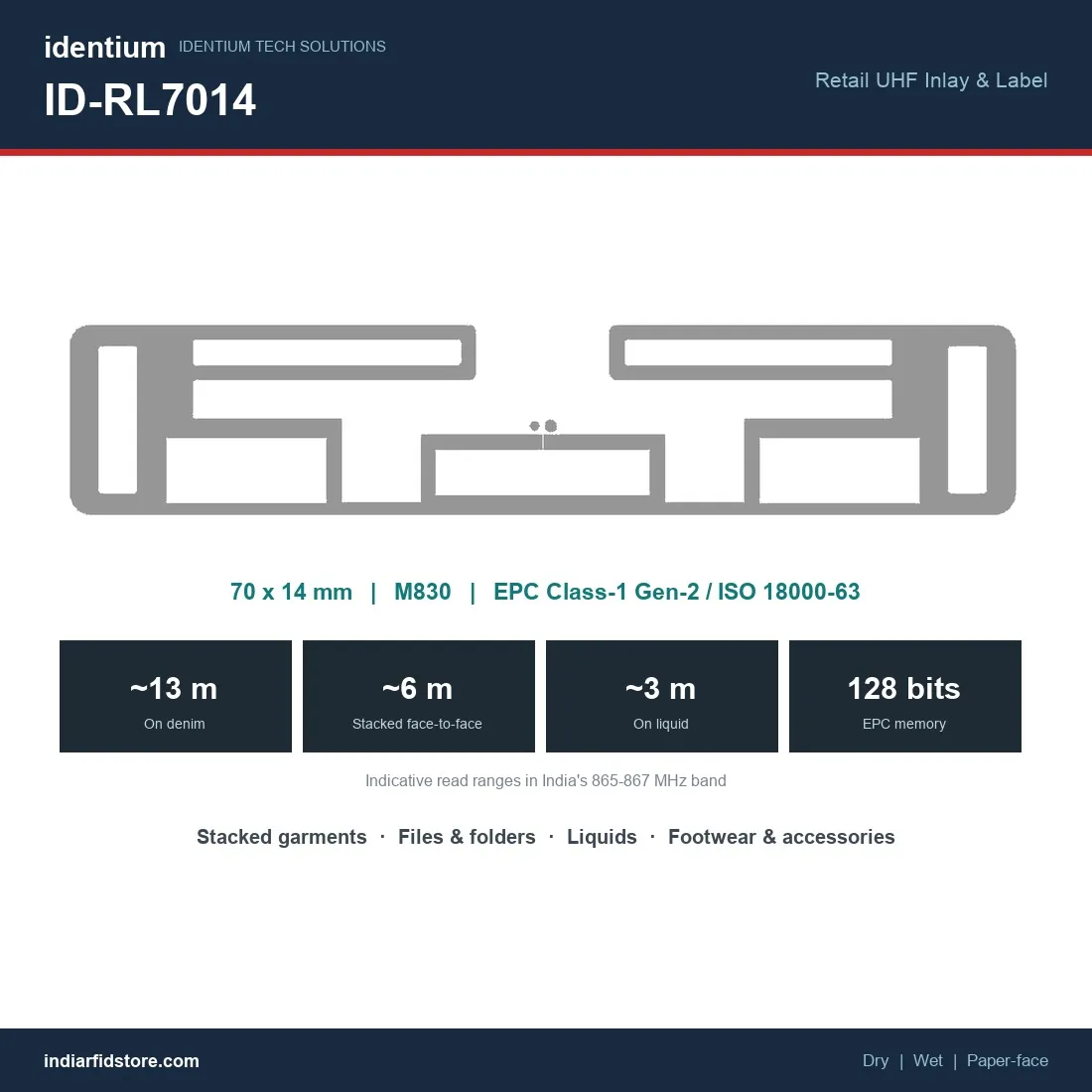
A 14 × 70 mm UHF RFID inlay on an NXP UCODE chip, offered as an inlay, label or sticker for retail goods, cartons and non-metal assets, with up to 6 m read range.
₹8
per piece + 18% GST
Minimum order: 500 pieces · the final price for your quantity is confirmed in the quote
View datasheet PDF · 172 KB- 7-day replacement · 1-year warranty against manufacturing defects
- Blue Dart next-day delivery
- Samples ₹250 (1–2 pcs, incl. shipping) · request
Key features
- NXP UCODE chip, EPC Gen2 / ISO 18000-6C
- Available as an inlay, label or sticker
- Up to 6 m read range (antenna and environment dependent)
- Thin, flexible base for flat and curved surfaces
- Covers 860–960 MHz, including India's 865–868 MHz band
- RoHS-compliant materials
- Frequency
- 860–960 MHz (covers India's 865–868 MHz band)
- Protocol
- EPC Gen2 / ISO 18000-6C
- Chip
- NXP UCODE
- Read range
- Up to 6 m (depends on antenna and environment)
Overview
One UCODE UHF RFID inlay, three formats
The ID-1470-UCODE is for buyers who want one well-known chip across several jobs. It pairs a 14 × 70 mm UHF antenna with an NXP UCODE chip and is offered as a bare inlay, a label or a sticker, so a converter, a retailer and a facilities team can all order the same part. Read range reaches up to 6 m depending on the reader antenna and surroundings.
Which format to order
Inlay
For label converters and tag makers who laminate it under their own printed face stock or build it into swing tickets.
Label
For print-and-encode work on an RFID printer, with a barcode and text on the face.
Sticker
For applying by hand to boxes, files and office equipment during an audit.
Why choose a UCODE chip
NXP UCODE chips are read by any EPC Gen2 reader and printer, which makes a UCODE inlay a safe default when your tags will also be read by suppliers' or customers' systems. For a side-by-side view of NXP and Impinj chips, see our Impinj vs NXP chip guide.
Keep the tag off metal and away from liquid-filled packs, and check reads with a handheld before tagging in volume. Other sizes and chips are in the UHF RFID inlays and labels range.
Typical applications
- Retail item tagging
- Carton and case labels
- Office asset stickers
- Record boxes and files
- Label converting
Specifications
Datasheet (PDF)| Frequency | 860–960 MHz (covers India's 865–868 MHz band) |
|---|---|
| Protocol | EPC Gen2 / ISO 18000-6C |
| Chip | NXP UCODE |
| Read range | Up to 6 m (depends on antenna and environment) |
| Dimensions | 14 × 70 mm (nominal) |
| Material | Thin, flexible substrate; RoHS-compliant |
| Supplied as | Dry inlay, wet inlay, or label/sticker on a paper roll |
| Compatible with | Standard UHF RFID readers and printers |
Frequently asked questions
Which UCODE chip version does the ID-1470-UCODE use?
What read range does it give?
Can it be used on metal items or liquid containers?
Does it work on India's UHF frequency?
Can I get it in label form for my RFID printer?
Related products
All UHF RFID Inlays & Labels →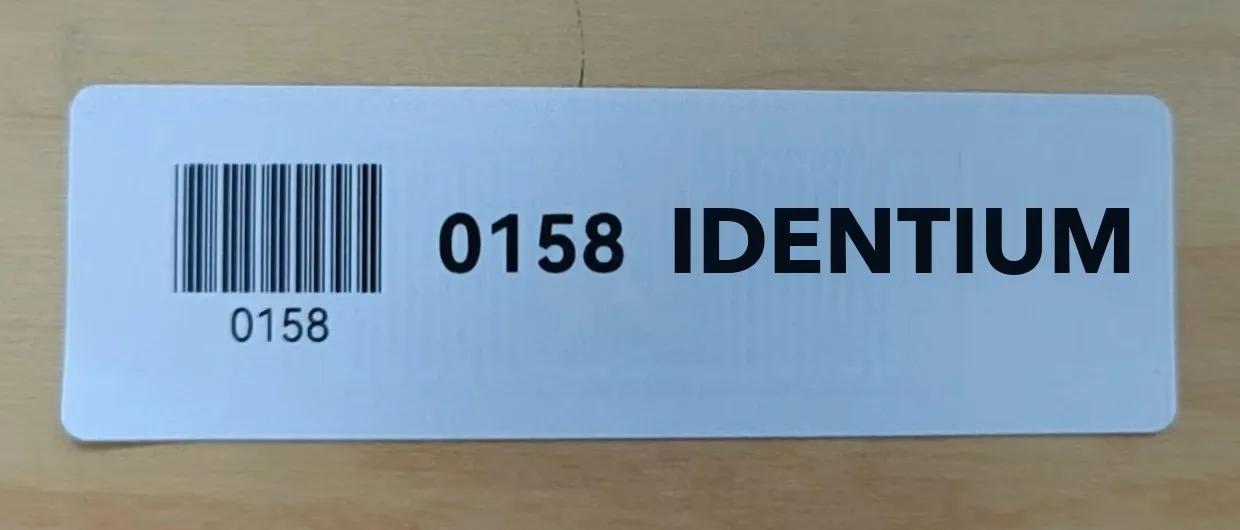
UHF RFID Label 50 × 30 mm (Impinj Monza R6)
₹8 + GST
Min. order 500 pcs
_Z4sCO.webp)

ID 73x21-H10
₹5 + GST
Min. order 500 pcs