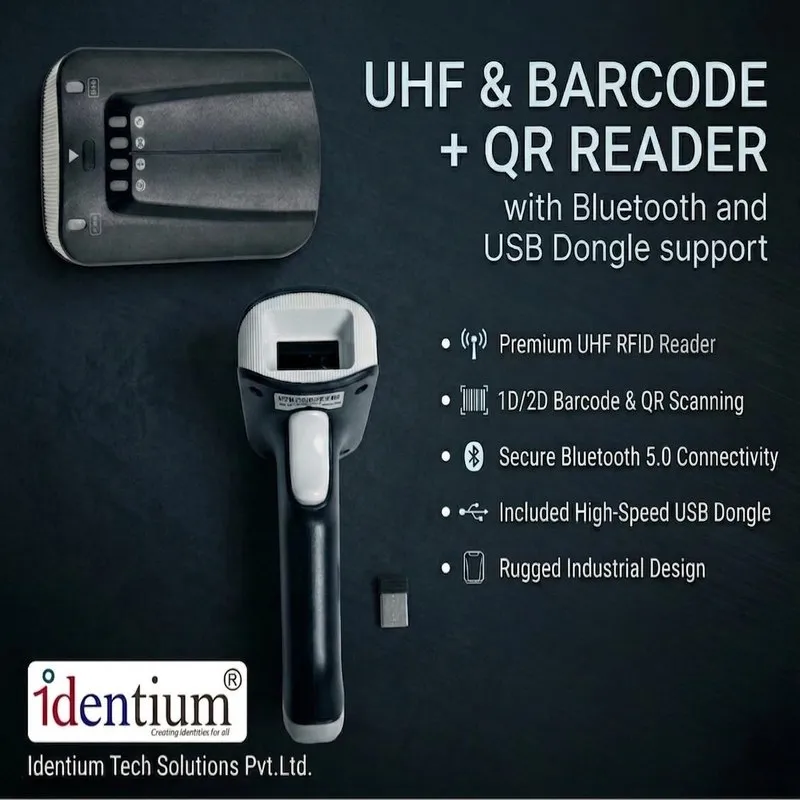
UHF RFID USB Handheld Reader UBR-100
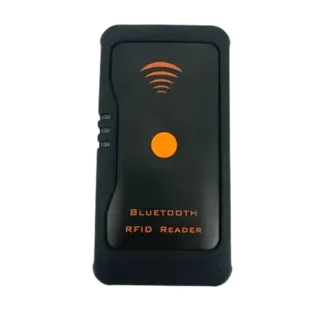
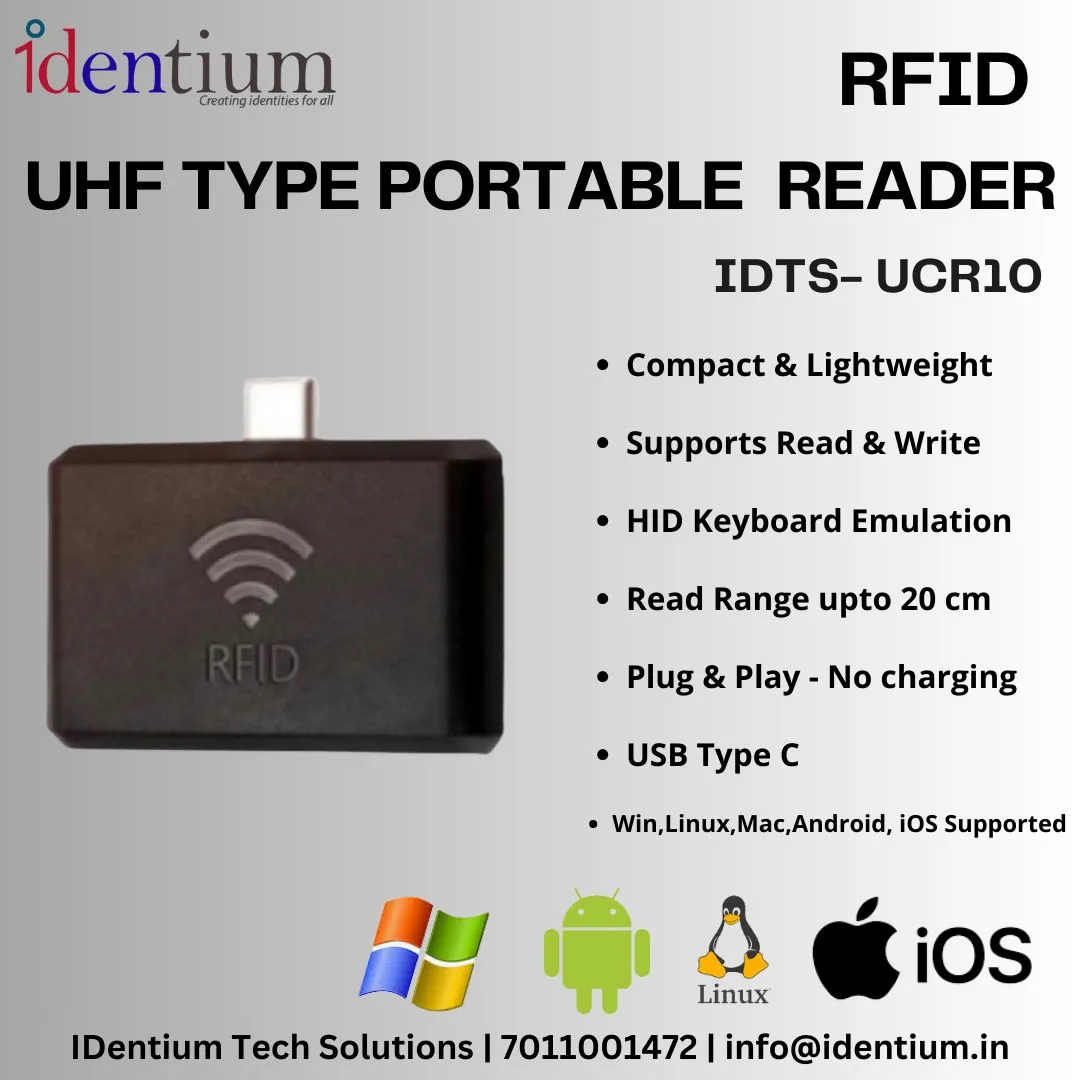
A compact handheld UHF RFID reader that plugs into a laptop or PC over USB and works without installing drivers, for stock counts and asset audits where the operator works alongside a computer.
₹13,400
per piece + 18% GST
Minimum order: 1 piece · the final price for your quantity is confirmed in the quote
View datasheet PDF · 221 KB- 7-day replacement · 1-year warranty against manufacturing defects
- Blue Dart next-day delivery
Key features
- USB plug and play; no additional drivers on most operating systems
- USB-powered from the connected laptop or PC
- 860–960 MHz, EPC Gen2 / ISO 18000-6C; covers 865–868 MHz
- Reads UHF RFID cards, tags, labels and wristbands
- Compact, lightweight handheld body
- Frequency
- 860–960 MHz (covers India's 865–868 MHz band)
- Protocol
- EPC Gen2 / ISO 18000-6C
- Interface
- USB, plug and play (no additional drivers on most operating systems)
Overview
What the UBR-100 USB handheld UHF reader does
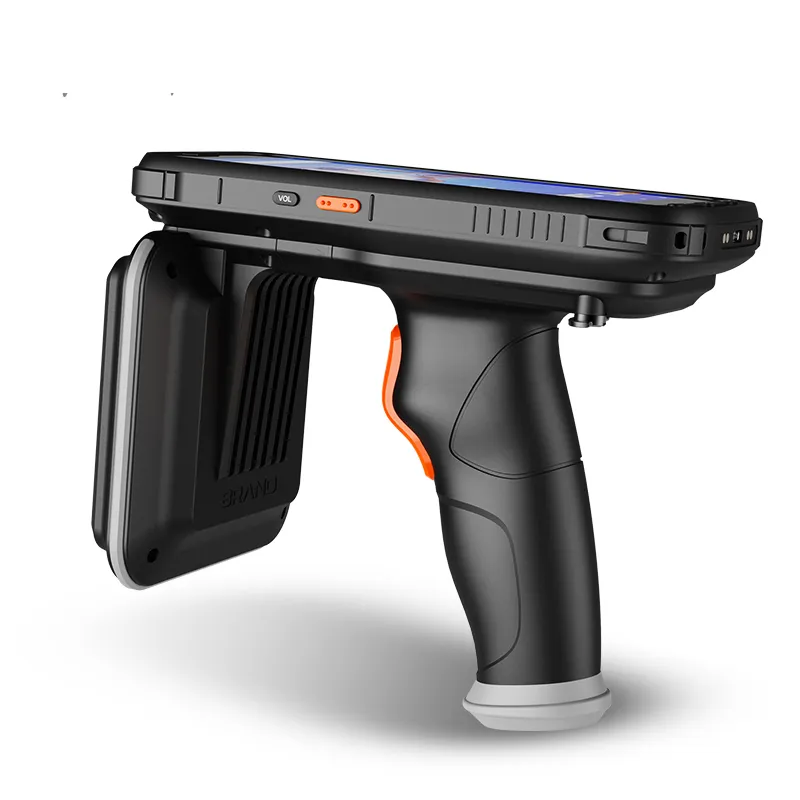
The UBR-100 is a handheld UHF RFID reader on a USB cable. Plug it into a laptop or PC and it is ready to use, with no additional drivers on most operating systems, and it takes its power from the USB port. For a stores or audit team that already works from a laptop, it is a simple way to start reading UHF tags.
Working on a USB tether
Because the reader is cabled, the computer goes where it goes. Common setups:
- Trolley count: laptop on a trolley, reader in hand, working down the aisle shelf by shelf.
- Receiving desk: laptop at the inward bay, reader used to check tagged cartons before put-away.
- Issue counter: library desks, record rooms and tool cribs where items are checked against a register.
Sweep slowly at a steady distance along a shelf, and stand a little back from steel racking, which reflects radio signals and can hide tags behind it. Test with a known good tag at the start of each count.
One reader for the whole UHF tag family
The UBR-100 covers 860–960 MHz on EPC Gen2 / ISO 18000-6C, which includes India's 865–868 MHz band, and reads standard UHF cards, tags, labels and wristbands. One device can check employee cards, asset labels, carton tags and wristbands. For metal assets, pair it with suitable on-metal RFID tags.
USB or wireless?
Choose the UBR-100 if counting always happens next to a computer and a cabled, USB-powered reader suits the way you work. If staff need to walk freely with only a phone, a Bluetooth model fits better; compare them under RFID handheld readers. For audit planning, see the fixed asset audit guide.
Typical applications
- Stocktaking and cycle counts
- Fixed asset audits
- Warehouse receiving
- Library shelf checks
- File and record rooms
- Tool crib checks
Specifications
Datasheet (PDF)| Frequency | 860–960 MHz (covers India's 865–868 MHz band) |
|---|---|
| Protocol | EPC Gen2 / ISO 18000-6C |
| Interface | USB, plug and play (no additional drivers on most operating systems) |
| Power | USB-powered from the host computer |
| Form factor | Compact, lightweight handheld |
| Compatible with | UHF RFID cards, tags, labels and wristbands |