Skip to content
India RFID Store

RFID Hybrid Cards
Model RFID Hybrid CardsIdentiumIn Stock

RFID Hybrid Cards

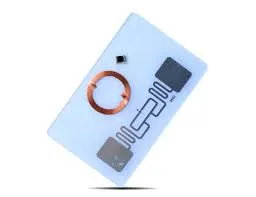
A CR80 photo-ID card with an HF 13.56 MHz chip for tap access and attendance and a UHF EPC Gen2 chip for portal and inventory reads, so one printed card covers both jobs.

₹40

per piece + 18% GST

Minimum order: 500 pieces · the final price for your quantity is confirmed in the quote

View datasheet PDF · 173 KB
  • 7-day replacement · 1-year warranty against manufacturing defects
  • Blue Dart next-day delivery
  • Samples ₹250 (1–2 pcs, incl. shipping) · request

Key features

  • HF 13.56 MHz (MIFARE or NTAG) plus UHF EPC Gen 2 in one card
  • Standard CR80 size: 85.6 × 54 mm
  • HF reads at 0–10 cm; UHF reads at 0.5–3 m (reader dependent)
  • Full-colour printing with photo, logo, barcode and QR code
  • Variants: HF + UHF, or HF + magnetic stripe + UHF
Frequency
HF 13.56 MHz + UHF 860–960 MHz (covers India’s 865–868 MHz)
Chip
HF: MIFARE or NTAG
Protocol
UHF: EPC Gen 2
Read range
HF 0–10 cm; UHF 0.5–3 m (depends on reader and antenna)

Overview

One printed RFID hybrid card for access and tracking

Many organisations issue a staff ID for doors and attendance and then need something else that portal or inventory readers can count. The hybrid card puts both into one CR80 card: an HF 13.56 MHz chip (MIFARE or NTAG) that is tapped at access and attendance readers within 10 cm, and a UHF EPC Gen2 chip that portal and inventory readers pick up at 0.5–3 m. The card face takes full-colour printing, so it doubles as the person’s photo ID.

Where the hybrid card fits

  • Employee ID: door access and attendance on HF, with UHF reads at exits or zones for movement records.
  • Libraries: one card as the staff or student ID and for book checkout.
  • Hospitals: staff door access on HF, alongside UHF equipment tracking.
  • Visitor passes: campuses running both HF and UHF readers can issue a single pass.

Choosing the variant

HF + UHF covers most sites; choose HF + magnetic stripe + UHF where a swipe reader is still in service. If your access system is built on DESFire keys, compare the HF + UHF DESFire card, and if your doors run 125 kHz proximity, the LF + UHF card. Before printing a batch, confirm the chip your attendance terminal reads, as our card printing compatibility guide explains.

Typical applications

  • Employee multi-function ID
  • Door access and attendance
  • Library staff and student IDs
  • Hospital staff badges
  • Visitor passes
  • Asset tracking

Specifications

Datasheet (PDF)
ModelRFID Hybrid Cards
FrequencyHF 13.56 MHz + UHF 860–960 MHz (covers India’s 865–868 MHz)
ChipHF: MIFARE or NTAG
ProtocolUHF: EPC Gen 2
Read rangeHF 0–10 cm; UHF 0.5–3 m (depends on reader and antenna)
Dimensions85.6 × 54 mm (CR80)
PrintingFull colour: photo, logo, barcode, QR code
VariantsHF + UHF; HF + magnetic stripe + UHF

Frequently asked questions

What read range does the hybrid card have?
About 0–10 cm on the 13.56 MHz HF side and 0.5–3 m on the UHF EPC Gen 2 side. UHF range depends on the reader, antenna and how the card is worn, so trial it on site before a large rollout.
Can the card be printed with our logo and staff photos?
Yes. It is a standard CR80 card (85.6 × 54 mm) and takes full-colour printing with photo, logo, barcode and QR code.
Which HF chips are available?
MIFARE or NTAG on the 13.56 MHz side. MIFARE is the usual choice for access control and attendance terminals; NTAG is an NFC chip that NFC phones can also read.
Is a magnetic stripe version available?
Yes. Choose HF + magnetic stripe + UHF if you still use a swipe reader, or plain HF + UHF otherwise.
Does the UHF side work in India?
Yes. The UHF chip covers 860–960 MHz, which includes India’s licence-exempt 865–868 MHz band used by UHF readers here.

Your quote list

Saved on this device. No payment is taken online.

Your list is empty. Use “Add to quote” on any product, then send one request for everything.