Skip to content
India RFID Store

Dual Frequency RFID Cards LF-UHF
Model LF-UHF RFID CARDSIdentiumIn Stock

Dual Frequency RFID Cards LF-UHF

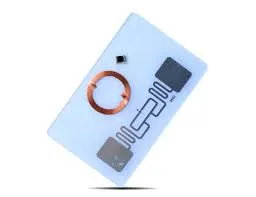
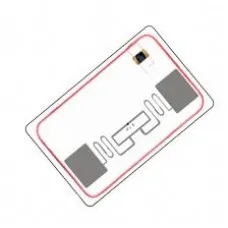
An ISO-format badge combining a 125 kHz proximity chip with a UHF EPC Gen2 chip, for sites that want long-range vehicle or gate reads without replacing their existing LF door readers.

₹30

per piece + 18% GST

Minimum order: 500 pieces · the final price for your quantity is confirmed in the quote

View datasheet PDF · 158 KB
  • 7-day replacement · 1-year warranty against manufacturing defects
  • Blue Dart next-day delivery
  • Samples ₹250 (1–2 pcs, incl. shipping) · request

Key features

  • 125 kHz LF chip for installed proximity door readers
  • UHF EPC Class 1 Gen 2 chip for long-range identification
  • UHF side read by readers on India’s 865–868 MHz band
  • Adds parking and gate reads without replacing LF readers
  • Supplied with or without a magnetic stripe
Frequency
125 kHz (LF) + UHF (read on India’s 865–868 MHz band)
Protocol
UHF: EPC Class 1 Gen 2 (ISO 18000-6C)
Magnetic stripe
Optional (with or without)

Overview

What the LF + UHF dual frequency card adds to an access system

A 125 kHz proximity system works well at doors, where staff hold a card up to the reader. It does little at a vehicle gate, where the card has to be picked up from a distance as the car approaches. This badge pairs the LF chip your door readers already understand with a UHF EPC Gen2 chip that a long-range reader can see, so parking and gate control can be added without touching the door system or reissuing a different door card.

How each side is used

  • 125 kHz side: presented at the existing proximity door readers exactly as before.
  • UHF side: read by a UHF reader at a boom barrier, gate lane or yard entry. UHF readers in India operate on the 865–868 MHz band.
  • Magnetic stripe: optional, if a swipe system is also in use.

Getting reliable UHF reads at a gate

UHF reads are affected by how the card is carried. A card pressed against the body or lying on a metal dashboard reads less reliably than one held up or clipped where the antenna can see it, so plan the reader position and card holder together and test with your own reader before a full rollout. Gate lanes are usually covered by a UHF integrated reader with a built-in antenna, wired to the barrier controller or access panel.

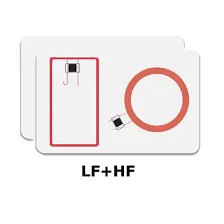
Moving doors to MIFARE instead? See the LF + HF card. Our access control setup guide covers readers and panels.

Typical applications

  • Staff parking gates
  • Boom barrier entry
  • Proximity door access
  • Industrial estate gates
  • Logistics yard entry
  • Campus vehicle lanes

Specifications

Datasheet (PDF)
ModelLF-UHF RFID Cards
Frequency125 kHz (LF) + UHF (read on India’s 865–868 MHz band)
ProtocolUHF: EPC Class 1 Gen 2 (ISO 18000-6C)
FormatISO 7816 hybrid dual-frequency badge
Magnetic stripeOptional (with or without)

Frequently asked questions

Will this card work with my existing proximity readers?
The 125 kHz side is meant for installed proximity readers. LF formats vary between systems, so share your reader make or a sample card when you request a quote to confirm the chip matches.
What read range does the UHF side give?
It depends on the UHF reader, its antenna and how the card is carried. Cards held close to the body or behind metal read at shorter distances, so trial it at your gate with your own reader before a large order.
Which UHF frequency is used in India?
UHF RFID in India uses the licence-exempt 865–868 MHz band. The card’s UHF side uses EPC Class 1 Gen 2, the standard read by UHF readers on that band.
Should I choose LF + UHF or HF + UHF?
Choose LF + UHF if your doors run on 125 kHz proximity readers. If your doors already use 13.56 MHz MIFARE or DESFire, the HF + UHF dual frequency card keeps that credential and adds UHF.
Is a magnetic stripe available?
Yes. The card is supplied with or without a magnetic stripe.

Your quote list

Saved on this device. No payment is taken online.

Your list is empty. Use “Add to quote” on any product, then send one request for everything.